How to Style and Care for Silver Tribal Hoop Earrings
Master the art of styling and maintaining silver tribal hoop earrings. Learn gauge sizing, oxidation cleaning, and face-shape matching in this guide.

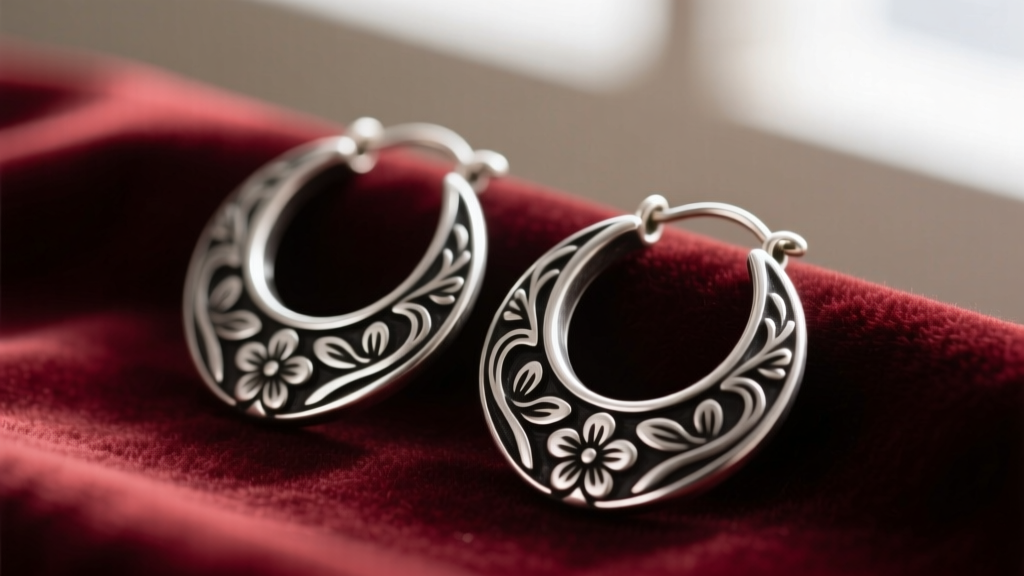
The Metallurgy of Tribal Jewelry: What Are You Actually Wearing?
When shopping for silver tribal hoop earrings, the term "tribal" is frequently used as a catch-all aesthetic descriptor rather than a metallurgical guarantee. To care for and style these pieces properly, you must first understand the exact metal composition. Genuine tribal-inspired hoops are typically crafted from 925 Sterling Silver, which contains 92.5% pure silver and 7.5% copper. The copper is essential; it provides the tensile strength required for hoop structures to maintain their shape and support heavy, intricate castings or stone settings.
However, the market is flooded with what is deceptively labeled as "Tibetan Silver" or "Tribal Silver." According to The Silver Institute, authentic silver alloys must meet strict purity standards. In contrast, generic "tribal silver" is often a base-metal alloy of copper, nickel, zinc, and sometimes lead, finished with a microscopically thin silver wash. Not only does this material tarnish irreversibly once the plating wears off, but the high nickel content is a primary culprit for severe contact dermatitis. Always verify that your hoops are stamped with a .925 or Sterling hallmark before purchasing.
Step-by-Step Guide to Sizing, Gauges, and Closures
Tribal hoop earrings are notoriously heavier than standard minimalist hoops due to their thick bands, elaborate filigree, and semi-precious stone inlays. Wearing a heavy hoop on a wire that is too thin will result in the dreaded "cheese-cutter effect," where the jewelry slowly migrates downward, permanently stretching and thinning the earlobe tissue.
To prevent structural damage to your ear, you must match the wire gauge to the weight of the hoop. Here is a practical framework for selecting the correct thickness:
| Hoop Weight / Style | Recommended Gauge | Millimeter Thickness | Best Closure Type |
|---|---|---|---|
| Lightweight Filigree (Under 10g) | 20g or 18g | 0.81mm - 1.02mm | Standard Latch-back |
| Medium Casted Bands (10g - 20g) | 16g | 1.29mm | Saddleback or Hinge |
| Heavy Stone-Inlaid Hoops (20g+) | 14g or 12g | 1.63mm - 2.05mm | French Wire with Silicone O-Ring |
Pro-Tip for Insertion: When inserting thick 14g or 12g tribal hoops, never force the wire through the piercing. Apply a micro-drop of sterile jojoba oil to the wire tip to lubricate the passage, preventing micro-tears in the fistula that can lead to localized infections or blowouts.
How to Clean Oxidized Silver Without Ruining the Patina
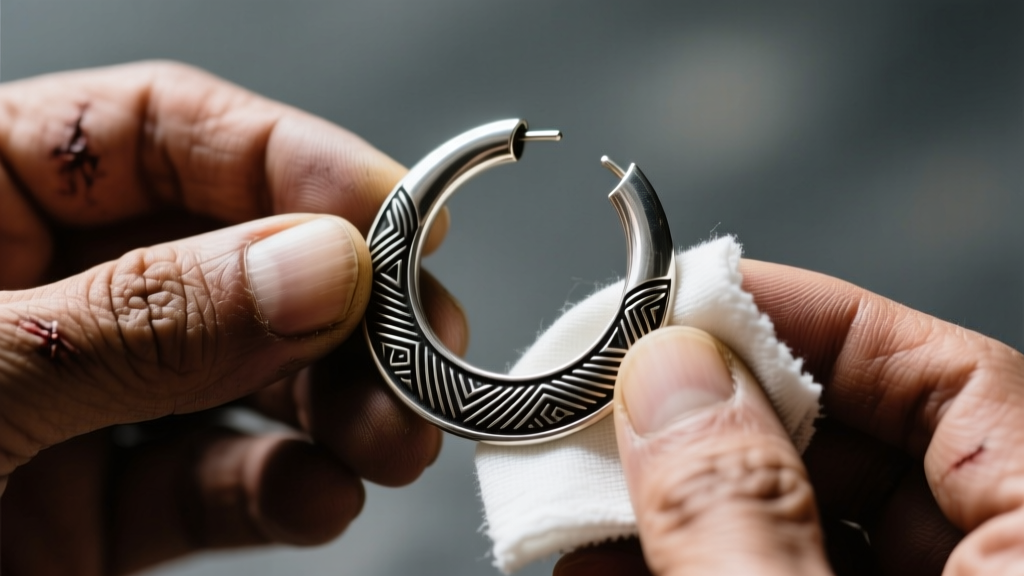
The defining visual characteristic of silver tribal hoop earrings is the high-contrast patina. Artisans intentionally oxidize the silver (using liver of sulfur) to turn the recessed engraved areas black, while polishing the raised surfaces to a high shine. This contrast makes the intricate geometric or floral motifs pop.
The Golden Rule: Never use commercial liquid silver dips (which contain thiourea) or ultrasonic cleaners. Liquid dips will strip the intentional oxidation from the crevices, leaving the earring looking flat and lifeless. Furthermore, ultrasonic vibrations can easily shatter porous semi-precious stones frequently used in tribal designs, such as turquoise, lapis lazuli, or malachite. The Gemological Institute of America (GIA) strictly advises against ultrasonic cleaning for any treated or porous gemstones.
The Safe Cleaning Protocol
- Dry Brush: Use a clean, dry baby toothbrush to gently sweep out dust and skin oils from the deep engravings.
- Targeted Polishing: Wrap a professional silver polishing cloth tightly around your index finger. Gently rub only the raised, high-polish surfaces of the hoop. Avoid pressing into the grooves.
- Stone Care: If your hoops feature turquoise or coral, wipe the stones with a barely damp microfiber cloth. Never apply chemical polishes to the stones, as they are highly absorbent and will permanently stain.
- Drying: Ensure the earrings are 100% dry before storage. Trapped moisture in the crevices will accelerate uncontrolled, ugly yellow-green tarnishing.
Styling Framework: Matching Tribal Hoops to Face Shapes

Because tribal hoops possess immense visual weight and draw the eye directly to the mid-to-lower face, selecting the right silhouette for your bone structure is critical. Use this decision matrix to find your ideal match:
- Round Faces: Avoid perfectly circular, thick-band hoops, which will emphasize the roundness of your cheeks. Instead, opt for elongated teardrop tribal hoops or angular, geometric Berber-style shields. The vertical lines visually lengthen the jawline and create a slimming illusion.
- Square Faces: Your goal is to soften a strong, angular jawline. Choose medium-to-large circular hoops featuring soft, organic filigree patterns or rounded cabochon stone settings. The curves of the silverwork will beautifully contrast and soften your natural bone structure.
- Heart-Shaped Faces: With a wider forehead and a narrow chin, you want to add visual weight to the lower half of your face. Bottom-heavy tribal dangles or hoops that feature a wider diameter at the base (like a rounded triangle or inverted teardrop) will perfectly balance your proportions.
- Oval Faces: You have the most versatility. To make a bold statement, pair your oval face with ultra-thick, heavy-gauge band hoops featuring dense, edge-to-edge engraving. The horizontal width will highlight your balanced features without overwhelming them.
Preventing Structural Failure and Tarnish
The most common point of failure in heavy silver tribal hoop earrings is the closure mechanism. Repeated bending of a latch-back wire to open and close it causes metal fatigue, eventually leading to a snapped post. To extend the lifespan of your hoops, always open the latch by pushing it up and out rather than bending it sideways. If your hoops feature a French wire (fishhook) closure, the weight of the tribal design will cause the hook to slowly unspool from your ear. Always secure heavy French wires with a clear silicone earring back or an O-ring stopper.
For long-term storage, silver reacts with hydrogen sulfide in the air to form silver sulfide (tarnish). Store your tribal hoops in an airtight ziplock bag alongside a 3M anti-tarnish strip. Never store them loose in a jewelry box where the heavy hoops can roll over and crush more delicate pieces, or worse, bend their own posts under their own weight. Hang heavy tribal hoops on a dedicated jewelry tree or lay them completely flat in a fabric-lined drawer to preserve their structural integrity for decades to come.


