How Do Clip On Earrings Work? Material & Tension Guide
Discover how clip on earrings work through material properties. Compare tension metals, silicone paddles, and screw-back mechanics for all-day comfort.

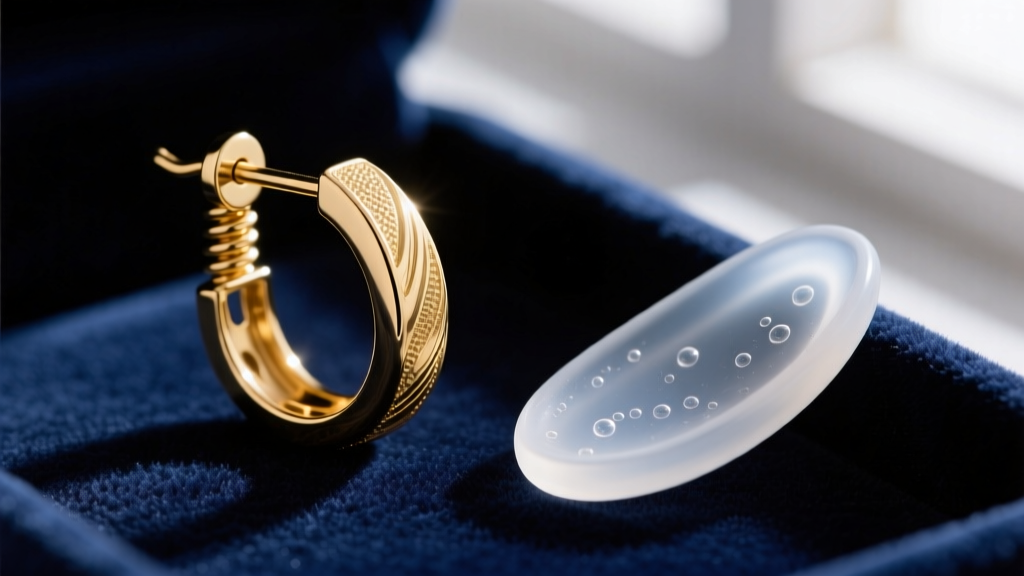
The Physics of Non-Pierced Jewelry: Tension vs. Gravity
When non-pierced jewelry enthusiasts ask, 'how do clip on earrings work?' the answer lies in a precise balance of mechanical tension, material yield strength, and surface friction. Unlike post earrings that rely on gravity and a friction back or screw to secure them through a fistula, clip-ons must clamp onto the earlobe. This clamping action creates a fulcrum at the hinge, applying a continuous compressive force to the tissue. If the force exceeds the capillary refill pressure of the earlobe (roughly 30-40 mmHg), the wearer experiences ischemic pain. If the force is too low, the earring succumbs to gravity and the kinetic energy of head movements, resulting in a lost piece of jewelry.
To understand the mechanics, we must break down the two primary systems used in modern and vintage clip-ons: the spring-hinge and the screw-back. Spring-hinges utilize a tiny coiled steel spring hidden within the hinge barrel to provide constant inward torque. Screw-backs rely on a threaded tension screw that pushes a paddle against the earlobe, allowing the wearer to manually adjust the clamping distance. However, the efficacy of both systems is entirely dictated by the metallurgical properties of the frame and the tribological properties (friction) of the paddle.
Material Properties That Dictate Clip-On Performance
The structural integrity of a clip-on earring is governed by the metal's yield strength and resistance to 'creep'—the tendency of a solid material to slowly deform permanently under the influence of mechanical stresses. When a clip-on is opened, the metal arm is subjected to tensile stress. If the metal's yield strength is too low, it will undergo plastic deformation, meaning it will not snap back to its original shape, resulting in a permanent loss of tension.
According to the Rio Grande Metals Guide, different jewelry alloys exhibit vastly different mechanical behaviors. Base metals like brass are highly malleable and inexpensive to cast, making them popular for vintage clip-ons. However, brass suffers from high metal fatigue. Conversely, modern aerospace-grade titanium and 316L surgical stainless steel offer immense tensile strength, allowing for thinner, lighter, and more resilient clip arms that maintain their calibration for decades.
| Metal Alloy | Yield Strength (MPa) | Weight Profile | Creep Resistance | Allergy Risk |
|---|---|---|---|---|
| Yellow Brass | 100 - 200 | Heavy | Poor (High Fatigue) | Moderate (Contains Zinc/Copper) |
| Sterling Silver (925) | 150 - 250 | Medium | Moderate | Low (Contains Copper) |
| 316L Surgical Steel | 485 - 530 | Medium-Heavy | Excellent | Low (Nickel traces) |
| Grade 5 Titanium (Ti-6Al-4V) | 880 - 950 | Ultra-Light | Superior | None (Hypoallergenic) |
For heavy statement earrings, such as chandelier or large hoop clip-ons, utilizing high-yield metals like titanium or hardened steel is non-negotiable. The Gemological Institute of America (GIA) frequently notes that the weight of the gemstones or decorative elements must be perfectly counterbalanced by the structural rigidity of the metal arm; otherwise, the earring will pivot forward and slide off the lobe.
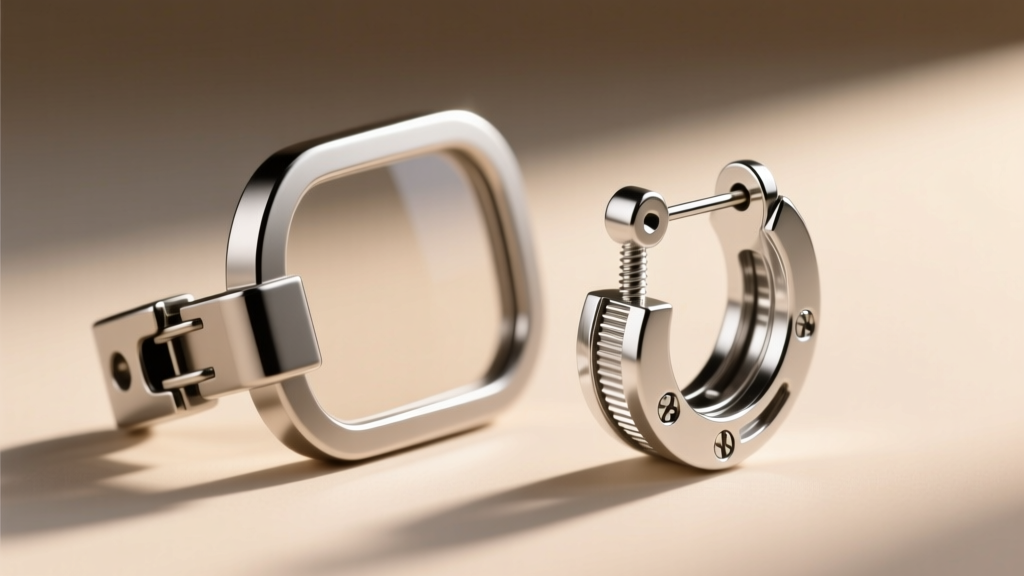
The Crucial Role of Paddle Materials and Padding
Understanding how do clip on earrings work also requires analyzing the point of contact: the paddle. The paddle's job is to distribute the clamping force over a wider surface area and increase the coefficient of friction against the skin. Bare metal paddles, common in mid-century vintage designs, offer a very low coefficient of friction. When the skin produces natural sebum or sweat, the metal-on-skin contact becomes slippery, causing the earring to slide downward and eventually detach.
Silicone vs. Resin vs. Foam Paddles
- Medical-Grade Silicone (Shore A 40-50 Durometer): The gold standard for modern clip-ons. Silicone provides a high-friction, micro-tacky surface that grips the skin without adhesive. It is hydrophobic, meaning it resists sweat and oils, and it distributes pressure evenly across the lobe's cartilage and tissue.
- Hard Resin/Acrylic: Often used in screw-back designs. While hypoallergenic and durable, resin lacks the micro-tackiness of silicone. It requires slightly higher clamping pressure to prevent slipping, which can lead to earlobe fatigue over a 6-hour wear period.
- Compressed Foam: Frequently found on inexpensive or vintage retrofitted clip-ons. Foam excels at pressure distribution but degrades rapidly. It absorbs skin oils, harbors bacteria, and compresses permanently over time, altering the calibrated tension of the earring.
Failure Modes: Why Clip-Ons Slip or Pinch
When a clip-on fails, it is rarely a design flaw and almost always a material or calibration mismatch. Here are the three most common mechanical failure modes observed by bench jewelers:
- Hinge Barrel Wear (Spring-Hinges): In lower-quality brass or silver clip-ons, the internal steel spring is harder than the surrounding hinge barrel. Over thousands of articulation cycles, the spring physically grinds away the softer interior metal of the barrel, creating 'slop' or play in the hinge. This results in a misaligned paddle that pinches the edge of the earlobe rather than clamping flatly.
- Thread Stripping (Screw-Backs): Screw-backs rely on fine machine threads. If manufactured from soft sterling silver or gold-filled wire, the threads can easily strip if over-tightened. Once stripped, the screw loses its ability to hold lateral tension, causing the paddle to loosen throughout the day.
- Thermal Expansion: Metals expand and contract with temperature changes. While negligible for small studs, large, solid cast clip-on bodies can experience slight dimensional shifts when moving from a cold outdoor environment to a warm indoor venue, subtly altering the clamping distance and causing the earring to slip.
Expert Adjustments: Calibrating Tension by Metal Grade
Because every earlobe varies in thickness (typically ranging from 4mm to 10mm), clip-ons must be calibrated to the individual wearer. However, the adjustment technique depends entirely on the material properties of the earring.
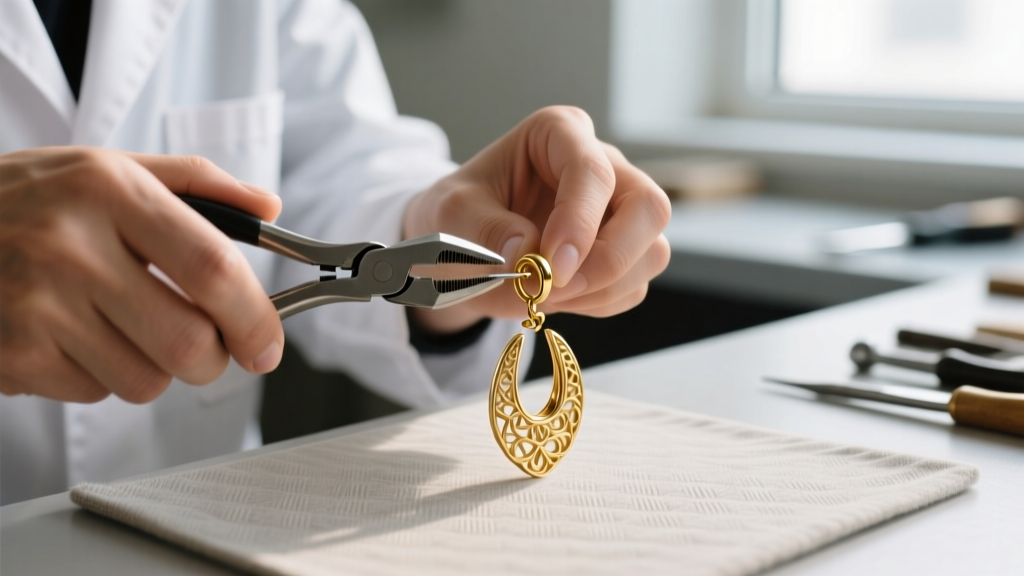
Bench Jeweler Tip: Never use standard steel chain-nose pliers to adjust the tension arm of a clip-on earring. The hardened steel teeth will permanently mar soft metals like 14k gold-fill, sterling silver, or brass, creating micro-fractures that accelerate metal fatigue and eventual snapping.
For spring-hinge clip-ons made of malleable metals like brass or silver, the tension is adjusted by gently bending the main wire arm. Using nylon-jaw pliers, a jeweler will grip the arm just above the hinge barrel and apply a few ounces of lateral pressure to increase or decrease the inward torque. Because brass has a low yield strength, it only takes a millimeter of movement to drastically change the clamping force.
For screw-back clip-ons, adjustment is done via the tension screw. However, if the maximum inward travel of the screw is insufficient for a thin earlobe, the solution is not to over-tighten and risk stripping the threads. Instead, a jeweler will add a secondary silicone or felt shim behind the existing paddle, effectively reducing the gap without compromising the structural integrity of the threaded mechanism. By respecting the metallurgical limits of the jewelry, wearers can enjoy secure, pain-free, non-pierced earrings that last a lifetime.


