Buying Guide: What to Look for in Long Long Earrings
Discover what to look for when buying long long earrings. Learn about weight limits, hypoallergenic metals, and face-shape pairing in our expert guide.

Defining the 'Long Long' Earring Silhouette
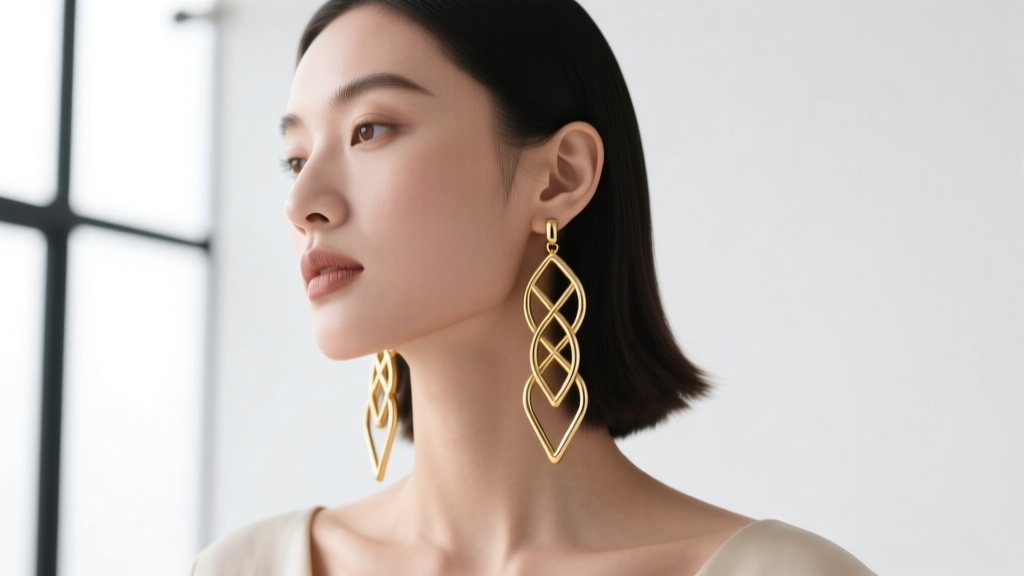
When we talk about 'long long earrings' in the contemporary jewelry market, we are not simply referring to standard drop earrings. This specific terminology denotes ultra-dramatic, architectural, shoulder-grazing or collarbone-skimming silhouettes that have dominated runway and editorial styling. These pieces are statement-makers, often exceeding three to four inches in length. However, their extreme proportions introduce unique structural and ergonomic challenges. Buying a piece of this magnitude requires a meticulous evaluation of weight distribution, metallurgical integrity, and backing mechanisms to ensure they remain comfortable and secure throughout the day.
The Physics of Dangle: Weight vs. Wearability
The most critical point of failure when purchasing long long earrings is ignoring the 'gram rule.' The human earlobe is composed of soft tissue and fat, lacking the cartilage structure found higher up the ear. When a heavy earring is suspended from a standard 20-gauge or 18-gauge piercing hole, gravity exerts constant downward pressure. Over time, this causes the 'cheese-cutter effect'—a gradual tissue migration where the jewelry slowly slices through the lobe, leading to permanent tearing.
For extended wear, an earring should ideally weigh under 10 grams per ear. If a design is visually massive, it must be engineered to reduce density. Here is a breakdown of common materials used in oversized dangles and their relative densities:
| Material | Density (g/cm³) | Engineering Strategy for Long Dangles | Average Price Range |
|---|---|---|---|
| Aluminum | 2.70 | Anodized for color; allows massive volume at minimal weight | $25 - $60 |
| Titanium (ASTM F136) | 4.50 | Milled into ultra-thin sheets; highly durable and hypoallergenic | $80 - $200 |
| Acrylic / Resin | 1.18 | Carved into chunky geometric shapes; virtually weightless | $15 - $45 |
| 14k Solid Gold | 12.90 | Must use hollow tubing or electroforming to reduce weight | $250 - $800+ |
| Brass (Plated) | 8.40 - 8.70 | Cast thin; prone to bending under its own weight over time | $20 - $75 |
If you are investing in solid gold long long earrings, always ask the jeweler if the piece is 'electroformed' or constructed from 'hollow tubing.' Solid cast gold dangles of this length will almost certainly cause lobe fatigue within an hour of wear.
Crucial Findings and Backing Mechanisms
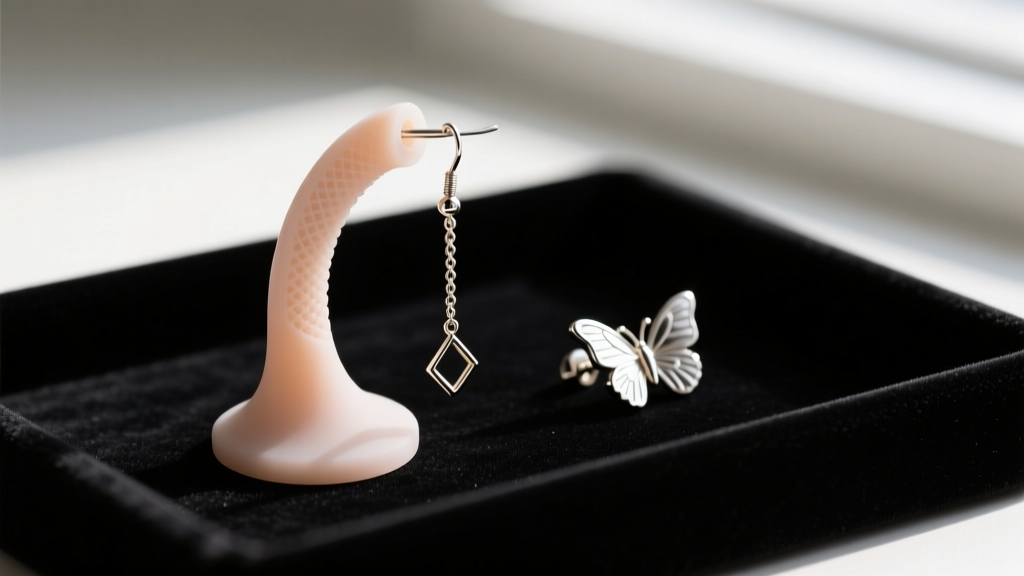
The earring post and backing are the only things standing between your investment and the floor. Standard friction-backed 'butterfly' clasps are entirely inadequate for long long earrings. The pendulum motion of walking creates kinetic energy that slowly works a standard friction back off the post. When shopping, look for these secure alternatives:
- Leverback Wires: The gold standard for dangles. A hinged wire snaps securely into a catch, completely enclosing the piercing. Ensure the wire thickness is at least 18-gauge to prevent bending.
- La Pousette Backs: Also known as click-locks, these feature a tiny internal mechanism that snaps onto a grooved post. They are the most secure option for straight-post heavy earrings.
- Silicone Support Discs: If the earring only comes with a standard post, you must use a wide silicone support disc (like the brand Bling Guards) against the back of the lobe. This distributes the weight across a wider surface area, preventing the cheese-cutter effect and adding friction to keep the backing in place.
- French Wire Stoppers: For shepherd-hook styles, always use clear silicone stoppers. Metal bullet-clutches do not grip the smooth curve of a French wire securely enough for heavy, swinging pieces.
Material Grades for Heavy-Duty Dangles
Because long long earrings swing and brush against the neck and jawline, the metal is in constant friction with your skin and hair. This makes hypoallergenic purity non-negotiable. According to the Association of Professional Piercers (APP), implant-grade titanium (ASTM F136) is the premier choice for sensitive skin, as it contains zero nickel and is highly resistant to corrosion from sweat and cosmetics.
If you prefer precious metals, the Gemological Institute of America (GIA) notes that 14k and 18k gold alloys are generally safe, provided they are alloyed with silver, copper, or palladium rather than nickel. However, be highly cautious of 'gold-plated' or 'gold vermeil' long long earrings. The constant swinging motion will eventually wear away the microscopic plating layer at the friction points, exposing the base metal underneath. As the American Academy of Dermatology (AAD) warns, prolonged exposure to exposed nickel alloys can trigger severe contact dermatitis, leading to itchy, weeping earlobes that force you to abandon the jewelry entirely.
Proportions, Face Shapes, and Styling
Styling extreme length requires an understanding of visual balance. Long long earrings act as vertical lines that draw the eye downward, elongating the neck and narrowing the face. Here is a quick framework for pairing these dramatic pieces with your specific features:
The Proportion Matrix
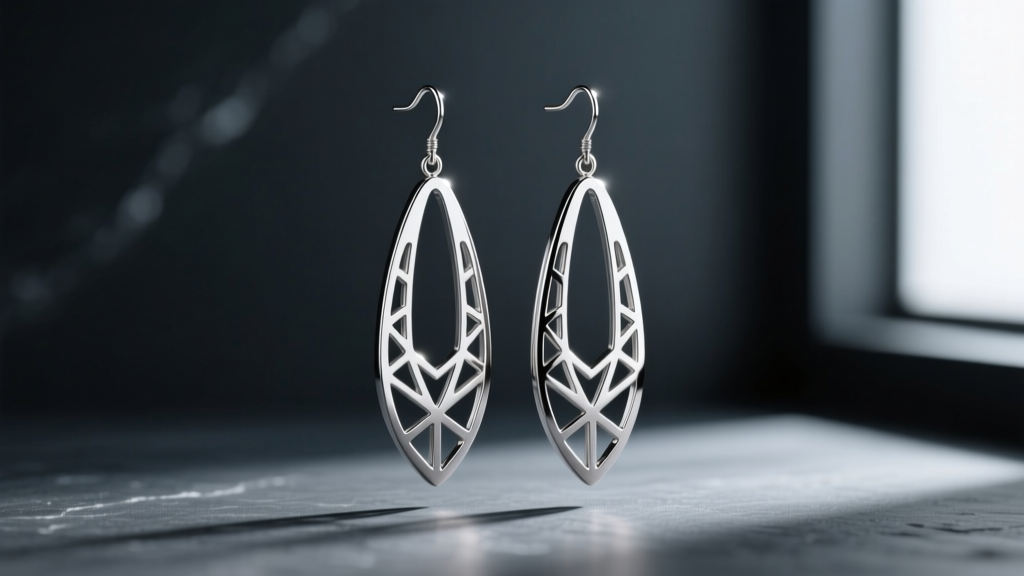
- Round Faces: Opt for long long earrings with sharp, angular geometric cuts or linear chains. Avoid rounded teardrops, which will echo and emphasize the roundness of the jawline.
- Square Faces: Choose pieces with soft curves, undulating waves, or rounded tassels at the bottom to soften a strong, angular jaw.
- Heart-Shaped Faces: Look for dangles that are wider at the bottom (like chandeliers or inverted triangles) to add visual weight to a narrower chin.
- Oval Faces: You have the most versatility. However, ensure the earrings do not extend past the collarbone, as this can visually overwhelm your natural proportions.
Neck Length Consideration: If you have a shorter neck, cap the length of your earrings at the jawline. If they brush the shoulders, they will visually erase your neck entirely, creating a cramped silhouette.
Structural Checks: The Jump Ring Vulnerability
Before purchasing, inspect the connection points. Long long earrings are often constructed from multiple articulated segments linked by jump rings. The kinetic swing of a heavy earring puts immense shear stress on these tiny metal loops.
Check if the jump rings are soldered closed or at least split-ring style (like a tiny keychain ring). If they are standard open jump rings where the two ends merely butt up against each other, the swinging motion will eventually pry them open, and the bottom half of your earring will be lost. If you already own a pair with open jump rings, take them to a local jeweler to have the connections laser-welded or soldered shut for a few dollars—a small price to protect a major investment.
Maintenance and Storage
Due to their length, these earrings are notoriously prone to tangling, which can bend delicate wires and warp hollow tubing. Never toss them loosely into a jewelry box. Store them hanging from a dedicated earring tree or thread the hooks through the holes of a specialized velvet roll. Before each wear, gently wipe the posts and hooks with an alcohol pad to remove accumulated skin oils and hair product residue, which can degrade both the metal finish and your silicone stoppers over time.