How to Clean and Maintain Etched Gold Hoop Earrings
Learn expert techniques to clean, polish, and store etched gold hoop earrings without damaging delicate engraved patterns or finishes.

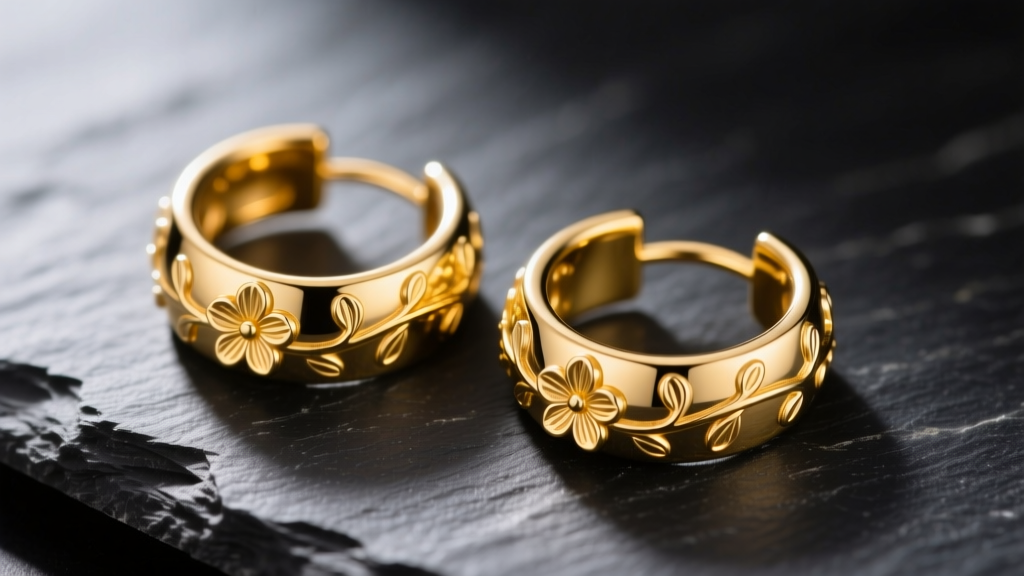
Etched gold hoop earrings represent a perfect intersection of classic silhouette and artisanal craftsmanship. Whether featuring hand-engraved floral motifs, geometric laser-etched patterns, or hammered textures, the added surface area and microscopic grooves of etched gold present a unique set of maintenance challenges. Unlike smooth, high-polish gold hoops that easily wipe clean, etched surfaces act as magnets for sebum, cosmetic residue, hard water minerals, and environmental pollutants.
If you own a pair of these intricate staples, standard jewelry cleaning methods can actually do more harm than good. Aggressive polishing can wear down the raised edges of hand-engraved burin cuts, while ultrasonic cleaners can strip the deliberate oxidized patina often used to highlight etched designs. In this comprehensive guide, we break down the metallurgical realities of gold alloys and provide a meticulous, step-by-step framework for cleaning, preserving, and storing your etched gold hoop earrings.
The Anatomy of an Etched Gold Hoop
To properly care for etched earrings, you must first understand how the etching is applied and how it interacts with the gold alloy. According to the Gemological Institute of America (GIA), pure 24k gold is too soft for daily wear jewelry. Therefore, etched hoops are typically crafted from 14k (58.5% gold) or 18k (75% gold) alloys, mixed with copper, silver, or zinc for durability.
- Hand Engraving: A master engraver uses a hardened steel burin to carve away metal. This process often leaves microscopic 'burrs' or raised edges along the grooves. Snagging a standard polishing cloth on these burrs can pull the metal or leave lint trapped in the design.
- Laser Etching: A laser vaporizes the surface metal to create a pattern. This results in sharper, cleaner grooves without raised burrs, but the intense heat can sometimes leave a microscopic layer of oxidation that requires specific chemical lifting rather than abrasive scrubbing.
- Antiquing (Patina): Many etched hoops are treated with liver of sulfur (potassium sulfide) to darken the recessed grooves, creating high contrast against the polished high points. This antiquing is superficial and can be easily stripped by harsh chemicals or ultrasonic vibrations.
The Step-by-Step Cleaning Routine
Forget commercial jewelry dips and abrasive pastes. The safest, most effective method for cleaning etched gold relies on gentle chemical lifting and micro-mechanical agitation.
Phase 1: Preparation and Materials
Gather the following specific tools before beginning. Do not substitute these with household alternatives, as the wrong tools will damage the gold or the etching.
- Distilled Water: Tap water contains chlorine, calcium, and magnesium. When water evaporates from the deep grooves of an etched hoop, it leaves behind hard water spots that are incredibly difficult to remove without abrasion.
- Phosphate-Free Dish Soap: A single drop of a mild, phosphate-free liquid soap (like Dawn or Seventh Generation) acts as a surfactant to break down skin oils without leaving a cloudy film.
- Extra-Soft Infant Toothbrush: You need a brush with a bristle diameter of less than 0.15mm. Standard adult toothbrushes, even those labeled 'soft,' have bristles that are too stiff and can scratch 18k gold alloys.
- Wooden Toothpicks: For dislodging stubborn, compacted debris from deep laser-etched channels.
- Compressed Air Duster: Essential for forcing water out of the microscopic grooves without rubbing.
Phase 2: The Soaking and Agitation Process
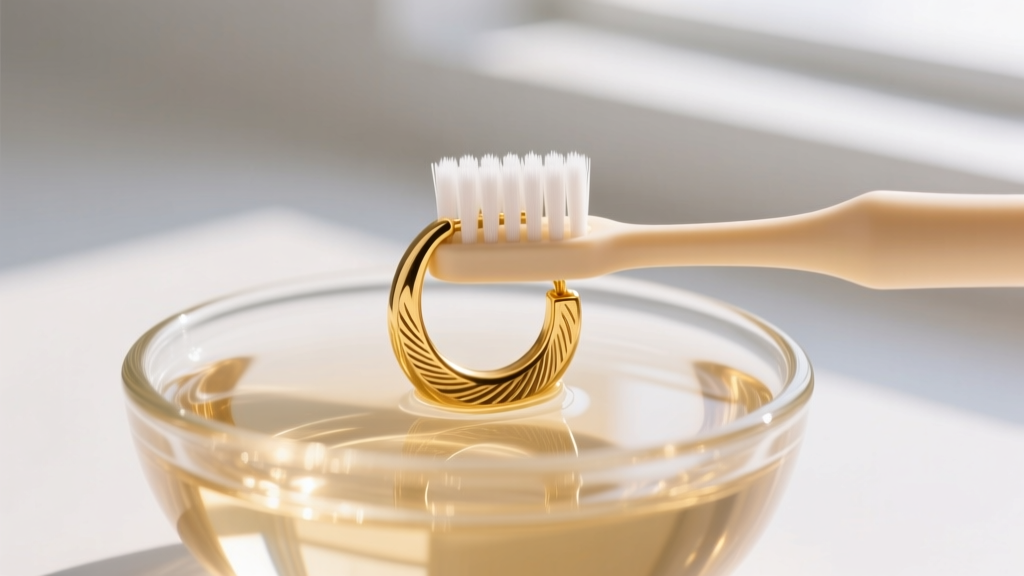
Begin by mixing one cup of lukewarm distilled water with a single drop of the phosphate-free soap in a glass bowl. Submerge your etched gold hoops and let them soak for exactly 10 to 15 minutes. This allows the surfactant to penetrate the grooves and loosen sebum and cosmetic buildup.
After soaking, take your extra-soft infant toothbrush and gently agitate the grooves. Critical Technique: If your hoops are hand-engraved, always brush parallel to the direction of the engraving lines. Brushing perpendicular to the cuts can catch the microscopic burrs and bend the gold. Use the wooden toothpick to gently scrape out any compacted lotion or dead skin cells from the deepest intersections of the pattern, taking care not to gouge the metal.
Phase 3: Rinsing and Drying
Rinse the hoops under a gentle stream of lukewarm distilled water. Do not use hot water, as rapid thermal expansion can stress the alloy, particularly if the hoops feature any tension-set stones alongside the etching.
Instead of towel-drying, which inevitably leaves cotton lint trapped in the etched grooves, shake off the excess water and use a can of compressed air to blow the moisture out of the microscopic channels. Finish by lightly patting the smooth, non-etched backing of the hoop with a lint-free microfiber cloth.
What to Avoid: Common Mistakes That Ruin Etchings
The internet is full of DIY jewelry cleaning hacks that are actively destructive to etched gold. The Federal Trade Commission (FTC) Jewelry Guides warn consumers about the misrepresentation of gold treatments, but understanding the chemistry of gold alloys is your best defense against accidental damage.
| Cleaning Agent / Method | Effect on Solid Etched Gold (14k/18k) | Effect on Gold Vermeil / Plated Hoops |
|---|---|---|
| Ultrasonic Cleaners | Safe for bare gold, but will strip dark antiquing/patina from grooves. | High risk. Cavitation bubbles can peel thin micron layers of plating. |
| Baking Soda Paste | Highly abrasive. Will scratch the high-polish ridges and dull the piece. | Destructive. Will strip the gold plating down to the base metal instantly. |
| Chlorine / Bleach | Causes stress corrosion cracking in copper-alloyed gold, leading to snaps. | Destroys the brass or copper base metal core, causing green skin and flaking. |
| Toothpaste | Contains silica abrasives that act like sandpaper on 18k gold surfaces. | Removes plating and leaves a cloudy, permanently scratched finish. |
| Commercial Silver Dips | Contains thiourea, which is toxic and can cause localized pitting in gold. | Will strip vermeil and cause irreversible chemical burns to the silver core. |
Solid Gold vs. Gold Vermeil Etched Hoops
Your cleaning protocol must adapt based on the fundamental construction of your earrings. Solid 14k or 18k gold hoops can withstand the gentle brushing and soaking methods outlined above without issue. However, the market is flooded with etched hoops made of gold vermeil or gold-plated brass.
The Vermeil Etching Problem: True gold vermeil requires a sterling silver base coated with at least 2.5 microns of gold. When a manufacturer etches a vermeil hoop, the cutting tool often slices entirely through the thin gold layer, exposing the sterling silver underneath in the grooves. This creates a galvanic cell where moisture and sweat cause the exposed silver to tarnish rapidly, while the gold remains bright. You cannot polish this tarnish out without removing more of the surrounding gold plating.
If you own etched vermeil hoops, skip the toothbrush entirely. Use a damp microfiber cloth to gently wipe the surface, and rely on a dry, soft-bristled makeup brush to dust out the grooves. Never soak vermeil etched hoops, as water will accelerate the galvanic corrosion in the exposed grooves.
Proper Storage to Prevent Tarnish and Scratches
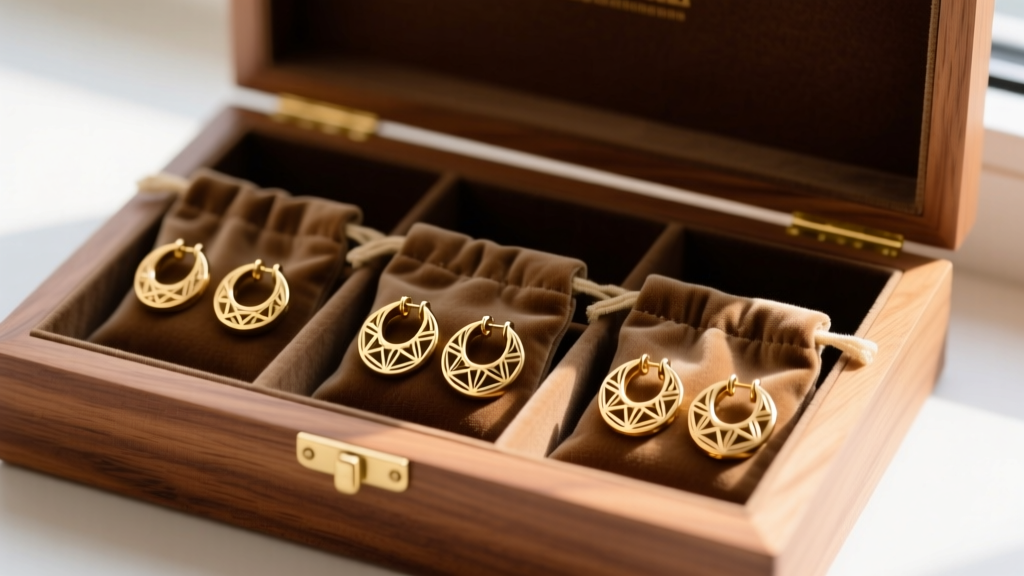
How you store your etched gold hoops is just as critical as how you clean them. The increased surface area of etched gold means there is more exposed metal to react with environmental sulfur and humidity. While pure gold does not tarnish, the copper and silver alloys in 14k and 18k gold are highly susceptible to sulfur dioxide in the air, which causes a dull, reddish-brown film to form over the intricate patterns.
- Anti-Tarnish Strips: Store your hoops in a sealed environment with 3M anti-tarnish strips. These strips absorb airborne sulfur compounds before they can react with the copper in your gold alloy.
- Individual Pouches: Never toss etched hoops into a shared jewelry box. The hard, raised ridges of the etching can easily scratch softer gold pieces, and conversely, diamond studs can gouge the gold etching. Use individual flannel or Pacific Silvercloth pouches.
- Climate Control: Avoid storing jewelry in bathrooms. The high humidity and fluctuating temperatures from showers accelerate the oxidation of the alloy metals present in the etched grooves.
When to Seek Professional Jewelry Cleaning
While your at-home maintenance routine will handle 95% of daily buildup, there are scenarios where professional intervention is required. If your etched hoops feature a heavy, intentional black patina (antiquing) that has begun to wear unevenly, a professional jeweler can re-apply the liver of sulfur treatment and carefully polish the high points to restore the original factory contrast.
Additionally, if you notice a white, chalky buildup deep within the laser-etched grooves that your toothpick and soap cannot remove, this is likely a buildup of calcium stearate from lotions or hard water scale. A jeweler can use a low-frequency ultrasonic cleaner with a specialized, pH-neutral enzymatic solution that breaks down these specific calcium bonds without harming the gold alloy or any gemstone accents. By adhering to these meticulous care standards, your etched gold hoop earrings will retain their artisanal depth and brilliant luster for decades.


