Cascade Earrings Explained: A Beginner's Guide to Styling
Discover everything about cascade earrings. Learn how to style waterfall designs, choose lightweight metals, and match them to your face shape.

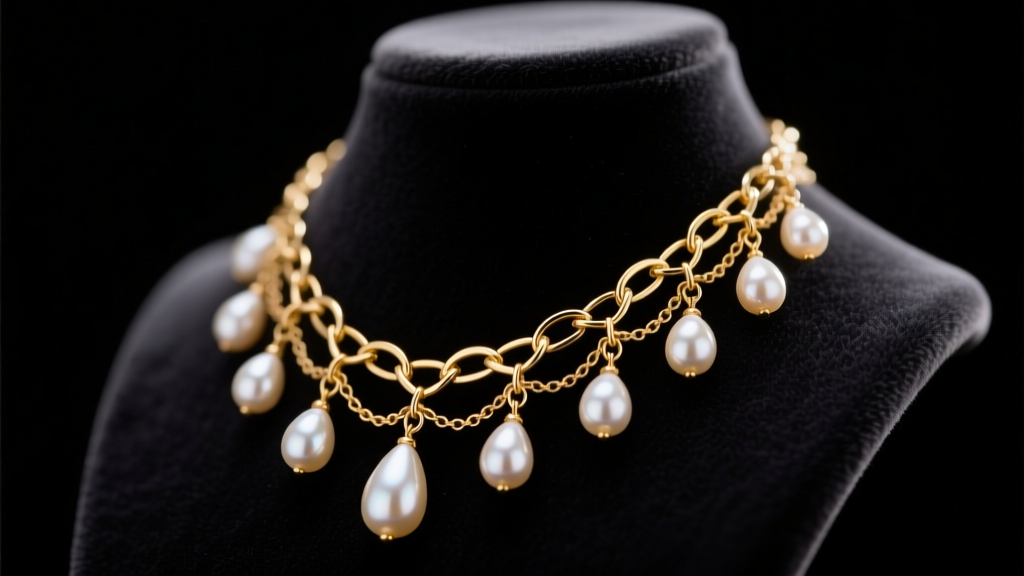
What Are Cascade Earrings?
If you have ever been drawn to the mesmerizing, fluid movement of waterfall-style jewelry, you have likely encountered cascade earrings. Unlike traditional chandelier earrings, which typically branch outward in wide, intricate geometric shapes, cascade earrings are defined by their vertical, flowing silhouette. They mimic the natural downward trajectory of a waterfall, utilizing articulated joints, delicate chains, and graduated gemstones to create a sense of kinetic elegance. As we navigate the jewelry trends of 2026, the cascade silhouette remains a dominant force, bridging the gap between red-carpet glamour and elevated everyday wear.
Understanding the anatomy of cascade earrings is the first step to mastering them. A standard pair consists of three primary components: the primary anchor (usually a stud or a French wire hook), the articulated body (a series of jump rings, link chains, or hinged metalwork that allows for multi-directional movement), and the terminal drop (the final gemstone, metal teardrop, or fringe element at the bottom). This articulation is what gives cascade earrings their signature sway, catching the light with every turn of your head. However, this same structural complexity introduces unique challenges regarding weight distribution, piercing health, and styling balance that every beginner must understand.
The Physics of Dangle: Managing Weight and Comfort
The most common complaint among beginners wearing long, dangling jewelry is earlobe fatigue. Because cascade earrings extend downward, they create a lever effect. The longer the earring, the more torque is applied to the bottom of your piercing hole. This can lead to discomfort, redness, and over time, the dreaded 'cheese wire effect' where the jewelry slowly stretches or tears the lobe tissue. To mitigate this, selecting the right metal based on its density is crucial.
When shopping for lightweight cascade earrings, pay close attention to the material composition. Below is a comparison of common jewelry metals used in waterfall designs, ranked by their physical density and comfort factor.
| Material | Density (g/cm³) | Hypoallergenic? | Best Use Case |
|---|---|---|---|
| Aluminum | 2.70 | Generally Yes | Oversized, dramatic cascade designs |
| Titanium (Grade 23) | 4.43 | Yes (ASTM F136) | Sensitive ears and daily wear |
| Sterling Silver (925) | 10.40 | No (Contains Copper) | Short to medium-length cascades |
| Brass / Bronze | 8.40 - 8.80 | No | Budget-friendly, occasional wear |
For those with sensitive skin or nickel allergies, the American Academy of Dermatology strongly recommends avoiding brass and cheap alloys, which often contain nickel as a hardening agent. Instead, opt for Grade 23 Titanium (Ti-6Al-4V ELI) or high-karat gold, which are biocompatible and significantly reduce the risk of contact dermatitis.
Face Shape Matching for Waterfall Silhouettes
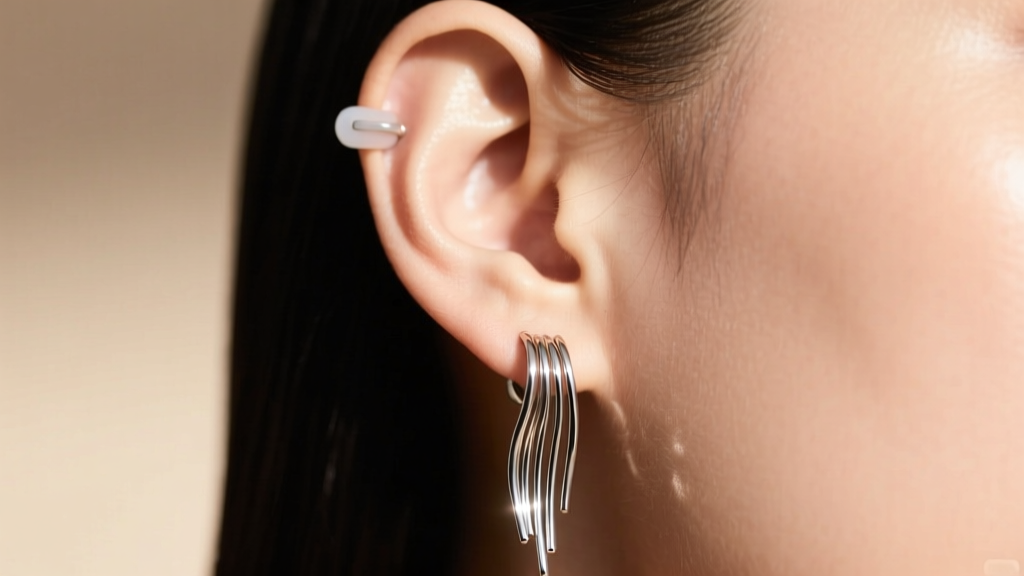 The verticality of cascade earrings makes them a powerful tool for balancing facial proportions. Because they draw the eye downward, they can elongate the face or soften angular features, depending on the specific design you choose. Here is a beginner-friendly framework for matching cascade earrings to your face shape:
- Round Faces: Your goal is to create the illusion of length and angles. Choose long, linear cascade earrings with sharp geometric terminal drops or rectangular gemstones. Avoid wide, teardrop-heavy designs that add unnecessary volume to the sides of your face.
- Square Faces: Characterized by a strong, angular jawline, square faces benefit from softening elements. Opt for cascade earrings featuring curved lines, oval gemstones, or fluid, chain-heavy waterfall designs that end in a rounded drop. The movement will soften your jaw's harsh angles.
- Heart-Shaped Faces: With a wider forehead and a narrow, pointed chin, you want to add visual weight to the lower half of your face. Look for cascade earrings that are bottom-heavy, such as those featuring clustered gems or wider teardrops at the very end of the dangle.
- Oval Faces: The universal face shape can pull off almost any cascade design. However, to maintain your natural balance, ensure the length of the earring does not extend more than an inch past your jawline, which could artificially elongate your features.
Styling Rules: Necklines, Hair, and Makeup
Cascade earrings are inherently loud. They command attention and introduce significant visual texture to your overall look. The golden rule of styling them is subtraction: let the earrings be the focal point by simplifying the surrounding elements.
Neckline Pairings
The relationship between your neckline and your earrings is critical. High necklines, such as turtlenecks or heavy crew necks, will visually collide with long cascade earrings, creating a cluttered and chaotic appearance. Instead, pair your waterfall earrings with open necklines. Strapless tops, sweetheart necklines, and deep V-necks provide a blank canvas of skin that allows the articulated movement of the earrings to shine without competition. If you are wearing a collared shirt, ensure the earring's terminal drop rests above the collar line to prevent snagging.
Hair and Makeup Balance
To maximize the kinetic beauty of cascade earrings, your hair should ideally be worn up or swept back. A sleek low chignon, a French twist, or a tight high ponytail will expose the ear and allow the jewelry to catch the light unimpeded. If you prefer wearing your hair down, tuck the front sections securely behind your ears. Regarding makeup, balance the drama of the jewelry by keeping the rest of your face relatively understated. A bold, graphic eyeliner or a classic red lip pairs beautifully, but attempting a heavy, multi-colored eyeshadow look alongside intricate diamond cascades will overwhelm your features.
Protecting Your Piercings: Lobe Support and Gauge Sizes
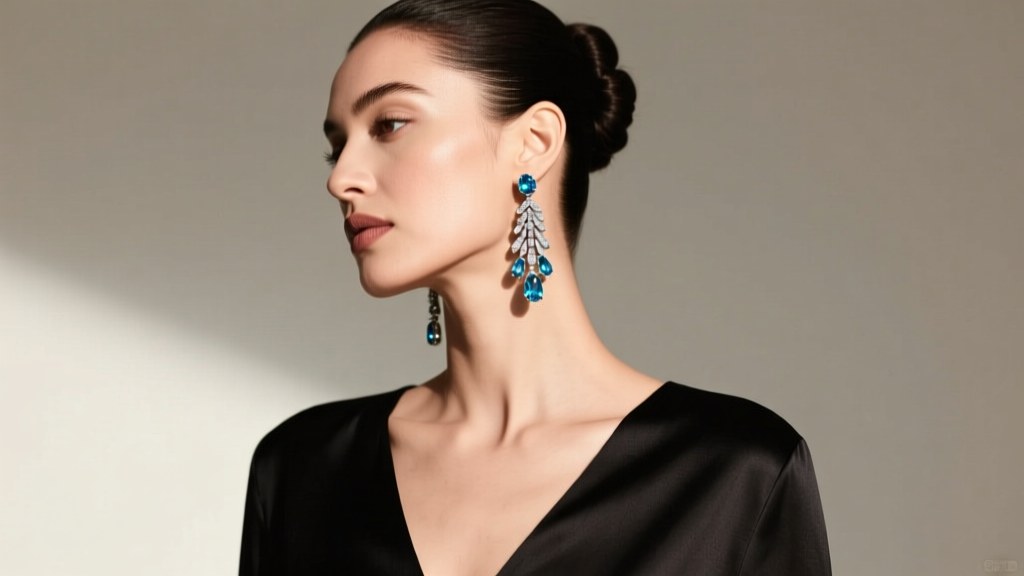 Even the most beautifully crafted cascade earrings can cause damage if your piercings are not properly supported. The standard gauge for a healed female earlobe piercing is 20G (0.81mm) or 18G (1.02mm), according to guidelines from the Association of Professional Piercers. When a heavy cascade earring hangs from a thin 20G wire, the pressure per square millimeter on the bottom of the fistula (the piercing hole) is immense.
To prevent lobe stretching and tearing, you must distribute this weight. There are three primary methods for supporting heavy dangle earrings:
- Silicone Disc Backs: Replace standard butterfly friction backs with wide, flat silicone discs (often 10mm to 14mm in diameter). These sit flush against the back of the earlobe, distributing the downward pull over a much wider surface area.
- Adhesive Ear Patches: Products like Lobe Wonder or BlingWraps are small, self-adhesive polyurethane patches that stick to the back of your earlobe. The earring post passes through the patch, which acts as a supportive splint, virtually eliminating lobe droop and pain.
- Ear Chains and Connectors: For ultra-heavy statement cascades, consider using an ear chain that connects the earring post to a secondary cartilage piercing (like a helix or conch), transferring the weight away from the delicate lobe tissue entirely.
Expert Tip: Never sleep in cascade earrings. The articulated joints can easily snag on pillowcases, leading to sudden, traumatic tearing of the earlobe. Always remove them before bed and store them hanging vertically in a jewelry arbor to prevent the chains from tangling.
Where to Buy: Price Tiers and Brand Recommendations
When investing in cascade earrings, you are paying for the craftsmanship of the articulated joints as much as the materials. Cheap jump rings will pull apart under the weight of the dangle, resulting in lost jewelry. Here is what you can expect across different price tiers in the current market:
- Budget ($25 - $60): Brands like BaubleBar or Kendra Scott offer trendy, fashion-forward cascade designs. Expect gold-plated brass or sterling silver with cubic zirconia or resin stones. These are excellent for occasional wear but require careful storage to prevent plating wear and tarnishing.
- Mid-Tier ($80 - $250): Accessible luxury brands such as Mejuri or Gorjana provide excellent craftsmanship in this range. You will find solid 14k gold vermeil, recycled sterling silver, and semi-precious gemstones like blue topaz, amethyst, or freshwater pearls. The jump rings are typically soldered, ensuring the structural integrity of the waterfall design.
- Fine Jewelry ($300+): For heirloom-quality pieces, look to designers like Lark & Berry or local bespoke jewelers. In this tier, you are paying for solid 14k or 18k gold, ethically sourced or lab-grown diamonds, and precision micro-pave settings. According to the Gemological Institute of America (GIA), understanding the density and cut quality of these gemstones is vital, as poorly cut stones will look dull even when in constant motion.
By understanding the mechanics, materials, and styling principles of cascade earrings, you can confidently incorporate this elegant, kinetic jewelry style into your wardrobe. Focus on lightweight metals, prioritize lobe support, and let the waterfall silhouette do the talking.


