Carolina Herrera Earrings: A Material & Quality Guide
Discover the base metals, plating techniques, and crystal quality of Carolina Herrera earrings. Learn how to maintain these iconic fashion pieces.

The Anatomy of Carolina Herrera Earrings: Beyond the Silhouette
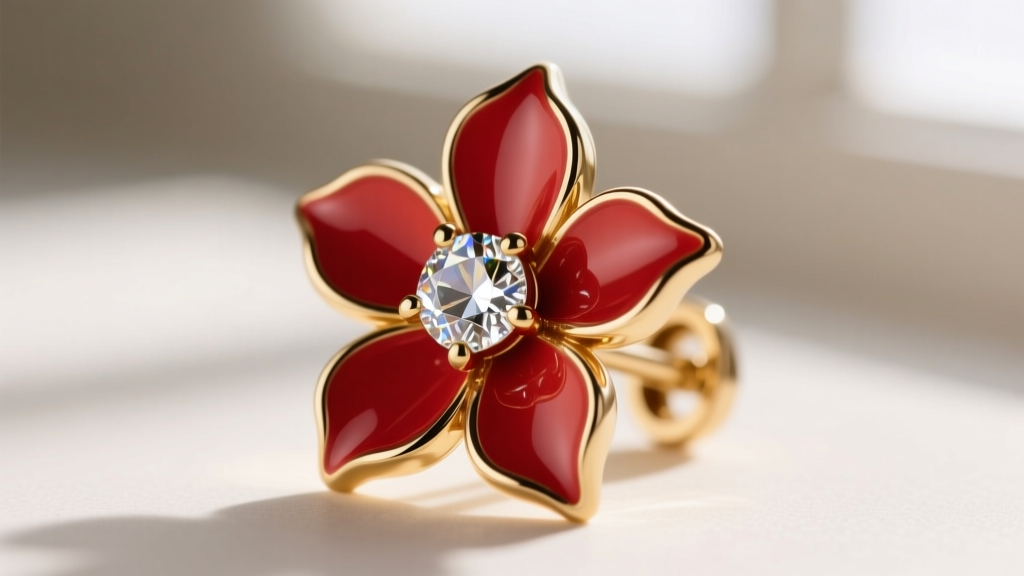
Carolina Herrera is globally synonymous with sophisticated, bold, and sculptural fashion jewelry. While the brand does release exclusive fine jewelry capsules, the vast majority of their iconic runway and seasonal earrings—ranging from the signature floral motifs to the sleek geometric drops of the 'Good Girl' collections—fall into the luxury fashion jewelry category. For the discerning collector or the first-time buyer, understanding the metallurgy, plating techniques, and material properties of these pieces is essential for managing expectations and ensuring longevity.
Unlike fine jewelry, which relies on the intrinsic value of solid precious metals and natural gemstones, luxury fashion jewelry derives its value from exceptional design, brand heritage, and advanced manufacturing techniques. In 2026, the gap between high-end costume jewelry and entry-level fine jewelry has narrowed significantly due to improvements in electroplating and synthetic stone creation. This guide deconstructs the exact materials used in Carolina Herrera earrings, providing a technical perspective on their quality, durability, and care requirements.
Base Metals: Brass vs. Zinc Alloy Foundations
The structural integrity of any earring begins with its base metal. Carolina Herrera predominantly utilizes two base metals for their fashion earring lines: cast brass and zinc alloy (often referred to as pewter or zamak). The choice between the two depends on the specific design requirements of the earring.
Brass (an alloy of copper and zinc) is the preferred medium for intricate, detailed castings, such as the brand's signature floral and vine motifs. Brass offers excellent fluidity when molten, allowing it to capture microscopic details in the mold. However, because brass contains copper, it is highly susceptible to oxidation. If the protective plating layer wears through, the copper will react with the acidity in human sweat, leading to the familiar 'green skin' effect and a metallic odor.
Conversely, zinc alloys are heavier and more rigid, making them ideal for structured, geometric hoops and bold, chunky studs. Zinc does not contain copper, meaning it will not turn the skin green if the plating degrades. Instead, it oxidizes into a dull, chalky white or gray patina. According to manufacturing standards outlined by Rio Grande, zinc alloys are also more forgiving during the polishing stage, allowing for a mirror-like finish before plating begins.
Plating and Finish: The Science of Gold-Tone and Enamel
The brilliant gold and silver finishes on Carolina Herrera earrings are achieved through electroplating. The longevity of this finish depends entirely on the plating thickness, measured in microns (µm). While cheap fast-fashion jewelry utilizes 'flash plating' (a mere 0.05 to 0.1 µm), luxury fashion houses typically employ heavy gold electroplating ranging from 0.5 to 2.0 µm.
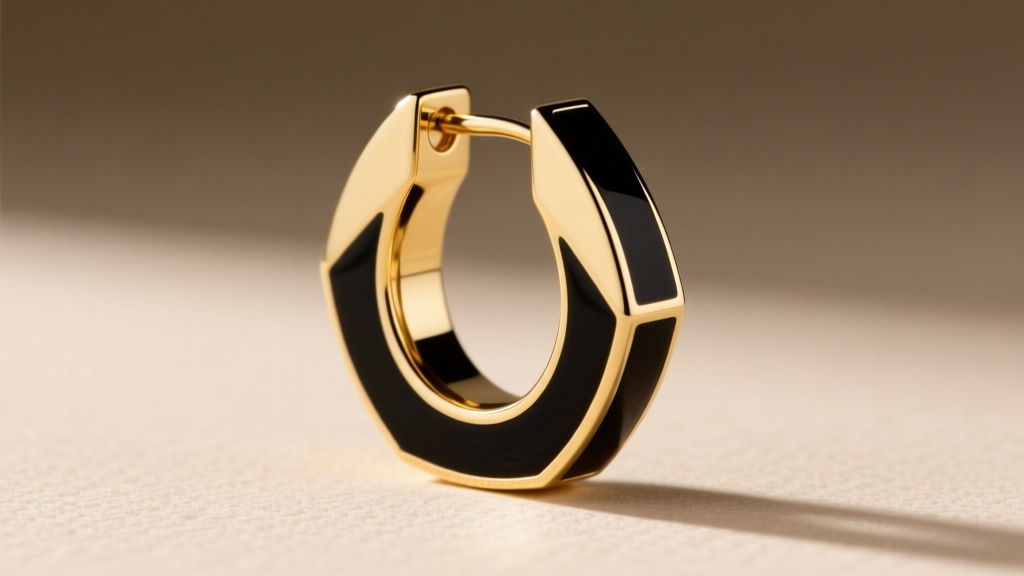
Before the final gold or rhodium layer is applied, a 'strike' layer—usually palladium or a high-grade copper—is deposited to ensure adhesion and act as a barrier. In recent years, the brand has increasingly adopted PVD (Physical Vapor Deposition) coating for select hardware components. PVD creates a molecular bond with the base metal, resulting in a finish that is up to ten times more resistant to friction and sweat than traditional wet electroplating.
Enamel work is another hallmark of Carolina Herrera's aesthetic. The brand primarily uses cold epoxy resin enamel rather than traditional vitreous (glass) enamel. Vitreous enamel requires firing at temperatures exceeding 1,400°F, which would melt or warp brass and zinc base metals. Epoxy enamel, however, cures at room temperature or with low heat. While it lacks the absolute scratch resistance of fired glass, modern epoxy formulations are highly flexible, reducing the risk of chipping when the earring is accidentally dropped.
Hypoallergenic Properties and 2026 Compliance
A critical concern for earring wearers is metal sensitivity, specifically to nickel. As of 2026, luxury fashion houses strictly adhere to updated EU REACH regulations and California Proposition 65 standards regarding nickel release. Carolina Herrera ensures that all earring posts and the underlying strike layers of their fashion jewelry are nickel-free.
Typically, the posts of these earrings are crafted from surgical-grade stainless steel or sterling silver, which are then plated to match the rest of the earring. The barrier layer beneath the gold finish is usually palladium, a platinum-group metal that is inherently hypoallergenic. However, individuals with severe contact dermatitis should note that once the outer plating wears down to the brass or zinc core over several years of heavy use, the risk of a localized allergic reaction increases.
Crystal and Stone Embellishments: Optical Properties
Carolina Herrera earrings are famous for their sparkle, achieved through precision-cut crystals and glass stones rather than natural diamonds. The brand frequently utilizes high-grade Austrian crystals (similar to Swarovski Elements) and precision-cut optical glass.
| Material Type | Refractive Index (RI) | Mohs Hardness | Primary Use in CH Earrings |
|---|---|---|---|
| Lead-Free Precision Crystal | 1.52 - 1.54 | 6.0 - 7.0 | Pavé settings, central drop stones |
| Optical Glass | 1.50 - 1.52 | 5.5 - 6.0 | Large cabochons, teardrop beads |
| Acrylic / Resin | 1.49 | 2.0 - 3.0 | Lightweight, oversized statement pieces |
| Natural Diamond (Fine Line) | 2.42 | 10.0 | Exclusive fine jewelry capsule collections |
While natural diamonds possess a refractive index of 2.42, creating intense 'fire' and brilliance, high-quality precision crystals offer an RI of approximately 1.54. According to the Gemological Institute of America (GIA), the brilliance of these crystals is heavily dependent on the precision of the faceting rather than the raw material itself. Carolina Herrera's stone setters use specialized prong and bezel settings to maximize light return, ensuring the earrings catch the light dynamically during movement.
Common Failure Modes: What to Expect Over Time
Understanding how fashion jewelry fails allows you to prevent it. The most common structural failure in Carolina Herrera drop and dangle earrings is post shearing. The friction post is typically soldered to a small brass pad on the back of the earring using lead-free silver solder. If the earring is caught on clothing or hair, the torque applied to the post can exceed the shear strength of the solder joint, causing the post to snap off cleanly.
Another frequent issue is enamel delamination. While epoxy enamel is flexible, it can separate from the metal base if exposed to thermal shock (e.g., leaving the earrings in a hot car) or harsh chemicals. Alcohol-based perfumes, hairsprays, and hand sanitizers can degrade the chemical bond between the resin and the metal, causing the enamel to lift or peel at the edges.
Care and Maintenance Protocol for Fashion Jewelry
To preserve the plating, enamel, and crystal settings of your Carolina Herrera earrings, a strict maintenance protocol is required. Never use ultrasonic cleaners or chemical silver dips. The high-frequency vibrations of an ultrasonic cleaner will shatter epoxy enamel and loosen the adhesive backing of foil-backed crystals, while chemical dips will instantly strip the gold-tone electroplating.
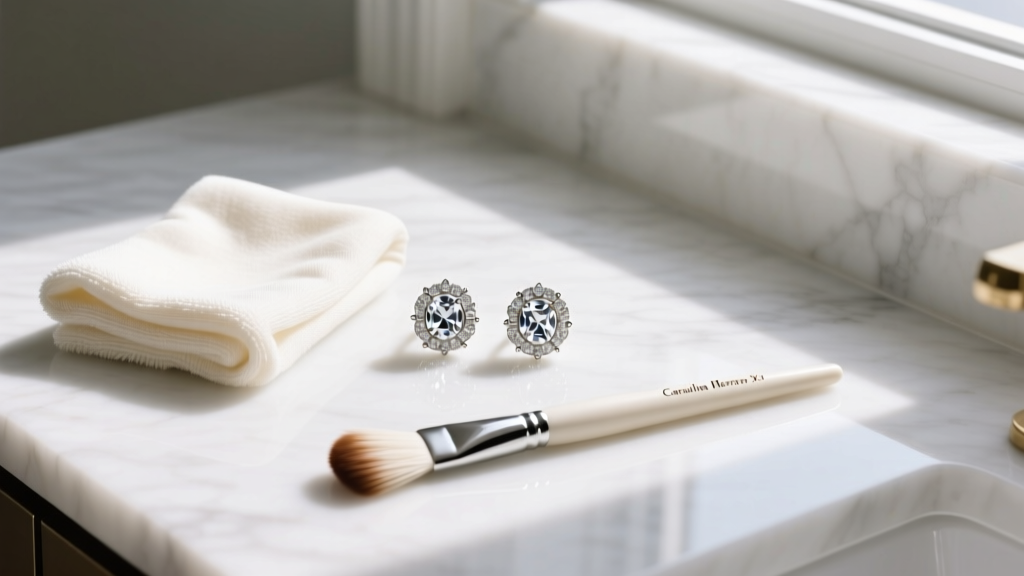
Instead, follow this expert-approved care routine:
- Dry Wiping: After every wear, gently wipe the earrings with a clean, dry microfiber cloth to remove skin oils, sweat, and cosmetic residue. Skin acidity is the primary catalyst for plating degradation.
- Soft Dusting: Use a clean, dry makeup brush or a soft-bristled baby toothbrush to gently dislodge dust and powder from the crystal pavé settings and enamel crevices.
- Chemical Avoidance: Always apply perfume, hairspray, and lotions at least 10 minutes before putting on your earrings. The solvents in these products will cloud optical glass and degrade epoxy resin.
- Proper Storage: Store the earrings in their original flannel pouches or a dedicated jewelry box lined with anti-tarnish fabric. For added protection, place a 3M anti-tarnish strip or a small packet of silica gel inside the storage compartment to control ambient humidity and prevent the base metal from oxidizing beneath the plating.
Final Verdict: Investment vs. Occasion Wear
Carolina Herrera earrings represent a masterclass in luxury fashion jewelry design. They are not intended to be passed down as heirlooms in the same way solid 18k gold and diamond pieces are. Instead, they are engineered to provide high-impact, runway-ready aesthetics with a sophisticated weight and finish that elevates them far above standard costume jewelry. By understanding the material properties of brass, electroplated finishes, and precision-cut crystals, you can confidently integrate these iconic pieces into your wardrobe and maintain their brilliance for years to come.


