Teardrop Pearl Earrings: 2026 Trend Analysis & Style Guide
Discover the 2026 trends for teardrop pearl earrings. Expert styling tips, pearl grading, and hardware insights to elevate your jewelry collection.


The jewelry landscape in 2026 marks a definitive shift away from minimalist, perfectly round studs toward dynamic, light-catching silhouettes. Teardrop pearl earrings have emerged as the undisputed focal point of contemporary ear styling, bridging the gap between vintage elegance and modern editorial edge. Unlike their symmetrical counterparts, teardrops offer a sense of movement and organic fluidity that complements the current demand for 'lived-in' luxury. Whether you are exploring baroque freshwater options or investing in high-luster South Sea drops, understanding the nuances of this specific silhouette is critical for both collectors and everyday wearers.
The Resurgence of the Teardrop Silhouette
The teardrop shape—wider at the base and tapering to a delicate point at the top—creates a natural pendulum effect. In 2026, the trend heavily favors the 'imperfect' baroque teardrop over the meticulously symmetrical drop. Designers are intentionally pairing mismatched baroque pearls to celebrate organic asymmetry, a movement heavily documented by gemological institutes tracking consumer preferences toward unique, one-of-a-kind gemstones. According to the Gemological Institute of America (GIA), the unique structural formation of baroque pearls allows for a more complex play of light, known as 'orient,' which is maximized when the pearl is cut or naturally formed into a teardrop.
Furthermore, the teardrop silhouette is inherently elongating. When suspended from a simple 18k gold wire or a minimalist bezel cap, the downward visual pull draws the eye along the jawline and neck, making it a highly strategic choice for evening wear and professional styling alike.
Decoding Pearl Grades: Luster, Nacre, and Orient
When evaluating teardrop pearl earrings, the grading parameters differ slightly from standard round pearls. Because teardrops are often evaluated on their overall silhouette and unique surface characteristics, traditional 'roundness' metrics are discarded. Instead, focus on these three critical factors:
- Luster: The most vital indicator of quality. High-grade teardrops should exhibit a sharp, mirror-like reflection. If the light reflecting off the pearl appears blurry or chalky, the nacre quality is substandard.
- Nacre Thickness: For saltwater teardrops, a minimum nacre thickness of 0.8mm is required for long-term durability. Thin nacre will eventually peel, especially at the tapered top of the teardrop where structural stress is highest.
- Surface Blemishes: In baroque teardrops, surface ridges and 'growth rings' are often celebrated as character marks. However, avoid pearls with deep cracks or chalky dead spots, which compromise the gem's structural integrity.
For a deeper dive into how surface characteristics impact valuation, resources like Pearl Paradise's Education Guide offer excellent visual benchmarks for identifying acceptable blemishes versus structural flaws.
Hardware Engineering: Preventing Structural Failures
The most common point of failure in teardrop pearl earrings is not the pearl itself, but the hardware. Teardrops are inherently bottom-heavy. This uneven weight distribution places immense leverage on the earring post and the setting mechanism. If the hardware is not engineered to handle this specific center of gravity, the earring will droop, bend, or eventually break.
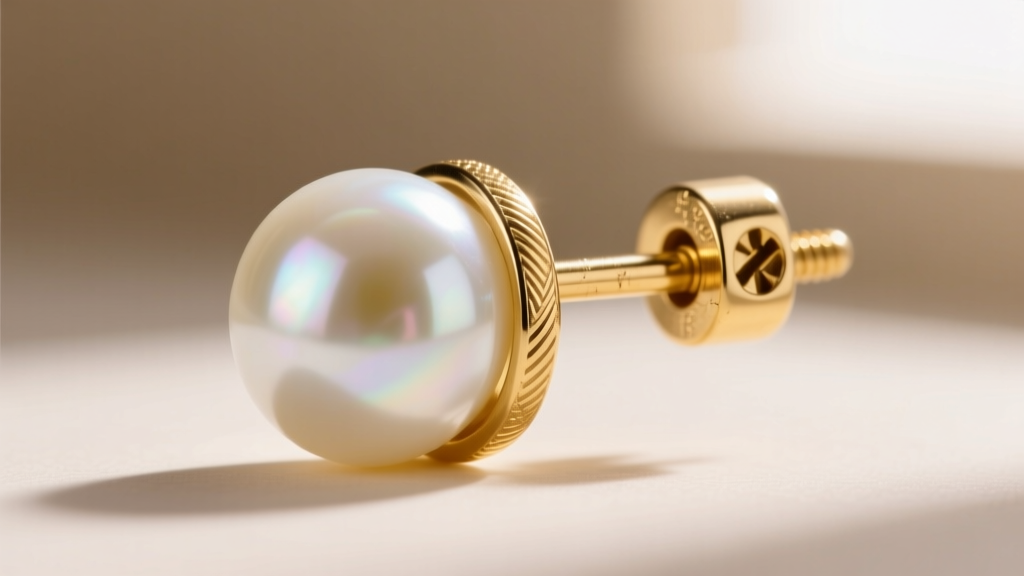
Peg vs. Bell Cap Settings
Most teardrop pearls are top-drilled and mounted using one of two methods:
- The Peg Setting: A small metal peg is coated with jeweler's epoxy (such as G-S Hypo Cement) and inserted into a half-drilled hole at the narrow top of the teardrop. While this offers the cleanest, most seamless aesthetic, it is highly susceptible to failure if exposed to heat, moisture, or skin oils, which degrade the adhesive over time.
- The Bell Cap Setting: A metal cap with prongs is glued to the top of the pearl, and the earring post is attached to the cap. This distributes the weight more evenly across the pearl's apex, reducing the risk of the pearl snapping off the post.
Crucially, you must check the post gauge. Standard lightweight earrings use a 20-gauge (0.81mm) post. For teardrop pearls weighing over 3 grams, insist on an 18-gauge (1.02mm) or even 16-gauge post to prevent the metal from bending under the pendulum weight. Always pair heavy teardrops with secure screw-back clutches or oversized silicone friction backs to prevent the earring from slipping out of the lobe.
Comparative Breakdown: Cultured Freshwater vs. South Sea Drops
The market for teardrop pearl earrings is largely dominated by two distinct categories, each offering vastly different price points, sizing, and visual characteristics.
| Feature | High-End Freshwater Baroque | White South Sea Symmetrical |
|---|---|---|
| Average Size | 9mm - 13mm | 11mm - 16mm |
| Luster Profile | Soft, satiny, high orient | Sharp, mirror-like, intense |
| Price Range (Per Pair) | $150 - $450 | $1,800 - $6,500+ |
| Durability | Excellent (Solid nacre) | Very Good (Thick nacre over bead) |
| Best For | Everyday editorial, asymmetrical styling | Black-tie events, heirloom investments |
Freshwater teardrops are nucleated with tissue rather than a solid bead, meaning they are essentially 100% solid nacre. This makes them incredibly durable against chipping, though they rarely achieve the razor-sharp luster of a premium South Sea pearl.
Face Shape Mapping & Styling Frameworks
Because teardrop earrings elongate the vertical axis of the face, they interact differently with various jawlines and facial structures. Applying a deliberate styling framework ensures the earrings enhance rather than overwhelm your natural features.

- Square & Strong Jawlines: Opt for long, narrow teardrops (12mm+ in length). The vertical drop softens angular features and draws the eye downward, creating a balancing effect. Avoid wide, chubby teardrops, which can widen the lower face.
- Round Faces: Angular or slightly asymmetrical baroque teardrops are ideal. The irregular edges introduce structure and definition, while the elongated shape provides a necessary vertical illusion.
- Heart-Shaped Faces: Choose teardrops that are wider at the base. The volume at the bottom of the earring perfectly compensates for a narrower chin, creating visual harmony.
- Oval Faces: The universal canvas. Oval face shapes can carry everything from delicate, petite 7mm teardrop studs to dramatic, shoulder-grazing chandelier drops featuring multiple cascading teardrops.
Care and Maintenance for Longevity
Pearls rank a mere 2.5 to 3.0 on the Mohs scale of mineral hardness, making them exceptionally vulnerable to scratching, chemical etching, and dehydration. Teardrop pearls, particularly those with a delicate tapered point, require meticulous care to prevent the tip from chipping against hard surfaces.
Expert Rule of Thumb: Always put your teardrop pearl earrings on after applying perfume, hairspray, and cosmetics. The alcohol and acids in these products will rapidly degrade the pearl's nacre, stripping away the luster and leaving a dull, chalky finish that cannot be reversed.
After wearing, gently wipe the pearls with a damp, lint-free microfiber cloth to remove skin oils and environmental pollutants. Store them flat in a soft silk pouch. Never hang teardrop pearl earrings on a jewelry tree; the constant pressure on the top-drilled hole and the adhesive joint will eventually cause the pearl to detach from the hardware. By respecting the organic nature of the gem and the physics of its setting, your teardrop earrings will remain a cornerstone of your collection for decades.


