How to Clean Squash Blossom Earrings Without Damaging Turquoise
Learn how to safely clean and maintain squash blossom earrings. Expert tips for polishing silver and protecting porous turquoise stones.


Squash blossom earrings are more than just striking accessories; they are wearable art deeply rooted in Native American jewelry traditions, particularly those of the Navajo (Diné) people. Characterized by their intricate sterling silverwork and vibrant turquoise cabochons, these dangles and drops require a highly specialized approach to maintenance. The juxtaposition of two vastly different materials—reactive silver and porous turquoise—creates a unique cleaning challenge. What benefits the metal can easily destroy the stone.
The Anatomy and Chemistry of Squash Blossom Earrings
To properly care for squash blossom earrings, you must first understand the materials involved. Traditional pieces are crafted from sterling silver (92.5% silver, 7.5% copper). The copper content is what makes sterling silver prone to tarnishing, a chemical reaction where hydrogen sulfide in the air creates a layer of black silver sulfide (Ag2S) on the surface.
The turquoise used in these earrings typically ranges from 5 to 6 on the Mohs hardness scale, making it relatively soft and highly porous. According to the Gemological Institute of America (GIA), turquoise can easily absorb oils, lotions, and harsh chemicals, which can alter its color or degrade its structural matrix over time. Furthermore, the intricate silver crevices, often featuring stamped repoussé or twisted wirework, trap dead skin cells, cosmetic dust, and environmental pollutants.
Hazardous Cleaning Methods to Avoid
Before discussing what to do, it is critical to outline what you must never do. Many commercial jewelry cleaning methods will permanently ruin the turquoise or strip the desirable antique patina from the silver.
| Cleaning Method | Why It Damages Squash Blossom Earrings |
|---|---|
| Ultrasonic Cleaners | High-frequency vibrations can easily fracture turquoise, especially stones with natural matrix webbing or internal inclusions. |
| Commercial Silver Dips | Acidic thiourea-based dips strip all oxidation (including intentional antiquing in the stampwork) and leave chemical residues that turn turquoise green or black. |
| Baking Soda & Aluminum Foil | While great for plain silver, the alkaline solution and heat can seep into the bezel settings, degrading the adhesive or causing the porous stone to craze. |
| Toothpaste or Abrasives | Scratches both the silver and the turquoise. Turquoise takes a high polish at the lapidary wheel; abrasives will leave it permanently dull and pitted. |
| Steam Cleaners | Sudden thermal shock can cause the turquoise to crack or separate from the epoxy backing in stabilized stones. |
Step-by-Step Cleaning Routine
For routine maintenance and deep cleaning, rely on mechanical action and gentle, pH-neutral solutions. You will need a soft-bristled makeup brush, a lint-free microfiber cloth, a specialized silver polishing cloth (such as a Sunshine cloth impregnated with jeweler's rouge), and a bamboo skewer.
Phase 1: Dry Dusting and Debris Removal
Begin by taking the soft-bristled makeup brush and gently sweeping the intricate silver stampwork and the edges of the bezel settings. This removes loose particulate matter without scratching the metal. If dirt is impacted in tight crevices, use the tip of a bamboo skewer to gently dislodge it. Avoid metal tools like needles or safety pins, which will gouge the sterling silver.
Phase 2: Polishing the Silver Components
Using your treated silver polishing cloth, gently rub the exposed sterling silver surfaces. The micro-abrasives and anti-tarnish agents in the cloth will lift the silver sulfide layer and restore the shine.
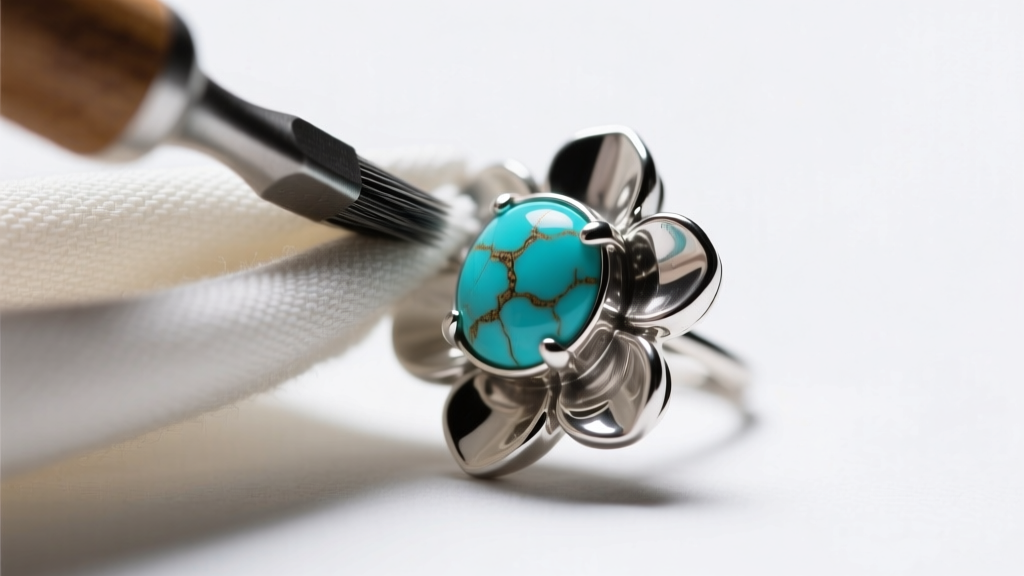
Critical Rule: Do not let the polishing cloth drag heavily across the turquoise. The jeweler's rouge embedded in the cloth can stain the porous stone or leave a waxy film that is nearly impossible to remove from the matrix webbing. Use a folded corner of the cloth to get close to the bezel edge, but stop exactly where the silver meets the stone.
Phase 3: Wiping the Turquoise Safely
To clean the turquoise, use a separate, clean microfiber cloth slightly dampened with distilled water. Wipe the surface of the stone gently to remove skin oils and environmental dust. Immediately follow up with a dry portion of the cloth to ensure no moisture remains on the stone or seeps under the bezel. The National Park Service conservation guidelines emphasize that moisture trapped in jewelry settings is a primary catalyst for accelerated localized tarnishing and material degradation.
Stabilized vs. Natural Turquoise: Adjusting Your Approach
It is vital to know whether your squash blossom earrings feature natural or stabilized turquoise. Natural turquoise is untreated and highly vulnerable to oils and acids. Stabilized turquoise has been infused with a clear epoxy resin under pressure to harden the stone and enhance its color.
While stabilized turquoise is less porous and more resistant to color changes from skin oils, it is highly sensitive to harsh solvents. Acetone, alcohol, and ammonia can dissolve or cloud the resin, leaving the stone looking cloudy or chalky. Regardless of the treatment, the dry-cloth and damp-distilled-water method outlined above remains the safest protocol for both varieties.
Proper Storage Protocols
How you store your squash blossom earrings between wears is just as important as how you clean them. Improper storage leads to severe tarnish and potential stone dehydration.

- Avoid Airtight Plastic Bags: Standard polyethylene ziplock bags can trap ambient humidity, creating a microclimate that accelerates silver tarnish and promotes moisture damage to the stone.
- Use Anti-Tarnish Textiles: Store your earrings in Pacific Silvercloth pouches or treated flannel bags. These fabrics are embedded with fine silver particles or zinc compounds that intercept and neutralize hydrogen sulfide gas before it reaches your earrings.
- Include 3M Anti-Tarnish Strips: If you must use a jewelry box or a plastic container, place a 3M anti-tarnish strip inside. These strips absorb sulfides and can protect the silver for up to six months before needing replacement.
- Protect from UV and Heat: Prolonged exposure to direct sunlight or extreme heat (like a dashboard or a windowsill) can cause certain treated turquoise to fade or the epoxy to yellow and craze.
Structural Maintenance: Ear Wires and Bezels
Squash blossom earrings are often heavy due to the density of the turquoise and the volume of silver used in the drop components. This weight places continuous stress on the ear wires, which are typically crafted from 20-gauge or 22-gauge sterling silver.
Every few months, inspect the loop where the ear wire connects to the earring body. Look for micro-fractures or thinning of the metal caused by friction. Additionally, check the bezel settings. Sterling silver is a relatively soft metal; a minor bump against a hard surface can bend the bezel wall away from the turquoise, leaving the stone loose. If you notice the stone rattling or the bezel lifting, stop wearing the earrings immediately and take them to a professional jeweler who specializes in Native American or lapidary jewelry. They can carefully burnish the silver back into place without applying the heat or pressure that would damage the stone.
By adhering to these specialized care protocols, you ensure that the striking contrast between the brilliant silver and the deep, earthy tones of the turquoise remains pristine, preserving both the aesthetic beauty and the cultural heritage of your squash blossom earrings for decades to come.


