Real Seashell Earrings: A Technical Guide to Nacre & Hardware
Discover the material science behind real seashell earrings. Learn about nacre hardness, ideal gauge sizes, sealing techniques, and hardware pairing.

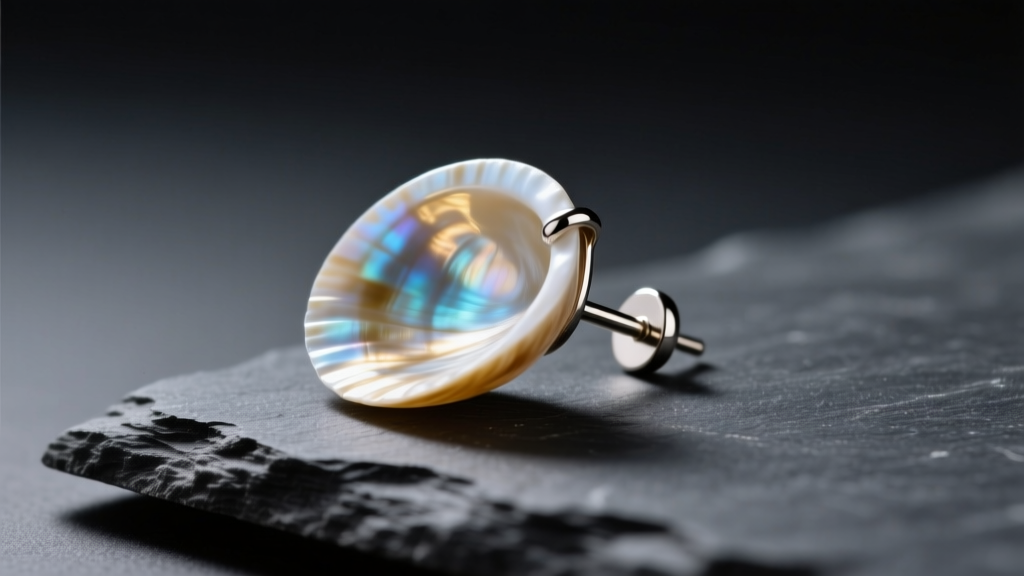
When curating a collection of organic jewelry, real seashell earrings present a unique intersection of natural beauty and extreme material fragility. Unlike faceted gemstones or forged metals, seashells are biological composites. For jewelers and informed collectors, understanding the lapidary science, structural limitations, and hardware requirements of natural nacre is essential for creating and maintaining pieces that survive daily wear.
The Material Science of Natural Nacre and Calcium Carbonate
To understand the durability of real seashell earrings, one must examine their microstructure. Shells are primarily composed of calcium carbonate (CaCO3) in the form of aragonite or calcite, bound together by an organic protein matrix called conchiolin. According to the Gemological Institute of America (GIA), this 'brick-and-mortar' microstructure—where microscopic aragonite platelets act as bricks and conchiolin acts as mortar—gives nacre its surprising toughness despite a relatively low Mohs hardness of 2.5 to 3.0.
This low hardness means that real seashell earrings are highly susceptible to scratching from everyday dust (which contains quartz, Mohs 7.0). Furthermore, the organic conchiolin layers are vulnerable to desiccation and chemical degradation. When designing or purchasing shell earrings, the orientation of the cut relative to the shell's natural growth lines dictates the piece's tensile strength. Cuts made parallel to the growth rings are significantly more prone to delamination and cleavage than those cut across the grain.
Lapidary Techniques: Drilling, Cutting, and Sealing
Transforming a raw shell into a polished earring component requires specialized lapidary techniques. Standard high-speed steel (HSS) twist drill bits will shatter a shell upon exit due to aggressive fluting and heat generation. Professional lapidaries use diamond-plated core drills operating at low RPMs (typically 500 to 1,500 RPM) with continuous water cooling.
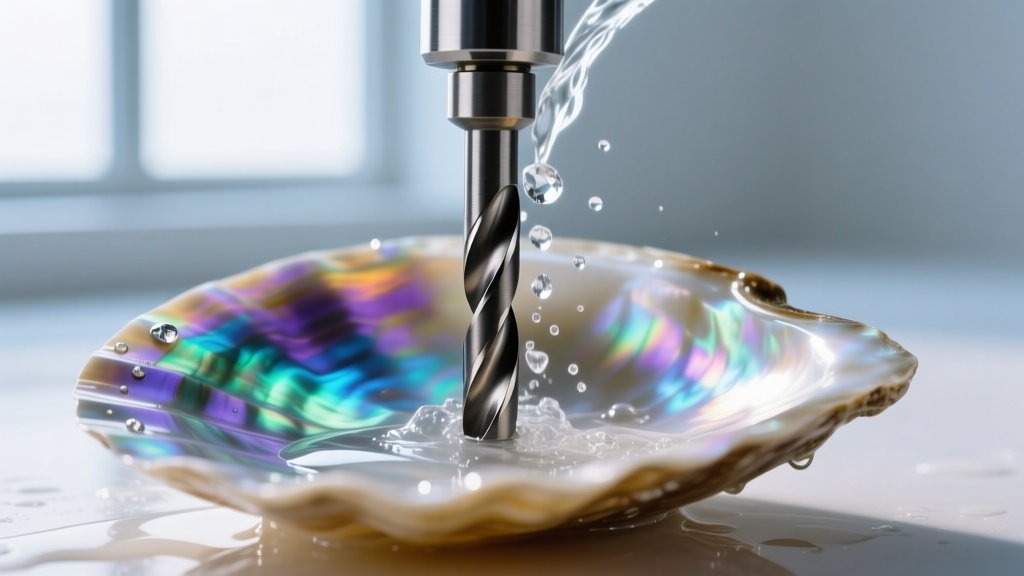
Water cooling is non-negotiable. The friction of drilling calcium carbonate generates localized heat that can cause thermal shock, resulting in micro-fractures that compromise the earring's structural integrity. To prevent 'blowout' (chipping on the back of the hole), the shell must be backed with a sacrificial piece of hardwood or acrylic.
Stabilization and Sealing Protocols
Because natural shells often harbor microscopic fissures, stabilization is frequently required before setting. Thin cyanoacrylate (CA) glue is drawn into the micro-cracks via capillary action, hardening to reinforce the nacre without altering its optical properties. For highly porous shells like sponge coral or lower-grade puka, a vacuum chamber is used to force a low-viscosity epoxy resin deep into the material. However, purists and high-end artisans prefer Paraloid B-72, a reversible conservation-grade acrylic resin that stabilizes the shell without permanently altering its chemical composition.
Hardware Specifications: Gauge Sizes and Metal Pairings
The hardware used in real seashell earrings must account for the material's low shear strength. Heavy dangle mechanisms or thick gauge wires will act as levers, cracking the shell under minor lateral stress.
| Hardware Component | Recommended Specification | Technical Rationale | Avg. Price Premium |
|---|---|---|---|
| Post Gauge | 20g (0.81mm) or 18g (1.02mm) | Minimizes hole diameter, preserving the structural web of the shell. | Base |
| Post Material | Implant-grade Titanium (ASTM F136) | Prevents galvanic corrosion and green oxidation that stains porous nacre. | +15% |
| Setting Style | Bezel or Flush | Distributes pressure evenly; prong settings create localized stress points that crack nacre. | +30% |
| Clutch/Backing | Silicone or Flat Disc | Butterfly clutches concentrate force on a tiny point, risking punch-through. | +5% |
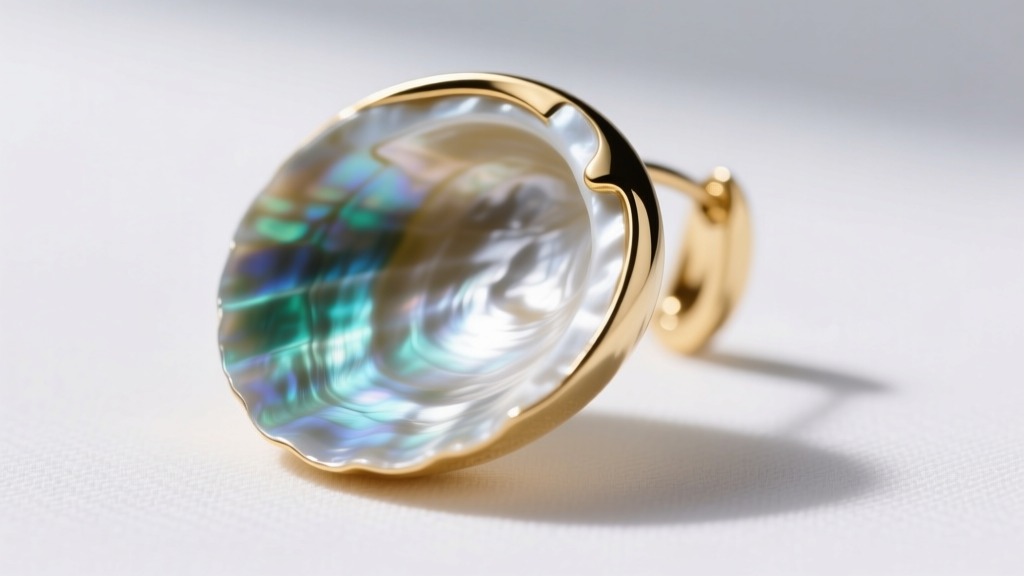
As noted by materials scientists at Mindat.org, calcium carbonate reacts readily with acidic compounds. Therefore, base metals like brass or copper, which oxidize and create acidic patinas, must be strictly avoided. 14k or 18k gold, platinum, and implant-grade titanium are the only metals chemically inert enough to ensure long-term contact with natural shell without causing localized degradation.
Identifying Genuine Shells vs. Resin and Bone Imitations
The market is flooded with imitation shell earrings crafted from dyed resin, reconstituted shell powder, or carved bone. Identifying genuine, solid-cut real seashell earrings requires specific diagnostic tests:
- Thermal Conductivity: Natural nacre is a poor thermal conductor but possesses a high specific heat capacity. When pressed to the cheek or lip, genuine shell feels distinctly cool and takes several seconds to warm up, whereas resin warms almost instantly.
- UV Fluorescence: Under a 365nm ultraviolet flashlight, the organic conchiolin proteins in natural shells typically exhibit a mild to strong blue or yellowish-white fluorescence. Synthetic resins often glow a harsh, uniform neon green or remain completely inert.
- Acoustic Tap Test: Gently tapping a genuine shell earring against a glass surface produces a sharp, high-pitched 'clink.' Resin produces a dull 'thud,' while bone yields a softer, hollow sound.
- Magnification: Under a 10x jeweler's loupe, real seashell earrings reveal subtle growth bands, chatoyancy, and natural undulations. Molded resin will show seam lines or perfectly uniform, artificial grain patterns.
- Hot Pin Test (Destructive): Heating a needle to red-hot and touching an inconspicuous area will leave genuine shell unaffected or emitting a faint smell of burning hair (due to proteins), while resin will melt, stick to the pin, and release a harsh chemical odor.
Long-Term Maintenance and Chemical Vulnerabilities
The most common failure mode for real seashell earrings is chemical etching. Calcium carbonate dissolves rapidly in acidic environments. Exposure to human sweat (pH 4.5 to 7.0), citrus juices, vinegar, or chlorine will etch the polished surface, leaving a dull, chalky finish that cannot be reversed without professional lapidary re-polishing.
Ultrasonic jewelry cleaners are strictly prohibited for shell earrings. The high-frequency cavitation bubbles generated by ultrasonic waves will aggressively impact the nacre layers, causing rapid delamination and shattering of the conchiolin matrix. The only safe cleaning protocol involves wiping the earrings with a damp, lint-free microfiber cloth moistened with distilled water, followed by immediate drying. Once a month, a microscopic application of pure jojoba oil can be rubbed into the shell to prevent the organic proteins from desiccating and cracking.
Furthermore, storage conditions dictate the lifespan of the organic matrix. Real seashell earrings must be stored in a climate-controlled environment away from direct UV sunlight, which breaks down conchiolin over time, causing the shell to yellow and become brittle. They must be kept in individual soft pouches; tossing them into a jewelry box alongside diamond or sapphire pieces guarantees severe scratching due to the vast disparity in Mohs hardness.
Sourcing and Ethical Considerations
When sourcing real seashell earrings, ethical and legal compliance is paramount. Certain highly prized shells are protected under international law. For example, the Queen Conch (Strombus gigas) and all species of Nautilus are listed under the CITES appendices, making their international trade strictly regulated or entirely banned to prevent overharvesting.
Responsible jewelers source Mother of Pearl (Pinctada maxima) as a byproduct of the cultured pearl and food industries, ensuring no waste. Paua (New Zealand abalone) is strictly quota-managed by the New Zealand government, making it one of the most sustainable and traceable options for vibrant, iridescent shell jewelry. Always request CITES documentation or proof of sustainable, byproduct sourcing from your supplier before purchasing high-value shell earrings.


