The True Earrings Cost Breakdown: Materials, Labor, and Value in 2026
Discover the true earrings cost breakdown for 2026. We analyze material grades, labor, and markup to help you evaluate fine jewelry investments.

The Anatomy of Fine Earrings Pricing
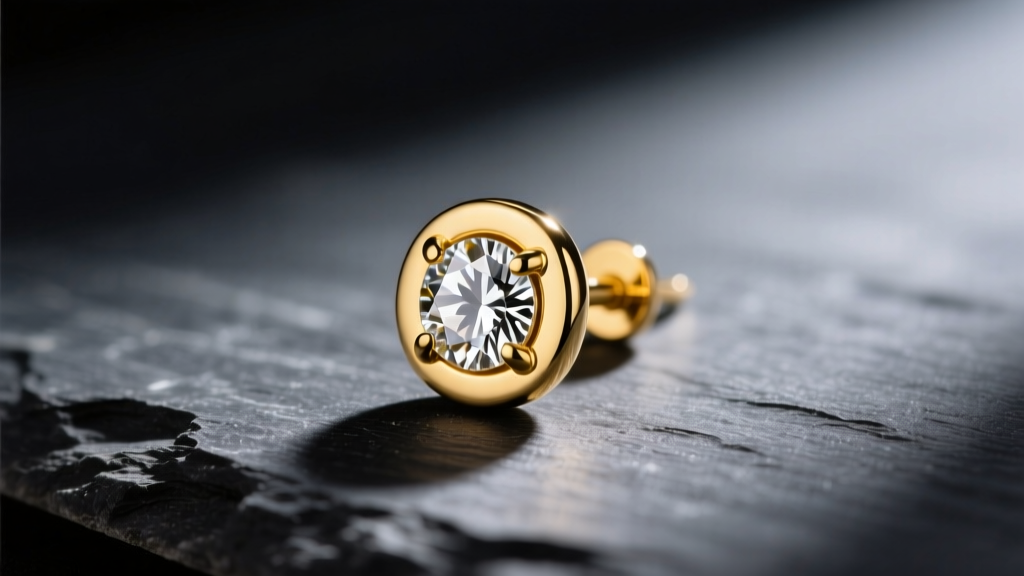
When consumers type 'earrings cos' or 'earrings cost' into search engines, they are often met with opaque pricing structures that make evaluating fine jewelry nearly impossible. In 2026, the earrings market is more complex than ever. Fluctuating precious metal spot prices, the saturation of lab-grown diamonds, and shifting retail markups mean that a pair of 1-carat total weight (CTW) diamond studs can range anywhere from $800 to $8,000. To make informed purchasing decisions, you must look past the brand name and understand the metallurgical, gemological, and labor-driven factors that dictate the true cost of fine earrings.
This expert deep dive dissects the exact manufacturing and material costs behind high-end earrings, providing you with a technical framework to evaluate value, spot structural flaws, and avoid inflated retail markups.
Raw Material Costs: Gold, Platinum, and Gemstones
The foundation of any fine earring is its metal alloy and gemstone composition. In 2026, the spot price of gold hovers around $2,150 per troy ounce, while platinum sits near $1,050. However, jewelry is rarely made from pure 24k gold due to its softness; instead, it is alloyed for durability and color.
Metallurgical Breakdown: 14k vs. 18k Gold and Pt950
- 18k Yellow Gold (75% Au): The industry standard for luxury earrings. It offers a rich, warm hue and high tarnish resistance. For a standard pair of 4-gram stud earrings, the raw gold value is approximately $220, before refining and alloying costs.
- 14k White Gold (58.3% Au): Often alloyed with nickel or palladium. Nickel-based 14k white gold is cheaper to produce but is a leading cause of contact dermatitis in cartilage piercings. Palladium-white gold costs roughly 15% more to cast but is hypoallergenic.
- Platinum 950 (Pt950): Composed of 95% platinum and 5% ruthenium or iridium. Platinum is denser than gold, meaning a pair of Pt950 huggie hoops will weigh significantly more than their gold counterparts, driving up the raw material cost by 40-60% despite the lower per-ounce spot price. According to Kitco, platinum's density requires more raw material per cubic millimeter of jewelry.
The Gemstone Equation: Natural vs. Lab-Grown
The gemstone market has undergone a seismic shift. According to the Gemological Institute of America (GIA), lab-grown diamonds produced via Chemical Vapor Deposition (CVD) are chemically identical to mined diamonds but cost 70-85% less. For melee diamonds (1.0mm - 1.5mm stones used in pave settings), the cost difference is staggering. A parcel of 100 natural VS1 melee diamonds might cost a manufacturer $450, while an equivalent parcel of CVD lab-grown melee costs under $60. This drastically alters the baseline cost of diamond-encrusted ear cuffs and drop earrings.
| Material Tier | Metal Cost (4g) | Stone Cost (Natural) | Stone Cost (Lab-Grown) | Total Raw Cost |
|---|---|---|---|---|
| 14k Gold / Natural | $135 | $1,800 | N/A | $1,935 |
| 18k Gold / Lab-Grown | $220 | N/A | $250 | $470 |
| Pt950 / Natural | $190 | $1,800 | N/A | $1,990 |
Labor and Manufacturing: Cast vs. Hand-Fabricated
Raw materials only tell half the story. The manufacturing method dictates the structural integrity, finish quality, and ultimately, the labor cost of the earrings.
Lost-Wax Casting and the Porosity Problem
Over 80% of commercial earrings are produced via lost-wax casting. A CAD model is 3D printed in wax, encased in investment plaster, and burned out in a kiln before molten metal is injected. While cost-effective, cheap casting often results in porosity—microscopic gas pockets trapped inside the metal. Porosity weakens earring posts, making them prone to bending or snapping under the torque of a tight friction back. High-end manufacturers mitigate this by using HIP (Hot Isostatic Pressing) or vacuum-assisted casting, which adds $25-$40 per unit to the manufacturing cost but ensures high-density, flawless metal.
Die-Striking and Hand-Fabrication
For maximum durability, particularly in lightweight hoop earrings and secure post mechanisms, die-striking is superior. Metal is subjected to immense hydraulic pressure, aligning the grain structure and work-hardening the alloy. A die-struck 18k gold earring post will resist bending far better than a cast one. Hand-fabrication, where a bench jeweler saws, solders, and files the metal from scratch, is reserved for bespoke pieces. Master jewelers charge between $100 and $180 per hour, meaning a hand-fabricated pair of articulated drop earrings can easily incur $600+ in labor costs alone before stone setting.
The Hidden Costs of Stone Setting and Finishing
Setting gemstones is a highly specialized discipline. The cost varies wildly based on the technique and the setter's expertise.
- Prong Setting: Standard for solitaire studs. A four-prong or six-prong basket requires precise notching and pushing. Cost: $15-$30 per stone.
- Bezel Setting: Requires the jeweler to push a continuous rim of metal over the girdle of the stone. It offers superior protection for active lifestyles but requires more labor. Cost: $35-$50 per stone.
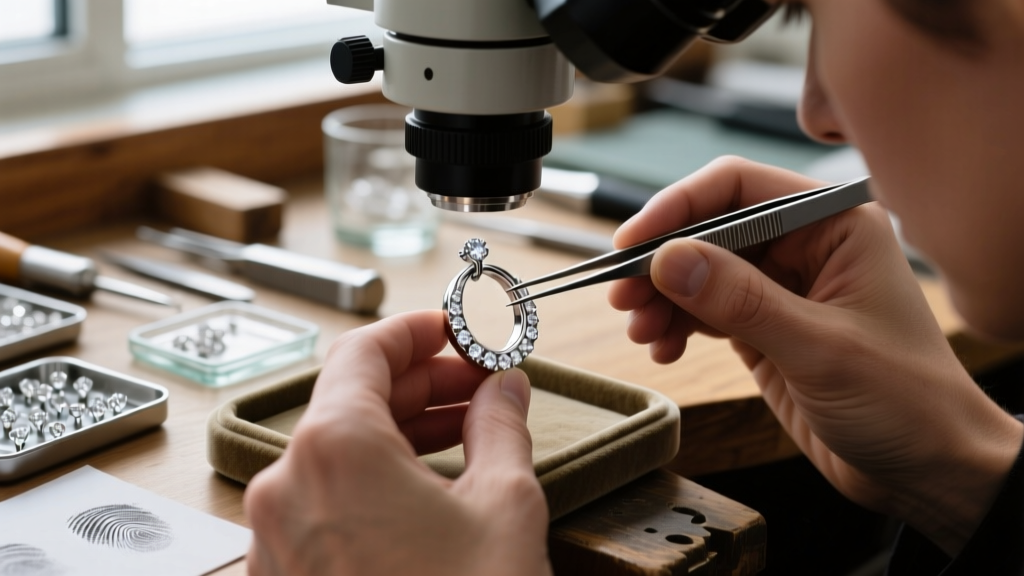
- Micro-Pave: Used in diamond huggies and ear cuffs. The setter must carve tiny beads from the solid metal to hold sub-2mm stones. A single huggie hoop might contain 40 stones, requiring 3-4 hours of microscope work. Cost: $150-$250 per hoop.
Post-setting finishing, including rhodium plating for white gold and high-polish tumbling, adds another $10-$20 per pair. According to industry analyses by JCK Online, the shortage of skilled master setters in North America has pushed labor rates up by 22% since 2023, a cost that is directly passed to the consumer.
Retail Markup vs. Direct-to-Consumer Margins
Understanding the earrings cost breakdown is useless if you do not account for retail markup. The traditional jewelry retail model relies on a 300% to 500% markup (often called 'keystone pricing' or higher) to cover brick-and-mortar overhead, insurance, and inventory holding costs. A pair of earrings with a true manufacturing cost of $400 will typically retail for $1,600 to $2,400 in a traditional mall jeweler.
Conversely, Direct-to-Consumer (DTC) fine jewelry brands operate on a 100% to 150% markup. By eliminating wholesale middlemen and physical storefronts, a DTC brand can offer that same $400 pair for $800 to $1,000. When evaluating a purchase, always ask for the metal weight, alloy composition, and stone origin to calculate the baseline manufacturing cost and determine if the retail markup is justified by the brand's design intellectual property and after-sales warranty.
How to Evaluate the True Value of Your Earrings
To ensure you are paying for quality rather than just a brand name, use this technical checklist before purchasing fine earrings:
- Check the Post Thickness: Standard lobe posts are 20-gauge (0.81mm) or 18-gauge (1.02mm). Anything thinner than 20-gauge is prone to bending and indicates cost-cutting.
- Inspect the Friction Backs: High-quality earrings use 'La Pousette' or screw-back mechanisms. Standard friction backs (butterfly backs) should have deep, precise grooves on the post to prevent loss.
- Demand Alloy Transparency: If buying white gold, ask if it is alloyed with palladium (hypoallergenic) or nickel (potential irritant).
- Evaluate the Pave Work: Use a 10x loupe. The metal beads holding the stones should be perfectly round and symmetrical. Rough or flattened beads indicate rushed, low-cost labor.
True luxury in fine jewelry is not defined by the logo on the box, but by the microscopic precision of the stone setting, the density of the alloy, and the structural integrity of the post mechanism.
Conclusion
The true cost of fine earrings in 2026 is a complex equation of precious metal spot prices, advanced gemological origins, and specialized bench labor. By understanding the technical differences between cast and die-struck metals, the economic impact of lab-grown melee diamonds, and the realities of retail markups, you can confidently navigate the market. Whether you are investing in platinum ear cuffs or 18k gold diamond studs, prioritizing material transparency and structural craftsmanship will always yield the highest long-term value.


