Mastering Beaded Earrings Hoops: Wire Gauges, Tension & Design
An expert technical guide to beaded earrings hoops, covering wire gauge selection, tension mechanics, material grades, and structural failure prevention.

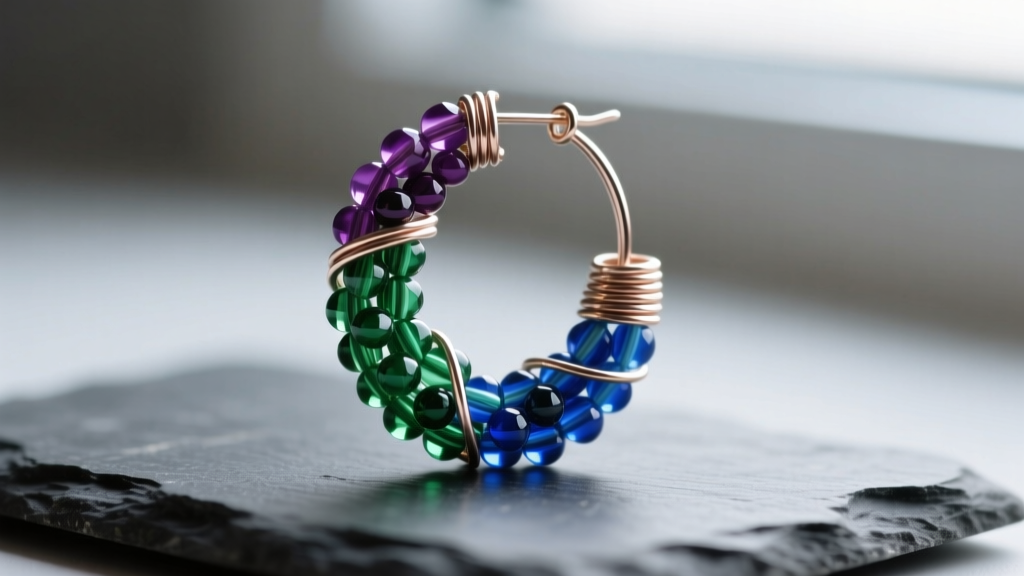
The Engineering Behind Beaded Earrings Hoops
While often dismissed as simple accessories, high-quality beaded earrings hoops are exercises in micro-engineering. The intersection of tensile strength, metallurgical memory, and bead friction dictates whether a hoop will retain its perfect geometry or warp under the microscopic stress of daily wear. As of 2026, the jewelry industry has seen a massive shift toward advanced hypoallergenic alloys and precision-drawn wires, raising the baseline for what constitutes a master-crafted beaded hoop. This deep dive explores the structural mechanics, material grades, and failure modes that separate heirloom-quality beaded hoops from mass-produced fast fashion.
The Physics of Wire Memory and Gauge Selection
The foundation of any beaded hoop is its armature wire. The two critical variables here are wire gauge (thickness) and wire hardness (temper). Selecting the wrong combination guarantees structural failure. Wire temper is categorized into dead-soft, half-hard, and full-hard. Dead-soft wire is highly malleable but lacks the memory to hold a circular shape under the added weight of glass or stone beads. Full-hard wire holds shape exceptionally well but is brittle; the act of threading beads and manipulating the closure can cause micro-fractures, leading to sudden snapping.
For beaded earrings hoops, half-hard wire is the industry standard. It offers the perfect equilibrium of malleability for threading and tension for shape retention. Below is a technical matrix for selecting the correct gauge based on hoop diameter and bead density.
| Wire Gauge | Diameter (mm) | Max Bead Weight | Recommended Temper | Primary Use Case |
|---|---|---|---|---|
| 24g (0.51mm) | 8mm - 12mm | < 2 grams | Half-Hard | Micro-hoops, lightweight seed beads |
| 20g (0.81mm) | 15mm - 25mm | 2 - 5 grams | Half-Hard | Standard everyday hoops, glass crystals |
| 18g (1.02mm) | 25mm - 40mm | 5 - 10 grams | Half-Hard / Full-Hard | Statement hoops, heavy semi-precious stones |
| 16g (1.29mm) | 40mm+ | 10+ grams | Full-Hard | Architectural hoops, sparse large bead accents |
According to Rio Grande's metallurgical guides, work hardening occurs naturally as wire is bent and threaded. A jeweler must account for this; a half-hard 20-gauge wire will approach a full-hard state by the time a 25mm hoop is fully wrapped with seed beads, naturally locking the tension into place.
Material Metallurgy & Oxidization Risks
The metal chosen for the hoop armature must withstand the acidic environment of the human earlobe while resisting the abrasive friction of the bead holes. In 2026, traditional sterling silver (.925) is increasingly being replaced by Argentium Silver for premium beaded earrings hoops. Argentium contains germanium, which forms a transparent oxide layer that drastically slows tarnishing—a crucial feature when beads are tightly wrapped and polish cloths cannot reach the wire.
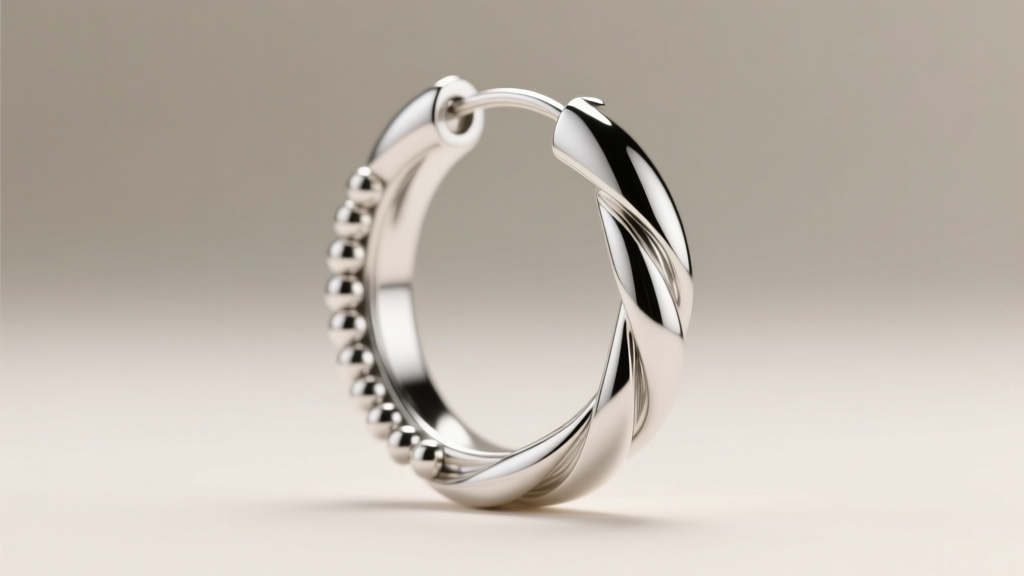
For those with nickel sensitivities, Niobium and Grade 23 Titanium (Ti-6Al-4V ELI) are the premier choices. Niobium is highly reactive to anodization, allowing jewelers to electrically color the wire to match or contrast with the beads without using dyes or platings that could wear off against the bead holes. However, titanium's extreme tensile strength makes it notoriously difficult to manipulate. Threading beads onto a titanium hoop requires specialized carbide-tipped cutters to flush-trim the wire at the clasp, as standard steel jewelry cutters will chip or dent.
Expert Warning: Never mix metal types in a single continuous bead wrap. Combining a brass core wire with sterling silver beads in the presence of sweat creates a galvanic cell, accelerating localized corrosion and ultimately snapping the wire at the anode site.
Threading Mechanics and Bead Friction
The internal geometry of a bead's drill hole is a hidden variable that dictates the lifespan of beaded earrings hoops. Not all beads are created equal, and their friction coefficients vary wildly.
- Czech Glass Seed Beads: Feature smooth, rounded drill holes. They glide over half-hard wire without causing abrasion, making them the safest option for continuous, high-tension wraps.
- Crystal Bicones (e.g., Preciosa, Swarovski): The manufacturing process leaves microscopic, razor-sharp edges at the drill hole entrances. Over time, the natural flexing of the hoop causes these edges to saw through the wire. Solution: Use 49-strand micro-wire (nylon-coated stainless steel) threaded through the bicones, then attach the micro-wire to the main hoop armature via wire guardians.
- Natural Semi-Precious Stones: Often feature irregular, rough drill holes. According to Fire Mountain Gems' bead hardness charts, stones like agate and jasper (Mohs 7) will easily abrade softer metals like pure gold or dead-soft silver. Always use a hardened steel or titanium armature when wrapping dense stone beads.
Proper tensioning is vital. Beads must be threaded with zero lateral slack. If a 2mm bead is placed on a wire with a 0.81mm diameter, the 1.19mm of empty space allows the bead to spin. This spinning acts as a microscopic flywheel, generating kinetic wear against the wire every time the wearer moves their head. Master jewelers use micro-crimps or localized wire kinking to lock beads in place, eliminating rotational friction.
Closure Mechanisms & Structural Failure Modes
The closure is the most vulnerable point of any hoop earring. When beads are added, the overall mass of the earring increases, placing exponential stress on the hinge or latch mechanism during insertion and removal.
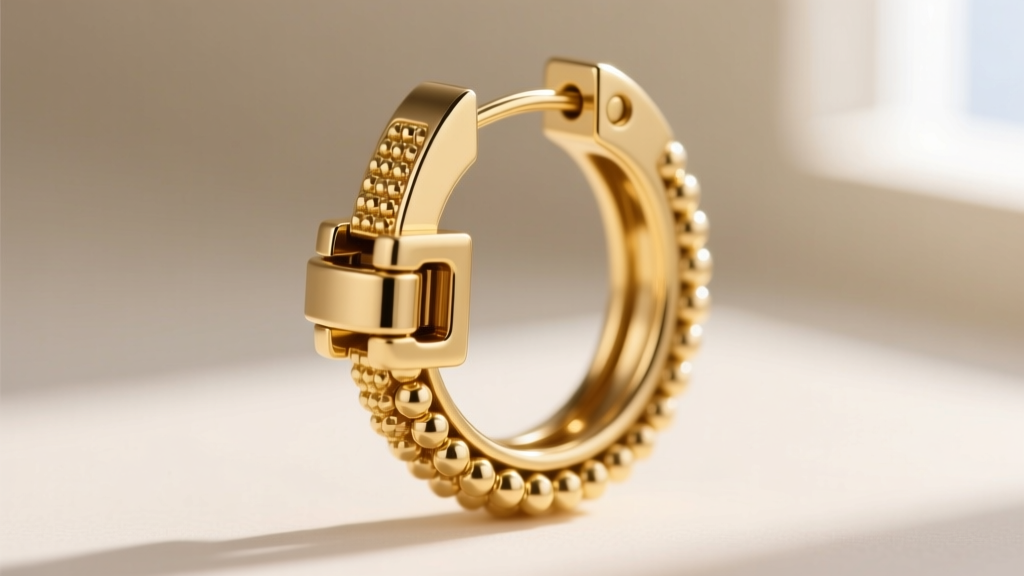
Continuous (Endless) Hoops
Continuous hoops rely on a thin wire post that inserts into a hollow tubing receiver. In beaded designs, this is a structural liability. The added weight of the beads pulls the hoop downward, bending the thin insertion wire. After repeated stress cycles, metal fatigue sets in, and the post snaps off inside the tubing. Technical Fix: Limit continuous closures to hoops under 15mm in diameter, or reinforce the insertion wire by soldering a secondary support strut at the joint.
Latch-Back and Hinged Closures
For medium to large beaded earrings hoops, a hinged latch-back with a locking snap mechanism is mandatory. The hinge distributes the mechanical load across a wider surface area of the wire. However, a common failure mode in 2026 mass-produced hoops is the use of low-grade solder at the hinge joint. When the heavy beaded section swings, the torque snaps the solder joint cleanly. Always inspect the hinge under a 10x loupe; a laser-welded hinge or a mechanically riveted joint will outlast traditional torch soldering by a factor of ten.
Final Considerations for the Advanced Collector
Evaluating beaded earrings hoops requires looking past the aesthetic appeal of the gemstones and focusing on the structural integrity of the armature. By demanding half-hard tempers, appropriate gauge thicknesses, and friction-mitigating threading techniques, you ensure the jewelry survives the rigors of daily wear. For further reading on gemstone durability and drill hole mechanics, the Gemological Institute of America (GIA) provides extensive databases on stone hardness and structural vulnerabilities that directly impact jewelry design.


