What to Disinfect Earrings With: A Beginner's Safe Guide
Learn exactly what to disinfect earrings with based on your metal type. Discover safe cleaning methods for titanium, gold, silver, and delicate gemstones.

Introduction to Ear Jewelry Hygiene
If you have ever experienced an itchy, red, or swollen earlobe after wearing a favorite pair of studs, you already know that ear jewelry hygiene is not just about aesthetics; it is a matter of dermatological health. The ear is a highly sensitive area, and the microscopic environment of a piercing tract can harbor sebum, dead skin cells, and environmental bacteria like Staphylococcus aureus. For cartilage piercings, the risk is even higher, as poor hygiene can lead to perichondritis, a painful infection of the tissue surrounding the cartilage.
However, when beginners ask, 'what to disinfect earrings with,' they are often met with conflicting advice. Some suggest boiling water, others recommend harsh chemicals, and many unknowingly ruin their jewelry in the process. Disinfecting is distinctly different from simply cleaning. While cleaning removes visible debris and oils, disinfecting actively destroys pathogens. To do this safely, you must match the disinfecting agent to the specific metallurgical grade and gemstone composition of your earrings.
The Short Answer: What to Disinfect Earrings With Safely
If you need a quick reference guide before your next wear, here are the three universally safest options for the majority of high-quality ear jewelry:
- 70% Isopropyl Alcohol (IPA): The gold standard for solid metals like titanium and gold. It effectively denatures bacterial proteins without leaving a residue.
- Mild, Fragrance-Free Antimicrobial Soap & Warm Water: The safest route for plated jewelry, porous gemstones, and organic materials like pearls.
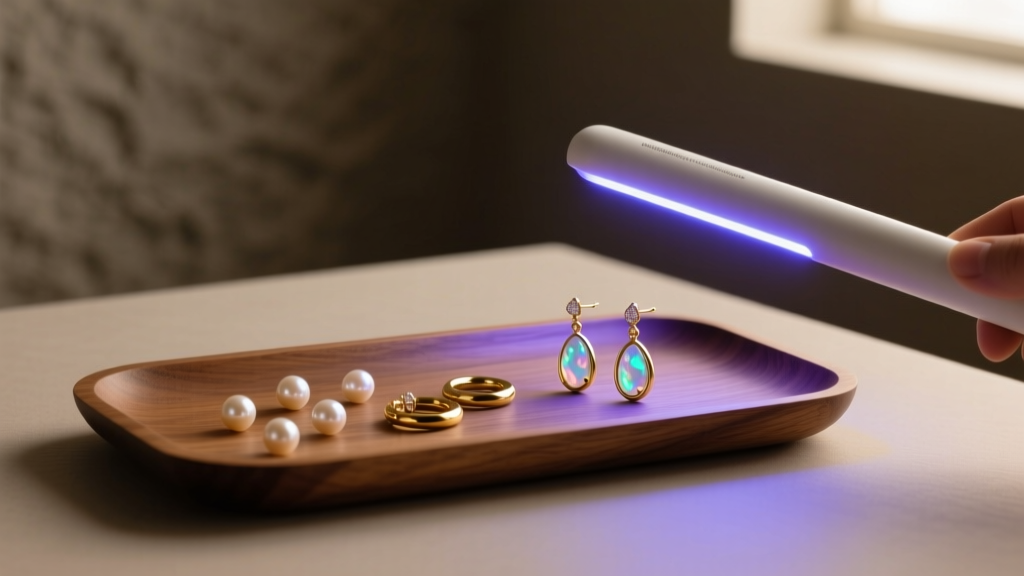
- UV-C Sanitizing Light: A chemical-free, non-destructive method perfect for delicate pieces that cannot withstand moisture or alcohol.
Why Your Metal Type Dictates Your Disinfectant
The Association of Professional Piercers (APP) emphasizes that not all 'surgical steel' or 'hypoallergenic' metals are created equal. The chemical reaction between a disinfectant and your earring's alloy will determine whether your jewelry survives the cleaning process intact. For comprehensive guidelines on body-safe metals, you can always refer to the Association of Professional Piercers jewelry materials database.
Implant-Grade Titanium (ASTM F136) & Niobium
Implant-grade titanium is the undisputed king of body jewelry. Because it is completely nickel-free and highly resistant to corrosion, you can disinfect it with almost anything. Soaking ASTM F136 titanium in 70% isopropyl alcohol for 5 to 10 minutes will thoroughly disinfect the post and backing without degrading the metal's mirror finish. You can even boil solid titanium pieces, provided they do not feature heat-sensitive gemstones.
Solid Gold (14k and 18k)
Solid gold is highly resilient, but it is still an alloy mixed with metals like copper, silver, or zinc to increase hardness. 70% isopropyl alcohol is perfectly safe for solid gold hoops and studs. However, avoid leaving gold jewelry soaking in alcohol for days on end, as prolonged exposure can slowly dull the luster of lower-karat alloys (like 10k or 14k) by stripping away natural skin oils that keep the polish vibrant.
Sterling Silver (925) & Plated Metals
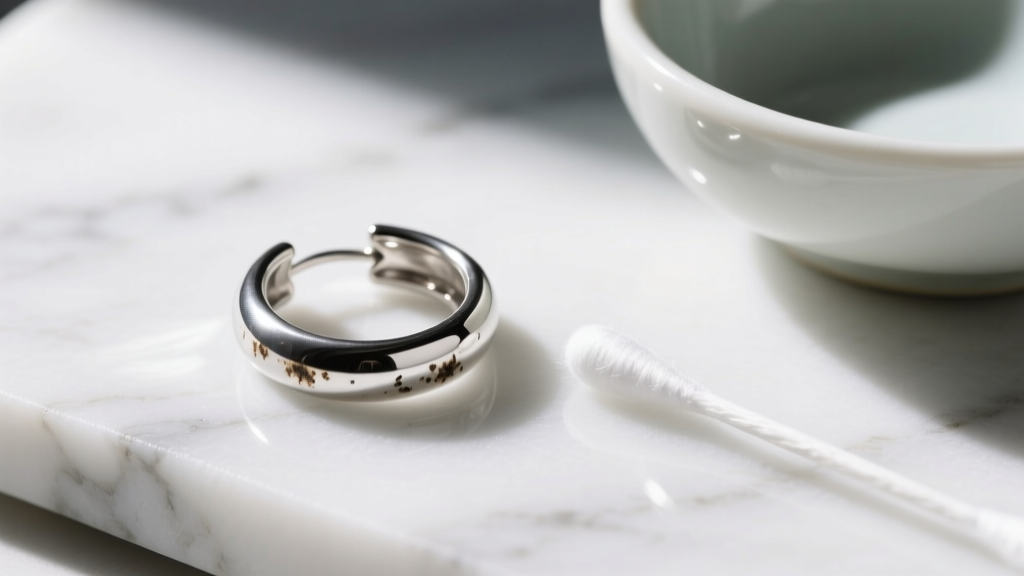
This is where most beginners make catastrophic mistakes. Sterling silver contains 7.5% copper, which is highly reactive. While a quick wipe with alcohol is generally fine, moisture is the enemy of silver. If you wash silver earrings with water and fail to dry them immediately, the copper will oxidize, resulting in black tarnish. For gold-plated or gold vermeil earrings, never use alcohol. Alcohol acts as a mild solvent and will accelerate the wearing away of the micron-thin gold layer, exposing the base brass or copper underneath.
The Danger Zone: Disinfectants That Ruin Jewelry
Knowing what not to use is just as critical as knowing what to disinfect earrings with. Here are the most common household mistakes and the chemical failure modes they cause:
The 99% Alcohol Myth
Many people assume that 91% or 99% isopropyl alcohol is better because it is 'stronger.' In microbiology, this is false. 99% alcohol evaporates so rapidly that it fails to penetrate the cell walls of bacteria. Furthermore, it instantly coagulates the outer proteins of a pathogen, creating a hard shell that protects the bacteria inside. 70% alcohol contains enough water to slow evaporation and allow the solution to penetrate and kill the cell.
Boiling Water and Thermal Shock
Boiling water (100°C / 212°F) is an excellent sterilizer for plain metal. However, if your earrings feature gemstones, dropping them into boiling water will cause thermal shock. Gems like opals, emeralds, and even some diamonds with internal inclusions will fracture or shatter when exposed to rapid, extreme temperature changes.
Household Bleach
Sodium hypochlorite (bleach) will permanently pit and corrode almost all jewelry metals, including gold and silver. It will also instantly dissolve the nacre (outer layer) of pearls and turn porous stones like turquoise a sickly, permanent brown.
Disinfectant vs. Material Compatibility Matrix
Use this quick-reference table to ensure you are pairing the right chemical agent with your specific earring type.
| Disinfectant Agent | Best Used On | Strictly Avoid Using On | Risk Level |
|---|---|---|---|
| 70% Isopropyl Alcohol | Titanium, Solid Gold, Niobium, Glass | Pearls, Opals, Plated Metals, Acrylic | Low (for safe metals) |
| Warm Water & Mild Soap | Plated Metals, Pearls, Porous Gems, Acrylic | Unsealed Wood (causes warping) | Very Low |
| Hydrogen Peroxide (3%) | Glass, Solid Titanium | Sterling Silver, Copper alloys, Organics | Medium (Causes rapid oxidation) |
| UV-C Light Sanitizer | All Metals, All Gemstones, Plastics | None (Requires direct line-of-sight) | Zero (Non-chemical) |
| Boiling Water | Plain Titanium, Plain Steel, Glass | Any gemstones, Plated metals, Acrylic | High (Thermal shock risk) |
Step-by-Step: The 5-Minute Safe Disinfection Routine
For your standard, everyday earrings (like solid gold huggies or titanium labret studs), follow this dermatologist-approved routine to ensure they are safe for sensitive ears:
- The Pre-Clean: Use a soft-bristled baby toothbrush and a drop of mild dish soap to gently scrub the earring post and the clutch/backing. This removes the biofilm of sebum and dead skin that shields bacteria from chemical disinfectants.
- The Rinse: Rinse thoroughly under lukewarm tap water to remove all soap residue.
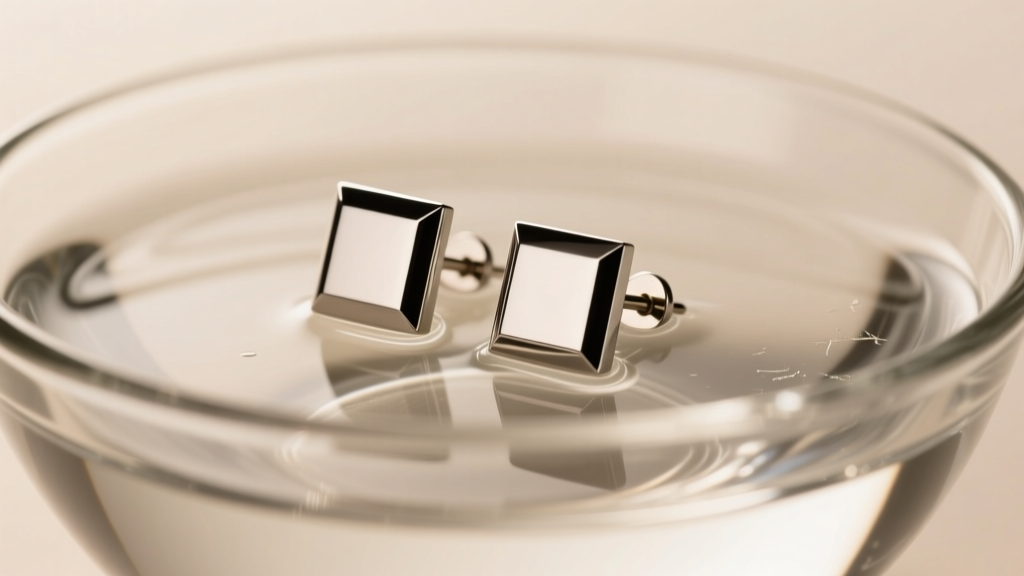
- The Disinfecting Soak: Submerge the metal parts of the earrings in a small shot glass filled with 70% isopropyl alcohol for exactly 5 minutes.
- The Extraction: Remove the earrings using clean tweezers or washed hands. Do not rinse the alcohol off; let it do its job.
- The Dry: Place the earrings on a clean, lint-free paper towel. Allow them to air dry completely. The alcohol will evaporate within 60 seconds, leaving behind a sterile surface.
Special Considerations: Gemstones and Organics
When your earrings feature gemstones, the Mohs hardness scale and porosity become your primary concerns. The Gemological Institute of America (GIA) categorizes gemstones not just by scratch resistance, but by chemical stability.
- Organic Gems (Pearls, Amber, Coral): These are incredibly soft and porous. Alcohol will strip their natural moisture, leading to 'crazing' (a network of fine surface cracks). Always clean these with a damp, soapy cloth and rely on UV light for disinfection.
- Crystalline Gems (Diamonds, Sapphires, Rubies): These are highly stable and can safely withstand a 70% alcohol soak. However, be mindful of the setting. If the stones are held in by glue rather than metal prongs, alcohol can dissolve the adhesive over time, causing you to lose your gemstone.
- Porous Stones (Turquoise, Lapis Lazuli, Opal): Opals contain up to 20% water. Alcohol and harsh chemicals will draw this water out, causing the stone to crack or lose its signature 'play-of-color.' Stick to gentle, soapy water and a soft cloth.
Frequently Asked Questions
Can I use hand sanitizer to disinfect my earrings?
While hand sanitizer contains alcohol, it also contains emollients, glycerin, and synthetic fragrances designed to moisturize skin. These additives will leave a sticky, cloudy film on your jewelry and can trap dirt against your skin, potentially causing contact dermatitis. Always use pure 70% isopropyl alcohol.
How often should I disinfect my earrings?
For healed piercings, disinfecting your earrings every 2 to 3 weeks, or immediately before wearing a pair that has been stored in a jewelry box, is sufficient. If you are actively dealing with an ear infection, you should disinfect your jewelry daily and consult a medical professional regarding your piercing tract.
Is it safe to share earrings if I disinfect them first?
Even with thorough disinfection, sharing earrings is highly discouraged by dermatologists and professional piercers. Micro-tears in the earlobe can transmit bloodborne pathogens. If you must share, the earrings should be made of non-porous materials (like solid titanium or glass) and subjected to a full 10-minute alcohol soak or a medical-grade autoclave cycle.
Understanding what to disinfect earrings with is a fundamental skill for any jewelry collector. By respecting the chemical properties of your metals and the physical vulnerabilities of your gemstones, you ensure that your ear curation remains both beautiful and biologically safe for years to come.


