Silver Fringe Earrings: 2026 Trend Analysis & Styling Guide
Discover the 2026 silver fringe earrings trend. Explore styling tips, sterling silver grades, weight distribution, and face-shape matching guides.


The Resurgence of Kinetic Jewelry in 2026
The 2026 jewelry landscape is defined by movement. As fashion pivots away from the heavy, static maximalism of the early 2020s, kinetic jewelry has taken center stage. At the forefront of this shift are silver fringe earrings—dynamic, light-catching accessories that transform the wearer’s natural micro-movements into a visual spectacle. Unlike rigid drop earrings or fixed hoops, fringe designs rely on fluid articulation, creating a cascading effect that draws the eye and frames the face with unparalleled elegance.
However, the allure of silver fringe extends far beyond its aesthetic appeal. Designing and wearing these pieces requires a deep understanding of metallurgy, weight distribution, and structural engineering. A poorly constructed fringe earring will tangle within minutes, snap under its own kinetic stress, or cause lobe fatigue. This comprehensive guide breaks down the exact specifications, material grades, and styling frameworks you need to master the silver fringe trend this year.
Metallurgy: Sterling Silver vs. Argentium in Fringe Designs
When dealing with fringe earrings, surface area is your biggest enemy. A single pair of 3-inch fringe earrings can contain over sixty individual wire strands, exponentially increasing the metal's exposure to oxygen and sulfur in the air. Standard 925 sterling silver, which contains 7.5% copper, is highly susceptible to tarnish. In a high-surface-area design like fringe, maintaining standard sterling silver requires constant, tedious polishing that risks bending the delicate strands.
This is why top-tier jewelers in 2026 are increasingly turning to Argentium silver for fringe constructions. Alloyed with germanium instead of traditional copper, Argentium (often stamped 935 or 960) forms a transparent, self-healing oxide layer that drastically slows tarnish. According to the Gemological Institute of America (GIA), this germanium alloy makes the silver highly resistant to firescale and environmental oxidation. For a piece of jewelry where reaching the inner strands with a polishing cloth is nearly impossible, Argentium is not just a luxury upgrade; it is a functional necessity.
Engineering the Drop: Wire Hardness and Gauge Specifications
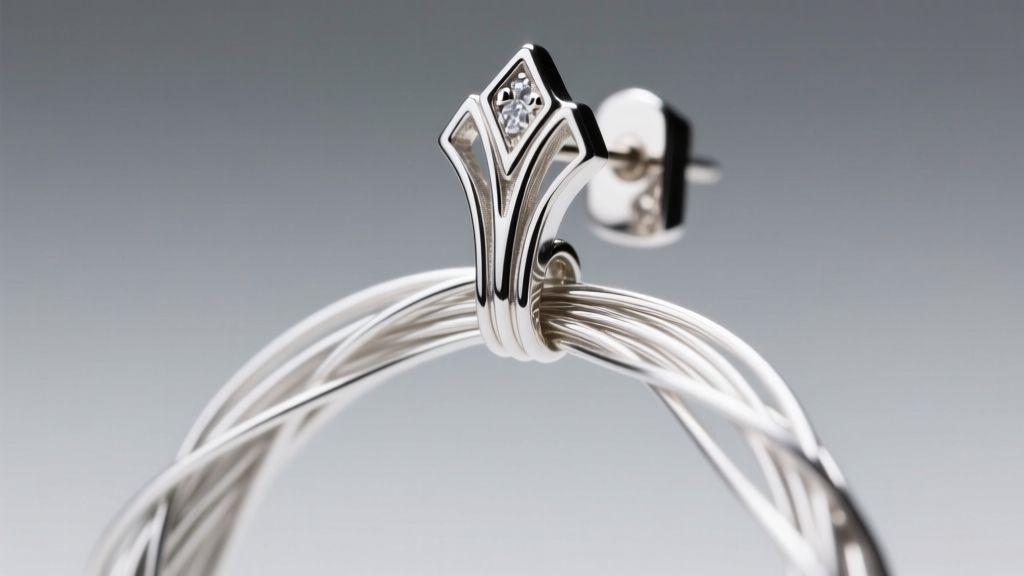
The fluid drape of silver fringe is dictated by wire hardness and gauge. Jewelers must balance the desire for silk-like movement with the structural need to prevent permanent kinking. According to Rio Grande's metallurgical guidelines, wire hardness ranges from dead-soft to spring-hard. Dead-soft wire offers the most luxurious drape but is prone to work-hardening and snapping if bent repeatedly at the solder joint. Half-hard wire provides structural integrity but can make the fringe look stiff and unnatural.
To solve this, master artisans use a combination of specific gauges and specialized soldering techniques, often reinforcing the top 2 millimeters of the fringe strand with a microscopic drop of clear jeweler's resin to prevent stress fractures at the cap.
| Wire Gauge | Hardness | Drape Quality | Tangle Risk | Best Application |
|---|---|---|---|---|
| 24-Gauge | Half-Hard | Stiff, structured | Low | Geometric, short fringe (1-2 inches) |
| 26-Gauge | Dead-Soft | Fluid, silk-like | High | Long, bohemian drops (3-5 inches) |
| 28-Gauge | Dead-Soft | Ultra-fine, delicate | Very High | Micro-fringe, layered cap accents |
Weight Distribution and Lobe Health
A standard pierced earlobe can comfortably support between 10 to 14 grams of weight before experiencing fatigue or the dreaded "cheese-cutter effect," where a thin ear wire slowly slices through the tissue. A 4-inch silver fringe earring crafted from 26-gauge wire can easily weigh 12 grams per earring. To mitigate this, the choice of ear wire is critical.
- Avoid: Thin, 22-gauge standard fishhook wires. They concentrate the pendulum weight onto a microscopic point of the lobe.
- Opt For: 18-gauge or 20-gauge leverback clasps. The leverback mechanism distributes weight across a wider surface area and secures the earring against kinetic loss.
- Pro Tip: Look for designs featuring a flattened "paddle" wire at the base of the hook, which acts as a physical stopper and weight distributor against the back of the lobe.
Face Shape & Fringe Length Matrix
Because fringe earrings create strong vertical lines, they are powerful tools for facial contouring. Selecting the correct length and cap shape is essential for harmonious styling.
Round Faces
The goal is to elongate the face and draw the eye downward. Choose narrow, linear fringe drops that are at least 3 inches long. Avoid wide, triangular, or chandelier-style fringe caps, which will add unwanted horizontal volume to the cheekbones.
Square Faces
Softening a strong jawline requires curved geometry. Look for silver fringe earrings that feature a rounded or teardrop-shaped cap. Medium lengths (2 to 2.5 inches) ending just above the jawline create a softening halo effect without emphasizing the angles of the lower face.
Heart-Shaped Faces
To balance a narrower chin, select fringe earrings with an inverted triangle silhouette or a wider base. Chandelier-style fringe that flares outward at the bottom adds necessary visual weight to the lower half of the face.
Maintenance: Troubleshooting the Tangle Factor
The most common failure mode of silver fringe earrings is tangling, which leads to bent wires and eventual metal fatigue. Proper maintenance requires a departure from standard jewelry care routines.
"Never place fringe earrings in an ultrasonic cleaner. The high-frequency cavitation bubbles will violently whip the delicate wire strands together, resulting in a knotted mess that is nearly impossible to salvage without snapping the dead-soft silver."
The Detangling Protocol:
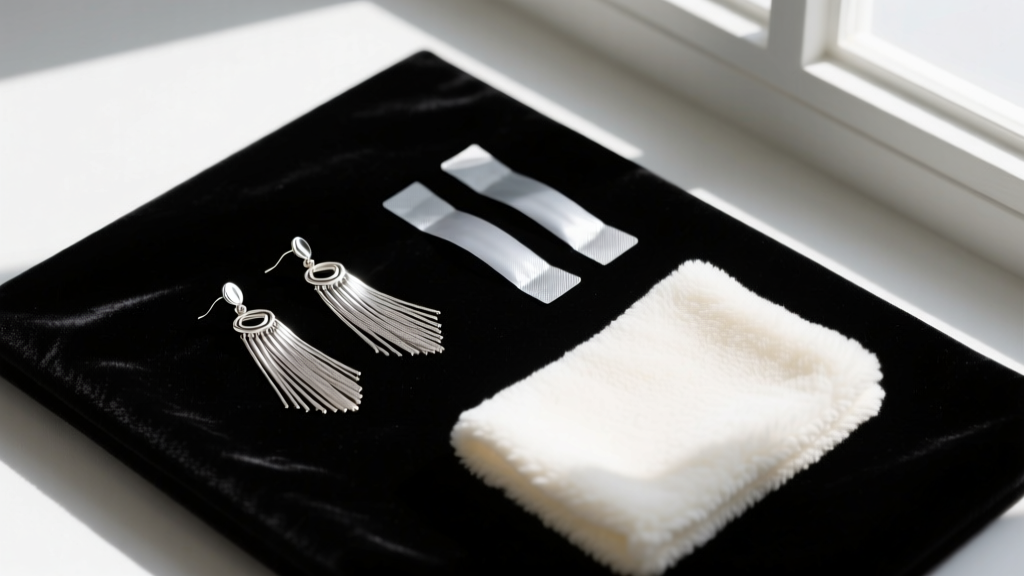
If your fringe strands become tangled, never pull them apart with your fingers. Lay the earring flat on a microfiber cloth. Use a fine-toothed eyebrow comb or a soft brass suede brush to gently separate the wires from the bottom up. Work in small sections, applying a microscopic drop of mineral oil to the comb teeth to reduce friction.
Storage:
Fringe must be stored hanging or laid perfectly flat. Tossing them into a standard jewelry box will guarantee crushing. Store them in individual, airtight zip-lock bags equipped with 3M anti-tarnish strips to neutralize sulfur gases, ensuring the Argentium or sterling silver remains brilliantly reflective.
Final Verdict: Investment vs. Fast Fashion
When shopping for silver fringe earrings in 2026, scrutinize the hallmarks and the soldering joints. Fast-fashion alternatives often use silver-plated brass wire, which will inevitably chip and turn the skin green at the high-friction points. True investment pieces will bear a clear ".925" or "935" stamp on the earring cap and feature seamlessly soldered jump rings connecting the fringe to the ear wire. By prioritizing Argentium silver, correct wire gauges, and ergonomic weight distribution, you can embrace the kinetic jewelry trend with pieces that are as structurally sound as they are visually mesmerizing.


