Why Do My Ears Hurt When I Wear Earrings? Expert Fixes
Discover why your ears hurt when wearing earrings. Learn about metal allergies, gauge friction, and post thickness, plus expert troubleshooting fixes.


If you have ever looked in the mirror, taken out your favorite studs, and asked yourself, why do my ears hurt when i wear earrings, you are experiencing one of the most common frustrations in jewelry wear. Ear pain is rarely random; it is a biological feedback mechanism signaling either an immune response or mechanical trauma. To solve the problem, we must move beyond vague "sensitive ear" marketing labels and examine the exact metallurgy, gauge physics, and anatomical variables at play.
The Anatomy of Earring Pain: Allergy vs. Friction
The first step in troubleshooting earring pain is identifying the root cause. Pain generally falls into two distinct clinical categories: Allergic Contact Dermatitis (ACD) and mechanical irritation. Misdiagnosing the type of pain leads to buying the wrong solutions.
Identifying Allergic Contact Dermatitis (ACD)
According to the American Academy of Dermatology, nickel allergy is the leading cause of ACD, affecting roughly 20% of women. If your pain presents as an itchy, warm, weeping, or flaky sensation that develops 24 to 48 hours after wearing the jewelry, you are likely experiencing an immune response to nickel or cobalt alloys leaching from the post. This is a delayed hypersensitivity reaction, meaning your ears might feel fine when you first put the earrings in, only to throb and itch by the evening.
Mechanical Irritation and the Cheese-Cutter Effect
If the pain is immediate, sharp, or feels like a dull ache localized strictly to the piercing channel, the issue is mechanical. This happens when the earring post is too thin, too thick, or poorly finished, creating micro-tears in the fistula (the healed skin tube of the piercing). Unlike allergies, mechanical pain does not typically cause surface flaking or intense itching; it feels like a sore wound.
The Metal Matrix: Decoding Hypoallergenic Marketing
The term "hypoallergenic" is largely unregulated in the jewelry industry. Many brands label items as hypoallergenic simply because they are coated in a thin layer of rhodium or gold over a reactive brass or nickel-silver core. Once that microscopic plating wears off—often within weeks of daily wear—the reactive base metal touches your skin, triggering immediate pain.
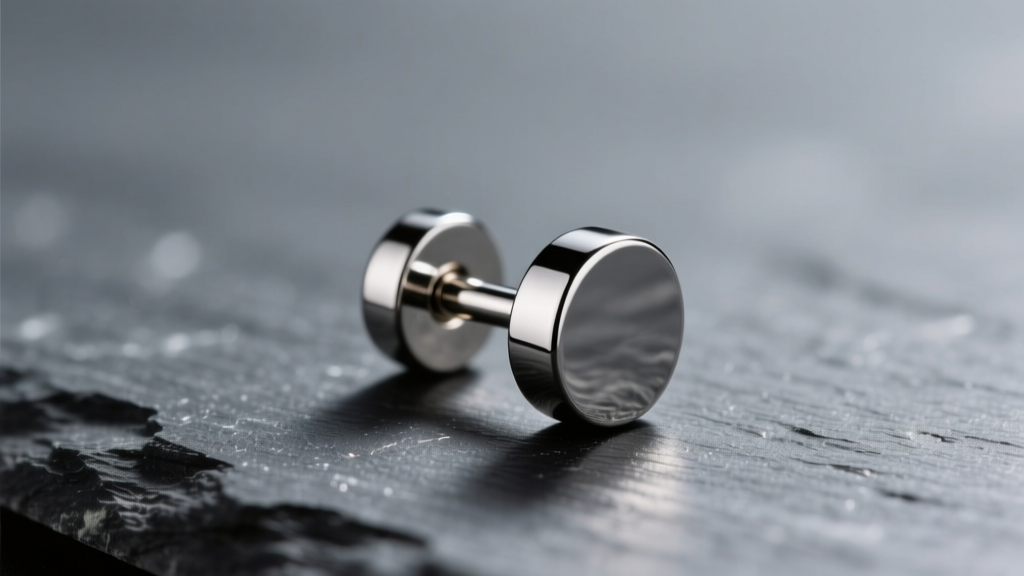
For genuine pain relief, you must look for specific metallurgical grades rather than marketing buzzwords. The Association of Professional Piercers (APP) recommends only a handful of materials for long-term, irritation-free wear.
| Material Grade | Nickel Content | Biocompatibility | Avg. Price (Per Pair) |
|---|---|---|---|
| ASTM F136 Titanium | 0% | Excellent (Implant-Grade) | $30 - $75 |
| Niobium (Ungraded) | 0% | Excellent (Highly Inert) | $25 - $60 |
| 14k/18k Solid Gold | Varies (Avoid white gold) | Very Good (If alloyed properly) | $150 - $400+ |
| 316L Surgical Steel | 10% - 14% | Poor for Sensitive Ears | $10 - $25 |
| Brass/Copper Base | Trace to High | Unacceptable (High Reactivity) | $5 - $20 |
Expert Fix: Switch entirely to ASTM F136 implant-grade titanium for your daily-wear studs. It is completely nickel-free, non-magnetic, and will not react with your skin's natural pH or sweat.
Gauge Size and Post Thickness: The Hidden Culprits
Gauge refers to the thickness of the earring post. The standard commercial earring found in most mall kiosks and department stores is 20-gauge (0.81mm) or 18-gauge (1.02mm). However, many professional piercings, especially those done with a needle or in the cartilage, are performed at 16-gauge (1.29mm) or 14-gauge (1.63mm).
The Danger of Mismatched Gauges
If your piercing healed at 16-gauge and you force a flimsy 20-gauge wire earring into it, you create a pressure disparity. The thin wire acts like a cheese-cutter, applying concentrated downward pressure on the bottom of the fistula. This leads to localized tissue necrosis, migration, and a sharp, aching pain that worsens throughout the day. Conversely, forcing a thick 14-gauge post into an 18-gauge hole causes blunt force trauma to the channel, resulting in immediate swelling and tenderness.
Expert Fix: Measure your current jewelry with a digital caliper, or visit a professional piercer to have your fistula measured. Purchase high-quality threadless or internally threaded flat-back labrets in the exact gauge of your piercing to distribute weight evenly across the entire channel.
Weight, Tension, and Butterfly Backings
Gravity is the enemy of the earlobe. While the earlobe is resilient, it is not designed to bear heavy loads for 12 hours a day. Earrings that exceed 10 to 15 grams per ear will cause micro-stretching of the collagen matrix in the lobe tissue. This results in a deep, throbbing ache at the base of the earlobe by the end of the day.
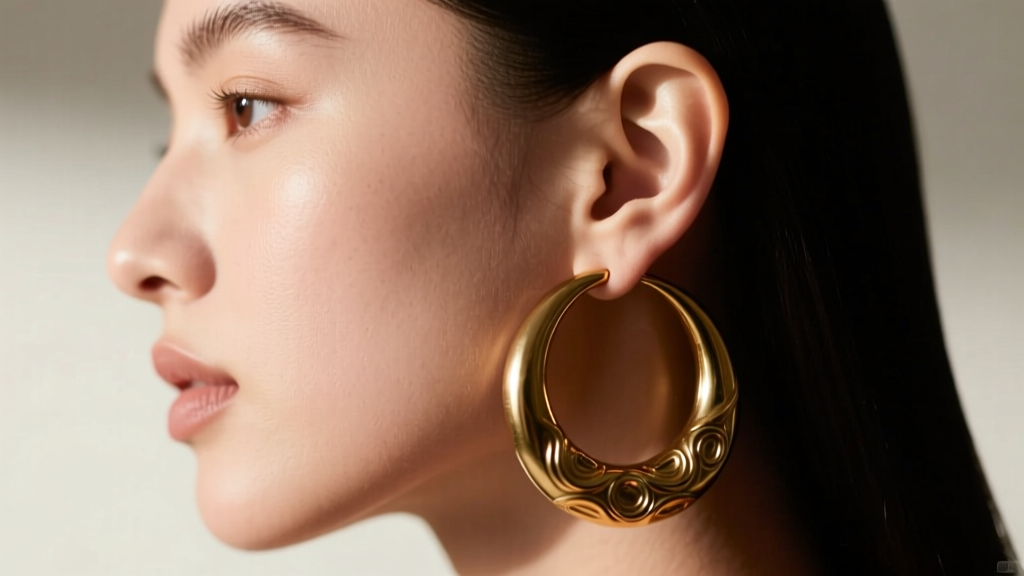
Furthermore, the traditional "butterfly" clutch backing is a primary vector for pain and infection. These backings trap dead skin cells, sebum, and moisture directly against the back of the ear. The sharp metal prongs of the post often poke the skin behind the ear when sleeping or wearing headphones, causing localized bacterial folliculitis (painful, pimple-like bumps).
Expert Fix: For heavy statement earrings, use silicone support patches (like Lobe Wonder) behind the ear to distribute the weight over a wider surface area. For daily studs, abandon butterfly clutches entirely in favor of flat-back titanium labrets secured with a small silicone O-ring, which eliminates the sharp post protrusion and allows the skin behind the ear to breathe.
Troubleshooting Framework: Isolate the Problem
If you are currently experiencing pain, follow this systematic troubleshooting protocol to isolate the exact variable causing your discomfort:
- The 48-Hour Titanium Test: Remove all current jewelry. Clean the ear with sterile saline. Insert a verified ASTM F136 titanium flat-back labret. Wear it for 48 hours. If the pain and itching vanish, your previous jewelry contained reactive alloys (nickel/brass).
- The Gauge Check: If the titanium earring still causes a sharp, cutting pain inside the hole, the gauge is too thin. Upsize to a thicker post (e.g., move from 18g to 16g) to eliminate the cheese-cutter effect.
- The Weight Audit: Weigh your favorite hoops or dangles on a kitchen scale. If they exceed 15 grams, restrict them to maximum 3-hour wear sessions, or switch to lightweight hollow-tube or acrylic alternatives.
- The Backing Swap: If the pain is located strictly on the back of the earlobe where the earring rests, discard all butterfly clutches and switch to flat disc backings or smooth silicone stoppers.
Pro Tip: Never sleep in your earrings. The lateral pressure of your head against a pillow forces the earring post at an unnatural angle, creating torque and micro-tears inside the healing or healed fistula. This is a leading cause of chronic cartilage bumps and lobe soreness.
When to Seek Professional Care
While most earring pain can be solved by upgrading your jewelry materials and mechanics, persistent pain accompanied by excessive heat, foul-smelling discharge, or a hard, raised keloid scar requires professional intervention. If you suspect an infection or are developing a hypertrophic scar, consult a board-certified dermatologist or a reputable APP-certified piercer. Do not attempt to treat severe cartilage infections with over-the-counter creams, as cartilage lacks direct blood supply and requires targeted medical care to prevent permanent deformity.
By understanding the precise mechanics of your jewelry and the biology of your piercings, you can permanently eliminate earring pain and build a collection that is as comfortable as it is beautiful.


