How to Choose the Perfect Pearl With Bow Earrings in 2026
Discover how to choose the perfect pearl with bow earrings in 2026. Expert tips on pearl grades, metal types, and bow proportions for every face shape.

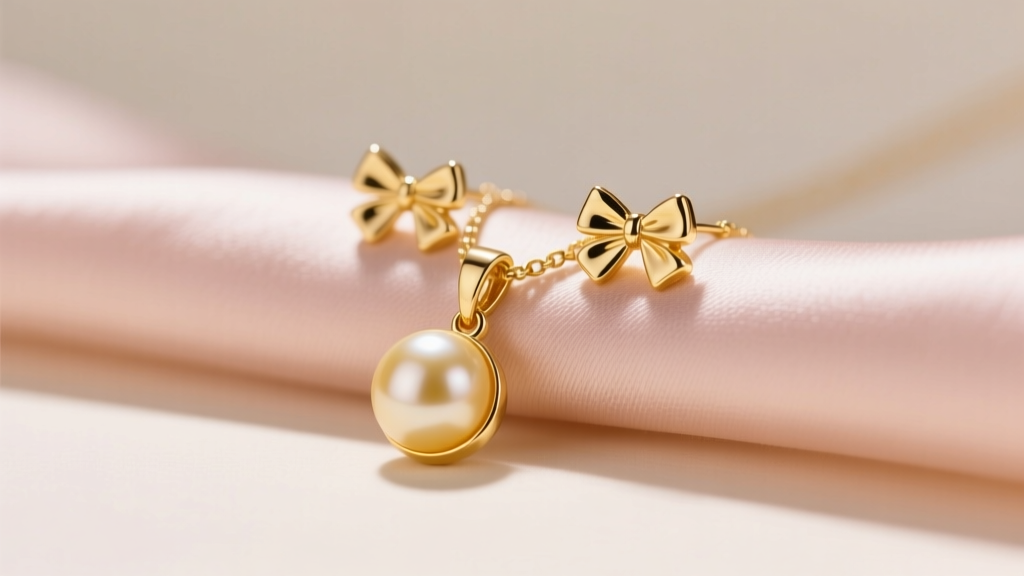
The Coquette Revival: Why Pearl and Bow Earrings Dominate 2026
The romantic, hyper-feminine "coquette" aesthetic has evolved from a fleeting social media trend into a permanent fixture of fine jewelry. As we navigate 2026, the demand for pearl with bow earrings has shifted from mass-produced fashion accessories to heirloom-quality fine jewelry. Today's discerning buyers are no longer satisfied with glued-on plastic pearls and hollow brass ribbons. Instead, the modern market demands structural integrity, ethically sourced nacre, and precision-cast precious metals. Whether you are looking for a subtle stud for the office or an elaborate drop earring for evening wear, understanding the intersection of pearl grading and metallurgical strength is critical. This comprehensive buying guide will equip you with the insider knowledge needed to evaluate quality, avoid common manufacturing flaws, and select a pair that will last a lifetime.
Decoding Pearl Quality: What to Look For
The pearl is the undisputed focal point of this earring style. According to the Gemological Institute of America (GIA), pearl value is determined by seven key factors: size, shape, color, luster, surface quality, nacre thickness, and matching. When shopping for pearl and bow designs, luster and nacre are your primary indicators of longevity and visual impact.
Nacre Thickness and Luster Grades
Nacre is the crystalline substance secreted by the mollusk, creating the pearl's iridescent layers. In bead-nucleated pearls like Akoya, a thin nacre layer (under 0.2mm) will eventually peel or chip, exposing the dull shell bead beneath. For fine jewelry, insist on a minimum nacre thickness of 0.4mm. Luster, which refers to the sharpness of light reflections on the pearl's surface, should be graded "Excellent" or "Very Good." An excellent luster rating means you can see a crisp, distinct reflection of the bow's metal outline on the pearl's surface. Avoid pearls with a chalky, milky, or hazy appearance, as this indicates poor nacre crystallization.
Freshwater vs. Akoya: A Buyer's Matrix
Choosing between Freshwater and Akoya pearls dictates both the price point and the visual character of your pearl with bow earrings. Below is a comparative matrix to help you decide based on your specific needs.
| Feature | AAA Freshwater Pearls | Hanadama Akoya Pearls |
|---|---|---|
| Nucleation | Mantle tissue (solid nacre) | Shell bead + mantle tissue |
| Shape | Near-round to off-round | Perfectly spherical |
| Luster Type | Soft, satiny, diffuse glow | Sharp, mirror-like, high-contrast |
| Durability | Extremely high (no bead core to expose) | High (requires nacre thickness verification) |
| Price Range (per pair) | $150 - $400 | $600 - $1,500+ |
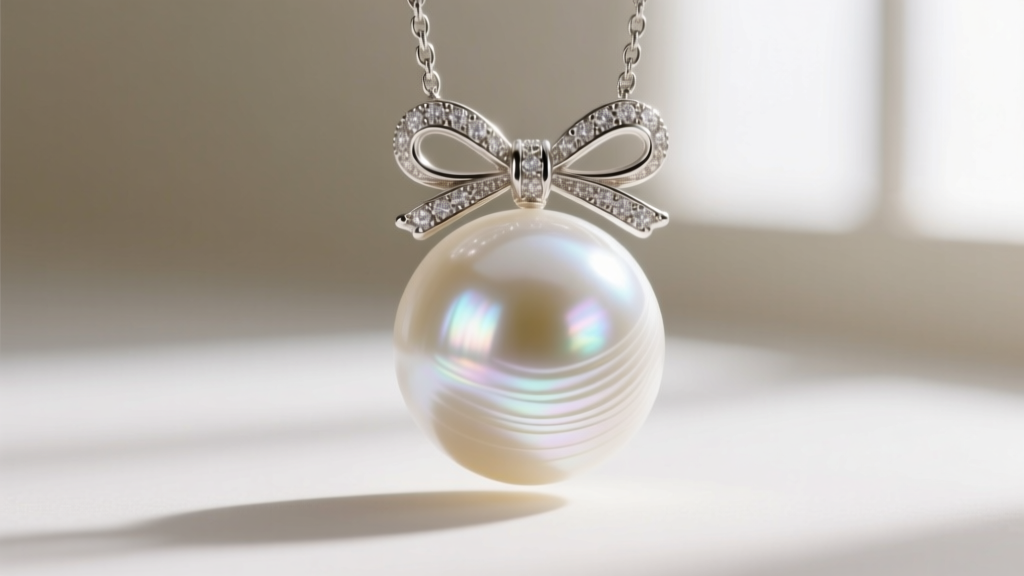
The Anatomy of the Bow: Proportions and Metals
The bow element is not merely a decorative afterthought; it is a complex piece of micro-sculpture that requires precise metallurgical planning. The way a bow is cast, its metal alloy, and its physical dimensions will determine both the earring's durability and its aesthetic harmony on your face.
Metal Grades and the 14k vs. 18k Dilemma
While 18k gold (75% pure gold) is often marketed as the pinnacle of luxury, it is actually structurally inferior for intricate, thin-wire designs like bows. Pure gold is a soft metal. An 18k gold bow with delicate ribbon loops is highly susceptible to crushing or bending if dropped on a hard surface or snagged on a sweater. Conversely, 14k gold (58.5% pure gold, alloyed with copper, silver, and zinc) offers significantly higher tensile strength and hardness. For the structural components of a bow earring, 14k gold or platinum are the superior choices, ensuring the delicate "tails" and "knots" of the bow retain their shape over decades of wear. Always verify that the metal complies with the Federal Trade Commission (FTC) Jewelry Guides regarding accurate hallmarking and nickel-free alloys to prevent contact dermatitis.
Bow Sizing and Face Shape Mapping
The proportion of the bow relative to the pearl must be balanced against the wearer's facial geometry. Here is a practical decision framework for matching bow proportions to face shapes:
- Round Faces: Avoid wide, horizontal bows that add lateral volume. Instead, opt for a vertical drop design where a small, delicate bow acts as the stud, and a larger pearl dangles below to elongate the jawline.
- Square Faces: Soften angular jawlines with bows featuring rounded, puffy loops and curved ribbon tails. Pair with a perfectly spherical, high-luster Akoya pearl to introduce soft, reflective curves.
- Heart-Shaped Faces: Balance a narrower chin with wider, horizontal chandelier-style bows featuring multiple smaller accent pearls distributed across the ribbon's width.
- Oval Faces: Universally flattering. You can confidently wear bold, oversized statement bows with large 10mm+ South Sea pearls without overwhelming your natural proportions.
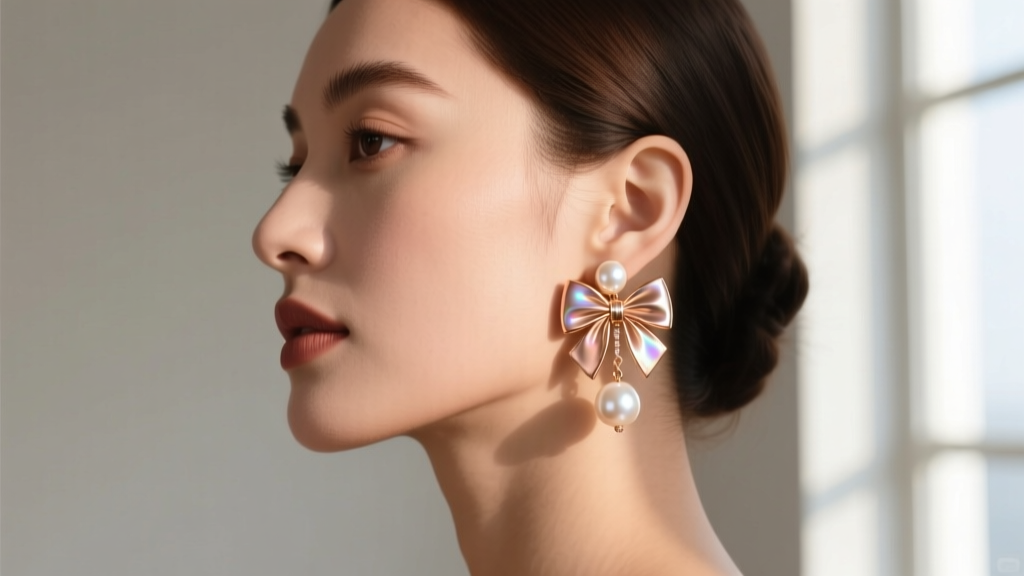
Structural Integrity: Avoiding Common Failure Modes
The most beautiful pearl with bow earrings are worthless if they fall apart. Mass-market jewelry often relies on shortcuts that lead to catastrophic failure within months. As an informed buyer, you must inspect the earring for the following three critical failure points:
- The Peg-and-Hole Setting vs. Surface Gluing: Never buy pearl earrings where the pearl is simply glued flat against a metal cup. High-end jewelers use a "peg setting," where a 1mm metal pin is soldered to the bow and inserted into a precisely drilled hole in the pearl, secured with two-part jeweler's epoxy. Surface gluing relies entirely on weak surface tension and will inevitably detach when exposed to the natural oils, sweat, and humidity of the earlobe.
- Post Shear at the Solder Joint: Examine where the earring post connects to the back of the bow's central knot. If the post is merely spot-soldered to a flat surface, it will easily snap under the leverage of a heavy pearl. The post should be integrated into the bow's structural armature or laser-welded for maximum shear strength.
- Cyanoacrylate Degradation: Cheap manufacturers use cyanoacrylate (super glue) to attach pearls. Over time, this glue turns chalky white and brittle, leaving a visible, unremovable white crust on the pearl's nacre. Always ask the jeweler if they use a flexible, non-yellowing two-part epoxy (such as Devcon or G-S Hypo Cement) for pearl setting.
Price Tiers and Where to Invest in 2026
Understanding the pricing landscape ensures you do not overpay for inferior materials. The market for pearl and bow earrings is strictly segmented into three tiers:
1. The Fashion Tier ($50 - $150): Typically crafted from rhodium-plated brass or sterling silver. Features commercial-grade, heavily blemished freshwater "potato" pearls. Bows are often hollow-cast to save metal weight, making them prone to denting. Suitable for occasional wear, but expect metal tarnish and glue failure within 12 to 18 months.
2. The Fine Jewelry Tier ($300 - $900): The sweet spot for everyday luxury. Crafted in solid 14k yellow, white, or rose gold. Features AAA-grade near-round freshwater pearls or entry-level Akoya pearls with good luster. Bows are die-struck or solid lost-wax castings, offering excellent durability. Peg-and-epoxy settings are standard here.
3. The Luxury Investment Tier ($1,500 - $4,000+): Reserved for heritage jewelers. Features 18k gold or platinum bows, often hand-fabricated with micro-pavé diamond accents along the ribbon edges. Utilizes Hanadama-certified Akoya or white South Sea pearls with exceptional orient and overtone. Every joint is laser-welded, and the pearls are mechanically secured or set with museum-grade adhesives.
Final Verdict: Styling Your Pair
Pearl with bow earrings are a masterclass in juxtaposing the organic, unpredictable beauty of nacre with the precise, geometric symmetry of a metallic ribbon. By prioritizing nacre thickness, opting for the tensile strength of 14k gold, and demanding peg-set structural integrity, you will secure a piece that transcends seasonal trends. Whether you choose the satiny warmth of freshwater pearls or the mirror-like brilliance of Akoya, your earrings will remain a sophisticated, romantic staple in your jewelry wardrobe for years to come.


