Peppermint Earrings: Material Properties & Care Guide
Explore the material properties of peppermint earrings, comparing tourmaline gems, vitreous enamel, and hypoallergenic metals for sensitive ears.

The Dual Nature of Peppermint Earrings in Modern Jewelry
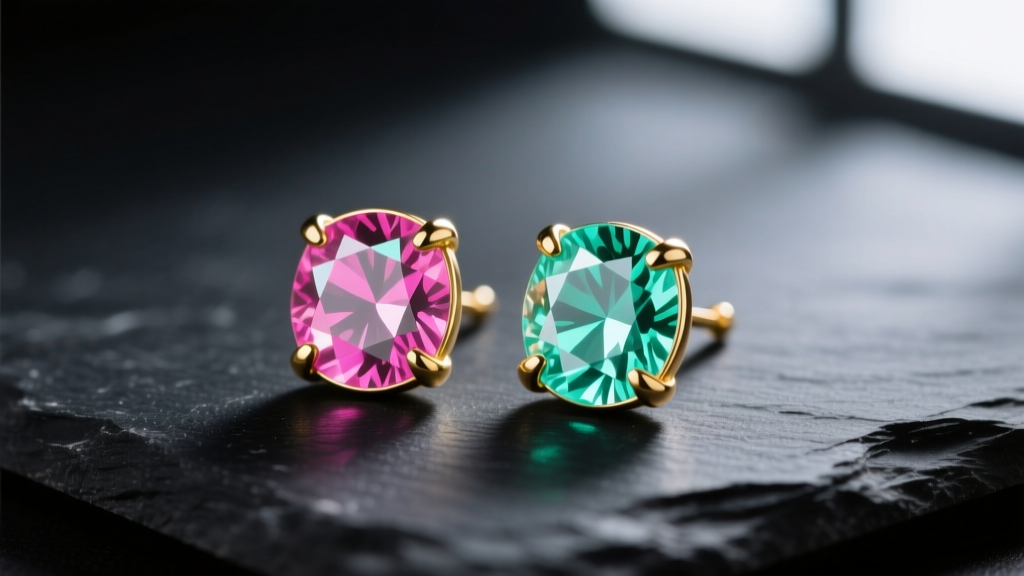
When jewelry enthusiasts search for peppermint earrings, they are typically navigating two entirely distinct material categories. The first is gemological: rare, banded peppermint tourmaline, prized for its striking pink, green, and white crystalline striations. The second is artisanal: the nostalgic peppermint-swirl motif, crafted using either traditional vitreous enamel or modern cold resins. As we move through 2026, understanding the material properties, durability metrics, and hypoallergenic requirements of these pieces is critical for both collectors and those with sensitive piercings.
This comprehensive guide breaks down the exact Mohs hardness, setting mechanics, and metallurgical standards required to make your peppermint earrings last a lifetime, whether you are wearing them in standard 20-gauge lobe piercings or 16-gauge cartilage setups.
The Gemological Reality: Peppermint Tourmaline
Peppermint tourmaline is a complex borosilicate mineral that forms in pegmatite veins, most notably sourced from Nigeria and Mozambique. The 'peppermint' trade name refers to the distinct alternating bands of pink (manganese-rich), green (iron/copper-rich), and colorless zones within a single crystal. According to the Gemological Institute of America (GIA), tourmaline sits at a 7 to 7.5 on the Mohs hardness scale. While this makes it suitable for daily wear, it possesses distinct cleavage planes and high pleochroism, meaning it can show different color intensities depending on the viewing angle.
Cabochon vs. Faceted Cuts
The way a lapidary cuts peppermint tourmaline drastically affects its visual impact and structural integrity. Cabochon cuts (smooth, domed, and unfaceted) are the industry standard for peppermint earrings because they allow the concentric banding to remain visible, mimicking the swirl of a candy cane. Faceting, while brilliant, often muddies the distinct color zoning, turning a vibrant peppermint stone into a washed-out brownish-pink. Furthermore, cabochons lack the sharp facet junctions that are prone to chipping upon impact, making them inherently more durable for earring applications.
Enamel vs. Resin: Crafting the Peppermint Swirl Motif
For those seeking the peppermint aesthetic without the gemstone price tag, artisanal metalworkers create swirl motifs using enamel or resin. However, the material properties of these two mediums are vastly different, dictating their longevity and price point.
Vitreous Enamel (Hot Enamel)
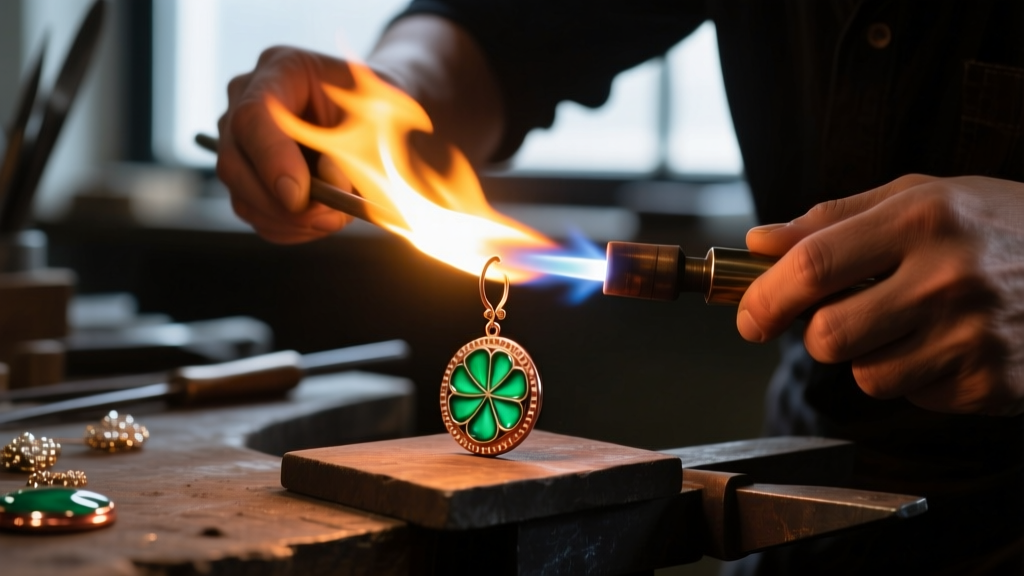
True vitreous enamel is essentially fused glass. Artisans sift finely ground silica and metallic oxides onto a copper, silver, or gold base, firing it in a kiln or with a torch at temperatures between 1,400°F and 1,500°F. The result is a permanent, glass-like finish with a Mohs hardness of around 5.5. It is highly UV-resistant and will never yellow. However, because glass is brittle, vitreous enamel peppermint earrings will shatter or 'craze' (develop microscopic cracks) if dropped on a hard tile floor.
Cold Enamel (Epoxy Resin)
Mass-produced peppermint earrings often utilize cold enamel, which is technically a two-part epoxy resin. It cures at room temperature and is poured into metal recesses. While it offers excellent impact resistance (it will bounce rather than shatter), resin has a Mohs hardness of only 2.5 to 3. It scratches easily and, crucially, lacks UV stabilizers. Over a period of 3 to 5 years, the white sections of a resin peppermint earring will inevitably yellow, degrading the visual contrast.
Material Durability Comparison Matrix
| Material | Mohs Hardness | Impact Resistance | UV Stability | Best Earring Application |
|---|---|---|---|---|
| Peppermint Tourmaline | 7.0 - 7.5 | Moderate (can chip) | Excellent | Stud earrings, secure bezel settings |
| Vitreous Enamel | 5.5 | Poor (shatters) | Excellent | Dangle earrings, occasional wear |
| Cold Epoxy Resin | 2.5 - 3.0 | High (bounces) | Poor (yellows) | Novelty pieces, children's jewelry |
Hypoallergenic Metal Pairings and Gauge Sizing
The most beautiful peppermint tourmaline or enamel drop will cause severe contact dermatitis if suspended from an allergenic wire. Approximately 15% of the global population has a nickel allergy, yet 'surgical steel' (316L stainless steel) can contain up to 12% nickel. For sensitive lobes or fresh cartilage piercings, the metal choice is non-negotiable.
- ASTM F136 Implant-Grade Titanium: The gold standard for body jewelry. It contains zero nickel and is biocompatible. The Association of Professional Piercers (APP) strongly recommends this for any healing or reactive piercing.
- 14k or 18k Solid Gold: Ensure it is nickel-free (alloyed with silver, copper, and zinc). Avoid gold-plated brass, as the plating will eventually wear off, exposing the reactive base metal to your skin.
- Platinum: Hypoallergenic and incredibly dense, though usually cost-prohibitive for large novelty enamel pieces.
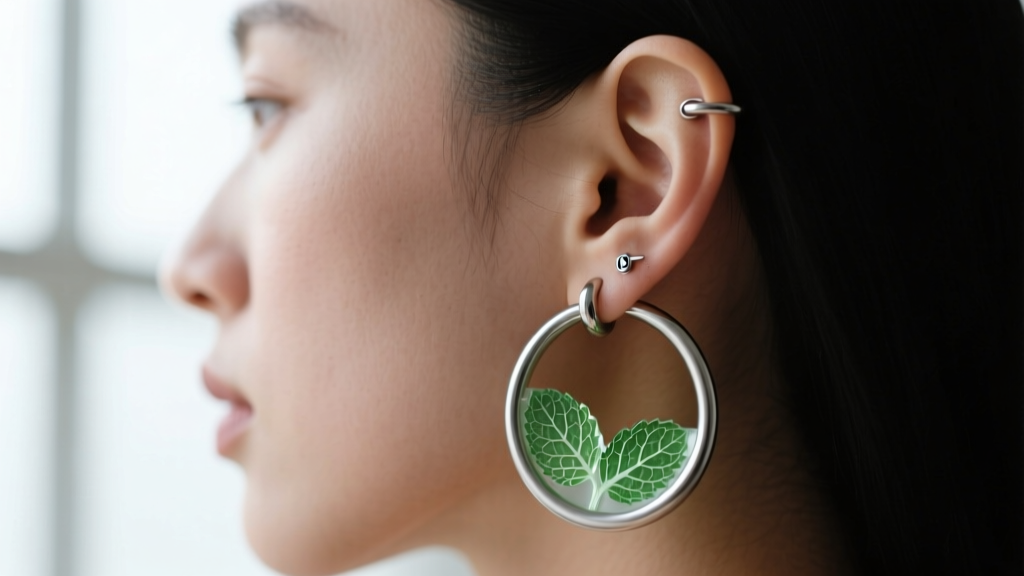
Gauge Sizing Guide: Standard lobe piercings are typically 20-gauge (0.81mm) or 18-gauge (1.02mm). If you are wearing peppermint huggies or hoops in a healed helix or forward helix cartilage piercing, you will likely need a thicker 16-gauge (1.29mm) wire to prevent the 'cheese-cutter effect,' where thin wires migrate through dense cartilage tissue under the weight of the earring.
Setting Mechanics: Protecting Your Investment
Because tourmaline has a distinct crystalline structure that makes it vulnerable to sharp blows, the setting mechanics of peppermint tourmaline studs must be carefully considered. Traditional four-prong settings leave the girdle (the widest edge of the stone) exposed. If you bump your ear against a doorframe or a hairbrush, the tourmaline can easily fracture along its cleavage plane.
For daily-wear peppermint earrings, always opt for a full bezel or half-bezel setting. A bezel involves a continuous rim of metal wrapped around the entire circumference of the cabochon. This not only protects the fragile edges but also provides a modern, sleek frame that enhances the concentric color banding of the stone. If the design requires a dangle or drop, ensure the jump rings connecting the peppermint charm to the ear wire are soldered closed, preventing the loss of the piece if the wire is snagged on clothing.
Long-Term Care and Cleaning Protocols
Improper cleaning is the fastest way to destroy both tourmaline and enamel. Many jewelers routinely use ultrasonic cleaners, which use high-frequency sound waves to agitate a cleaning solution. Never put peppermint tourmaline in an ultrasonic cleaner. Tourmaline frequently contains microscopic liquid inclusions; the ultrasonic vibrations can cause these inclusions to expand and shatter the stone from the inside out.
Safe Cleaning Checklist
- For Tourmaline: Use lukewarm water, a drop of pH-neutral dish soap, and a baby toothbrush with ultra-soft bristles. Gently brush the back of the cabochon where skin oils accumulate, rinse, and dry with a microfiber cloth.
- For Vitreous Enamel: Wipe with a damp cloth. Avoid harsh chemicals like bleach or ammonia, which can degrade the metallic oxides used to create the red and green swirls.
- For Resin: Keep away from alcohol-based hand sanitizers and perfumes, which will chemically break down the epoxy matrix, leaving it sticky and dull.
Final Verdict: Choosing Your Peppermint Pair
Whether you are investing in a pair of 18k gold bezel-set peppermint tourmaline studs for their geological rarity, or commissioning a local artisan to hand-fire a vitreous enamel peppermint drop, understanding the material science ensures your jewelry survives the rigors of daily wear. By prioritizing ASTM F136 titanium or solid gold for your ear wires, selecting protective bezel settings, and adhering to gentle cleaning protocols, your peppermint earrings will remain a vibrant, hypoallergenic staple in your collection for decades to come.


