Troubleshooting 35mm Hoop Earrings: Fixes for Sagging & Tangling
Solve common 35mm hoop earrings issues like lobe sagging, hair tangling, and clasp slipping with our expert troubleshooting guide and material fixes.

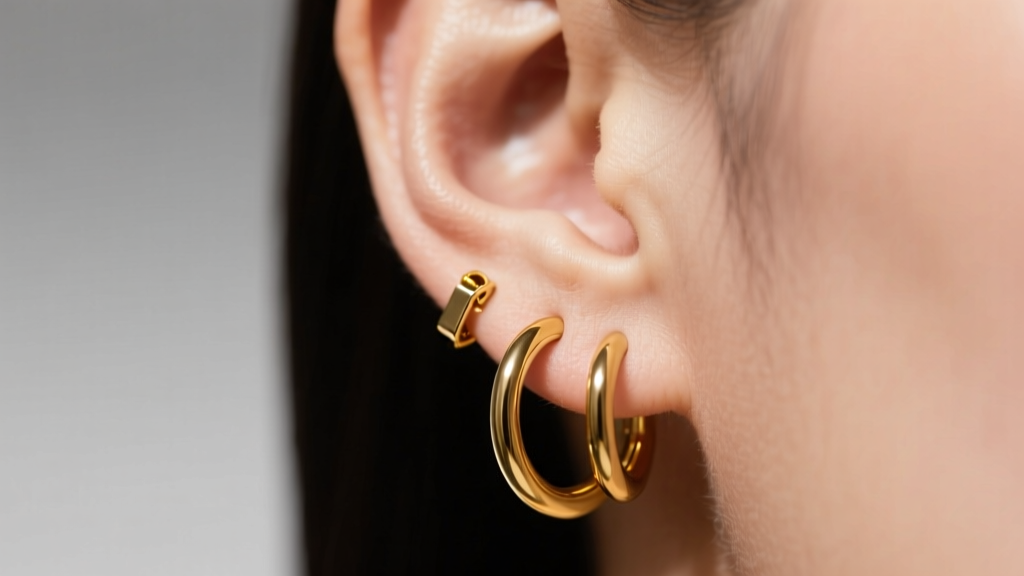
The 35mm hoop earring (approximately 1.37 inches) occupies a highly specific, often problematic niche in jewelry design. It is too large to function as a secure huggie, yet too small to act as a dramatic shoulder-duster. Because a 35mm diameter rests precisely at the hinge of the jawline and the tuck-zone behind the ear, it is uniquely susceptible to mechanical failures that smaller or larger hoops avoid. Whether you are dealing with chronic earlobe fatigue, aggressive hair tangling, or clasps that pop open during sweater season, troubleshooting 35mm hoop earrings requires an understanding of weight distribution, metallurgy, and closure mechanics.
The Unique Physics of the 35mm Hoop
Unlike a 15mm huggie that hugs the cartilage, or a 60mm statement hoop that swings freely below the neck, the 35mm hoop operates in a high-friction zone. Every time you turn your head, speak, or tuck your hair behind your ear, the 35mm hoop encounters physical resistance. This resistance transfers kinetic energy directly back to the piercing fistula (the healed hole) and the closure mechanism. Over time, this micro-trauma leads to the three most common complaints we see in our editorial inbox: forward drooping, severe hair snags, and compromised hinges.
Troubleshooting Matrix: Identifying Your Hoop Failure
Before replacing your favorite pair, diagnose the exact mechanical failure using the matrix below. Most issues with 35mm hoops are not defects, but rather mismatches between the earring's architecture and your daily habits.
| Problem | Root Cause | The Expert Fix |
|---|---|---|
| Forward Droop / Sagging | Heavy solid metal on thin 20g wire shifts the center of gravity forward. | Switch to 18g wire, hollow-tube construction, or add 1mm silicone O-rings. |
| Chronic Hair Snagging | Exposed leverback hooks or latch-back V-catches act as fishhooks for fine hair. | Upgrade to continuous (endless) hoops or flush hinged clickers. |
| Clasp Popping Open | Latch tension loss from repetitive sweater pulls or sleeping in the hoops. | Gently squeeze the U-catch with nylon-jaw pliers to restore tension. |
| Cartilage Pinching | Confusing Outer Diameter (OD) with Inner Diameter (ID) for conch piercings. | Measure your piercing clearance and buy based on ID, not OD. |
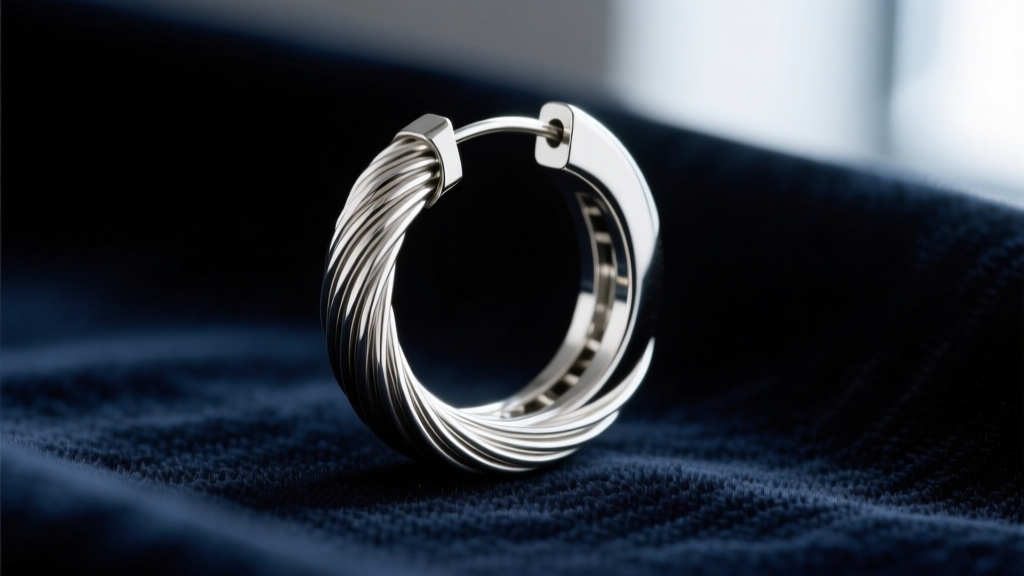
Solving Lobe Sagging and "Forward Tilt"
Earlobe fatigue is a genuine physiological response to sustained weight. A solid 925 sterling silver 35mm hoop with a 2.5mm wire thickness can weigh upwards of 5.5 grams per earring. While that sounds light, the Association of Professional Piercers notes that sustained downward pressure on a standard lobe piercing can cause the fistula to stretch and angle downward, resulting in the dreaded "forward tilt" where the hoop points toward your cheek rather than hanging straight.
Gauge and Weight Dynamics
The first step in solving sagging is evaluating the gauge and volume. Many fast-fashion brands use thick, solid brass or silver wires to make 35mm hoops look substantial, inadvertently creating a pendulum effect. To fix this without sacrificing the visual impact of a thick hoop, seek out hollow-tube construction. A 14k gold hollow tube hoop at 35mm can maintain a chunky 3mm visual thickness while weighing less than 1.5 grams. If you prefer solid metals, mandate an 18-gauge (1.0mm) or 16-gauge (1.2mm) wire. This reduces the overall mass while actually providing better structural rigidity than a flimsy 20-gauge wire that bends under the hoop's own weight.
The Silicone O-Ring Hack
If you already own a pair of heavy 35mm hoops that droop, you can artificially correct the center of gravity. Purchase 1mm-thick, 3mm-diameter silicone O-rings (often sold as earring backs or jewelry making supplies). Slide one O-ring onto the post before inserting it through your ear, and secure it with a standard butterfly back or screw-back. The silicone creates high-friction drag against the back of the earlobe, physically preventing the heavy front of the hoop from pulling the post downward.
The Hair-Tangle Trap at the Jawline
Because 35mm is the exact average distance from a standard lobe piercing to the point where hair naturally flips over the shoulder or tucks behind the ear, these hoops are notorious tanglers. The culprit is almost always the closure mechanism.
Upgrading the Closure Mechanism
- Leverbacks: The worst offenders for 35mm hoops. The small V-shaped wire catch at the back creates a perfect hook for fine hair. Avoid leverbacks entirely if you wear your hair down.
- Latch-Backs (Saddlebacks): Better than leverbacks, but the tiny hinge pin and the receiving U-catch can still catch stray strands. If you must wear latch-backs, ensure the receiving catch is deeply milled so the post sits completely flush.
- Hinged Clickers: Excellent for security, but at 35mm, the hinge joint can pinch hair if the tolerances are loose. Look for brands that use CNC-machined hinges rather than cast hinges for a seamless, gap-free joint.
- Continuous (Endless) Hoops: The ultimate anti-tangle solution. A continuous hoop features a thin, slightly curved pin that slides into a hollow receiving tube. Because there are no external hinges or catches, hair glides right over the metal. The trade-off is that inserting them requires a specific "pinch-and-snap" technique to avoid bending the wire out of its perfect circular tension.

Cartilage vs. Lobe: Sizing the 35mm Hoop
A frequent troubleshooting ticket we receive involves customers buying 35mm hoops for conch or lower helix piercings, only to find the metal crushing against their cartilage folds. This is a fundamental misunderstanding of how hoop diameters are marketed.
When a brand advertises a "35mm hoop," they are almost always listing the Outer Diameter (OD). If the hoop is made from a thick 3mm tubular wire, the Inner Diameter (ID)—the actual empty space that must clear your ear anatomy—is only 29mm. For a standard lobe, a 29mm ID is plenty of room. But for a conch piercing, where the cartilage shelf protrudes outward, a 29mm ID will result in a tight, uncomfortable squeeze that can cause pressure necrosis or migration. According to guidelines discussed by Jewelrywise and professional piercers, always measure your cartilage clearance with a digital caliper and purchase hoops based strictly on their Inner Diameter specifications, especially for sizes hovering around the 30-40mm threshold.
Expert Maintenance: Fixing Loose Hinges and Clickers
If your 35mm latch-back or clicker hoops are popping open when you pull a turtleneck over your head, the metal has experienced fatigue. The receiving "U" catch has been stretched slightly wider than the post, reducing the friction required to keep it closed.
Step-by-Step Hinge Repair
- Secure the Hoop: Place the hoop on a soft jeweler's bench block or a folded microfiber cloth to prevent scratching.
- Use the Right Tool: Never use standard steel needle-nose pliers, as they will leave permanent gouges in gold or silver. Use nylon-jaw pliers or wrap the tips of your steel pliers in masking tape.
- Apply Gentle Pressure: Grip the receiving U-catch (not the hinge itself) and apply a very gentle, inward squeezing motion. You only need to close the gap by a fraction of a millimeter.
- Test the Snap: Insert the post. It should require a firm push and produce an audible "click." If it's too tight, gently pry it back open with a flathead jeweler's screwdriver.
Final Verdict on the 35mm Silhouette
The 35mm hoop earring remains a staple of the modern jewelry wardrobe because it perfectly frames the jawline without overwhelming the facial features. However, its mid-sized geometry demands respect for material weight and closure engineering. By prioritizing ASTM F-136 implant-grade titanium or hollow 14k gold, opting for flush continuous closures, and understanding the critical difference between OD and ID, you can transform your 35mm hoops from a source of daily frustration into a flawless, comfortable signature piece.


