Best Materials for a Gay Earring: Pride & Piercing Guide
Discover the best materials for a gay earring in 2026. Compare titanium, gold, and anodized pride jewelry for safe, long-lasting lobe and cartilage wear.

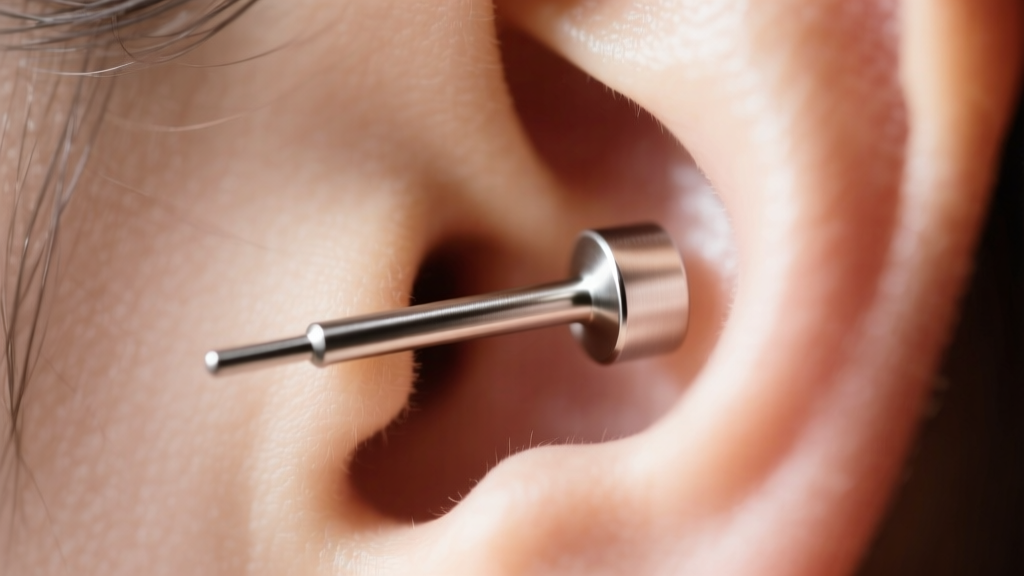
The Evolution of the Gay Earring: From Covert Signal to Material Science
The concept of the 'gay earring' has undergone a radical transformation. Historically, a single stud in the right ear served as a covert signaling mechanism within the LGBTQ+ community during the conservative climates of the 1980s and 1990s. Today, queer coding in jewelry is loud, proud, and highly intentional. Whether you are sporting a single statement piece, a pride-themed cartilage cuff, or an anodized rainbow stud, the material composition of your gay earring dictates not just its aesthetic, but its biocompatibility and longevity.
As we navigate 2026, the modern queer community demands more from its jewelry. According to GLAAD, self-expression is a cornerstone of LGBTQ+ visibility. But visibility should never come at the cost of your physical health. Understanding the metallurgy behind your jewelry is essential for preventing contact dermatitis, piercing rejection, and premature material degradation.
The Core Metals: Biocompatibility and ASTM Standards
When selecting a single, high-impact earring, the metal must withstand constant wear, moisture, and friction. The Association of Professional Piercers (APP) strictly recommends specific implant-grade materials for both fresh and healed piercings. Here is how the top contenders compare for your gay earring.
| Material | Standard / Grade | Nickel Content | Price Range (Single Piece) | Best Application |
|---|---|---|---|---|
| Implant-Grade Titanium | ASTM F136 | 0% (Nickel-Free) | $35 - $120 | Fresh piercings, threadless posts, sensitive lobes |
| Niobium | Un-alloyed (99.9% Nb) | 0% | $25 - $80 | Anodized pride colors, lightweight hoops |
| 14k Solid Gold | 58.5% Gold Alloy | Varies (Often Nickel-Free) | $150 - $400 | Healed lobes, luxury single studs |
| 18k Solid Gold | 75% Gold Alloy | Rarely present | $250 - $800+ | Huggies, decorative ends (not posts) |
Why Implant-Grade Titanium Reigns Supreme
Implant-grade titanium (ASTM F136) is the undisputed champion for the post—the part of the earring that actually passes through your tissue. It is entirely nickel-free, highly resistant to corrosion, and significantly lighter than steel. For a single 'gay earring' meant to be worn 24/7 without removal, titanium prevents the galvanic reactions that cause the skin to turn green or develop contact dermatitis.
Pride in Color: Anodization vs. Enamel vs. Resin
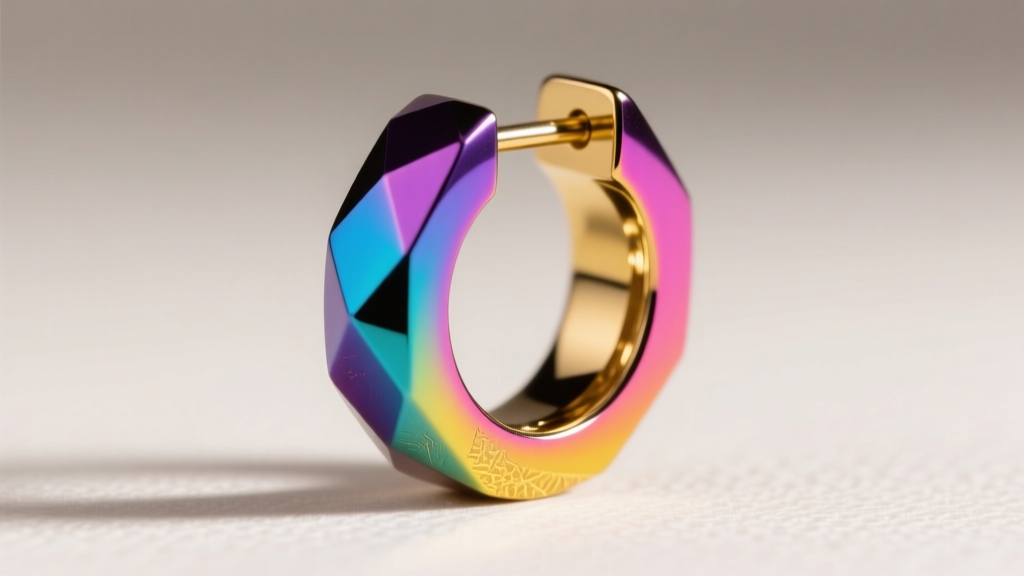
A major component of modern queer jewelry is the incorporation of the Pride flag's vibrant colors. However, how those colors are applied drastically affects the earring's safety profile and lifespan.
- Anodized Titanium & Niobium: This is the gold standard for colored jewelry. Anodization uses an electrical current to thicken the natural oxide layer on the metal's surface. This alters how light refracts, creating vibrant rainbow, trans-flag, or bi-flag colors without using any dyes, paints, or chemicals. It is 100% biocompatible and will not flake off inside your piercing.
- Vitreous Enamel: Enamel is essentially fused glass. While beautiful and highly durable on the decorative front of a stud or hoop, it should never be used on the post or inside the piercing channel. If enamel chips, the sharp glass-like edges can cause micro-tears in the fistula (the piercing tunnel).
- Epoxy Resin & UV Acrylics: Often found in cheap, mass-produced pride jewelry. These materials are porous, harbor bacteria, and can degrade when exposed to sweat, sebum, and hot showers. Avoid resin for any earring that passes through the skin.
Gauge Sizes, Threading, and the Single-Piece Strategy
The structural integrity of a single statement earring relies heavily on its gauge (thickness) and threading mechanism. Because a 'gay earring' is often a solitary focal point, it must be secure and comfortable.
Understanding Gauge for Lobes vs. Cartilage
Most standard commercial lobe earrings are 20-gauge (0.81mm) or 18-gauge (1.02mm). However, professional piercers typically use 16-gauge (1.29mm) or 14-gauge (1.60mm) for both lobes and cartilage. A thicker 16G post reduces the 'cheese-cutter effect,' where thin wire slowly migrates through the tissue due to the weight of the jewelry. If you are wearing a heavier single drop or a chunky pride huggie, upgrading to a 16G or 14G titanium post is crucial for long-term tissue health.
Threadless (Push-Pin) vs. Internally Threaded
Never wear externally threaded jewelry (where the screw is on the post). The threads act like a file, destroying your piercing channel every time you insert it. Instead, opt for:
Threadless (Push-Pin) Mechanisms: The decorative end has a slightly bent pin that creates tension inside the hollow post. This is the most secure method for a single earring, ensuring you don't lose your prized jewelry to a loose screw. It also allows for custom sizing, ensuring the post is the exact length of your healed tissue, eliminating spaces where bacteria can hide.
Failure Modes and Long-Term Maintenance
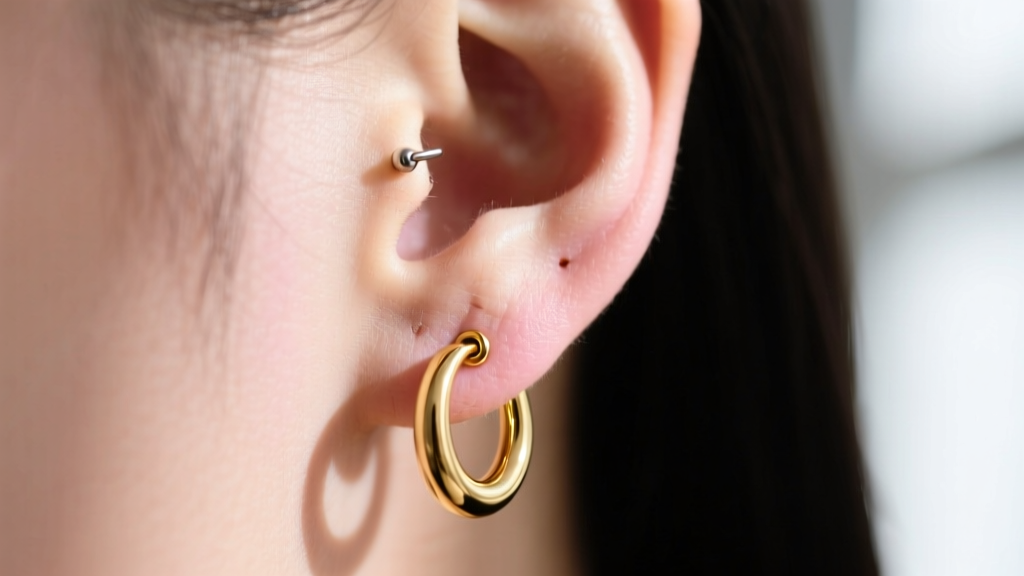
Even the highest quality materials require specific maintenance to retain their luster and structural integrity. Here are the most common failure modes for expressive, single-piece earrings and how to prevent them:
1. Galvanic Corrosion from Mixed Metals
If you wear a 14k gold decorative end on a titanium post, you may experience galvanic corrosion if the two metals touch in the presence of an electrolyte (like sweat or saltwater). This creates a micro-battery effect, leading to rapid tarnishing of the gold and pitting of the titanium. Always ensure your decorative ends and posts are either the same metal or separated by a biocompatible O-ring or gemstone setting.
2. Alloy Tarnishing in Lower-Karat Gold
While pure 24k gold is completely inert, it is too soft for jewelry. 14k and 18k gold are alloyed with copper, silver, and zinc. Copper is highly reactive to sulfur and chlorine. If you swim in chlorinated pools or use sulfur-based skincare products, your gold gay earring will develop a dull, dark patina. Clean it regularly with a mild, phosphate-free dish soap and a soft-bristled toothbrush to remove sebum and environmental pollutants.
3. Snagging and Prong Failure
For single diamond or gemstone studs, the prongs holding the stone are vulnerable. A 4-prong setting is more likely to catch on hair and clothing than a bezel setting. If your single earring features a gemstone, opt for a bezel setting where the metal completely surrounds the stone's girdle, ensuring it survives the rigors of daily wear.
Final Thoughts on Investing in Identity
The modern gay earring is far more than a relic of historical coding; it is a celebration of identity, material innovation, and personal style. By prioritizing ASTM F136 titanium, opting for anodized colors over porous resins, and respecting the mechanics of gauge and threading, you ensure that your jewelry remains as resilient and vibrant as the community it represents. Invest in pieces that honor your body and your truth.


