Material Guide for Two Piercing Earrings: Titanium vs Gold
Discover the best metals for two piercing earrings. Compare titanium, gold, and steel for double lobes, connected chains, and sensitive skin.

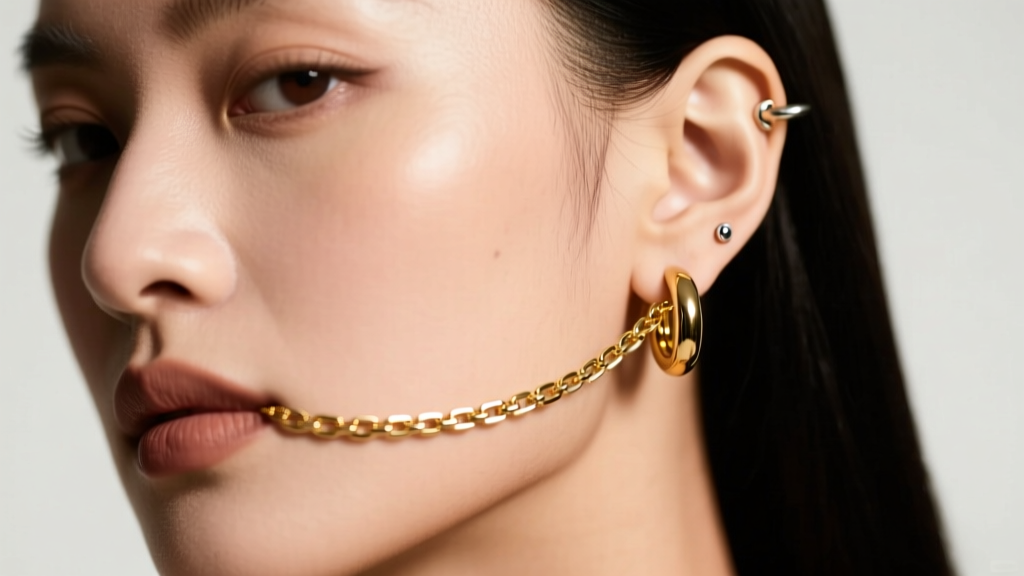
Curating the perfect double-lobe or cartilage setup requires more than just an eye for aesthetics; it demands a deep understanding of metallurgy and biomechanics. When selecting two piercing earrings—whether you are opting for independent studs or connected chain styles—the material dictates not only the visual appeal but also the healing environment, weight distribution, and long-term tissue health. In 2026, jewelry standards have evolved, and consumers are more educated than ever about the hidden risks of low-grade alloys.
This comprehensive guide breaks down the exact material properties you need to consider when shopping for multiple ear piercings, ensuring your setup remains comfortable, hypoallergenic, and structurally sound.
The Biomechanics of Double Piercings: Weight and Tension
Wearing jewelry in two adjacent holes introduces unique mechanical stresses that single piercings do not face. This is especially true for connected two piercing earrings, such as lobe-to-lobe chains or ear cuffs linked to a primary stud. These pieces create a closed tension loop across the ear tissue.
If the metal is too heavy, gravity will pull the jewelry downward, causing the primary hole (usually the lower lobe) to bear the brunt of the weight. Over time, this can lead to tissue thinning or migration. Conversely, if the metal lacks adequate tensile strength, the constant micro-movements of the ear can cause the wire or chain to permanently deform. According to the Association of Professional Piercers (APP), the density and yield strength of the metal are critical factors in preventing fistula irritation, particularly when jewelry spans across multiple holes.
Material Breakdown: What Works Best?
Not all metals are created equal. The environment inside a piercing channel is warm, moist, and slightly acidic, making it a harsh testing ground for alloys. Here is how the top jewelry materials perform in double-piercing setups.
Implant-Grade Titanium (ASTM F136)
For any piercing that is still healing, or for individuals with known metal sensitivities, ASTM F136 implant-grade titanium is the undisputed champion. Titanium is remarkably lightweight, boasting a density of roughly 4.5 g/cm³—nearly half that of surgical steel. When wearing two piercing earrings made of titanium, the reduced weight significantly minimizes the downward drag on the lower lobe.
Furthermore, titanium contains zero nickel. Its surface naturally forms a passive oxide layer that prevents corrosion, ensuring that the micro-polish of the post remains smooth and frictionless as it moves through the fistula during daily activities.
14k and 18k Solid Gold
Gold remains a premier choice for healed double piercings, but the karat and alloy composition matter immensely. Pure 24k gold is too soft and will easily scratch or bend under the tension of a connected chain. Therefore, 14k and 18k gold are preferred.
- 14k Gold: Harder and more scratch-resistant due to a higher percentage of alloy metals. Ideal for the friction points of connected two piercing earrings.
- 18k Gold: Softer and richer in color, but more prone to micro-abrasions that can harbor bacteria if not cleaned properly.
Critical Warning: Ensure your gold is alloyed with palladium or silver, not copper or nickel. Nickel-alloyed white gold is a leading cause of contact dermatitis, a risk amplified when wearing multiple pieces that trap sweat against the skin. The Mayo Clinic notes that prolonged exposure to nickel-releasing alloys in body jewelry is a primary trigger for systemic allergic responses.
316L Surgical Steel and Niobium
316L surgical stainless steel is ubiquitous and affordable, but it contains 8-10% nickel. While the nickel is usually bound tightly within the alloy, the friction caused by the swaying motion of dangling two piercing earrings can cause microscopic wear, releasing nickel ions into the tissue. Steel is best reserved for fully healed, non-sensitive lobes. Niobium, on the other hand, is a highly reactive element that forms a protective oxide layer similar to titanium. It is an excellent, albeit heavier, hypoallergenic alternative for custom anodized jewelry.
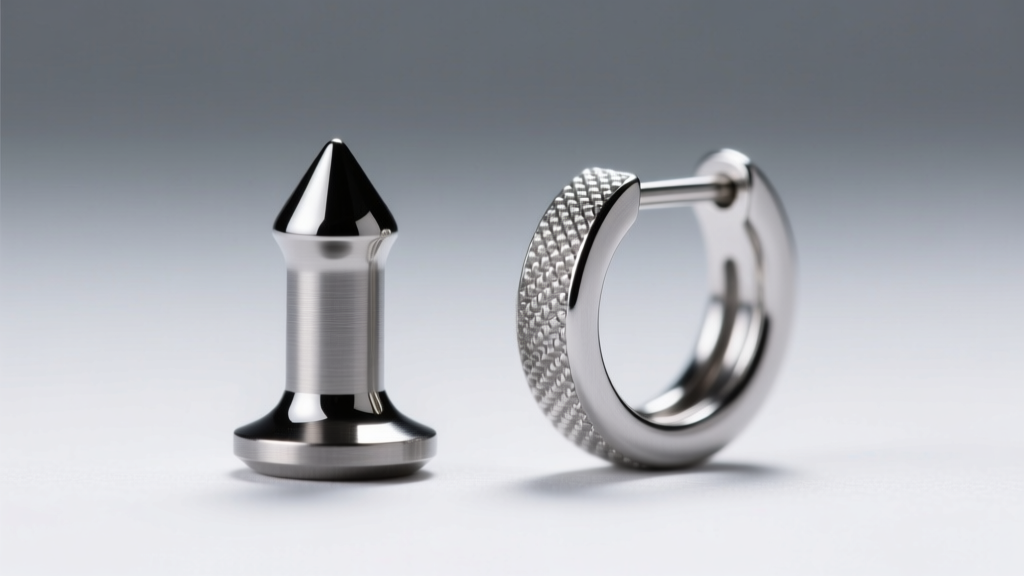
Connected vs. Independent Two Piercing Earrings
When designing a double-lobe look, you generally choose between independent pieces (two separate studs or hoops) and connected pieces (a single chain or bar linking both holes). The material requirements shift drastically between the two.
| Material | Density (g/cm³) | Nickel Content | Tensile Strength | Best Use Case |
|---|---|---|---|---|
| ASTM F136 Titanium | 4.5 | 0% | High | Healing piercings, heavy connected chains |
| 14k Solid Gold | 12.9 | 0% (if palladium alloy) | Medium-High | Healed lobes, luxury independent sets |
| 18k Solid Gold | 15.6 | 0% (if palladium alloy) | Medium | Healed lobes, lightweight aesthetic studs |
| 316L Surgical Steel | 8.0 | 8-10% | High | Healed, non-sensitive budget setups |
| Niobium | 8.57 | 0% | Medium | Custom anodized independent hoops |
The Galvanic Corrosion Risk: If you wear connected two piercing earrings that mix metals—for example, a titanium stud in the top hole connected by a steel chain to a gold cuff in the bottom hole—you risk galvanic corrosion. When sweat acts as an electrolyte, the dissimilar metals create a micro-battery effect, leading to rapid tarnishing, metallic tastes, and severe skin irritation. Always ensure all components of a connected piece share the same base metal family.
Gauge Sizing and Hole Proximity
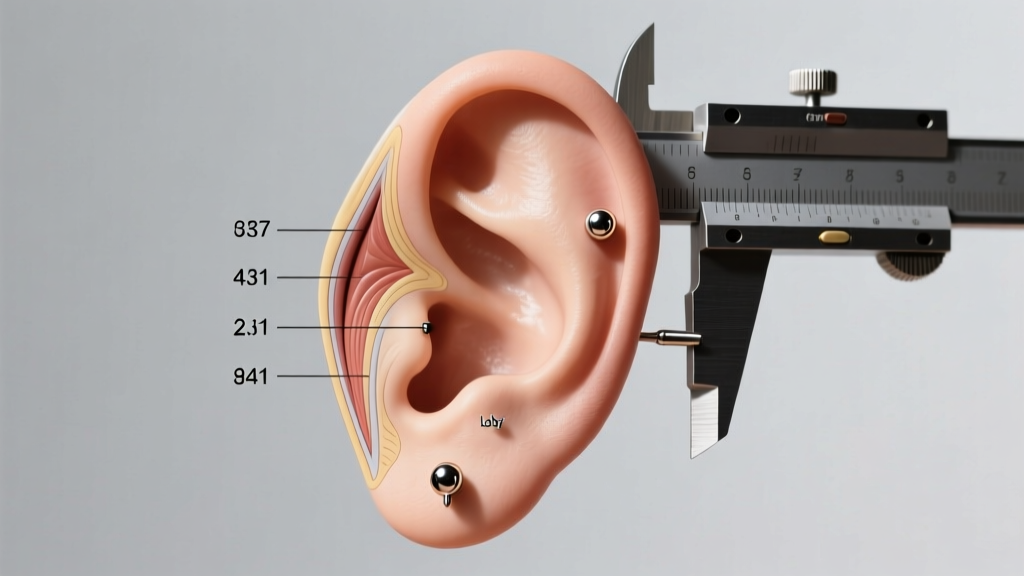
Material properties only matter if the jewelry actually fits your unique anatomy. The standard gauge for a primary lobe piercing is 18G (1.0mm) or 20G (0.8mm), while secondary lobes and cartilage are often pierced at 16G (1.2mm).
If you are purchasing a rigid bar that spans across two holes, the distance between your piercings must perfectly match the jewelry's manufacturing. A standard double-lobe spacing is roughly 6mm to 8mm. If your holes are spaced 10mm apart, a rigid 7mm titanium bar will create severe angular stress, forcing the metal to act as a lever against the fistula walls. In these cases, flexible chain links or independent earrings are mandatory to preserve tissue health.
Care and Maintenance for Multi-Hole Setups
Maintaining multiple piercings requires a disciplined approach to hygiene, especially when the jewelry is physically linked.
- Ultrasonic Cleaning: Connected two piercing earrings feature tiny jump rings and clasp mechanisms that trap dead skin cells and sebum. Use an ultrasonic jewelry cleaner with a mild, ammonia-free solution once a month to dislodge debris from the chain links.
- Polishing: Micro-scratches on gold or steel can harbor bacteria. Have a professional jeweler polish your solid gold pieces annually to restore the mirror finish, which reduces friction during insertion and removal.
- Sleeping Habits: Never sleep in connected chain earrings. The lateral pressure of a pillow can twist the chain, applying a torque force that can tear the more delicate secondary piercing. Switch to flat-back titanium labret studs for sleeping.
Final Verdict: Choosing Your Metal
Selecting the right material for two piercing earrings is an investment in your body's long-term health and comfort. If you are dealing with fresh piercings, sensitive skin, or heavy connected designs, ASTM F136 titanium is the most biologically inert and structurally forgiving option. For fully healed lobes where luxury and warmth are the priority, palladium-alloyed 14k gold offers the perfect balance of hardness and prestige. By respecting the biomechanics of your ear anatomy and avoiding mixed-metal galvanic traps, your double-piercing setup will remain a flawless, irritation-free expression of your personal style.


