Mastering Bow Dangle Earrings: Weight, Gauge & Fit Mechanics
Discover the technical mechanics of bow dangle earrings. Learn about metal gauges, weight distribution, articulation joints, and lobe support systems.

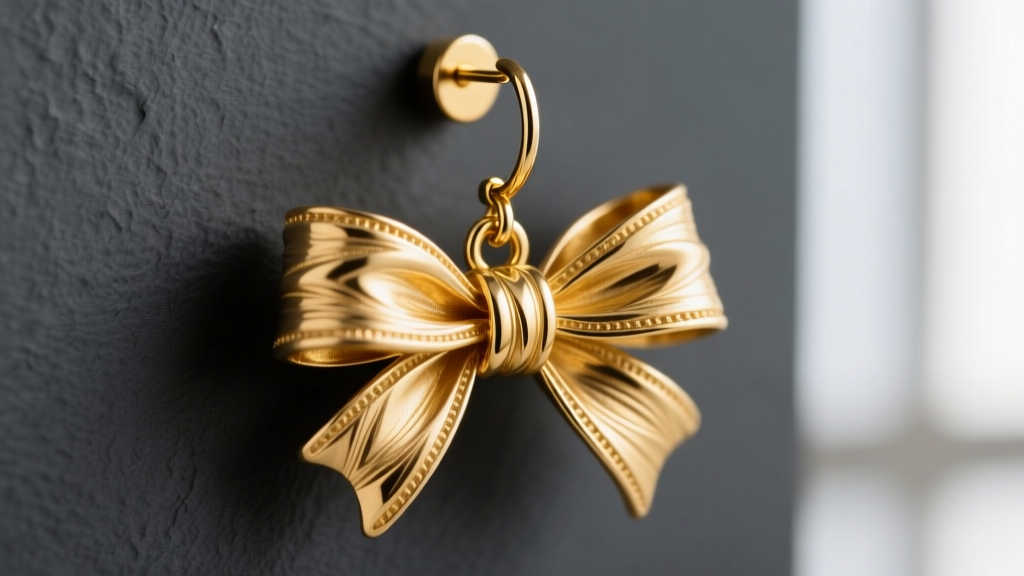
Bow dangle earrings are a staple of elegant jewelry design, but translating the soft, fluid drape of a fabric ribbon into rigid metal presents a unique metallurgical and structural challenge. Unlike static studs or simple hoops, a dangle earring must navigate the physics of movement, wind resistance, and the biomechanical limits of the human earlobe. In this expert deep dive, we deconstruct the engineering behind high-quality bow dangle earrings, examining metal gauges, articulation mechanics, and the critical backing systems required to prevent lobe trauma.
The Structural Anatomy of a Bow Dangle
To understand why some bow earrings hang beautifully while others look stiff or cause discomfort, we must first examine their structural anatomy. A well-engineered bow dangle consists of four primary components: the post, the bail (or connector), the articulation joint, and the bow body itself. The interaction between the bail and the bow body dictates the earring's kinetic behavior.
Articulation Joints: Hinges vs. Jump Rings
The articulation point is where the magic happens. If a bow is soldered directly to a static post, it lacks movement and appears lifeless. Master jewelers utilize two primary articulation methods:
- Soldered Jump Rings: A micro-jump ring connects the bow's top loop to the post's bottom loop. This allows for 360-degree rotational freedom and a natural pendulum swing. However, if the jump ring is not laser-welded or perfectly soldered shut, the dynamic load of the dangle will eventually pull the ring apart.
- Micro-Hinges: Often used in high-end vintage or luxury pieces, a hidden barrel hinge restricts movement to a single vertical plane. This prevents the bow from flipping upside down but requires precise tolerances to avoid seizing.
Material Science: Metal Gauges and Ribbon Folds
Creating the illusion of soft fabric using hard metal requires advanced metalworking techniques. According to the technical archives at Ganoksin, the world's largest jewelry-making technical resource, achieving delicate ribbon folds usually involves die-striking or hand-fabrication from sheet metal, rather than traditional lost-wax casting.

Cast bows tend to be thick, heavy, and lack the sharp, crisp edges of a real ribbon knot. Hand-fabricated bows, conversely, are constructed from sheet metal ranging from 22-gauge (0.64mm) to 26-gauge (0.40mm). To prevent the thin metal from collapsing, jewelers employ a technique called work hardening. By strategically hammering or burnishing the edges of the "ribbon," the metal's crystalline structure is compressed, increasing its tensile strength without adding bulk.
When evaluating 18k yellow gold bow dangle earrings, look for sharp, defined creases at the knot. Muddy or rounded folds indicate a poor-quality cast rather than expert sheet-metal fabrication.
Another technique for creating voluminous but lightweight bows is electroforming. This process involves depositing a layer of gold over a wax or resin mandrel, which is later melted away. Electroformed bow dangle earrings can achieve massive visual volume while weighing less than 3 grams, bypassing the biomechanical limits of the earlobe entirely. However, the resulting metal shell is incredibly thin (often under 0.2mm) and will dent permanently if subjected to compressive force.
Platinum (95% pure) is rarely used for intricate, hand-folded bows because its high melting point and stiffness make micro-folding difficult without risking metal fatigue or cracking. Sterling silver (92.5% pure) is more common for fashion-tier bows but is prone to tarnishing in the deep crevices of the knot, requiring meticulous maintenance.
Weight Distribution and Earlobe Biomechanics
The human earlobe is composed primarily of adipose (fat) tissue and lacks the supportive cartilage found in the upper ear. This makes it highly susceptible to traction and tearing. The weight of bow dangle earrings is a critical factor, but dynamic load—the force exerted when the earring swings, catches on hair, or encounters wind—is the true enemy of earlobe integrity.
Below is a technical breakdown of weight classifications and their corresponding structural requirements:
| Weight Tier | Mass (Per Earring) | Optimal Post Gauge | Biomechanical Impact & Risk |
|---|---|---|---|
| Lightweight | Under 5 grams | 20G (0.81mm) | Minimal traction. Safe for all-day wear on standard or stretched lobes. |
| Mid-Weight | 5 to 12 grams | 18G (1.02mm) | Moderate downward pull. Requires a supportive backing to prevent the "slit" effect. |
| Statement | 12 to 20+ grams | 16G (1.29mm) | High traction risk. Not recommended for extended wear without specialized earlifts. |
For mid-weight and statement bow dangles, the center of gravity is crucial. A bow that is bottom-heavy will pull the post downward, creating a fulcrum effect that slices through the piercing channel. Expert designers counterbalance this by hollowing out the bottom loops of the bow or integrating a lightweight structural armature inside the knot.
Advanced Backing Systems for Heavy Dangles
The standard "butterfly" or friction back is entirely inadequate for bow dangle earrings exceeding 6 grams. The narrow surface area of a butterfly back concentrates pressure on a single point behind the earlobe, leading to discomfort and eventual migration of the piercing.
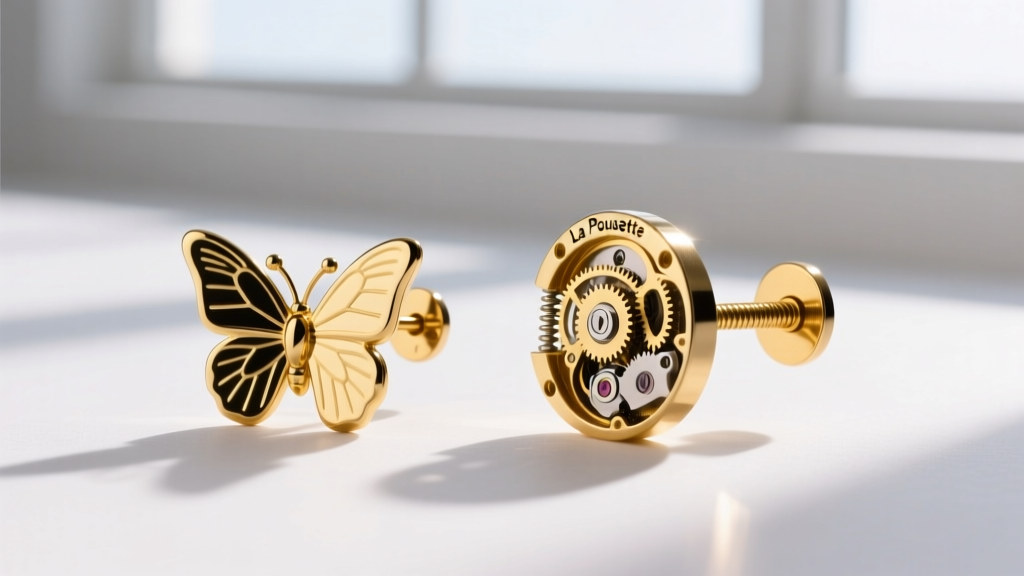
La Pousette vs. Silicone Stabilizers
To secure heavier bows, professionals recommend two primary backing systems:
- La Pousette (Locking Clutch): This mechanical backing features two tiny spring-loaded tabs that lock securely into a grooved earring post. It completely eliminates the risk of the earring falling off and distributes pressure slightly better than a standard friction back. However, it requires a specialized grooved post, meaning it cannot be used on generic wire.
- Silicone Earlifts and Disc Backings: For bows in the 10-15 gram range, a wide silicone disc or a specialized plastic "earlift" pad is essential. These pads sit flush against the back of the earlobe, distributing the downward traction across a surface area of roughly 150 square millimeters. This prevents the post from acting as a cheese-wire through the tissue.
According to guidelines from Jewelers of America, ensuring that the post length is sufficient to accommodate both the thickness of the earlobe and the depth of a wide disc backing is a common oversight in mass-produced jewelry. A standard post is 11mm; for heavy dangles requiring disc backings, a 14mm post is the professional standard.
Maintenance: Preventing Metal Fatigue in Delicate Folds
The "knot" of a bow dangle earring is a massive stress concentration point. Every time the earring swings, kinetic energy travels down the post and transfers into the knot. Over time, this cyclical loading can cause metal fatigue, particularly in lower-karat gold alloys (like 10k or 14k) which can become brittle if heavily work-hardened during manufacturing.
To maintain the structural integrity of your bow dangles:
- Avoid Ultrasonic Cleaners for Hollow Bows: Many large, statement bows are electroformed or constructed from hollow tubing to save weight. The high-frequency vibrations of an ultrasonic cleaner can cause micro-fractures in the soldered seams of hollow components.
- Inspect the Articulation Loop: Every six months, use a 10x jeweler's loupe to inspect the jump ring connecting the bow to the post. If you see a visible seam or gap, take it to a jeweler for a quick laser weld before the dangle is lost.
- Clear Trapped Compounds: Polishing compounds like rouge or tripoli frequently become trapped in the deep, undercut crevices of the bow knot during manufacturing. Over time, this trapped compound hardens and attracts moisture, leading to localized galvanic corrosion. Use a soft-bristled brush and a mild degreasing solution to clear these recesses periodically.
- Store Flat, Not Hanging: Hanging heavy bow dangles on a jewelry tree puts constant static tension on the articulation joint. Store them flat in a lined box to relieve mechanical stress.
Conclusion
Bow dangle earrings are far more than a simple aesthetic choice; they are a triumph of micro-engineering and metallurgical artistry. By understanding the importance of soldered articulation joints, appropriate metal gauges, and biomechanically sound backing systems, you can invest in pieces that not only drape beautifully but also preserve the health of your earlobes for decades to come. Whether you are selecting a delicate 24-gauge gold ribbon for daily wear or a bold, hollow-electroformed statement piece for an evening gala, the technical details dictate the longevity and comfort of the design.


