Expert Guide to 1 ct Diamond Earrings: Specs & Pricing
Master the technical specs of 1 ct diamond earrings. Explore cut proportions, setting engineering, gauge sizes, and 2026 lab vs. natural pricing.

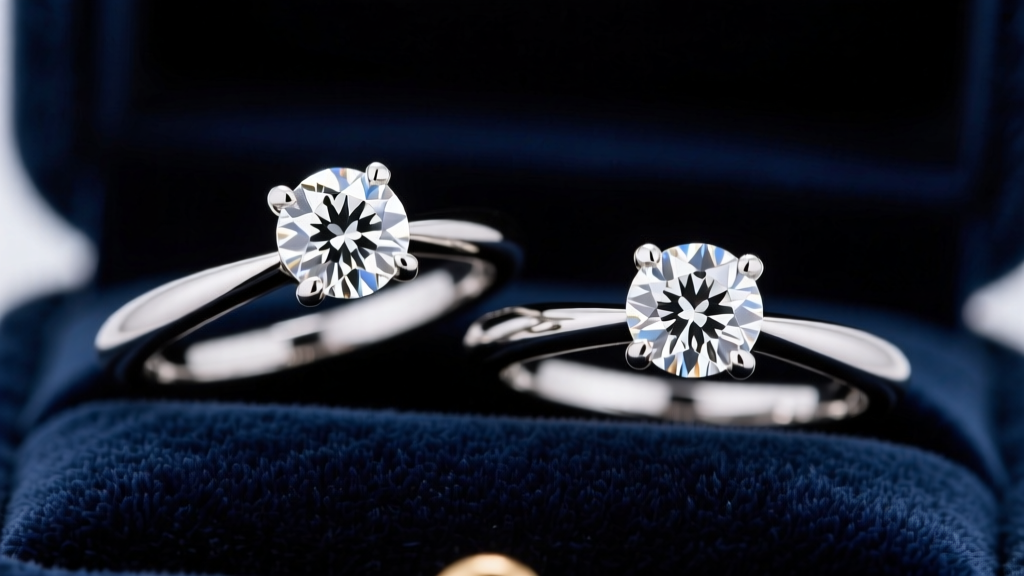
When evaluating 1 ct diamond earrings, the first technical hurdle is deciphering carat weight terminology and understanding how light physics interact with stones positioned parallel to the face. Unlike rings, which are viewed from a dynamic, multi-angled perspective at close range, earring studs sit on a fixed vertical plane roughly two feet from the observer's eye. This distinct spatial relationship fundamentally alters how we must prioritize the 4Cs, setting engineering, and metallurgy. In this technical deep dive, we deconstruct the exact specifications required to maximize light return, structural integrity, and value in the current market.
The Carat Conundrum: Total Weight vs. Single Stone
The phrase '1 ct diamond earrings' is notoriously ambiguous in retail jewelry. It almost always refers to Total Carat Weight (TW), meaning the combined weight of both stones. Therefore, a 1 ct TW pair consists of two 0.50 ct diamonds. Because diamond pricing follows an exponential curve rather than a linear one, a single 1.00 ct diamond costs exponentially more than two 0.50 ct diamonds of the same quality.
For buyers seeking a single 1.00 ct stone per ear (2.00 ct TW), the structural requirements of the earring post change dramatically. A 2.00 ct TW pair weighs approximately 0.4 grams, which is enough to cause severe drooping on standard earlobes if the setting's center of gravity is not properly calibrated. Always verify whether the listing specifies 'TW' or 'each' before comparing price-per-carat metrics.
Cut Proportions: The Non-Negotiable Metric
Because earrings are viewed face-on, cut quality is the single most important determinant of visual impact. A poorly cut 0.70 ct diamond will face up smaller and appear duller than an ideally cut 0.50 ct stone. According to the Gemological Institute of America (GIA), light return is governed by precise facet alignment. For round brilliant studs, you must demand the following proportional ranges to guarantee edge-to-edge brilliance:
- Table Percentage: 54% - 57% (Prevents the 'fish-eye' effect and ensures a crisp contrast pattern).
- Total Depth: 61.0% - 62.5% (Keeps the physical diameter wide enough for maximum spread without sacrificing pavilion light bounce).
- Crown Angle: 34.0° - 35.0°
- Pavilion Angle: 40.6° - 41.0°
Stones falling outside these parameters will suffer from light leakage, appearing glassy or dark in the center—flaws that are highly visible when the stones are stationary on the earlobe.
Setting Engineering: Martini, Basket, and Halo
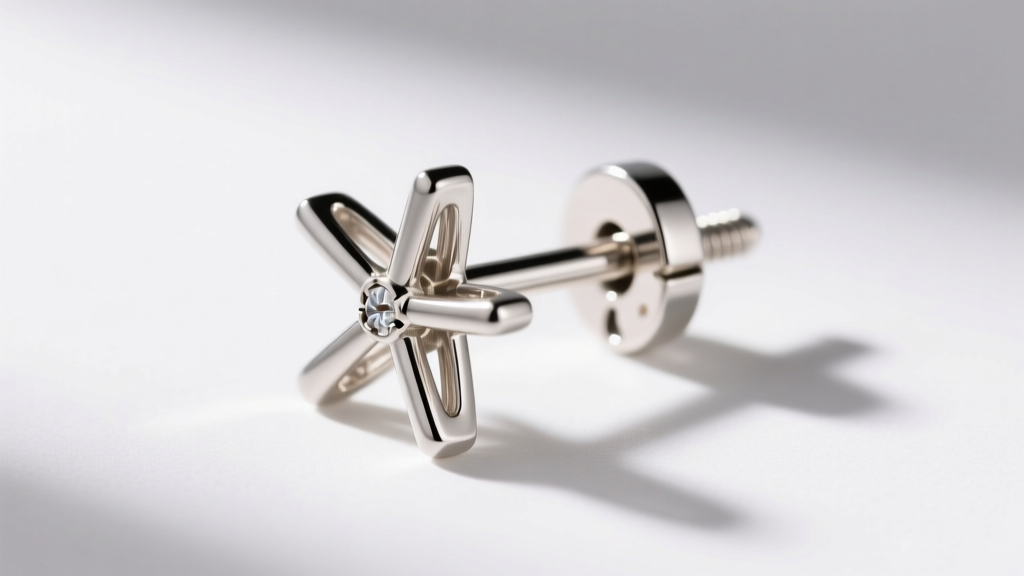
The architecture of the setting dictates both the security of the stone and how it sits on the lobe. A heavy 1 ct TW pair requires a low-profile setting to prevent the 'droop' effect caused by gravity pulling on the post.
| Setting Type | Prong Count | Center of Gravity | Best Use Case | Drawbacks |
|---|---|---|---|---|
| Martini | 3 | Very Low | Stones up to 1.50 ct TW | Prongs can catch on hair; less lateral security. |
| Basket | 4 | Medium | Stones 1.50 ct to 3.00 ct TW | Sits slightly higher; can block light if base is too wide. |
| Halo | 4 + Melee | High | Maximizing spread of smaller centers | Requires frequent ultrasonic cleaning; melee can loosen. |
For a classic 1 ct TW pair, the 3-prong martini setting remains the gold standard. By minimizing the metal directly beneath the culet, it allows maximum ambient light to enter the pavilion, while the low center of gravity keeps the stud perfectly flush against the lobe.
Post Metallurgy and Gauge Mechanics
The post is the structural spine of the earring. Standard fashion earrings use 20-gauge (0.81mm) or 18-gauge (1.02mm) wire. However, for fine diamond studs, particularly those exceeding 0.75 ct TW, an 18-gauge post forged in 950 Platinum or 18k White Gold is mandatory. Platinum's density and tensile strength prevent the post from bending under the weight of the stone, which can cause the threading to strip or the post to snap under lateral pressure.
Friction vs. Screw Backs
Friction backs (butterfly clasps) rely on a spring-loaded tension mechanism that degrades over time, leading to lost stones. For any diamond investment over $1,000, upgrade to screw-back mechanisms. The La Pousette locking back, widely considered the industry benchmark for high-value studs, utilizes a mechanical click-lock system that physically prevents the backing from unscrewing, providing fail-safe security for active wearers.
Color, Clarity, and Fluorescence Protocols
Because earrings are viewed from a distance of 24 to 36 inches, you can aggressively optimize your budget by relaxing color and clarity grades without sacrificing visual performance.
- Color: For platinum or white gold settings, F-G color is ideal. For 14k or 18k yellow gold settings, you can safely drop to H-I color, as the warm metal reflection masks faint yellow body tones.
- Clarity: VS2 to SI1 is the optimal range. Inclusions in an SI1 stone are entirely invisible to the naked eye from two feet away. Paying for VVS clarity in earrings is a waste of capital.
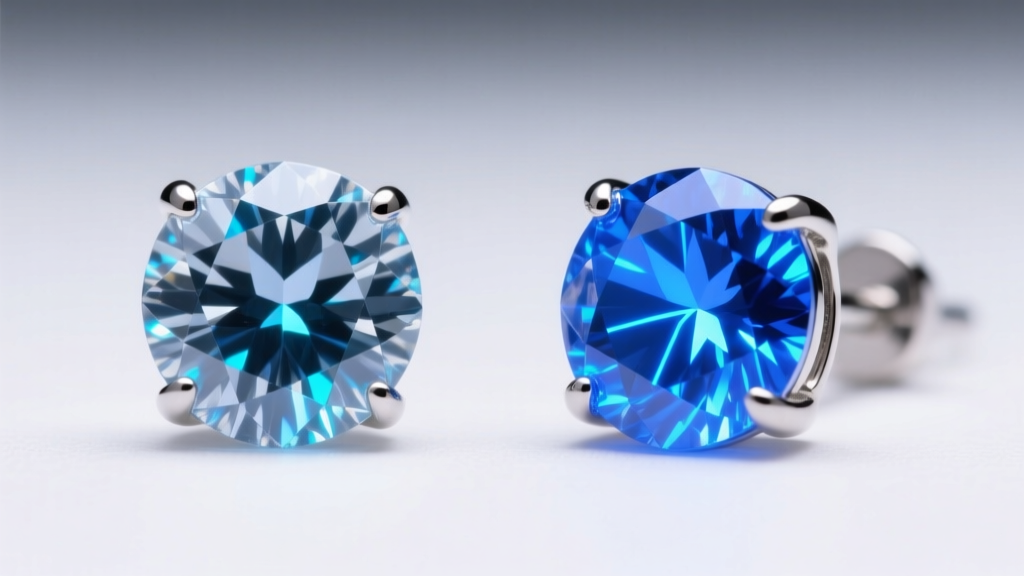
- Fluorescence: According to GIA research on diamond fluorescence, Faint to Medium Blue fluorescence can actually be advantageous in H-I color stones, as the UV component in natural daylight will make the stones appear one to two color grades whiter. Avoid 'Strong' or 'Very Strong' fluorescence, which carries a 10-15% market discount due to the rare risk of a milky or oily appearance.
2026 Market Pricing Matrix: Lab-Grown vs. Natural
The pricing landscape for diamond studs has shifted dramatically with the maturation of Chemical Vapor Deposition (CVD) and High Pressure High Temperature (HPHT) lab-grown diamonds. Below is the current 2026 pricing matrix for a matched pair of 1 ct TW (0.50 ct each) round brilliant studs, graded F color / VS2 clarity with Excellent cut symmetry.
| Origin | Certification | Avg. Retail Price (1ct TW) | Resale Liquidity |
|---|---|---|---|
| Natural Mined | GIA | $2,800 - $3,600 | Moderate (30-40% of retail) |
| Lab-Grown (CVD) | IGI / GIA | $650 - $950 | Low (Near zero secondary market) |
| Lab-Grown (HPHT) | IGI | $700 - $1,000 | Low (Near zero secondary market) |
When sourcing lab-grown 1 ct diamond earrings, always verify the growth method. HPHT stones can sometimes exhibit residual magnetic inclusions or metallic flux, while CVD stones may show internal strain patterns under cross-polarized light. For ultimate peace of mind, demand a GIA or IGI grading report that explicitly maps the inclusions and confirms the absence of post-growth treatments. For further technical verification on matching pairs, consult the Rapaport Diamond Report to ensure your price-per-carat aligns with current wholesale market indicators.
By prioritizing cut proportions, selecting the correct setting architecture, and leveraging the visual forgiveness of the earlobe's viewing distance, you can engineer a pair of diamond studs that deliver maximum optical brilliance and structural longevity.