Pearl Earrings Large: 2026 Runway Trends & Styling Guide
Discover the 2026 trend forecast for pearl earrings large. Explore South Sea vs. freshwater options, weight management, and runway styling tips.

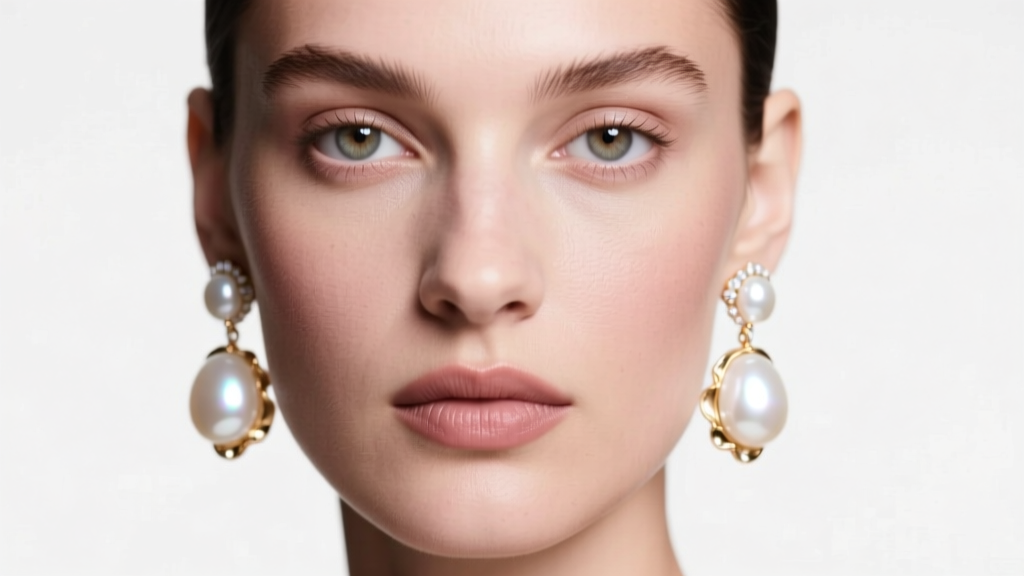
The 2026 Shift: Tactile Maximalism and the 14mm+ Threshold
For decades, the classic 7mm Akoya stud was the undisputed standard of pearl elegance. However, the 2026 jewelry landscape has decisively pivoted. Driven by a cultural shift toward "tactile maximalism," pearl earrings large in scale—specifically those exceeding the 14mm threshold—are dominating both haute couture runways and contemporary street style. This is not merely a trend of oversized proportions; it is a fundamental reimagining of the pearl as an avant-garde, architectural medium rather than a conservative accessory.
According to recent runway analyses from Vogue, designers are moving away from perfectly matched, spherical strands, favoring instead the raw, unpolished gravity of massive baroque and keshi pearls. The visual weight of a large pearl earring demands attention, creating an immediate focal point that balances the increasingly structured, broad-shouldered silhouettes of 2026 fashion.
Gemological Breakdown: Sourcing Oversized Pearls
When shopping for large pearl earrings, understanding the biological and gemological limitations of different oyster species is critical. Not all pearls can achieve massive sizes while maintaining structural integrity and high luster. Below is a comparative analysis of the primary large-pearl varieties available in the 2026 market.
| Pearl Variety | Oyster Species | Typical Large Size Range | Nacre Thickness & Luster | 2026 Est. Price (Pair, AAA) |
|---|---|---|---|---|
| White South Sea | Pinctada maxima | 13mm – 18mm+ | Thick (2mm+), Satin Luster | $1,200 – $4,500+ |
| Tahitian Black | Pinctada margaritifera | 12mm – 16mm | Thick (1.5mm+), Metallic Overtone | $800 – $3,200 |
| Edison Freshwater | Hyriopsis cumingii | 12mm – 16mm | Variable, High-Gloss Luster | $150 – $600 |
| Akoya (Rare Large) | Pinctada fucata | 9mm – 11mm (Max) | Thin but intensely reflective | $600 – $1,500 |
As noted by the Gemological Institute of America (GIA), the Pinctada maxima oyster is the only species capable of consistently producing pearls over 15mm with exceptional nacre quality. When evaluating large pearls, nacre thickness is your primary defense against peeling and chipping. A 15mm bead-nucleated pearl must possess a minimum of 1.5mm to 2mm of nacre to ensure longevity and that deep, inner glow known as "orient."
Engineering the Drop: Weight, Gauge, and Backing Mechanics
The most common failure mode for oversized pearl earrings is hardware fatigue. A 15mm South Sea pearl can weigh between 3.5 and 4.5 grams per earring. When suspended from the earlobe, this creates significant kinetic leverage, especially during movement.
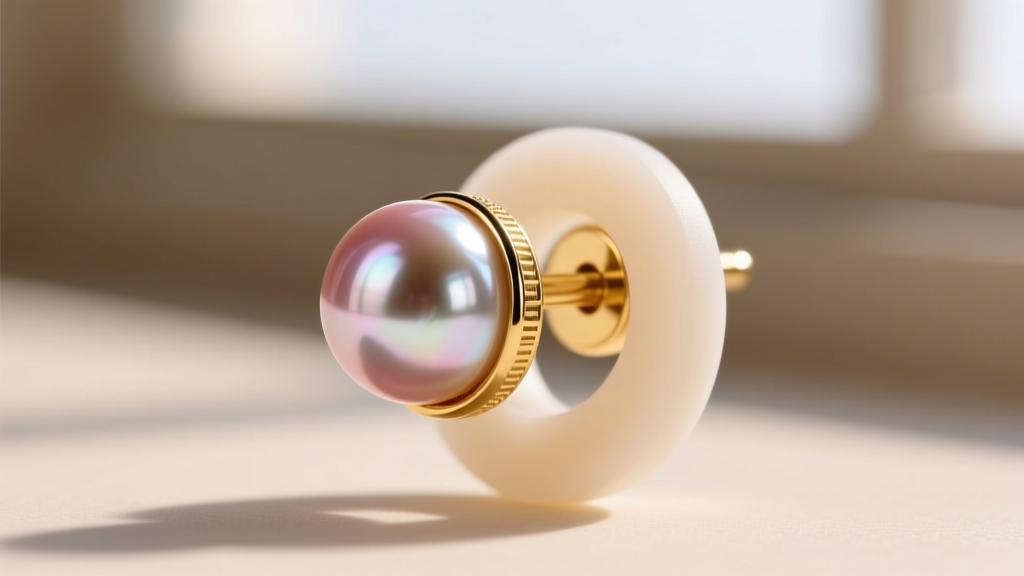
Post Gauge and Tensile Strength
Standard earring posts are typically 20-gauge (0.81mm) or 22-gauge (0.64mm). At these thicknesses, the weight of a 14mm+ pearl will cause the post to bend downward, resulting in an awkward, drooping silhouette that stretches the earlobe piercing over time. For large pearl earrings, you must seek out 18-gauge (1.02mm) or 16-gauge (1.29mm) posts. These thicker wires provide the tensile strength required to keep the pearl perfectly parallel to the ground.
Advanced Backing Systems
Standard friction backs (butterfly clutches) are entirely inadequate for heavy pearls; they slip off easily and fail to distribute weight. Instead, look for:
- La Pousette Backs: These feature a mechanical locking mechanism that clicks securely into a groove on the post, preventing accidental loss of a high-value item.
- Jumbo Silicone Earnuts: Essential for weight distribution. A wider silicone disc spreads the 4-gram load across a larger surface area of the earlobe, preventing tearing and discomfort.
- Omega Backs or Leverbacks: For drop styles, an Omega clip or a hinged leverback provides a secondary point of contact against the ear, stabilizing the swing of the pearl.
Face Shape Architecture: Balancing Proportions
Wearing massive pearls requires an understanding of facial architecture. The goal is not to overwhelm the features, but to create optical harmony.
- Round Faces: Avoid perfectly spherical 15mm studs, which will echo and exaggerate facial roundness. Instead, opt for elongated baroque drops or keshi pearl dangles that measure 15mm in width but extend 25mm+ in length to draw the eye vertically.
- Square Faces: Soften a strong jawline with large, curved silhouettes. A 14mm round South Sea pearl set in a curved, halo-style bezel or a continuous pearl huggie hoop provides necessary contrast to angular bone structure.
- Heart-Shaped Faces: Balance a narrower chin with inverted triangle silhouettes. Chandelier earrings featuring a smaller 8mm pearl at the lobe cascading into a larger 14mm pearl at the base work beautifully.
- Oval Faces: The most versatile canvas. Oval faces can effortlessly carry the boldest 2026 trend: the asymmetric mismatch, wearing a single 18mm baroque drop on one side and a minimalist metal cuff on the other.
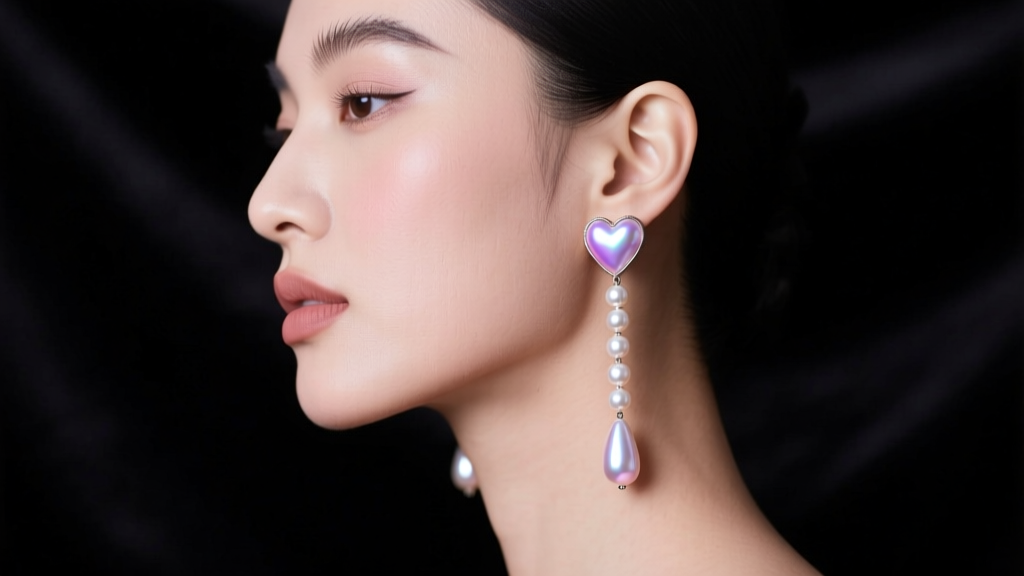
The Baroque and Keshi Renaissance
While perfectly round pearls command the highest traditional premiums, 2026 has crowned the baroque and keshi pearls as the ultimate status symbols among fashion insiders. Baroque pearls are characterized by their irregular, asymmetrical shapes, while keshi pearls are composed of solid nacre, having formed without a bead nucleus.
Because keshi pearls are solid nacre, their luster is often incredibly intense, displaying a mirror-like surface that catches light from every angle. A 16mm keshi pearl earring offers a sculptural, organic aesthetic that perfectly aligns with the current "raw luxury" movement. Furthermore, because they are irregular, no two pairs are exactly alike, offering a bespoke element that mass-produced spherical pearls cannot replicate.
2026 Pricing Realities and Investment Value
The global pearl market has experienced significant supply chain contractions over the last three years, driven by environmental changes affecting oyster yields in Australia and French Polynesia. Consequently, the pricing for high-quality large pearls has appreciated.
"Investing in large, gem-grade South Sea pearls is no longer just about adornment; it's about acquiring a tangible asset. The 15mm+ AAA category has seen a 14% year-over-year value increase, outperforming many traditional luxury goods," notes a 2025 market report from the American Gem Society.
When budgeting for pearl earrings large in scale, expect to pay a premium for the "jump" in millimeter size. The price per carat (or gram) increases exponentially once a pearl crosses the 14mm threshold. A pair of 12mm Tahitians might cost $900, but stepping up to a matched pair of 15mm Tahitians with comparable luster and surface cleanliness will easily push the price past $2,800 due to the sheer rarity of the oyster surviving the 3-year cultivation process required to reach that size.
Final Styling Verdict
The era of the timid pearl is over. In 2026, large pearl earrings are bold, architectural statements that demand high-quality engineering and confident styling. By prioritizing nacre thickness, insisting on 18-gauge hardware, and embracing the organic beauty of baroque shapes, you can master the oversized pearl trend while ensuring your investment remains structurally sound and timelessly elegant.


