Fixing Peacock Earrings Feather Damage and Lobe Strain
Learn how to troubleshoot peacock earrings feather damage, fix chipped enamel, reinforce heavy dangles, and prevent lobe strain with expert care tips.

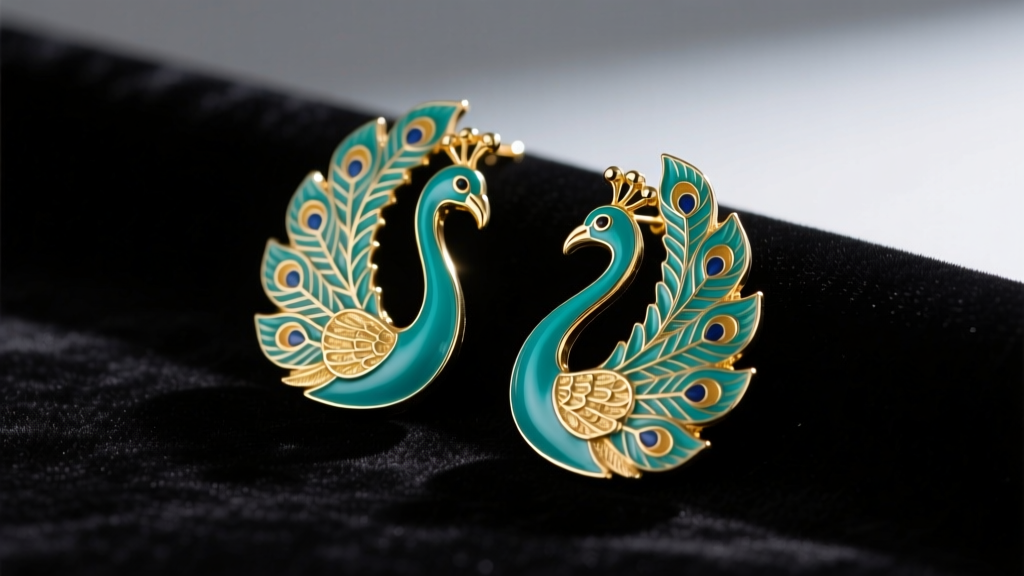
Peacock motifs have dominated jewelry design for over a century, but owning a pair of elaborate peacock earrings feather dangles comes with a unique set of structural and material challenges. From the delicate iridescent 'eye' (ocellus) chipping upon impact to the sheer weight of oversized drops causing severe lobe strain, these statement pieces require specialized troubleshooting. Whether you are dealing with vintage Miriam Haskell costume jewelry or modern artisan vitreous enamel, understanding the failure points of these designs is the first step toward restoration and comfortable wear.
The Anatomy of Failure in Peacock Motifs
Before attempting any repairs, it is crucial to identify the exact materials used in your peacock earrings feather design. The troubleshooting approach varies wildly depending on whether the feather is rendered in metal, enamel, silk, or actual keratin.
Enamel Degradation on the Ocellus
The most common point of failure in metal peacock earrings is the enamel work on the feather's eye. According to Britannica's guide to enamelwork, there are two primary types of enamel used in jewelry: vitreous (glass fused to metal at high temperatures) and cold (epoxy-based resins). Cold enamel, frequently found in mid-range and vintage costume pieces, is highly susceptible to UV yellowing and micro-chipping. If the teal or gold sections of your feather motif are flaking, you are likely dealing with degraded cold enamel that has lost its plasticizer over time.
Real Keratin vs. Silk Fraying
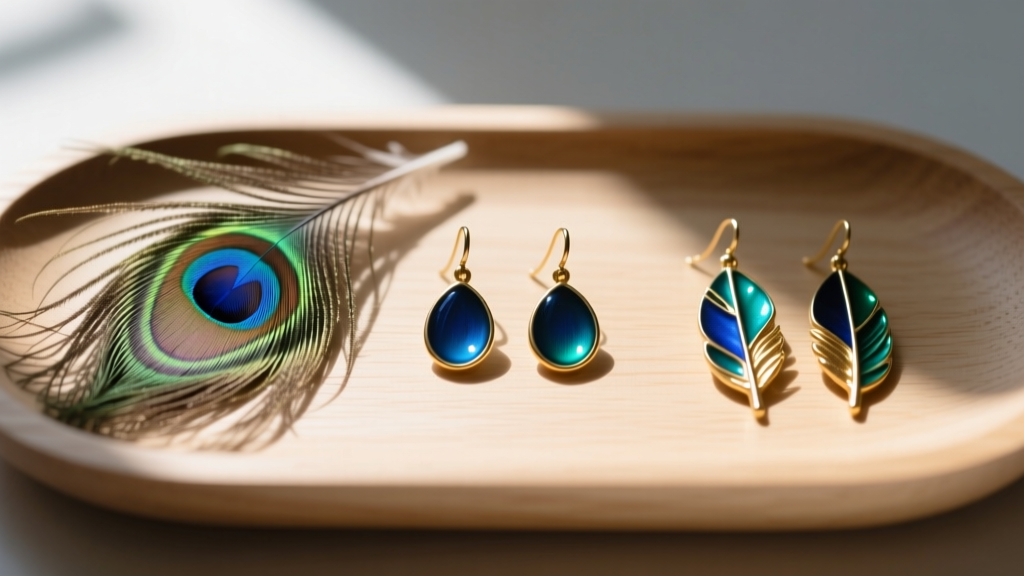
Some bohemian or artisan designs incorporate actual peacock feathers. Real feathers are composed of keratin, where the barbs hook together via microscopic barbules. When these hooks separate, the feather 'frays' and loses its structural integrity. Unlike silk or synthetic alternatives, real feathers cannot be glued back together; they require moisture and heat manipulation to re-lock the barbules.
Troubleshooting Weight and the Cheese-Cutter Effect
The most frequent physical complaint regarding peacock earrings feather drops is earlobe pain and stretching. A standard earlobe piercing is typically 20-gauge (0.81mm) or 18-gauge (1.02mm). When a heavy, elongated peacock dangle (often weighing between 20 and 35 grams per ear) is suspended from a thin 20G wire, it creates a fulcrum point that slices through the tissue—a phenomenon piercers call the 'cheese-cutter effect.'
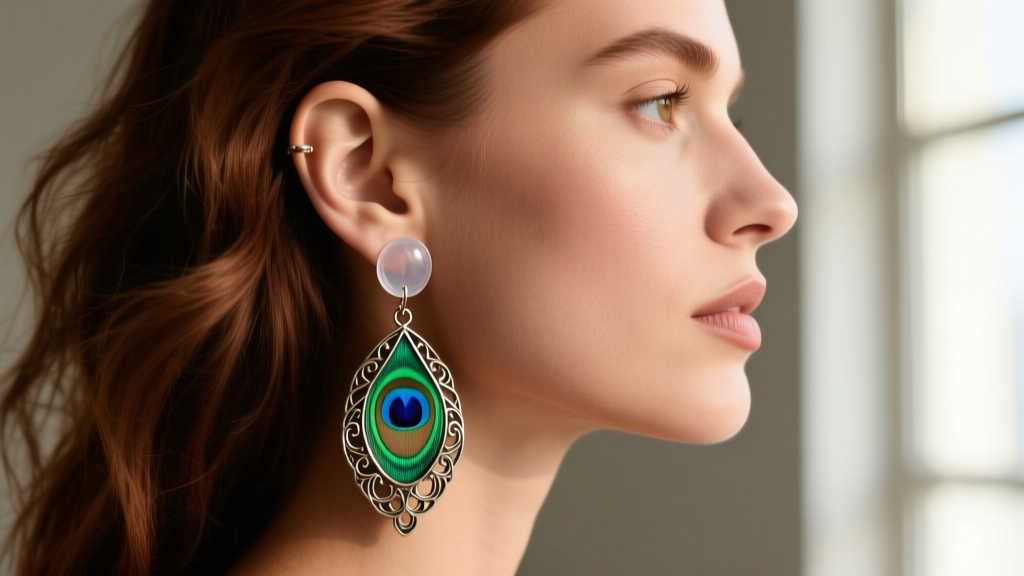
To troubleshoot this, you must alter the weight distribution rather than simply removing the earrings. Here are the most effective mechanical solutions:
- Upgrade the Wire Gauge: Have a jeweler swap the standard 20G French wire for an 18G or 16G (1.29mm) leverback or thick French wire. The increased surface area disperses the downward force across more tissue.
- Silicone O-Ring Backs: Ditch standard metal butterfly backs. Use 6mm to 8mm flat silicone o-rings. These act as a wide washer, distributing the weight of the earring post across a broader section of the back of the lobe.
- Ear Chain Supports: For ultra-heavy vintage pieces, attach a delicate 14k gold-filled ear chain that hooks over the top of the ear cartilage, transferring 60% of the weight away from the lobe fistula entirely.
| Earring Component | Standard Spec | Troublesome Spec | Recommended Fix |
|---|---|---|---|
| Post/Wire Gauge | 20G (0.81mm) | Over 15g total weight | Upgrade to 18G (1.02mm) or 16G (1.29mm) |
| Earring Back | Metal Butterfly (4mm) | Digs into lobe, causes pressure necrosis | Flat Silicone O-Ring (8mm diameter) |
| Dangle Length | Over 3 inches | Swings and catches on clothing | Add a discreet silicone stabilizer sleeve to the post |
Material Allergies and Base Metal Tarnish
Many vintage and fast-fashion peacock earrings feather designs are cast from Zamak (a zinc alloy) or raw brass, then plated with a thin layer of gold or silver. Once the plating wears off on the post or the back of the feather plate, the base metals react with the skin's acidity, causing green discoloration and severe contact dermatitis. The American Academy of Dermatology notes that nickel, often present in cheap alloy mixes, is the leading cause of jewelry-related allergic reactions.
The Troubleshooting Protocol:
- Immediate Barrier: For a temporary fix, coat the earring post and the back of the metal feather plate with two layers of clear, medical-grade polyurethane or a dedicated jewelry coating like JewelSkinCote. Do not use standard nail polish, as it contains solvents that can degrade cold enamel on the front of the earring.
- Permanent Solution: Take the earrings to a professional jeweler and request a 'flash rhodium plating.' Rhodium is a hypoallergenic platinum-group metal that creates a permanent, tarnish-resistant barrier over the base metal without altering the intricate gold or copper tones of the feather design, provided the jeweler uses careful masking techniques.
Step-by-Step Restoration Guide for Damaged Feathers
If your peacock earrings feather elements have sustained physical damage, follow these material-specific restoration steps:
Repairing Frayed Real Feathers
Do not use water or glue. Boil a pot of distilled water and hold the frayed feather approximately six inches above the steam for 15 to 20 seconds. The heat and moisture relax the keratin. While the feather is still warm and pliable, use your thumb and forefinger to gently stroke and pinch the barbs from the base of the vane up to the tip. This manually re-engages the microscopic barbules, zipping the feather back together.
Filling Chips in Enamel Ocellus
If the glass or cold enamel on the feather's eye has chipped, you can perform an invisible fill using UV-curing jewelry resin. 1. Clean the chip with 99% isopropyl alcohol to remove skin oils. 2. Mix a two-part UV resin with a tiny amount of mica powder (teal, emerald, or gold) to match the original iridescence. 3. Use a micro-dental applicator to drop the resin into the chip, ensuring it is slightly proud of the surface. 4. Cure under a 36W UV lamp for 60 seconds. 5. Wet-sand the cured resin with 3000-grit sandpaper until perfectly flush with the surrounding metal cloisons, then polish with a jeweler's rouge cloth.
Expert Sourcing: What to Look for in 2026
If your current peacock earrings feather designs are beyond repair and you are in the market for a replacement, prioritize structural integrity over sheer size. Look for artisans who use plique-à-jour enamel techniques, which resemble stained glass and are significantly more resilient to impact than traditional champlevé. Additionally, seek out designs that feature a 'hinged' or 'articulated' feather drop. An articulated joint where the feather meets the main stud or hoop absorbs kinetic energy when the earring swings, drastically reducing the torque placed on your earlobe piercing and preventing the metal from snapping at the solder joint.


