Diamond Flower Cluster Earrings: Metal & Stone Guide
Explore the material science of diamond flower cluster earrings. Compare metal alloys, diamond melee grades, and prong durability for lasting wear.

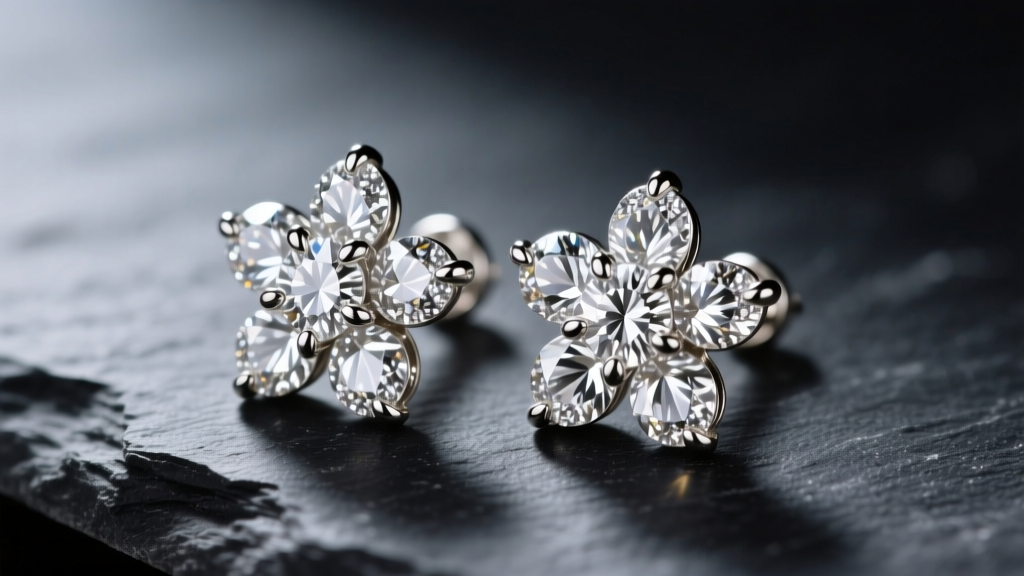
When it comes to timeless floral jewelry, diamond flower cluster earrings remain a perennial favorite. By grouping multiple smaller diamonds (melee) around a central stone or interlocking them to form petals, jewelers create the illusion of a single, massive gemstone. However, the intricate architecture of a cluster setting introduces unique structural vulnerabilities. The longevity, brilliance, and daily wearability of these earrings depend entirely on the material science behind the metal alloys and the specific properties of the diamonds used.
In this comprehensive guide, we dissect the metallurgical and gemological properties that dictate the quality of diamond flower cluster earrings, helping you make an informed, technically sound investment.
The Structural Engineering of Floral Clusters
A standard floral cluster earring typically features a center stone surrounded by six to eight "petal" stones. Unlike solitaire studs, which rely on four or six robust prongs, cluster settings utilize a network of micro-prongs or shared-prong galleries. This dense metalwork requires precise casting and exceptional tensile strength. If the metal is too soft, the micro-prongs will wear down rapidly, leading to lost stones. If the metal is too brittle, the prongs can snap during routine cleaning or when snagged on clothing.
Furthermore, cluster earrings are inherently top-heavy. A 2.5-carat total weight (CTW) floral cluster exerts significant downward leverage on the earlobe. This makes the thickness of the earring post—measured in gauge sizes—a critical factor in preventing the dreaded "earring droop" that plagues poorly engineered studs.
Metal Alloys: Hardness, Prongs, and Post Gauges
The choice of metal dictates how well the micro-prongs will hold the diamond melee over decades of wear. Jewelers measure metal durability using the Vickers Hardness (HV) scale. Below is a comparative analysis of the most common alloys used in diamond flower cluster earrings.
| Metal Alloy | Vickers Hardness (HV) | Prong Retention | Recommended Post Gauge | Maintenance Level |
|---|---|---|---|---|
| Platinum 950 | ~125 HV (Work-hardens) | Exceptional | 18g (1.02mm) | Low (Polishing) |
| 18k White Gold | ~120-130 HV | Good | 18g (1.02mm) | High (Rhodium replating) |
| 14k Rose Gold | ~140-150 HV | Very Good | 20g (0.81mm) - 18g | Low |
| 925 Sterling Silver | ~60-70 HV | Poor | N/A (Not recommended) | High (Tarnish/Bending) |
The Hidden Cost of White Gold Maintenance
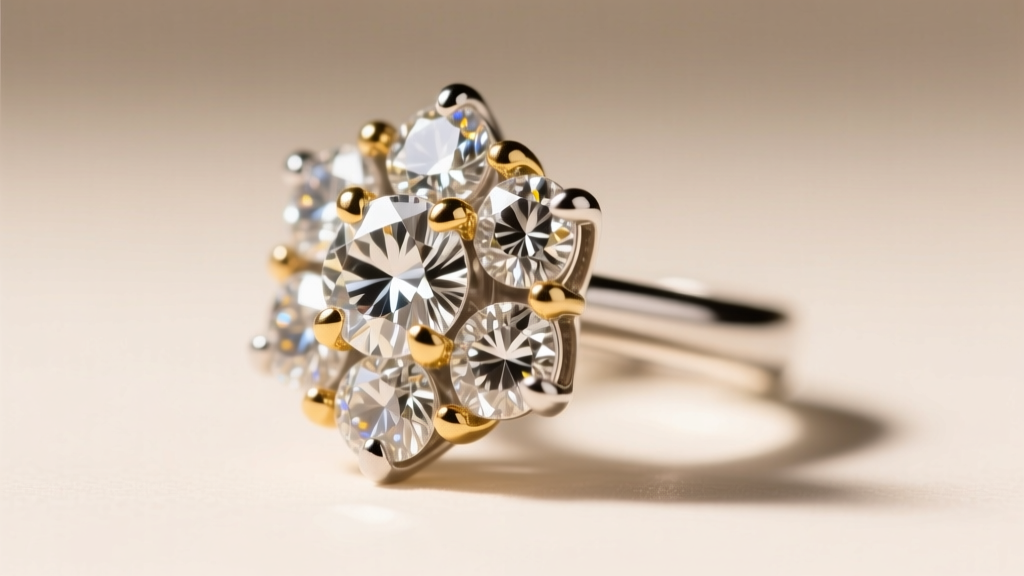
While 18k white gold is a popular choice for diamond flower cluster earrings due to its bright, reflective color, it is naturally a pale yellow alloy. To achieve a stark white finish, it is plated with rhodium, a platinum-group metal. Standard rhodium plating on earring settings ranges from 0.75 to 1.0 microns in thickness. With daily wear, friction from hair and skin oils will wear this plating away in 12 to 24 months, exposing the yellowish base metal and making the micro-prongs look dull. Platinum 950, conversely, is naturally white and will never require replating, though it develops a soft patina over time.
Why Sterling Silver Fails in Cluster Settings
According to Federal Trade Commission (FTC) Jewelry Guidelines, sterling silver must contain 92.5% pure silver. However, pure silver is exceptionally soft. Even when alloyed with copper to create 925 sterling silver, the metal lacks the tensile strength required to securely grip 1.5mm melee diamonds. Over time, the micro-prongs in silver cluster earrings will flatten, leading to inevitable stone loss. We strongly advise avoiding sterling silver for any multi-stone cluster design.
Diamond Melee Properties: Natural vs. Lab-Grown in 2026
The "petals" of a floral cluster are crafted using diamond melee—small diamonds ranging from 0.01 to 0.15 carats each. The optical performance of your earrings depends heavily on the cut quality of these tiny stones.
Full-Cut vs. Single-Cut Melee
- Full-Cut Melee (57-58 facets): These are essentially miniature versions of standard round brilliant diamonds. In a flower cluster, full-cut melee (typically 1.5mm to 2.5mm) captures and refracts light beautifully, creating the scintillation necessary to make the floral pattern "pop."
- Single-Cut Melee (17-18 facets): Often used in lower-tier jewelry, single-cut stones lack the complex facet structure required for brilliance. In a cluster setting, they can appear flat, glassy, or "dead" under indoor lighting.
As noted by the Gemological Institute of America (GIA), the cut quality of melee is rarely graded on standard reports, making it crucial to buy from jewelers who guarantee full-cut stones in their cluster arrangements.
The Lab-Grown Melee Revolution
By 2026, lab-grown diamond melee has entirely disrupted the cluster earring market. Because floral clusters require dozens of precisely calibrated stones, the cost of natural, color-matched melee is prohibitively high. Lab-grown diamonds, created via Chemical Vapor Deposition (CVD) or High Pressure High Temperature (HPHT) methods, offer identical physical and optical properties at a fraction of the cost. However, buyers should be aware that some lower-quality CVD melee can exhibit brownish undertones or internal strain patterns under UV light. Always insist on premium-grade lab-grown melee with E-F color equivalents to ensure the flower petals look crisp and white.
"The success of a cluster setting relies on the precise calibration of the melee. A variance of just 0.1mm in stone diameter can cause uneven prong tension, leading to structural failure and lost diamonds." — American Gem Society (AGS) Educational Archives
Troubleshooting Common Cluster Failure Modes
Even with premium materials, diamond flower cluster earrings are subject to specific mechanical stresses. Understanding these failure modes will help you maintain your jewelry and spot issues before a stone is lost.
1. The "Cheese-Wire" Prong Effect
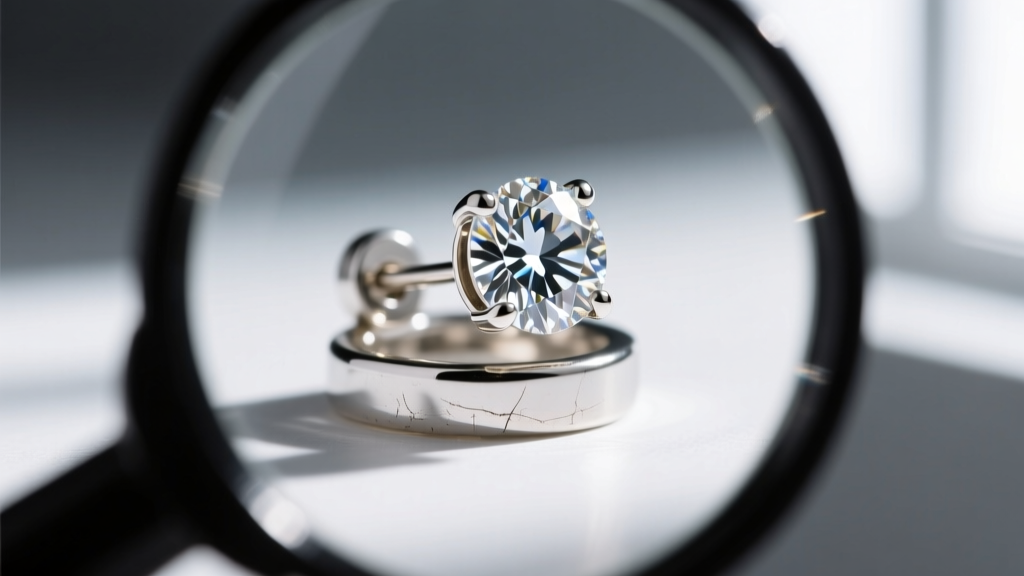
When cluster earrings are worn during sleep or physical activity, the friction between the earlobe and the earring back can cause the metal gallery to rub against the skin and hair. Over years, this acts like a cheese wire, slowly thinning the shared prongs between the petal stones. Solution: Remove cluster earrings before bed and have a jeweler inspect the prong thickness with a 10x loupe annually.
2. Post Bending and Earring Droop
A heavy floral cluster (over 2.0 CTW) paired with a thin 20-gauge (0.81mm) post will inevitably bend under its own weight, causing the flower to point downward. Solution: Ensure your earrings feature an 18-gauge (1.02mm) or 16-gauge (1.29mm) post. Additionally, upgrade from standard friction backs to La Pousette (locking) backs or screw-backs, which provide a wider, more secure base against the earlobe to distribute the weight evenly.
3. Snagging on Textiles
The intricate edges of floral designs are notorious for catching on sweaters, scarves, and towels. A single hard snag can lift a micro-prong entirely off the diamond's girdle. Solution: Look for "bezel-set" or "semi-bezel" cluster designs where the metal wraps entirely around the perimeter of the petal stones, eliminating exposed prong tips on the outer edge.
Final Verdict: Matching Material to Your Lifestyle
Selecting the perfect pair of diamond flower cluster earrings requires looking beyond the total carat weight. If you prioritize heirloom-level durability and minimal maintenance, Platinum 950 with full-cut natural or premium lab-grown melee is the ultimate choice. The dense metal ensures the micro-prongs will securely hold the floral arrangement for generations without the need for rhodium replating.
For those seeking a warmer aesthetic with high durability, 14k Rose Gold offers an excellent balance of hardness (thanks to its copper content) and unique color contrast, making the diamond petals appear exceptionally bright. Regardless of the metal you choose, always verify the post gauge and inspect the prong architecture to ensure your floral clusters remain as structurally sound as they are visually stunning.


