Are Sterling Silver Earrings Hypoallergenic? The Metal Truth
Are sterling silver earrings hypoallergenic? We break down 925 silver metallurgy, nickel allergies, rhodium plating, and safe alternatives.

The Short Answer: Is 925 Silver Safe for Sensitive Ears?
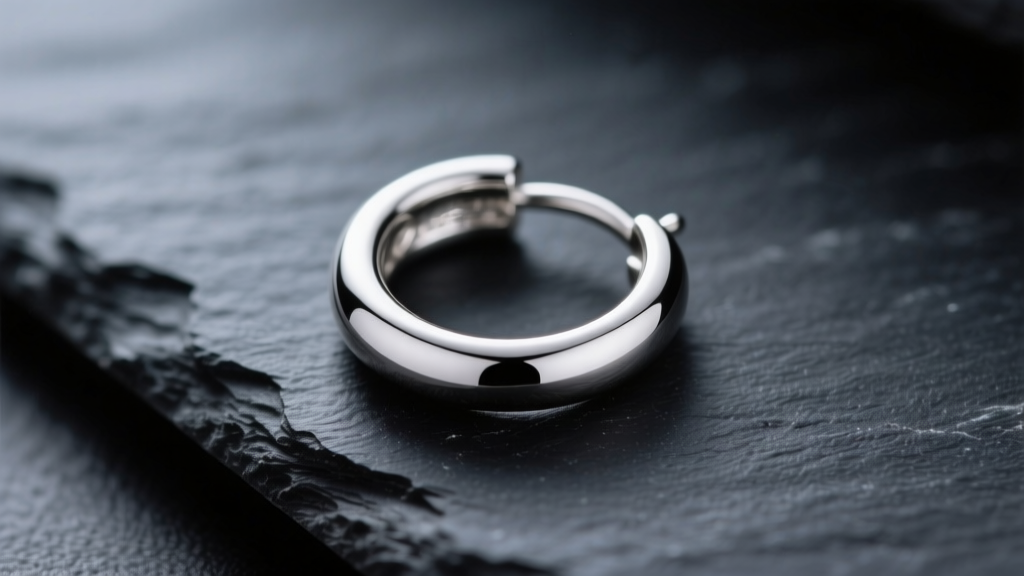
When consumers ask, "are sterling silver earrings hypoallergenic?" the jewelry industry often provides a misleading "yes." The reality is far more nuanced. Pure silver (999 fine silver) is entirely hypoallergenic and biocompatible. However, it is also too malleable for functional jewelry; a pure silver earring post would bend under the slightest pressure, and clasps would fail. To solve this, metallurgists created sterling silver (925), an alloy comprising 92.5% pure silver and 7.5% secondary metals. It is this 7.5% alloy fraction that dictates whether your ears will tolerate the jewelry or erupt in allergic contact dermatitis (ACD).
For individuals with known metal sensitivities, understanding the exact metallurgical composition of your earrings is not optional—it is a medical necessity. Below, we deconstruct the chemistry of sterling silver, expose the hidden irritants in mass-produced jewelry, and provide a definitive framework for selecting safe ear adornments.
The Metallurgy of Sterling Silver: Why Alloys Matter
The 7.5% alloy added to pure silver is traditionally copper. Copper provides the necessary tensile strength for earring posts, hooks, and clasps. From a dermatological standpoint, copper is generally well-tolerated by the human body. It does not typically trigger ACD. However, copper oxidizes when exposed to sulfur and moisture, leading to the infamous "green skin" effect. While this oxidation is harmless and easily washed away, it is frequently mistaken by consumers for an allergic reaction.
The Nickel Problem in Mass Manufacturing
The true danger arises when manufacturers deviate from traditional copper alloys to cut costs or alter the metal's color. According to the American Academy of Dermatology, nickel is the most common cause of allergic contact dermatitis worldwide. In cheaper, mass-produced sterling silver—particularly items sourced from regions with lax metallurgical standards—manufacturers may introduce nickel or zinc into the alloy mix to create a brighter, whiter finish without the added cost of rhodium plating. If your 925 silver earrings contain even trace amounts of nickel, they are definitively not hypoallergenic.
Material Comparison: Sterling Silver vs. True Hypoallergenic Metals
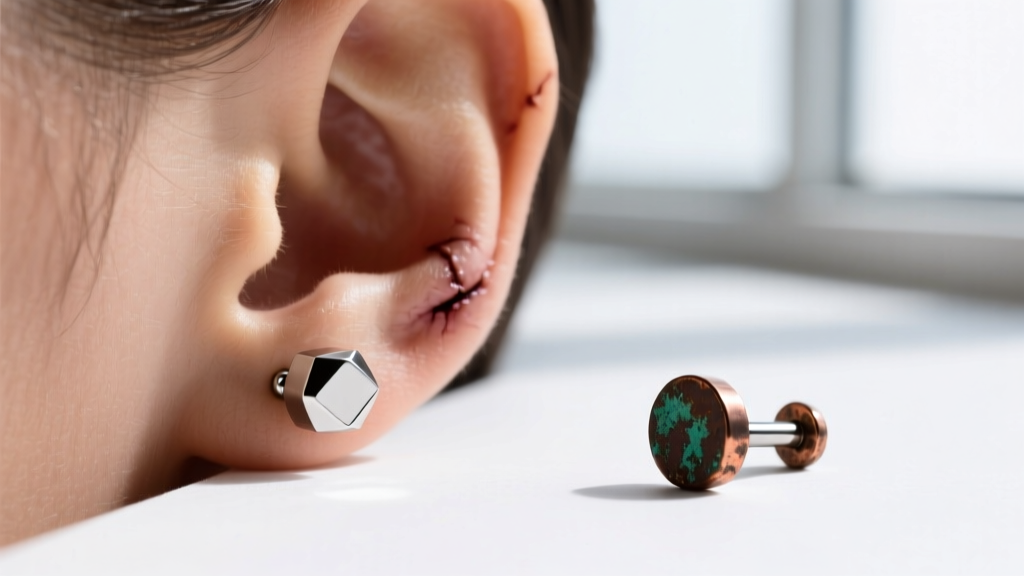
To understand where sterling silver falls on the biocompatibility spectrum, we must compare it against metals that are universally recognized as safe for sensitive tissue. The table below outlines the material properties, allergen risks, and best use cases for common earring metals.
| Material | Composition & Grades | Hypoallergenic Status | Best Use Case | Avg. Price (Studs) |
|---|---|---|---|---|
| 925 Sterling Silver | 92.5% Ag, 7.5% Cu (or Ni/Zn) | Conditional (Risk of Ni/Cu irritation) | Healed lobes, occasional wear | $15 - $60 |
| Argentium Silver | 93.5% or 96% Ag, Germanium, Cu | High (Germanium prevents tarnish) | Healed lobes, cartilage, daily wear | $40 - $120 |
| Implant-Grade Titanium | Ti-6Al-4V ELI (ASTM F136) | Absolute (Zero nickel, biocompatible) | Fresh piercings, severe allergies | $20 - $80 |
| Niobium | 99.9% Pure Niobium | Absolute (Highly inert, anodizable) | Fresh piercings, cartilage, sensitive ears | $25 - $90 |
| 14k/18k Gold | 58.5% / 75% Au, alloyed with Ag/Cu | High (If strictly Ni-free alloy) | Healed lobes, fine jewelry collections | $150 - $500+ |
As the data illustrates, if you require a guaranteed hypoallergenic metal, ASTM F136 compliant implant-grade titanium and pure niobium are the undisputed gold standards. Sterling silver remains a conditional option, heavily dependent on the integrity of the specific manufacturer's alloy recipe.
The Rhodium Plating Factor: A Temporary Shield
Many high-end jewelers plate their 925 sterling silver earrings with rhodium, a precious metal in the platinum family. Rhodium is exceptionally hard, highly reflective, and completely hypoallergenic. When you buy rhodium-plated sterling silver, you are essentially buying a titanium-like barrier between your skin and the silver-copper alloy beneath.
However, plating is a surface treatment, not a permanent structural change. The longevity of this hypoallergenic shield depends entirely on the thickness of the plating:
- Flash Plating (0.01 - 0.05 microns): Common in fast-fashion jewelry. Wears off in weeks, exposing the underlying alloy to your skin and sweat.
- Standard Plating (0.1 - 0.3 microns): Found in mid-tier jewelry. Lasts several months with careful wear but will eventually degrade at high-friction points like the earring post.
- Heavy Plating (0.75 - 1.5+ microns): Used by luxury and specialized hypoallergenic brands. Can last for years before requiring re-plating.
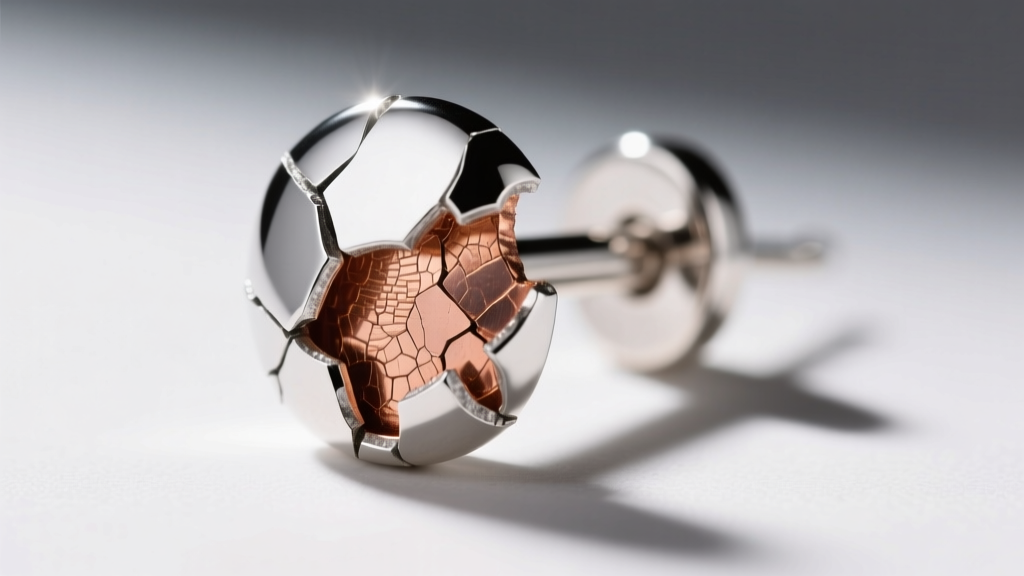
Once the rhodium layer breaches on the earring post, the underlying copper or trace nickel makes direct contact with the piercing channel, triggering an immune response. If you have severe allergies, rhodium-plated silver is only a temporary solution.
Gauge Size, Surface Area, and Irritation
An often-overlooked variable in earring allergies is the physical dimension of the post. Standard lobe earrings are typically 20-gauge (0.81mm) or 18-gauge (1.02mm). Cartilage jewelry is usually thicker, ranging from 16-gauge (1.29mm) to 14-gauge (1.63mm).
A thicker gauge means a larger surface area of metal is in constant contact with the mucosal tissue of the piercing channel. If you are wearing a reactive metal like un-plated sterling silver in a 14-gauge cartilage piercing, the increased surface area accelerates both the oxidation process and the volume of allergen exposure. This is why many people can tolerate cheap silver in their standard 20g lobe piercings but experience immediate flare-ups when wearing the same metal in thicker cartilage studs.
Actionable Guide: How to Verify and Wear Silver Safely
If you already own sterling silver earrings or prefer the aesthetic and price point of 925 silver, you must take proactive steps to protect your skin. Follow this decision framework:
1. Perform a Dimethylglyoxime (DMG) Test
Do not trust the "925" stamp blindly; it only certifies the silver content, not the absence of nickel. Purchase a nickel spot test kit utilizing Dimethylglyoxime (DMG). Swab the earring post with the testing solution. If the swab turns pink or red, the earring contains leachable nickel and is unsafe for sensitive ears. According to the National Center for Biotechnology Information (NCBI), even microscopic amounts of nickel leaching from jewelry are sufficient to trigger severe contact dermatitis in sensitized individuals.
2. The Clear Coat Hack (Use with Caution)
A common internet hack suggests painting earring posts with clear nail polish to create a barrier. While this works in an emergency, it is not recommended for long-term use. Nail polish degrades rapidly when exposed to the pH of human sebum and can chip off inside the piercing channel, trapping bacteria and causing localized infections. Instead, use specialized, medical-grade barrier coatings like Skintifique Protective Cream or specialized jewelry sealants designed for prolonged dermal contact.
3. Strict Hygiene and Oxidation Removal
If your silver earrings are un-plated and turning black (tarnish), do not wear them in the shower. The combination of hot water, sulfur-heavy soaps, and trapped moisture creates an acidic environment that accelerates copper oxidation. Clean your silver posts weekly with a dedicated silver polishing cloth to remove the reactive sulfide layer before inserting them into your ears.
When to Ditch Silver for Fresh Piercings
There is one scenario where the question "are sterling silver earrings hypoallergenic?" is irrelevant: unhealed piercings. A fresh piercing is an open wound. The body's immune system is already in a state of high alert, fighting off environmental bacteria. Introducing a reactive, porous metal like oxidizing sterling silver into a healing fistula is a recipe for hypertrophic scarring, prolonged healing times, and severe irritation bumps.
For any piercing that is less than 6 to 12 months old, sterling silver must be entirely avoided. Rely exclusively on implant-grade titanium (ASTM F136) or solid 14k/18k nickel-free gold until the fistula is fully mature, calloused, and capable of defending itself against reactive alloys. Once healed, you can safely reintroduce high-quality, verified nickel-free 925 sterling silver into your rotation.


