Peep Earrings Material Guide: Best Metals For Cage Settings
Discover the best metals for peep earrings. We compare titanium, gold, and silver for cage settings, focusing on gauge strength and skin safety.

The Anatomy of Peep Earrings: Why Material Dictates Longevity
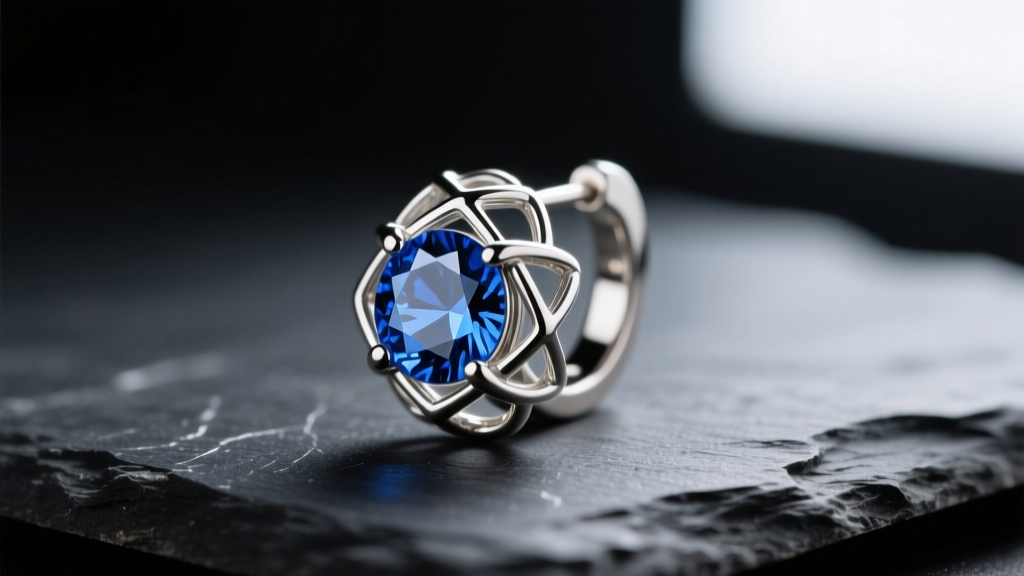
Peep earrings—characterized by their intricate cage, lattice, or hollowed-out shell designs where a central gemstone or contrasting element "peeps" through—have become a dominant force in contemporary ear styling. As of 2026, micro-CNC machining and advanced 3D metal printing have allowed jewelers to create impossibly delicate "peek-a-boo" frameworks. However, this structural openness introduces a critical vulnerability: the metal framework must possess immense tensile strength to prevent the cage from warping. A warped cage not only misaligns the peeping stone but can also create sharp micro-abrasions against the earlobe or cartilage.
When selecting peep earrings, the aesthetic of the cutout is secondary to the metallurgical properties of the wire or sheet metal used to construct it. The thickness of the metal, its Vickers hardness (HV), and its nickel content will ultimately determine whether the earring survives daily wear or fails within a month. Below, we break down the exact material specifications you need to look for when investing in cage and peep-style earrings.
Metallurgical Breakdown: Comparing the Big Four
Implant-Grade Titanium (ASTM F136)
For structural integrity and biocompatibility, ASTM F136 implant-grade titanium is the undisputed champion of peep earrings. Titanium boasts a remarkably high strength-to-weight ratio and a Vickers hardness of roughly 330-370 HV. This allows jewelers to craft ultra-thin cage wires—often as thin as 18-gauge (1.02mm) or even 20-gauge (0.81mm)—without sacrificing the structural rigidity needed to hold a gemstone securely in place. Furthermore, according to the Association of Professional Piercers, ASTM F136 titanium contains 0% nickel, making it the safest choice for fresh piercings or sensitive lobes that will be in constant contact with the intricate metalwork of a peep setting.
14k vs. 18k Solid Gold
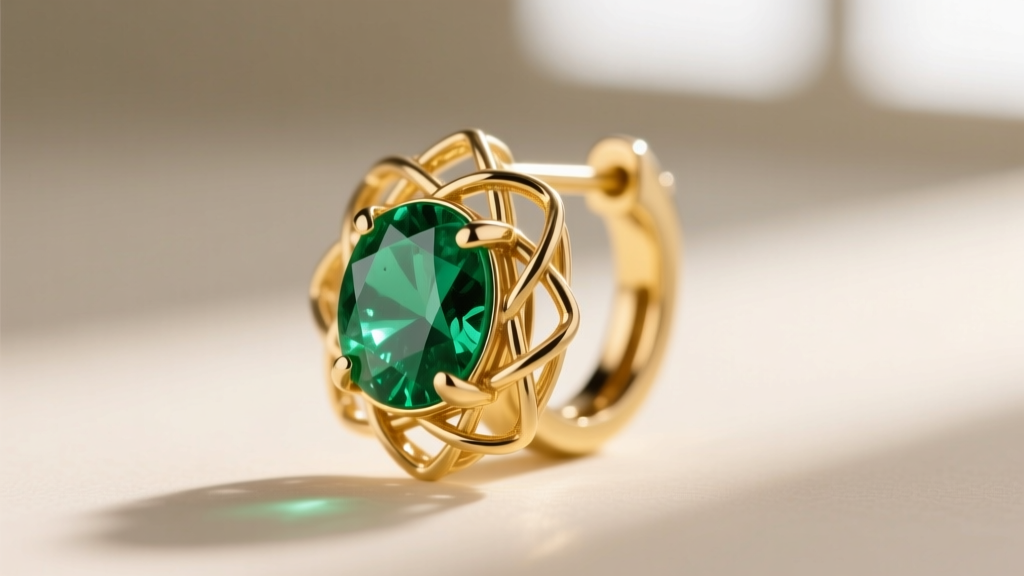
Gold is the traditional standard for fine jewelry, but its malleability requires careful consideration in cage settings. Pure 24k gold is far too soft for peep earrings; it must be alloyed. 18k gold (75% pure gold) has a Vickers hardness of roughly 80-120 HV. While beautiful, an 18k gold lattice can easily warp if snagged on a towel or hairbrush, potentially popping the tension-set "peep" stone out of its housing. Conversely, 14k gold (58.5% pure gold) is alloyed with metals like copper, silver, and zinc, raising its hardness to 120-150 HV. As noted by the Gemological Institute of America (GIA), the increased alloy content in 14k gold provides the necessary durability for intricate wirework and open-air bezel settings, making it vastly superior to 18k for structural peep designs.
Sterling Silver (925) and Surgical Steel (316L)
Sterling silver is an affordable entry point, but its low hardness (60-80 HV) makes it highly prone to bending. If you purchase silver peep earrings, ensure the structural cage wires are at least 16-gauge (1.29mm) to resist deformation. Additionally, silver sulfide tarnish accumulates rapidly in the tiny crevices of lattice cutouts, requiring meticulous maintenance. On the other hand, 316L Surgical Steel is harder and cheaper, but it contains 8-10% nickel. Because peep earrings often feature multiple points of contact with the skin due to their wrap-around or cage-like nature, the prolonged friction can trigger contact dermatitis in nickel-sensitive individuals. We strongly advise avoiding surgical steel for complex, high-contact peep designs.
Material Properties & Failure Modes Data Chart
To make an informed purchasing decision, reference this comparative data table outlining the physical properties and common failure modes of metals used in peep and cage earrings.
| Material Grade | Vickers Hardness (HV) | Nickel Content | Ideal Wire Gauge for Cages | Primary Failure Mode | Avg. Price Range |
|---|---|---|---|---|---|
| ASTM F136 Titanium | 330 - 370 | 0% | 18g (1.02mm) - 20g (0.81mm) | Surface scratching; structural failure is extremely rare. | $85 - $280 |
| 14k Solid Gold | 120 - 150 | Trace / None | 16g (1.29mm) - 18g (1.02mm) | Prong fatigue over time if alloyed with high copper. | $220 - $650 |
| 18k Solid Gold | 80 - 120 | Trace / None | 14g (1.62mm) or thicker | Cage warping from minor impacts; stone loss. | $380 - $950+ |
| 925 Sterling Silver | 60 - 80 | 0% (Alloyed w/ Copper) | 14g (1.62mm) - 16g (1.29mm) | Bending under tension; severe tarnish in micro-cutouts. | $45 - $130 |
| 316L Surgical Steel | 150 - 190 | 8% - 10% | 18g (1.02mm) - 16g (1.29mm) | Nickel leaching causing contact dermatitis on earlobes. | $15 - $50 |
Wire Gauge and Tension: The Engineering of the "Peep"
The "peep" effect is usually achieved through one of two methods: a suspended tension setting within a wire cage, or a hollowed-out metal shell with laser-cut windows. The engineering requirements for these two methods dictate the necessary gauge thickness.
- Tension-Suspended Cages: If the gemstone appears to float inside a geometric wireframe, the metal must act as a spring. Titanium and 14k white gold (which is alloyed with nickel or palladium for stiffness) are mandatory here. Using 18k yellow gold for a tension-suspended peep earring is a catastrophic design flaw; the metal will stretch, and the stone will fall out.
- Laser-Cut Shells: For earrings where a stone peeps through a solid but hollowed-out metal dome (like a geode or armor-style earring), the metal sheet should be no thinner than 22-gauge (0.64mm). Anything thinner risks the metal folding inward if the earring is dropped on a hard surface.
- Post and Hinge Integrity: The structural weakness of a cage design often transfers stress to the earring post. Ensure the post itself is at least 18-gauge (1.02mm) and, ideally, 16-gauge (1.29mm) for heavier lattice drops to prevent the post from shearing off at the solder joint.
Care and Maintenance for Intricate Cutouts
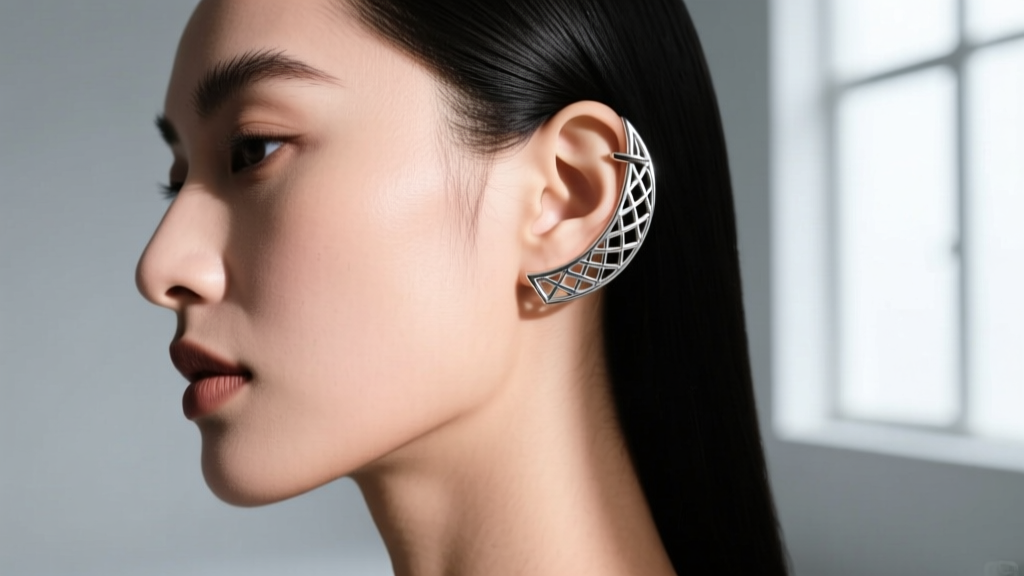
The very feature that makes peep earrings beautiful—the negative space and intricate cutouts—makes them a magnet for sebum, dead skin cells, and cosmetic residue. Improper cleaning can ruin the finish or loosen the peeping element.
- Avoid Ultrasonic Cleaners for Tension Settings: While ultrasonic cleaners are excellent for removing grime from solid metals, the high-frequency vibrations can easily shake a tension-set stone loose from its delicate peep housing. Stick to manual cleaning.
- The Soft-Brush Method: Use a baby-soft toothbrush and a mild, phosphate-free dish soap diluted in warm water. Gently agitate the bristles through the lattice gaps. Do not use toothpaste or baking soda, as the mild abrasives will create micro-scratches on the polished inner edges of the cage, dulling the light reflection that makes the peep stone sparkle.
- Drying the Crevice: Moisture trapped between the gemstone and the metal cage can lead to water spots or, in the case of silver, accelerate oxidation. Use a can of compressed air or a hair dryer on the "cool" setting to blast water out of the intricate peep holes before storing the earrings in an anti-tarnish pouch.
Final Verdict: Which Material Should You Choose?
If you are investing in high-end, daily-wear peep earrings with delicate wireframes, ASTM F136 Titanium and 14k Solid Gold are your best options. Titanium offers unmatched structural rigidity for ultra-thin, modern, avant-garde cage designs, while 14k gold provides the traditional warmth and prestige required for fine jewelry, provided the gauge thickness is properly calibrated to the alloy's hardness. Avoid 18k gold for tension cages, and reserve sterling silver strictly for thicker, heavy-gauge lattice designs where bending is less likely. By prioritizing metallurgical properties over pure aesthetics, you ensure your peep earrings remain secure, comfortable, and visually striking for years to come.


