Keloid Earring Treatment: Budgeting Jewelry vs Medical Care
Compare the costs of keloid earring treatment options. We analyze medical procedures versus preventative implant-grade jewelry investments.

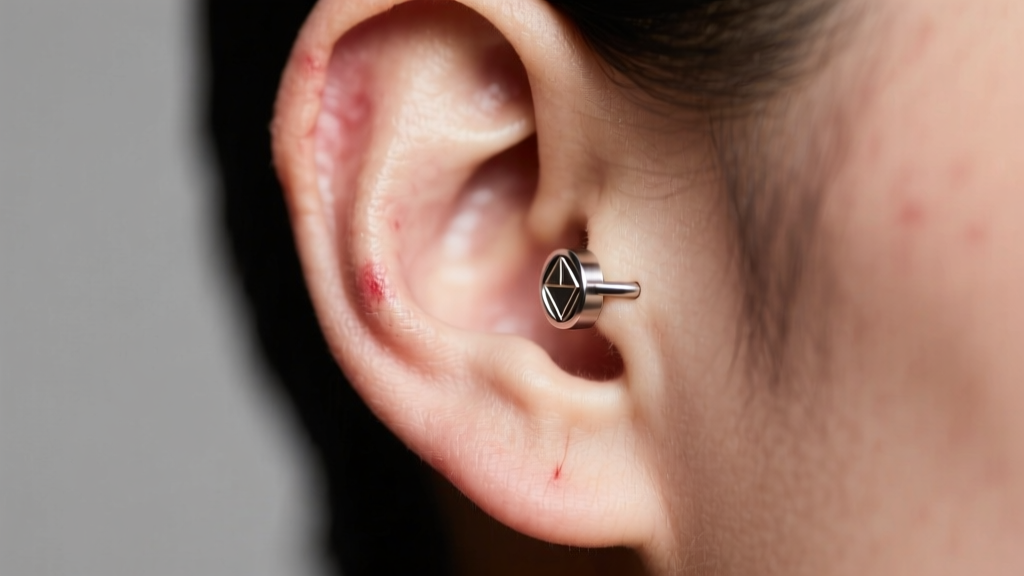
The Financial Reality of Keloid Earring Treatment
When a standard ear piercing transforms into a raised, fibrous keloid, the immediate instinct is to seek medical intervention. However, managing and preventing keloids is not solely a dermatological challenge; it is fundamentally a jewelry and materials issue. As we navigate the body modification landscape in 2026, consumers are increasingly realizing that the most effective keloid earring treatment often begins long before a dermatologist's scalpel is involved. From a budget and value assessment perspective, treating keloids requires a dual-pronged financial strategy: allocating funds for clinical reduction when necessary, and investing in specialized, high-grade jewelry to prevent recurrence. This guide breaks down the true costs of medical interventions versus the long-term ROI of preventative, implant-grade jewelry.
Clinical Interventions: Pricing the Medical Route
If a keloid has already formed, jewelry changes alone will not shrink the existing scar tissue. Clinical intervention becomes mandatory. According to the American Academy of Dermatology, keloids have a notoriously high recurrence rate, meaning a single treatment is rarely sufficient. Budgeting for medical keloid earring treatment requires preparing for multiple sessions.
| Treatment Modality | Average Cost (Per Session) | Sessions Required | Recurrence Risk |
|---|---|---|---|
| Intralesional Corticosteroids | $50 - $150 | 3 to 6 | Moderate (if used alone) |
| Cryotherapy (Freezing) | $150 - $300 | 2 to 4 | Low to Moderate |
| Surgical Excision | $250 - $1,500+ | 1 (plus adjuvant therapy) | Extremely High (up to 80% alone) |
| Pulsed Dye Laser (PDL) | $200 - $400 | 3 to 5 | Low (for redness/vascularity) |
The hidden cost of surgical excision is the mandatory adjuvant therapy. The National Center for Biotechnology Information (NCBI) notes that excising a keloid without follow-up steroid injections or superficial radiation almost guarantees the keloid will return, often larger than before. Therefore, a $500 surgical bill can easily balloon into a $1,500+ comprehensive treatment plan.
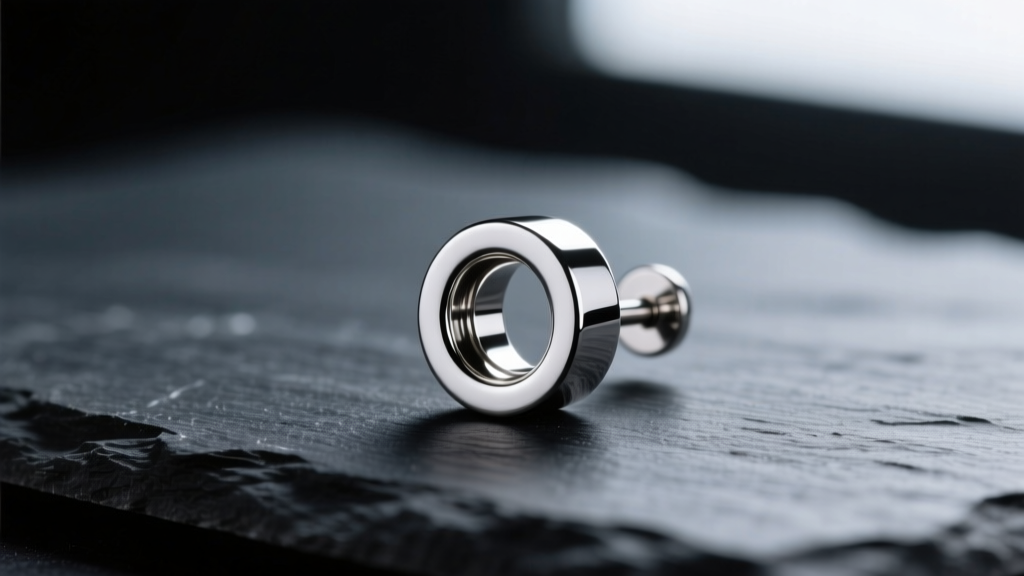
The Jewelry Investment: Preventative and Pressure Pieces
Once a keloid is flattened clinically, or if you are simply trying to prevent one from forming in a prone ear, your jewelry budget must shift from fashion to medical-grade utility. The era of relying on commercial "surgical steel" (316L) is over for keloid-prone individuals. 316L steel contains nickel, a known contact allergen that triggers the exact inflammatory cascade that leads to keloid proliferation.
1. Implant-Grade Titanium (ASTM F136)
Your baseline budget for any earring worn in a keloid-prone ear must be ASTM F136 implant-grade titanium. Unlike standard titanium, F136 is strictly regulated for biocompatibility and contains zero nickel.
Cost Range: $25 to $65 per piece for high-quality, internally threaded flat-back labrets from reputable brands. While this is a 300% markup compared to mall-kiosk fashion earrings, the value lies in the elimination of contact dermatitis, which is a primary keloid trigger.
2. Pressure Earrings for Post-Surgical Care
If you undergo surgical excision, dermatologists universally recommend pressure therapy to starve the healing tissue of excess oxygen and blood flow, preventing regrowth.
Cost Range: $30 to $85. Magnetic pressure earrings are cheaper but often lack the consistent compression required. Screw-back or custom-molded silicone pressure earrings offer superior, adjustable tension, making them the higher-value investment for post-operative keloid earring treatment.
The "Cheese Cutter" Effect: Gauge Sizing and Hidden Costs
One of the most overlooked aspects of keloid prevention is the physical gauge (thickness) of the earring wire. Standard fashion earrings are typically 20-gauge (0.8mm) or 18-gauge (1.0mm). For a keloid-prone earlobe, these thin wires are a financial and physical liability.
The Biomechanical Rule of Ear Jewelry: The thinner the wire, the higher the pressure per square millimeter exerted on the fistula (piercing channel). Heavy dangles on 20-gauge wires act like a cheese cutter, causing micro-tears. The body responds to this chronic micro-trauma by overproducing collagen, resulting in a keloid.
To maximize value and minimize medical bills, budget for a professional up-sizing to 16-gauge (1.2mm) or 14-gauge (1.6mm). The initial cost of having a piercer taper the hole and insert a thicker, solid 14k gold or titanium post ($40 - $80) is a fraction of the cost of a single steroid injection.
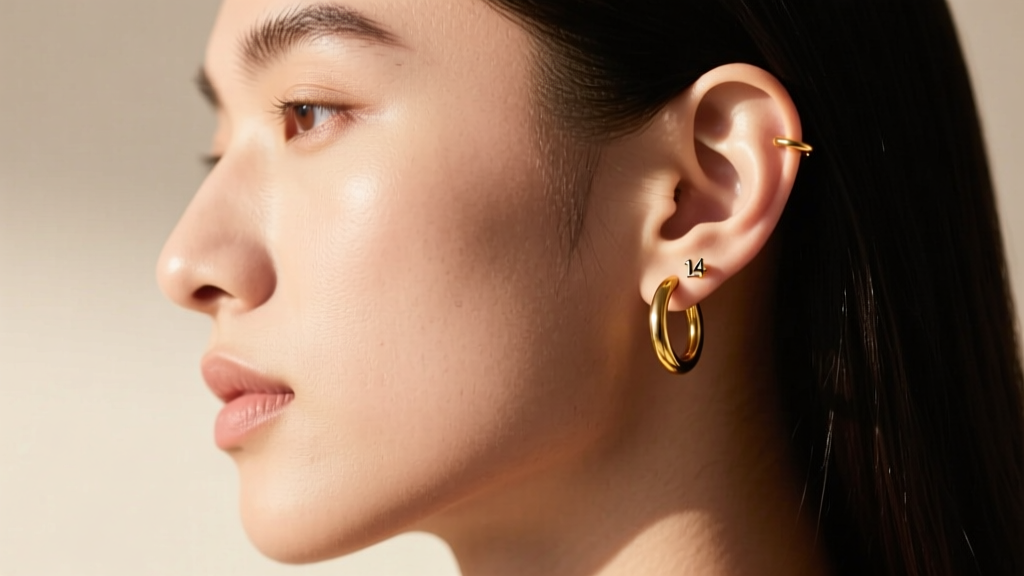
Material Upgrades: Solid Gold vs. Plated Illusions
If you prefer the aesthetic of gold over titanium, your budget must accommodate solid 14k or 18k gold. The market is flooded with "gold-plated" or "gold vermeil" earrings marketed as hypoallergenic. The moment the microscopic plating wears off—often within weeks of daily wear—the base metal (usually brass or copper) is exposed to the fistula, triggering severe inflammation.
- Gold-Plated/Vermeil ($15 - $40): Zero value for keloid-prone ears. High risk of allergic contact dermatitis and subsequent scarring.
- Solid 14k Gold ($80 - $250+): Excellent biocompatibility, provided it is nickel-free (some 14k white gold alloys contain nickel; stick to yellow or rose gold).
- Niobium ($30 - $60): A highly underrated, budget-friendly alternative to titanium. It is completely hypoallergenic and can be anodized to mimic various colors without using toxic dyes or plating.
Cost-Benefit Framework: When to See a Dermatologist
How do you allocate your budget between jewelry upgrades and medical treatments? Use this decision framework to assess the value of your next step:
- Stage 1: Mild Irritation Bumps (Not true keloids).
Action: Downsize to an ASTM F136 titanium flat-back labret. Ensure the post length accommodates swelling.
Budget Allocation: $40 for jewelry. $0 for medical. - Stage 2: Raised, firm, rubbery nodule extending beyond the piercing site.
Action: This is a true keloid. Jewelry changes will not shrink it. Schedule a dermatologist consultation for intralesional steroids.
Budget Allocation: $150+ for medical. $50 for a pressure earring to wear post-injection. - Stage 3: Massive, painful keloid restricting ear movement.
Action: Surgical excision followed by radiation or aggressive steroid therapy, paired with custom-molded pressure jewelry.
Budget Allocation: $1,000+ for comprehensive clinical care.
Final Verdict: Maximizing Value in Ear Care
Ultimately, the most cost-effective keloid earring treatment is aggressive prevention. By auditing your jewelry box and discarding any piece that is not ASTM F136 titanium, niobium, or solid 14k/18k gold, you eliminate the primary inflammatory triggers. Furthermore, respecting the biomechanics of your earlobes by upgrading to thicker 16-gauge or 14-gauge posts prevents the micro-trauma that signals your body to overproduce scar tissue. While clinical treatments are miraculous when necessary, investing $100 in high-quality, biocompatible jewelry today will save you thousands in dermatological procedures tomorrow.


