What Gauge Is a Normal Earring? Size & Material Guide
Discover what gauge is a normal earring and how metal properties affect sizing. Compare 18g to 22g materials for lobes and cartilage.

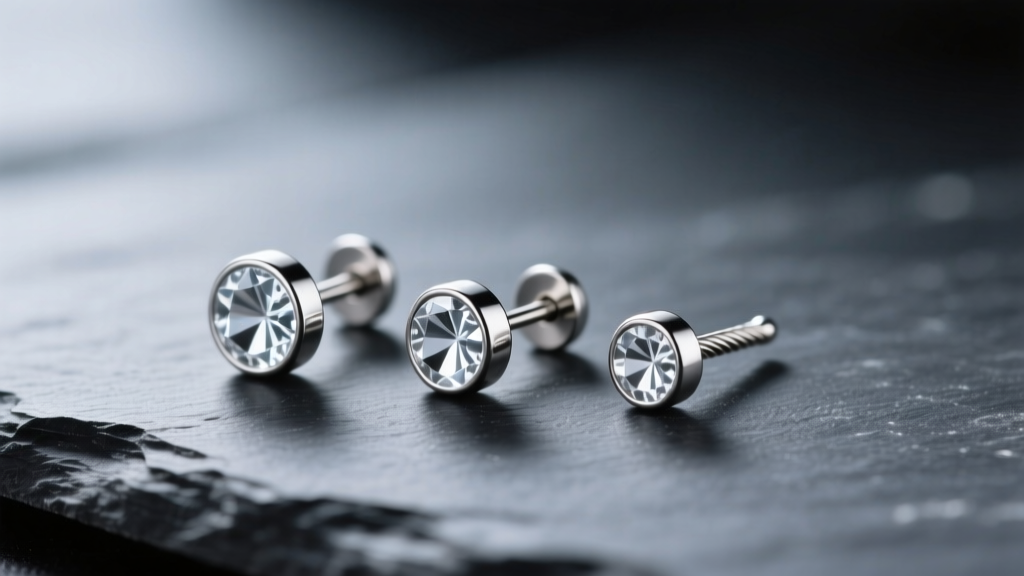
When shopping for fine jewelry or planning a new piercing, one of the most common and critical questions is: what gauge is a normal earring? The answer is not a single universal number, but rather a spectrum dictated by the anatomical placement of the piercing and, crucially, the metallurgical properties of the jewelry material. A gauge that is perfectly safe in implant-grade titanium might cause severe tissue damage or structural failure if crafted in soft 18-karat gold.
In this comprehensive guide, we bridge the gap between body modification standards and materials science. We will explore the exact millimeter conversions of standard gauges, analyze how tensile strength and Vickers hardness dictate safe jewelry sizing, and provide a definitive framework for choosing the right thickness for your earlobes and cartilage.
The Short Answer: Standard Earring Gauges Explained
The jewelry industry uses the Birmingham Gauge (or Standard Wire Gauge) system, which is inversely proportional to thickness—meaning the higher the gauge number, the thinner the wire. If you are asking what gauge is a normal earring for a standard, healed earlobe piercing, the industry standard is 20-gauge (0.81mm) or 18-gauge (1.02mm). However, professional piercers increasingly default to 18G or even 16G (1.29mm) for initial piercings to ensure tissue stability.
For cartilage piercings (helix, tragus, conch), a 16-gauge (1.29mm) or 14-gauge (1.63mm) is considered the normal, safe baseline. Using thinner jewelry in cartilage drastically increases the risk of migration, rejection, and the notorious 'cheese-cutter effect,' where thin wire slowly slices through the tissue under the weight of the jewelry or accidental snags.
Gauge Thickness vs. Material Tensile Strength
To truly understand earring sizing, we must look at material properties. Not all metals behave identically when drawn into thin wires. The structural integrity of a hoop or post relies on the metal's yield strength and hardness.
For example, pure 24k gold is far too soft for body jewelry. It is alloyed with metals like copper, silver, and zinc to create 14k or 18k gold. Even then, gold is significantly softer than titanium. A 22-gauge (0.64mm) wire made of 14k gold will easily warp, bend, and lose its circular shape if used for a seamless hoop. Conversely, ASTM F136 implant-grade titanium possesses a much higher tensile strength, meaning a 20-gauge titanium wire will maintain its structural rigidity far better than a gold wire of the exact same diameter.
Material Hardness & Minimum Safe Gauge Chart
| Material Grade | Vickers Hardness (HV) | Minimum Safe Gauge (Hoops) | Minimum Safe Gauge (Studs) |
|---|---|---|---|
| Implant-Grade Titanium (ASTM F136) | ~350 HV | 18G (1.02mm) | 20G (0.81mm) |
| 14k Solid Gold (Nickel-Free Alloy) | ~130-150 HV | 16G (1.29mm) | 18G (1.02mm) |
| 18k Solid Gold (Nickel-Free Alloy) | ~110-130 HV | 14G (1.63mm) | 18G (1.02mm) |
| 316L Surgical Stainless Steel | ~150-190 HV | 18G (1.02mm) | 20G (0.81mm) |
Note: While titanium can physically withstand being drawn to 20G or 22G without breaking, the Association of Professional Piercers (APP) advises against wearing any jewelry thinner than 18G in the ear to prevent tissue tearing.
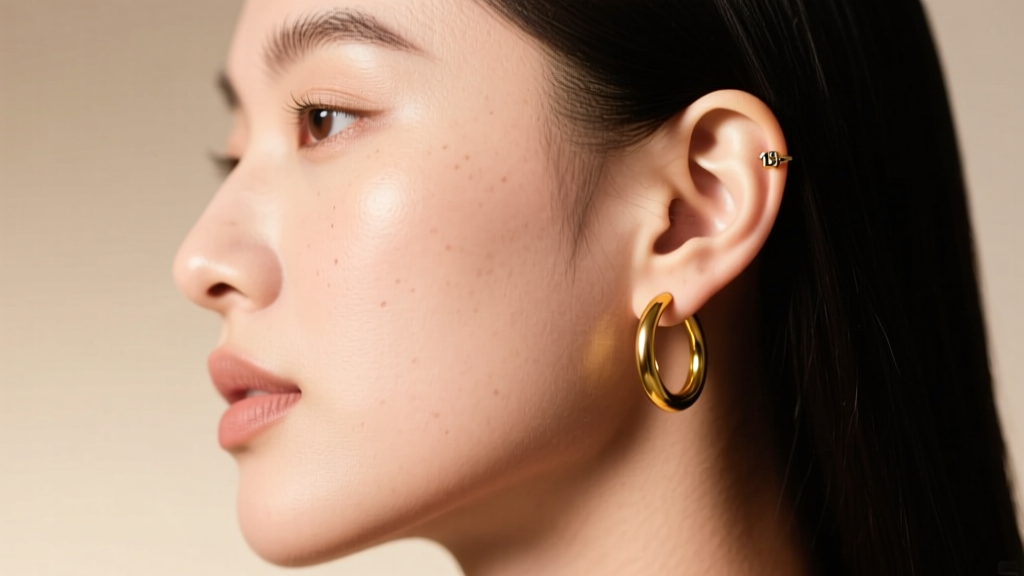
Standard Lobe Piercings: 20G vs. 18G vs. 14G
Earlobes consist of dense vascular tissue without the rigid support of cartilage. This makes them forgiving, but still susceptible to damage from improper gauge and material pairings.
The 20-Gauge Standard (0.81mm)
Most commercial, mass-produced fashion earrings and mall-kiosk piercing guns utilize 20G or even 22G jewelry. While 20G is perfectly fine for lightweight studs made of rigid materials like surgical steel or titanium, it is a poor choice for heavy gold hoops. The thin profile concentrates the downward force of the gold onto a microscopic surface area of the earlobe, leading to elongation and sagging over time.
The 18-Gauge Sweet Spot (1.02mm)
For fine jewelry enthusiasts, 18G is the ultimate sweet spot for earlobes. It provides enough surface area to distribute the weight of heavy gemstone drops or solid gold huggies without causing tissue fatigue. Furthermore, 18G is the standard size for high-end clicker rings and threadless labret ends, giving you access to a vastly superior selection of premium jewelry designs.
Cartilage Sizing: Why 16G Reigns Supreme
Cartilage is an avascular connective tissue that relies on surrounding skin for blood supply. When pierced, it swells significantly and takes 6 to 12 months to fully heal. If you are wondering what gauge is a normal earring for a fresh helix or tragus, the answer is almost universally 16G (1.29mm) or 14G (1.63mm).
Using thin 18G or 20G jewelry in cartilage introduces severe biomechanical risks:
- Migration: Thin wire acts like a cheese wire under tension. If a 20G hoop snags on a sweater, the sheer pressure can cause the jewelry to slowly migrate through the cartilage, resulting in permanent scarring and rejection.
- Swelling Strangulation: Cartilage swells unpredictably. A thicker 16G post provides a wider channel, accommodating minor shifts in tissue density without the jewelry becoming embedded or causing localized necrosis.
- Angle Stability: Thicker jewelry forces the piercer to use a wider, more stable needle, ensuring a perfectly straight fistula (piercing channel). Thin needles used for 20G jewelry are prone to flexing, resulting in crooked piercings that cannot accommodate straight labret posts.
'Jewelry that is too thin can cause the 'cheese-cutter effect,' where the jewelry migrates through the tissue. For this reason, initial cartilage piercings should never be performed with jewelry thinner than 16-gauge.' — Association of Professional Piercers (APP)
Material Properties That Dictate Your Gauge Choice
When selecting your jewelry, you must cross-reference the gauge with the specific alloy grade. Here is how the top three body-safe materials interact with earring sizing.
Implant-Grade Titanium (ASTM F136)
Titanium is the undisputed king of initial piercings. It is entirely nickel-free, biocompatible, and lightweight. Because of its high strength-to-weight ratio, titanium can be safely machined into intricate 18G threadless ends and delicate 16G clickers without fear of the metal snapping or warping. If you have thin earlobes and require a lighter piece of jewelry, titanium allows you to wear larger, more elaborate designs at an 18G thickness without dragging the tissue down.
14k and 18k Solid Gold
Gold is a noble metal, highly resistant to tarnish and corrosion, making it excellent for long-term wear. However, its relative softness means that gold jewelry must be manufactured with structural integrity in mind. Reputable fine jewelers will rarely craft a seamless gold hoop thinner than 16G, as the metal will easily bend out of shape when the wearer attempts to open and close the segment. For gold stud earrings, 18G is the standard, as the rigid backing (such as a butterfly clutch or flat-back labret) supports the post, preventing it from bending.
316L Surgical Stainless Steel
While widely available and inexpensive, 316L steel contains up to 10% nickel. In thin gauges (20G or 22G), the surface area is small, but the rate of nickel leaching into the micro-abrasions of a healing fistula can trigger severe contact dermatitis. Furthermore, the polishing process on ultra-thin steel wires often leaves microscopic surface scratches that harbor bacteria. Steel is best reserved for fully healed piercings at 16G or 14G thicknesses, where the surface can be mirror-polished to an ultra-smooth finish.
Troubleshooting Gauge Mismatches and Sizing Errors
Even experienced collectors occasionally purchase jewelry that doesn't fit their anatomy. Here is an expert framework for troubleshooting gauge and material mismatches:
- The 'Tight Fit' Forcing Issue: Never force a 16G earring into an 18G hole. Even if the metal is soft gold and seems to 'slide' in, you are essentially stretching the fistula with a blunt object. This causes micro-tears, leading to hypertrophic scarring (irritation bumps) along the cartilage ridge.
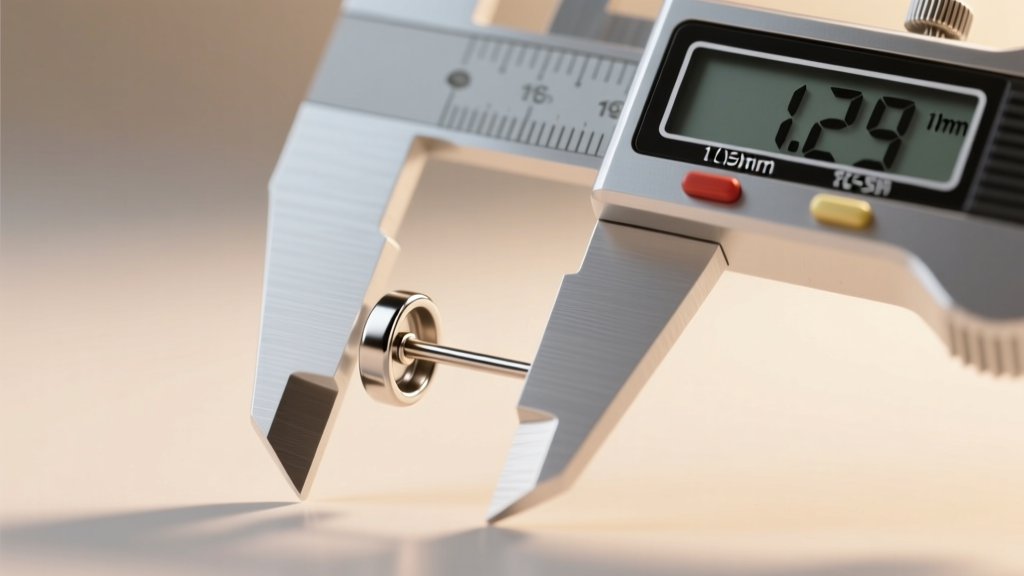
- Measuring Existing Jewelry: Do not rely on visual estimation. Purchase a cheap digital caliper. Measure the wire diameter, not the length of the post. If your caliper reads 0.81mm, you are wearing 20G. If it reads 1.02mm, you have an 18G post.
- Up-Sizing for Tissue Health: If you have worn 20G fashion earrings for years and notice your earlobes feeling tender or the holes looking slightly elongated, it is time to up-size. Transitioning to 18G or 16G flat-back titanium labrets will allow the tissue to plump back up around the thicker post, restoring the health of the fistula.
Expert Sizing Framework for Your Next Purchase
To ensure you are buying the correct jewelry for your specific anatomy and material preference, use this quick decision matrix before checking out:
- For Fresh Piercings (Any Location): Only accept 14G or 16G Implant-Grade Titanium (ASTM F136). Avoid gold and steel until the 6-12 month healing mark is confirmed by a professional.
- For Healed Earlobe Studs: 18G is the optimal standard. It accommodates both high-end 14k gold and titanium, offering the widest variety of gemstone settings without sacrificing tissue support.
- For Healed Earlobe Hoops: Never drop below 18G. If buying solid gold, opt for 16G to prevent the hoop from warping into an oval shape during daily wear.
- For Healed Cartilage (Helix/Tragus): 16G is the absolute minimum for structural safety. If you are buying a heavy gold shield or cluster setting, upgrade to 14G to counterbalance the weight of the decorative end.
Understanding what gauge is a normal earring is only the first step. By marrying the precise millimeter dimensions of the jewelry with the metallurgical realities of the chosen alloy, you ensure that your ear styling is not only visually stunning but anatomically sustainable for a lifetime of wear. Always consult with an APP-certified piercer or a certified metallurgical jeweler when transitioning between gauges or investing in fine metals.


