How to Style and Maintain Your Favorite Mango Earring Styles
Learn how to style, clean, and restore your mango earring collection. Step-by-step care for carved mango wood, enamel, and motif drops.

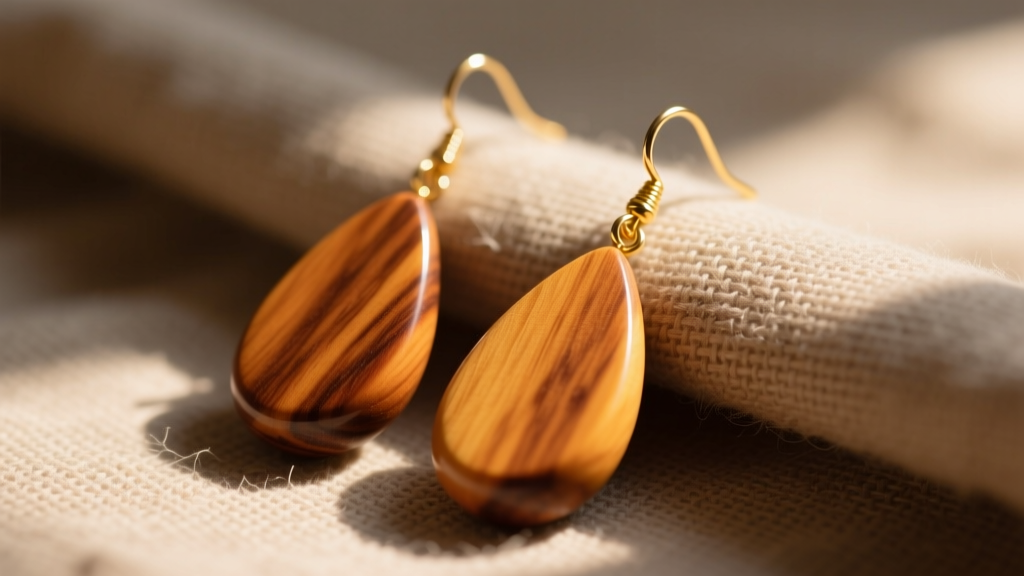
The Rise of the Mango Earring: Organic Shapes and Sustainable Materials
In the jewelry landscape of 2026, the mango earring has evolved far beyond a simple novelty accessory. Today, this term encompasses three distinct, highly sought-after categories: sustainably harvested carved mango wood drops, pop-art inspired cold enamel fruit motifs, and the traditional Indian 'Ambi' (paisley/mango) silhouette crafted in gold vermeil. Each of these styles features the iconic asymmetrical teardrop shape that flatters a wide variety of face shapes, but they require vastly different care protocols.
Whether you are wearing a heavy, artisan-carved wooden statement piece or a delicate vitreous enamel mango drop, improper maintenance can lead to cracked wood, clouded resin, or tarnished metals. This comprehensive, step-by-step guide will teach you how to identify your materials, restore dried organic components, upgrade your hardware for heavy drops, and style the mango silhouette for your unique facial structure.
Step 1: Identify Your Mango Earring Material and Vulnerabilities
Before applying any cleaning solution or polishing cloth, you must accurately identify the material of your mango earring. The teardrop shape is universal, but the molecular structure of the materials dictates their vulnerabilities. According to The Wood Database, mango wood (Mangifera indica) is a moderately hard timber, but its porous nature makes it highly susceptible to moisture loss and environmental cracking.
| Material Type | Durability Profile | Primary Vulnerability | Best Cleaning Method | Avg. Price Range |
|---|---|---|---|---|
| Carved Mango Wood | Janka Hardness: 1,070 lbf | Drying out, water spotting, cracking | Dry microfiber, mineral oil | $45 - $150 |
| Cold Enamel (Epoxy Resin) | Scratch-prone, flexible | Heat warping, chemical clouding | Mild soap, lukewarm water | $20 - $65 |
| Vitreous Enamel (Fired Glass) | Glass-like, highly brittle | Impact shattering, chipping | Soft damp cloth only | $120 - $350 |
| Brass/Gold Vermeil Motif | High tensile strength | Tarnish, skin acidity reactions | Jewelry polishing cloth | $85 - $250 |
Step 2: How to Restore and Seal Carved Mango Wood Drops
If you own carved mango wood earrings, you may notice the wood grain looking dull, gray, or slightly rough to the touch after a few months of wear. This is a sign of dehydration. Unlike synthetic resins, mango wood is an organic material that requires periodic re-sealing to maintain its structural integrity and rich, golden-brown hue.
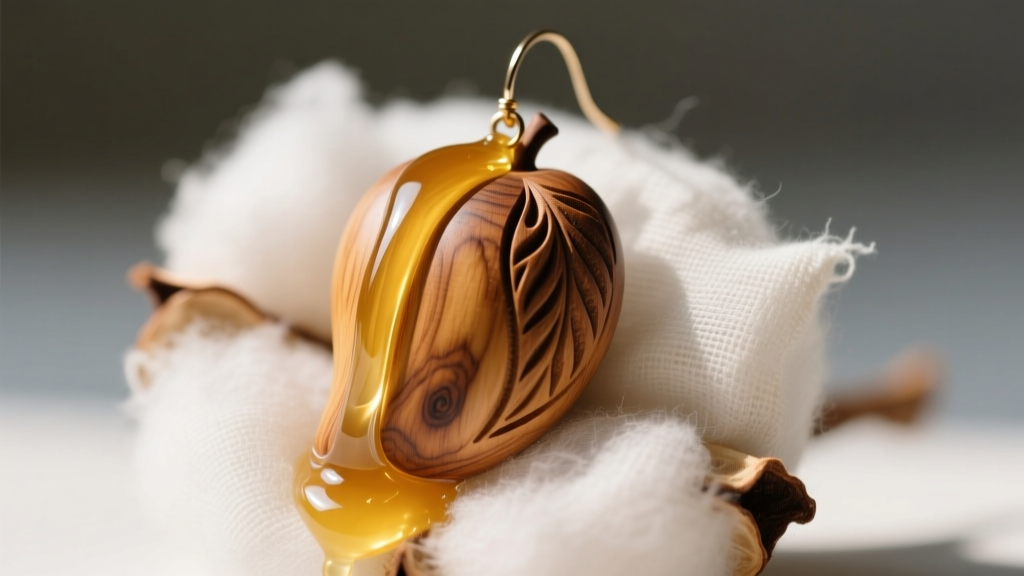
The Jojoba Oil and Beeswax Sealing Method
- Surface Preparation: Wipe the earrings with a completely dry, lint-free microfiber cloth to remove surface oils and dead skin cells. Never use water or alcohol, as these will strip the wood's natural tannins and cause immediate micro-fissures.
- Light Buffing (If Scratched): If your wooden mango earring has minor surface scratches, gently buff the affected area with 600-grit sandpaper. Always sand in the direction of the wood grain, never against it.
- Oil Application: Apply two drops of food-grade Jojoba oil or pure mineral oil to a cotton swab. Rub the oil deeply into the wood grain. Jojoba oil is preferred over olive or coconut oil because it is a liquid wax ester that will not go rancid over time.
- Wax Sealing: Once the oil has absorbed (approximately 15 minutes), apply a micro-thin layer of pure beeswax using a soft cloth. Buff vigorously until the wood achieves a soft, satin luster. This wax layer acts as a hydrophobic barrier against ambient humidity and sweat.
Step 3: Styling the Teardrop 'Mango' Silhouette for Your Face Shape
The defining characteristic of the mango earring is its asymmetrical, curved teardrop shape—wider at the bottom and tapering to a delicate point at the top. This specific geometry creates a visual weighting effect that can dramatically alter the perceived proportions of your face. Here is how to style this silhouette based on your bone structure:
- Square Faces: The sharp angles of a square jawline are beautifully softened by the curved, organic lines of a mango wood or enamel drop. Opt for medium-to-large drops (1.5 to 2.5 inches) that hang below the jawline to elongate the neck.
- Heart-Shaped Faces: Because heart-shaped faces are wider at the forehead and narrow at the chin, the bottom-heavy mango shape perfectly balances the lower half of the face, adding visual volume exactly where it is needed.
- Round Faces: To avoid emphasizing circularity, choose elongated, narrow mango motifs (often seen in traditional Indian Ambi designs) rather than wide, chunky fruit shapes. The verticality will create a slimming, elongating illusion.
- Oval Faces: Oval faces possess naturally balanced proportions and can pull off any variation of the mango earring, from oversized pop-art enamel fruit studs to delicate, diamond-encrusted paisley drops.
Step 4: Upgrading Hardware for Heavy Artisan Drops
One of the most common failure modes for artisan jewelry is hardware inadequacy. A solid, carved mango wood teardrop or a thick brass motif can easily weigh between 12 and 25 grams per ear. Standard friction-back posts and thin wires are not engineered to support this weight, leading to stretched earlobes, lost earrings, and post-bending.
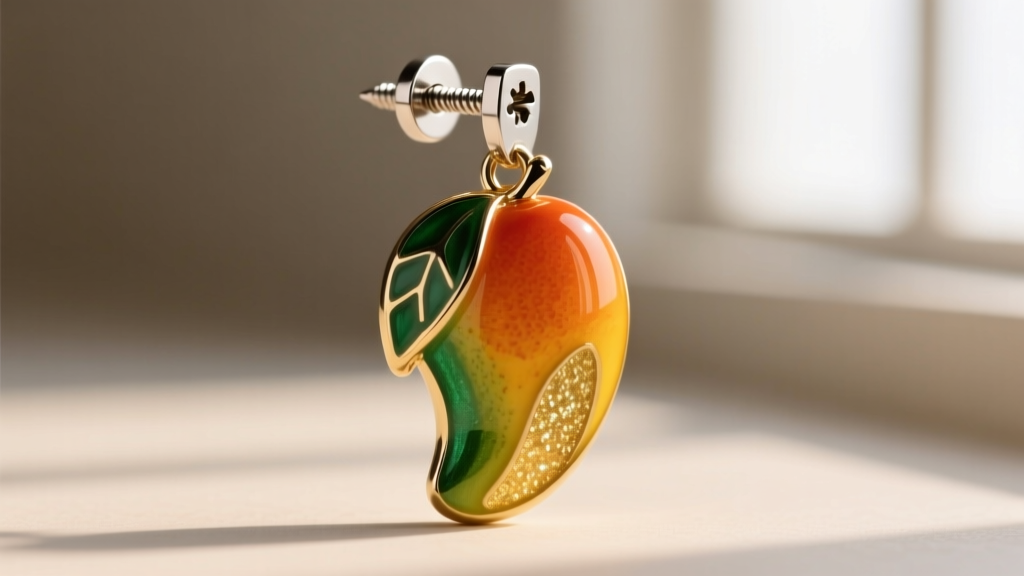
Gauge Sizing and Backing Upgrades
Standard commercial earrings typically use a 20-gauge (0.81mm) post. For heavy mango drops, you must upgrade your hardware. If you are having a jeweler custom-fit your drops, request an 18-gauge (1.02mm) or 16-gauge (1.29mm) post made from implant-grade titanium (ASTM F136). Titanium provides superior tensile strength and is entirely hypoallergenic, preventing the earlobe inflammation that often occurs when heavy metals drag against sensitive piercing tracts.
Furthermore, abandon standard butterfly friction backs. Heavy drops require silicone O-ring clutches or threaded screw-backs. Screw-backs mechanically lock the earring in place, ensuring that the sheer kinetic force of a heavy mango drop swinging as you walk does not dislodge the backing. As noted by experts at Jewelers Mutual, ensuring your clasps and posts are proportionate to the weight of the jewelry is the single most effective way to prevent catastrophic loss.
Common Maintenance Mistakes to Avoid
Even seasoned jewelry collectors make critical errors when caring for mixed-material pieces. To ensure your mango earring collection survives for decades, strictly avoid the following practices:
- The Ultrasonic Cleaner Trap: Never place enamel or wood earrings in an ultrasonic cleaner. The high-frequency cavitation bubbles will shatter vitreous enamel, cloud cold epoxy resin, and force microscopic water droplets deep into the pores of mango wood, leading to internal rot.
- Chemical Exposure: Hairspray, perfume, and sunscreen contain alcohols and solvents that will strip the protective wax seal off wooden drops and degrade the glossy topcoat of cold enamel fruit motifs. Always apply your beauty products and wait 10 minutes before putting on your earrings.
- Improper Storage: Tossing heavy wooden drops into a communal jewelry box will result in severe scratching and chipping. Store each mango earring individually in a soft flannel pouch or a dedicated compartment with anti-tarnish strips if metal hardware is present.
Expert Troubleshooting Tip: If the metal inlay or accent gemstone on your wooden mango earring becomes loose, do not use standard superglue (cyanoacrylate). Superglue dries brittle and will leave a permanent white, chalky residue on the wood grain. Instead, use a flexible jeweler's adhesive like G-S Hypo Cement, which allows for the natural expansion and contraction of the wood during seasonal humidity changes.
By understanding the unique material science behind your jewelry and implementing these targeted care routines, your mango earrings will remain vibrant, structurally sound, and perfectly styled for every occasion.


