Star Dangle Earrings: A Beginner's Guide to Styling and Care
Discover everything about star dangle earrings. Learn how to choose the right metals, gauge sizes, and face-shape pairings in our beginner guide.

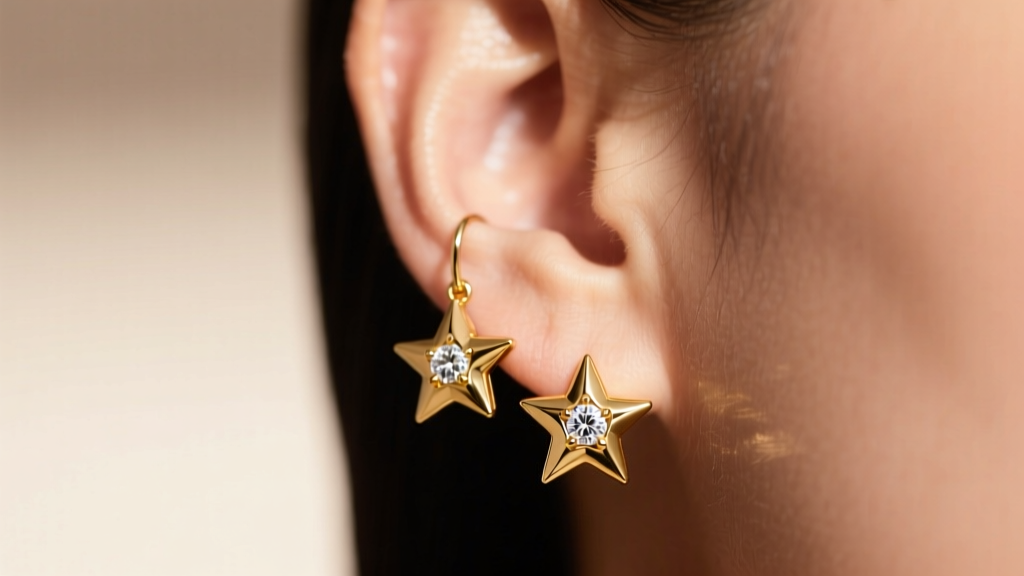
What Exactly Are Star Dangle Earrings?
When navigating the vast world of ear adornments, it is crucial to understand the distinction between a drop and a dangle. Drop earrings typically feature a single element that hangs just below the earlobe with minimal movement. In contrast, star dangle earrings are designed with articulated joints, chains, or hinges that allow the celestial motif to swing freely and catch the light with every turn of your head. This kinetic movement is what gives dangles their signature dramatic flair.
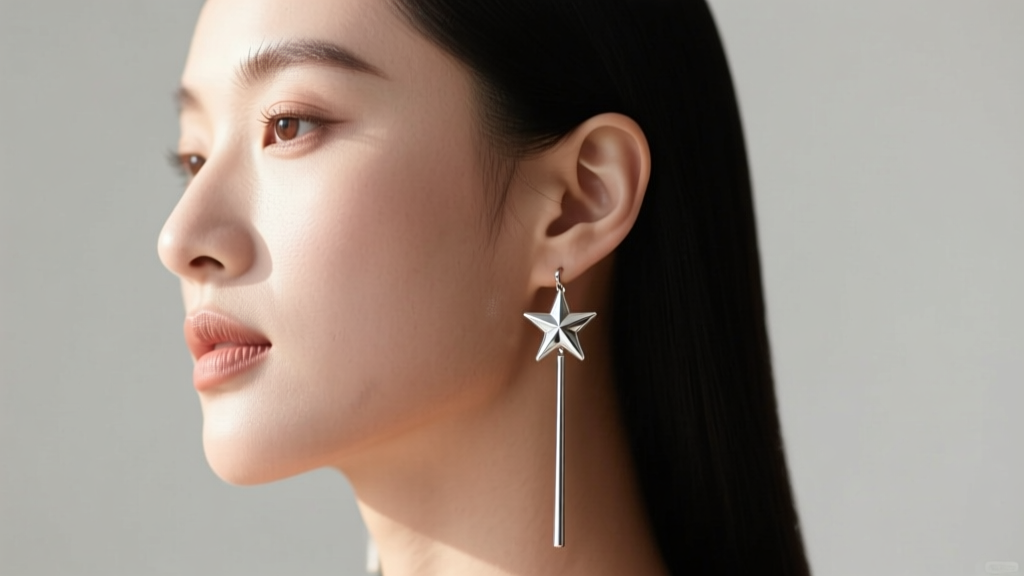
For beginners, the star motif offers incredible versatility. You will typically encounter three main design variations: the classic solid five-point star, the delicate geometric starburst outline, and the linear "shooting star" design that incorporates a trailing chain of smaller accents. Understanding these variations is the first step in mastering how to style them for both everyday wear and evening events.
Choosing the Right Metal and Gauge Size
The longevity and comfort of your earrings depend heavily on material grades and wire thickness. Because dangle earrings act as pendulums, they exert more kinetic stress on your earlobe piercing than static studs. Therefore, selecting the correct gauge and hypoallergenic metal is non-negotiable.
Standard Gauge Sizes Explained
Most standard lobe piercings are done at 20-gauge (0.81mm) or 18-gauge (1.02mm). When shopping for star dangle earrings, always check the wire thickness of the ear hook. If you wear 18-gauge jewelry but force a 20-gauge wire into your piercing, the thinner wire can act like a cheese cutter under the swinging weight of the star charm, eventually migrating or tearing the lobe. Conversely, forcing a thick 16-gauge wire into a delicate 20-gauge hole will cause micro-tears and inflammation.
Material Grades and Allergies
According to the Association of Professional Piercers (APP), nickel is the most common contact allergen in jewelry. Beginners should avoid cheap brass or nickel-silver alloys. Instead, look for these safe material grades:
- 316L Surgical Stainless Steel: Excellent for budget-friendly options, though it is heavier and can fatigue the lobe if the star charm is oversized.
- Implant-Grade Titanium (ASTM F-136): The gold standard for sensitive ears. It is incredibly lightweight, reducing the pendulum drag on your piercing.
- Solid 14k or 18k Gold: Ideal for fine jewelry pieces. Note that 24k gold is too soft for dangle wires and will easily bend out of shape.

Face Shape Pairing Guide
The swinging nature of dangle earrings makes them a powerful tool for balancing facial proportions. The length and width of the star motif can either soften angular features or add much-needed structure to softer face shapes. Use the framework below to select the most flattering proportions.
| Face Shape | Recommended Star Dangle Style | Design Rationale |
|---|---|---|
| Round | Long, linear shooting stars | Vertical lines and elongated chains draw the eye downward, creating the illusion of a longer, more sculpted jawline. |
| Square | Curved starburst clusters | Soft, rounded arrangements of multiple small stars help to offset and soften strong, angular jawbones and prominent cheekbones. |
| Oval | Medium geometric 5-point stars | Oval faces are naturally balanced. Mid-length, symmetrical star shapes highlight the natural harmony without overpowering the features. |
| Heart | Inverted triangle or chandelier stars | Styles that are wider at the bottom add visual weight to the lower half of the face, balancing a broader forehead and narrow chin. |
The Mechanics of Movement and Failure Modes
Beginners often overlook the structural engineering required to keep dangle earrings intact. The connection point between the ear wire and the star charm is the most critical failure point. Understanding these mechanics will save you from losing a favorite piece.
Jump Rings vs. Soldered Links
Many mass-produced star dangle earrings use a standard "jump ring" (a small circle of wire with a slit) to attach the star to the hook. Under the repetitive swinging motion, the tension can cause the jump ring to pull apart, dropping the star charm. When inspecting a piece, look for soldered jump rings (where the slit is fused shut with metal) or solid cast links. If your earrings feature unsoldered jump rings, take them to a local jeweler to have them soldered shut for a few dollars—a vital preventative measure.
Wire Types: French Hook vs. Leverback
The standard French hook (fishhook) wire is common but prone to falling out if the earring is lightweight and the dangle swings forward. For heavier solid gold or gemstone star dangles, a leverback closure is vastly superior. The leverback features a hinged clasp that snaps securely behind the earlobe, completely eliminating the risk of the earring slipping out during movement.
Maintenance and Snag Prevention
The intricate points of a star motif, combined with the swinging chains of a dangle, create a high-risk environment for snagging. Knit sweaters, lace fabrics, and even long, unbound hair are notorious for catching on the upper points of the star.
Pro Tip: Always put your star dangle earrings in after you have finished styling your hair and applying hairspray or perfume. Aerosolized chemicals can degrade the rhodium plating on white gold or sterling silver stars, leaving them looking dull and cloudy.
For cleaning, avoid harsh ultrasonic cleaners if your star earrings feature glued-in cubic zirconia or soft gemstones like opals or turquoise, as the vibrations can shatter the stones or dissolve the adhesive. Instead, use a few drops of mild dish soap in warm water and gently scrub the crevices of the star with a soft-bristled baby toothbrush. Dry thoroughly with a microfiber cloth to prevent water spots.
Price Tiers and What to Expect
When budgeting for your first pair of quality star dangle earrings, it helps to understand what drives the cost. The Gemological Institute of America (GIA) notes that precious metal purity and gemstone origin are the primary cost factors in fine jewelry. Here is a realistic breakdown of what to expect in the current market:
- Budget Tier ($15 - $45): Typically crafted from brass or 316L stainless steel with gold or silver plating. The stars are often hollow or stamped sheet metal to keep weight down. Expect the plating to wear off after a few months of daily wear, revealing the base metal beneath.
- Mid-Range Tier ($60 - $180): Solid 925 sterling silver or heavy gold vermeil (a thick layer of gold over sterling silver). You will find better mechanical construction here, such as soldered links and leverback closures. This is the sweet spot for beginners seeking durability without the fine jewelry price tag.
- Fine Jewelry Tier ($250 - $1,000+): Solid 14k or 18k gold, often featuring genuine diamonds, sapphires, or high-grade lab-grown stones set into the star points. These pieces are heirloom-quality, will not tarnish, and are safe for 24/7 wear, provided the gauge size matches your piercing.
By prioritizing proper gauge sizing, secure mechanical links, and face-shape harmony, you can confidently integrate star dangle earrings into your daily rotation. They are more than just a fleeting trend; when chosen with intention, they become a dynamic, light-catching staple of your personal style.


