Engineering Earring Crawlers: Tension, Gauge, and Fit
Master the biomechanics of earring crawlers. Explore tension calibration, optimal gauge sizes, hypoallergenic metals, and anti-slip fitting techniques.

The Biomechanics of Ear Climbers
Earring crawlers (frequently termed ear climbers) represent a unique intersection of biomechanics and metallurgy in contemporary jewelry design. Unlike standard studs that rely on gravity and a friction back, or continuous structural hoops, crawlers depend on a dual-anchor tension system. This technical deep dive examines the engineering tolerances, material science, and fitting mechanics required to manufacture and wear earring crawlers without tissue damage or structural failure. Understanding these variables is critical for both jewelers designing the pieces and consumers seeking a secure, comfortable fit.
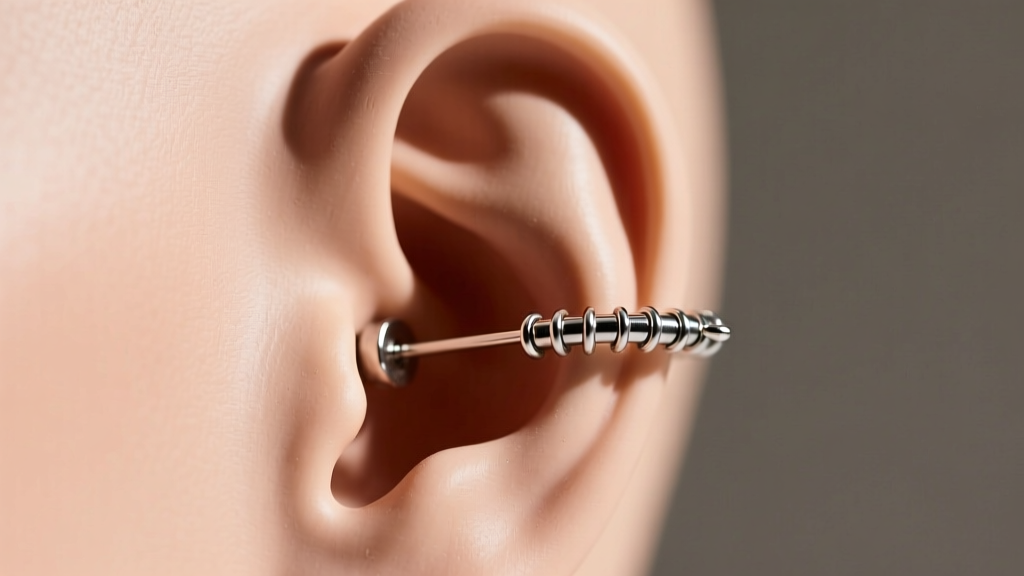
The Physics of the Crawl: Tension and Anchor Points
The fundamental mechanics of an earring crawler rely on a lever and fulcrum system. The pierced fistula (the hole) acts as the primary anchor and fulcrum. The post extends horizontally through the tissue, while the decorative arm extends vertically along the helix or auricle. The friction back or clutch provides the secondary anchor behind the ear.
If the center of mass of the decorative arm extends too far from the vertical axis of the post, rotational torque occurs. This causes the infamous 'droop' effect, where the crawler rotates downward. To counteract this, expert jewelers design the crawler arm with a slight inward curvature (the cuff) that applies gentle lateral pressure against the cartilage edge, creating a third point of contact that stabilizes the piece against gravitational shear.
Metallurgical Requirements: Hardness and Springback
Not all metals possess the mechanical properties required for functional earring crawlers. The material must exhibit high 'springback' (elastic recovery) to maintain tension against the ear without permanent deformation. If a metal is too malleable, the cuff will slowly bend outward over time, losing its grip on the helix.
| Metal Alloy | Vickers Hardness (HV) | Yield Strength | Crawler Suitability |
|---|---|---|---|
| Sterling Silver (925) | 60-70 HV | Low | Poor (requires frequent rebending) |
| 14k Yellow Gold | 130-150 HV | Medium | Good (industry standard for fine jewelry) |
| Ti-6Al-4V (Grade 5 Ti) | 340-360 HV | High | Excellent (ideal tension and biocompatibility) |
| Platinum (950 Pt) | 120-140 HV | Medium-High | Good (heavy, requires thicker gauge wire) |
As noted by the Gemological Institute of America (GIA), alloying elements in gold and platinum significantly alter the crystalline structure, directly impacting how well a crawler arm will retain its calibrated curve after repeated wear.
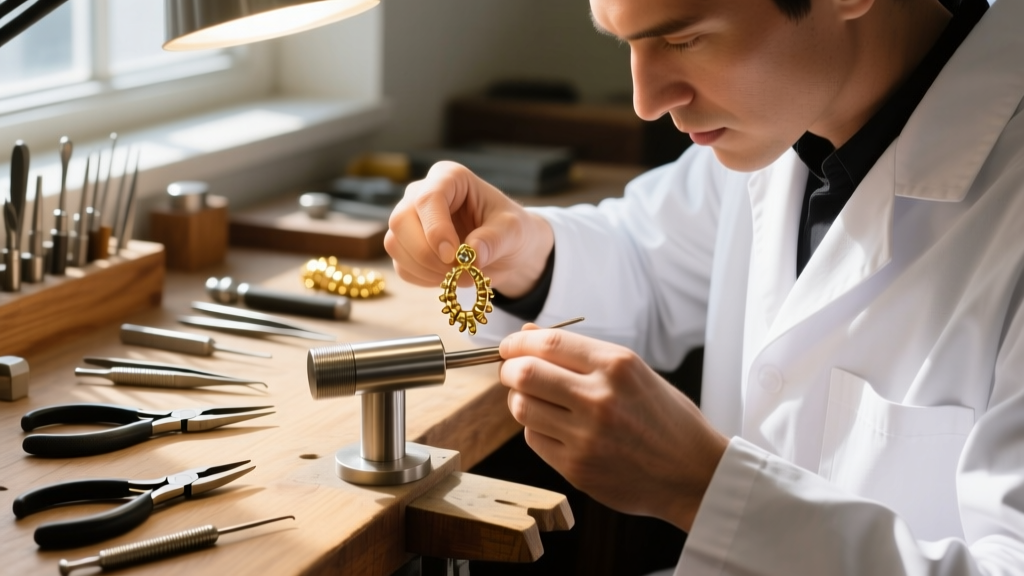
Gauge Specifications and Piercing Compatibility
The post gauge is a critical, often overlooked variable in crawler design. Standard earlobe piercings are typically 20G (0.81mm) or 18G (1.02mm). Cartilage piercings, however, are usually 16G (1.29mm). Most mass-market crawlers use 20G posts to fit standard lobe holes, but this creates a mechanical vulnerability.
The 18G Sweet Spot for Structural Integrity
A 20G wire supporting a 15mm crawler arm is subject to significant shear stress. For optimal structural integrity without causing tissue migration, 18G (1.02mm) is the superior post thickness for earring crawlers. An 18G post provides a 58% increase in cross-sectional area compared to 20G, drastically reducing the risk of the 'cheese-cutter effect'—a phenomenon where a thin wire slowly migrates through the earlobe tissue under the continuous torque of the crawler arm. The Association of Professional Piercers (APP) frequently highlights the dangers of undersized jewelry in high-stress applications.
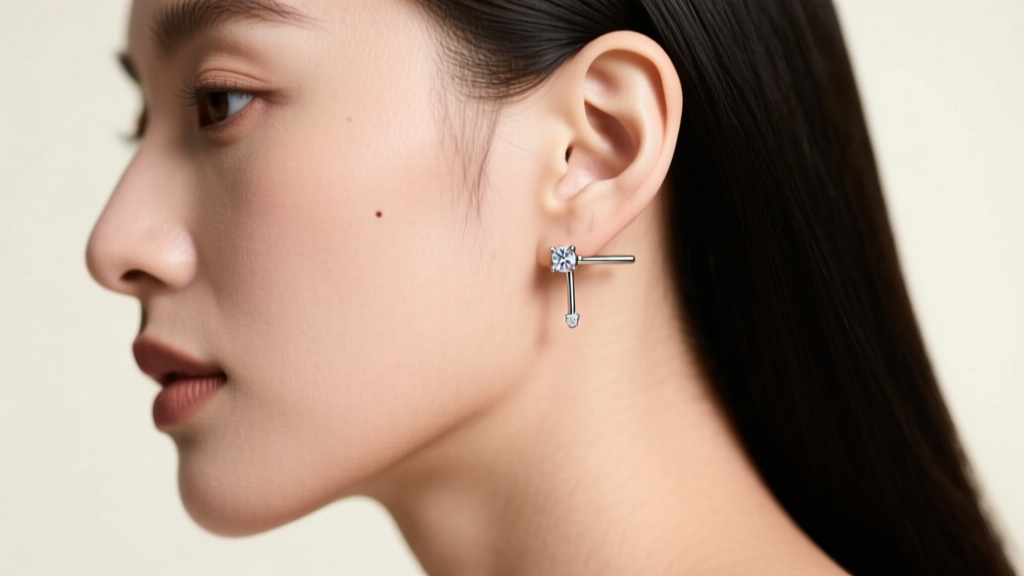
Anatomical Variations and Helix Curvature Mapping
The human auricle is not a standardized geometric plane. The helix rim varies in thickness from 2mm to over 8mm depending on the individual's cartilage density and folding morphology. When engineering earring crawlers, jewelers must account for these variables.
- Thin Helix Rim (2-4mm): Requires a tighter cuff radius (approx. 4.5mm inner diameter) to prevent the crawler from sliding off the edge during physical movement.
- Thick Helix Rim (5-8mm): Requires a wider cuff radius (approx. 6.0mm inner diameter). If a tight cuff is forced onto a thick rim, it will cause ischemic compression.
- Darwin's Tubercle: A natural thickening of the helix that can block the upward trajectory of a rigid crawler. Articulated or segmented crawlers are required for ears with prominent tubercles.
Troubleshooting Common Failure Modes
Even perfectly engineered earring crawlers can fail if the fitting mechanics are misunderstood. Here is a diagnostic framework for common issues:
- The Droop (Rotational Failure): Caused by a post that is too long or a friction back that fails to grip. Fix: Use a secure silicone or metal locking clutch that snaps into a post groove, reducing the lever arm length behind the ear.
- The Pinch (Ischemic Compression): The cuff applies too much lateral pressure, restricting capillary blood flow to the helix edge, leading to tissue necrosis in extreme cases. Fix: Adjust the cuff radius using nylon-jawed pliers to increase the inner diameter by 1-2mm.
- The Spin (Asymmetrical Loading): The center of gravity is misaligned, causing the piece to rotate forward. Fix: Counterweight the design by utilizing a heavier clutch or selecting a shorter, denser metal alloy for the upper arm.
Expert Sizing and Calibration Framework
Proper calibration of an earring crawler requires specialized tools. Jewelers should never use standard steel pliers directly on the cuff, as this will mar the finish and work-harden the metal unevenly, leading to micro-fractures.
"Jewelry should never exert continuous, restrictive pressure on the tissue margins. For ear climbers, the decorative cuff should rest adjacent to the cartilage, providing lateral stability without clamping the tissue." — APP Guidelines on Tissue Compression
To achieve the perfect fit, the crawler should be placed on a tapered steel mandrel. Using a rawhide mallet or nylon-jawed bending pliers, the cuff is gently expanded or contracted in 0.5mm increments until it slides over the helix with a tactile 'click' of resistance, ensuring the earring crawlers remain secure through daily wear without compromising vascular health.


