How to Choose Earring Backs That Stay On Securely
Discover how to choose and secure earring backs that stay on. Explore step-by-step guides for friction, screw, and locking backs to prevent loss.

The Anatomy of Earring Security: Why Standard Backs Fail
Losing a fine jewelry earring is a frustrating and expensive experience. The culprit is almost always the backing mechanism. Standard "butterfly" or friction backs rely on two small metal tabs that grip the earring post through tension. Over time, metal fatigue causes these tabs to loosen, reducing the friction coefficient. Furthermore, standard earring posts are typically 20-gauge (0.81mm) or 18-gauge (1.02mm). If the post is too long for your specific earlobe thickness, the back will slide off during sleep or when brushing your hair. If it is too short, the backing cannot fully engage the groove, leading to inevitable loss.
To find earring backs that stay on, you must move beyond standard friction clutches and understand the mechanical requirements of your specific earrings. According to the Gemological Institute of America (GIA), proper jewelry maintenance includes regularly inspecting and upgrading backing mechanisms to match the weight and value of the earring.
Step-by-Step: Upgrading to Earring Backs That Stay On
Upgrading your earring backs is not a one-size-fits-all process. Follow this step-by-step guide to ensure a perfect, secure fit.
Step 1: Measure Your Post Gauge and Length
Before purchasing new backs, you must know your post dimensions. Use a digital caliper to measure the thickness (gauge) and length of the post.
- Standard Studs: Usually 20G (0.81mm) or 18G (1.02mm).
- Standard Length: 8mm to 10mm.
- Heavy Dangles: Often require 14mm to 16mm posts to accommodate thicker lobes and the weight of the drop.
Expert Tip: If your post lacks a machined groove (a small notch near the end), friction and locking backs will fail. You must use screw backs or silicone O-rings for smooth, un-notched posts.
Step 2: Select the Right Locking Mechanism
Once you have your measurements, choose a mechanism that physically prevents the back from sliding off. The two most reliable options are threaded (screw) backs and mechanical locking clutches (such as La Pousette locking mechanisms). Threaded backs require the post to have external or internal threading, while mechanical locks use a dual-spring system that clicks into a machined groove on a smooth post.
Comparative Analysis: Which Backing System is Best for You?
Not all security systems are created equal. Below is a comprehensive breakdown of the most effective earring backs that stay on, categorized by their mechanical design and ideal use cases.
| Backing Type | Mechanism | Best For | Price Range (14k Gold) | Security Level |
|---|---|---|---|---|
| Friction (Butterfly) | Tension tabs gripping a notch | Lightweight, inexpensive studs | $15 - $30 | Low |
| External Screw | Threads on the post, screws into back | Standard diamond studs | $35 - $60 | High |
| Internal Screw | Smooth post, threads inside the backing | Sensitive piercings, high-end studs | $50 - $85 | Very High |
| La Pousette (Locking) | Spring-loaded dual-clutch lock | Valuable heirloom studs, active wear | $45 - $75 | Very High |
| Jumbo Silicone | High-friction elastomer cylinder | Heavy dangles, drooping lobes | $2 - $8 (Medical Grade) | Medium-High |
How to Properly Apply and Maintain High-Security Backs
Even the best earring backs that stay on will fail if applied incorrectly. Proper application and maintenance are critical for long-term security.
Applying Threaded (Screw) Backs
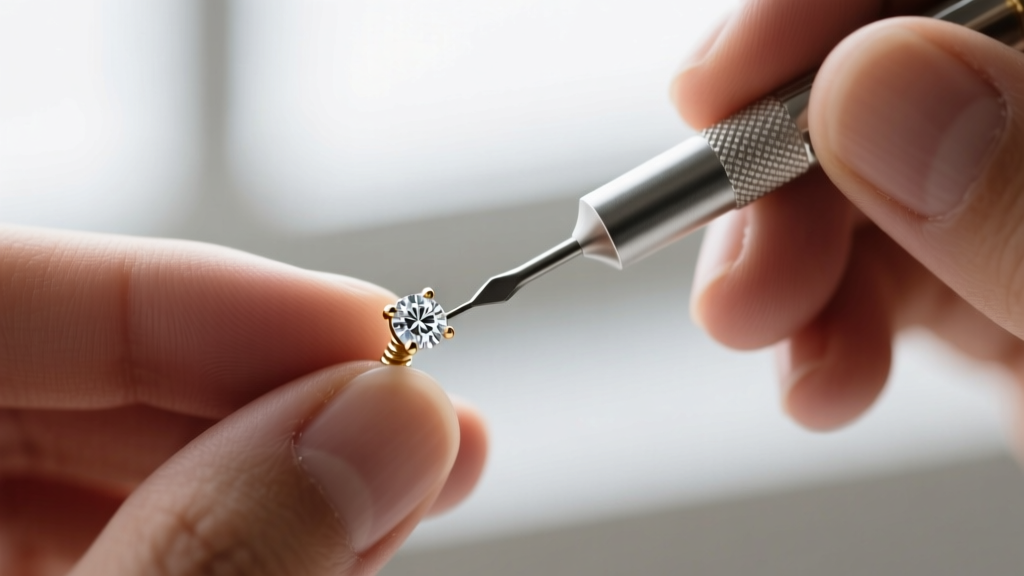
When using screw backs, never force the threading. Cross-threading will permanently strip the metal, ruining both the post and the back. Align the backing perfectly straight with the post and turn counter-clockwise until you feel a slight "drop" into the thread path, then screw clockwise. If you encounter resistance, back it out and try again.
Applying Mechanical Locking Backs (La Pousette)
Push the backing onto the post until you hear and feel two distinct clicks. The first click engages the primary spring, while the second click locks the secondary safety clutch into the post's groove. To remove, you must squeeze the two side tabs simultaneously while pulling.
Maintenance and Cleaning
Sebum, dead skin cells, and lotion build up inside backing mechanisms, acting as a lubricant that reduces friction. Clean your earring backs weekly using an ultrasonic jewelry cleaner or a soft brush with warm water and mild dish soap. For silicone backs, replace them every 4 to 6 months, as the elastomer degrades and stretches over time when exposed to natural skin oils.
Jeweler's Insight: Internal threading is vastly superior to external threading for daily wear. External threads act like a file against the delicate tissue of your piercing hole every time you insert the earring. Internal threading keeps the post perfectly smooth, protecting your earlobe while providing maximum security.
Troubleshooting Common Security Failures
When your secure earring backs act up, use these professional troubleshooting techniques to resolve the issue without damaging your jewelry.
- Stuck Screw Backs: Never use metal pliers, which will mar the gold or platinum. Instead, put on a pair of textured nitrile or rubber gloves. The rubber provides immense grip, allowing you to easily unscrew the back without applying excessive torque.
- Loose La Pousette Clutch: If the locking mechanism feels loose and no longer "clicks" securely, the internal springs may be compromised. These cannot be repaired at home; take them to a bench jeweler who specializes in Stuller jewelry manufacturing standards and findings for a professional replacement.
- Heavy Dangles Drooping: If your heavy drop earrings point toward the floor, the issue is not just the back, but the lack of surface area. Switch to a 12mm or 14mm jumbo silicone back, which distributes the weight across a wider area of the earlobe. For extreme weights, pair the jumbo back with an adhesive earlobe support patch (like LobeWonder) worn behind the ear.
Expert Recommendations by Earring Weight and Style
To ensure you are using the correct earring backs that stay on for your specific jewelry collection, follow this weight-based decision framework:
Under 2 Grams (Lightweight Studs & Small Hoops)
For lightweight pieces, standard friction backs are often sufficient. However, if you frequently lose earrings due to active habits or sleeping in them, upgrade to a La Pousette locking back. The mechanical lock provides peace of mind without adding unnecessary bulk behind the ear.
2 to 5 Grams (Medium Diamond Studs & Huggies)
This weight range is the danger zone for friction backs, as the momentum of a 3-gram earring can easily dislodge a worn-out butterfly clutch. Internal screw backs are the gold standard here. They provide a permanent, physical barrier to loss and sit flush against the earlobe, preventing the earring from spinning.
Over 5 Grams (Statement Dangles & Heavy Drops)
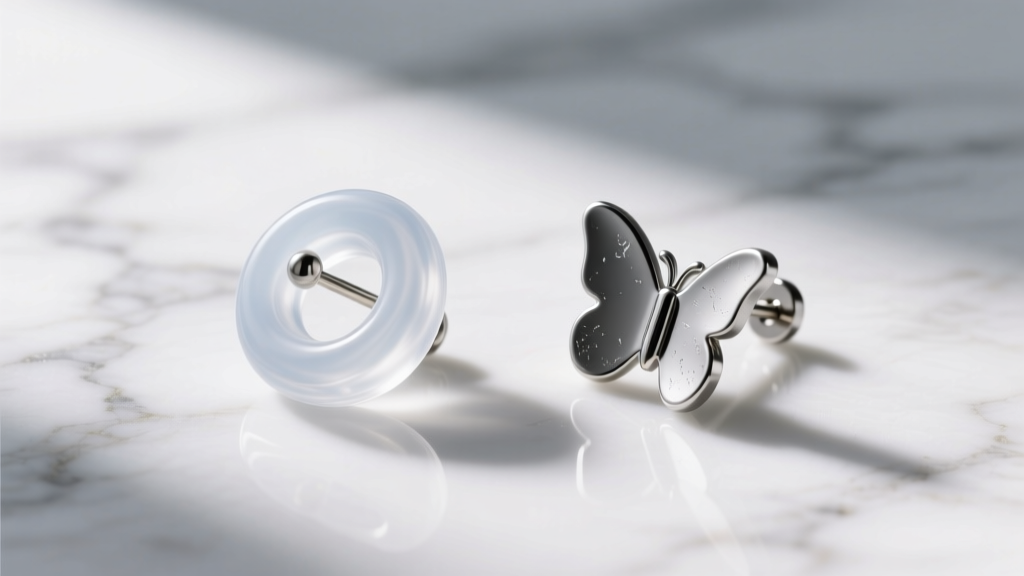
Heavy earrings require surface area and friction, not just locking mechanisms. A metal locking back on a heavy dangle will cause the earring to pivot and droop. Use medical-grade silicone jumbo backs (at least 10mm in diameter). The high-friction elastomer grips the post tightly while supporting the earlobe. Ensure your earring posts are at least 18-gauge (1.02mm) to prevent the metal from bending under the weight of the drop.
Final Thoughts on Securing Your Fine Jewelry
Investing in high-quality earring backs that stay on is a fractional cost compared to the emotional and financial toll of losing a cherished diamond or gemstone. By accurately measuring your post gauges, understanding the mechanics of threaded versus locking systems, and maintaining your backs with regular cleaning, you can wear your fine jewelry with absolute confidence. Ditch the standard butterfly clutches, and upgrade your security hardware to match the value of your collection.


