Gold Crystal Drop Earrings: 2026 Budget & Value Guide
Discover if gold crystal drop earrings are worth the investment in 2026. We break down pricing tiers, material grades, and value for money.

The True Cost of Brilliance: Assessing Gold Crystal Drop Earrings
The market for gold crystal drop earrings is notoriously saturated, leaving consumers navigating a minefield of deceptive marketing and inflated price tags. In 2026, the divide between 'demi-fine' marketing and actual metallurgical value has never been wider. A $25 pair from a fast-fashion retailer and a $150 pair from an Instagram boutique might look identical on a screen, but their structural integrity, material composition, and lifespan are worlds apart. As a buyer, understanding the intersection of precious metal standards, crystal optics, and mechanical hardware is the only way to ensure your budget translates into genuine value.
This guide strips away the branding hype to evaluate what you are actually paying for. We will dissect the FTC guidelines on gold thickness, analyze the optical properties of modern lead-free crystals, and establish a definitive pricing matrix to help you identify true bargains versus overpriced costume jewelry.
Metallurgical Breakdown: Plated, Vermeil, and Solid Gold
The term 'gold' in jewelry descriptions is heavily regulated, yet frequently manipulated in e-commerce listings. When evaluating gold crystal drop earrings, the base metal and the thickness of the gold layer dictate the piece's longevity and intrinsic value.
Flash Plating vs. Gold Vermeil
According to the Federal Trade Commission, for a piece to be legally classified as 'Gold Vermeil' in the United States, it must feature a sterling silver (.925) base coated with a minimum of 2.5 microns of gold (typically 14k or 18k). Conversely, standard 'gold-plated' jewelry often utilizes a brass or nickel-silver base with a 'flash' plating of just 0.1 to 0.5 microns. Flash-plated earrings will inevitably tarnish, pit, and cause contact dermatitis within months of regular wear, rendering them a poor financial investment.
| Material Grade | Base Metal | Gold Thickness | Estimated Lifespan | 2026 Fair Price Range |
|---|---|---|---|---|
| Flash Plated | Brass / Copper | 0.1 - 0.5 microns | 1 - 6 Months | $15 - $35 |
| Gold Vermeil | Sterling Silver (.925) | 2.5+ microns | 2 - 5 Years | $65 - $140 |
| Gold Filled | Jeweler's Brass | 5% of total weight | 10+ Years | $80 - $160 |
| Solid 14k Gold | 14k Gold Alloy | Solid throughout | Lifetime / Heirloom | $250 - $600+ |
Crystal Optics: Swarovski, Preciosa, and Cubic Zirconia
The 'crystal' component of your drop earrings is where brands often obscure the truth. True lead crystal (containing 24% lead oxide) is largely phased out of modern jewelry due to health regulations. Today, the market relies on advanced lead-free formulations and synthetic simulants.
Refractive Index and Dispersion
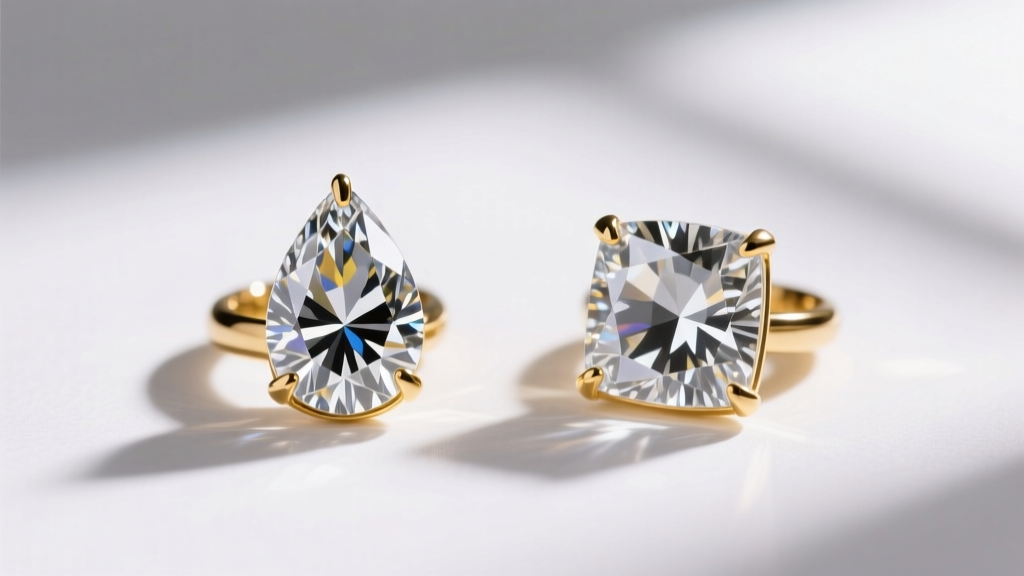
When assessing value, you must understand how the stone interacts with light. As detailed by the Gemological Institute of America (GIA), Cubic Zirconia (CZ) possesses a high refractive index (2.15-2.18), giving it a brilliant, diamond-like white light return. However, premium crystal brands like Preciosa and Swarovski (using their Advanced Crystal standard) rely on a lower refractive index (~1.52) but compensate with mathematically perfect faceting and specialized foil backings that create a distinct 'rainbow fire' and scintillation that CZ cannot replicate.
Expert Insight: If a brand advertises 'Swarovski crystals' but the price is under $30, be highly skeptical. In 2026, Swarovski strictly limits its loose component sales to verified luxury partners. Most budget 'crystal' earrings now use generic machine-cut glass or lower-tier synthetic spinel, which lacks the precise optical symmetry required for high-end brilliance.
The 2026 Pricing Matrix: What Should You Actually Pay?
To determine if a pair of gold crystal drop earrings is fairly priced, cross-reference the materials with the current market tiers. Paying fine jewelry prices for vermeil and CZ is a common consumer trap.
- Tier 1: Fast Fashion ($15 - $40) Expect brass bases, flash plating, and mass-produced glass or acrylic stones. Value is purely aesthetic and temporary.
- Tier 2: Mid-Tier Demi-Fine ($65 - $150) The sweet spot for value. Look for 14k gold vermeil over .925 silver, paired with precision-cut Preciosa crystals or AAA-grade CZ. Hardware should feel substantial.
- Tier 3: Fine Jewelry ($300 - $800+) Solid 14k or 18k gold construction. At this price point, 'crystal' should be replaced by natural gemstones (like quartz or beryl) or high-end synthetics like Moissanite. Paying $400 for CZ and vermeil is a severe overpayment.
Hardware & Durability: The Hidden Costs of Cheap Drops
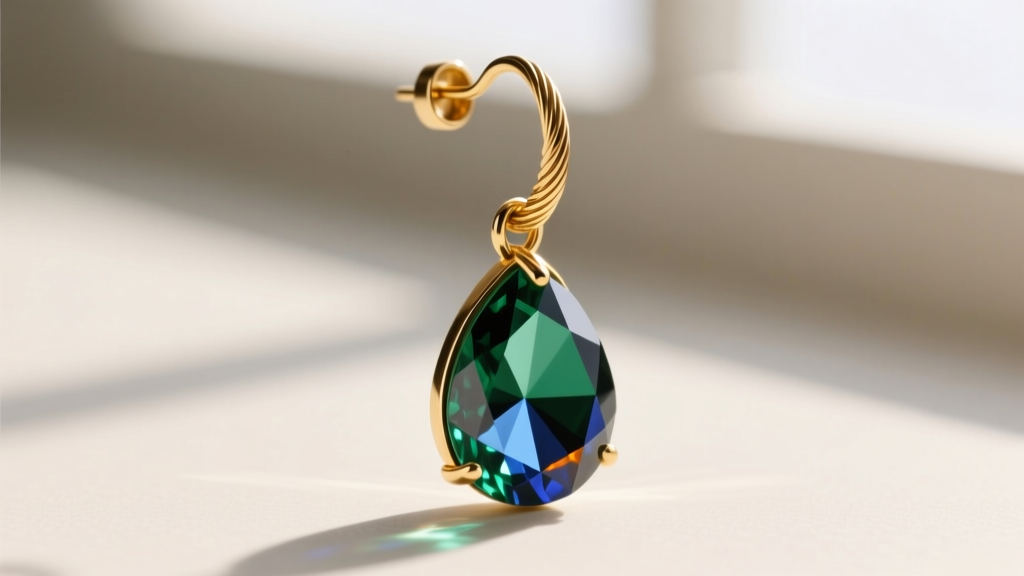
The most critical failure point in drop earrings is not the metal finish or the stone setting—it is the structural hardware connecting the post to the pendulum drop. Drop earrings are subject to the 'pendulum effect,' where the kinetic energy of walking and head movements places continuous shear stress on the connecting loops.
Wire Gauge and Metal Fatigue
Wire thickness is measured in gauges; the lower the number, the thicker the wire. Budget manufacturers frequently use 22-gauge (0.64mm) or even 24-gauge (0.51mm) wire to save on precious metal costs. If a crystal drop weighs more than 3 grams, a 22-gauge wire loop will suffer from metal fatigue and snap within six months of daily wear.
The Value Rule: For any gold crystal drop earring featuring a stone larger than 10mm or weighing over 4 grams, the connecting wire and fishhook must be a minimum of 20-gauge (0.81mm), ideally 18-gauge (1.02mm). Furthermore, ensure the earring back (clutch) is made of silicone or solid metal with a wide base; cheap butterfly backs with thin stamped metal will fail to support the forward weight of a drop earring, causing it to droop uncomfortably on the earlobe.
Final Verdict: Your 2026 Value Assessment Checklist
Before adding gold crystal drop earrings to your cart, run them through this rapid E-E-A-T value checklist:
- Verify the Stamp: Look for a '.925' stamp on the post. If it says '925' but the listing only says 'gold plated' (not vermeil), the base is likely brass stamped deceptively.
- Check the Weight: Read the product specifications for weight. If the drops are heavy, message the seller to confirm the wire gauge is 20g or thicker.
- Identify the Stone: Demand transparency. 'Premium crystal' is a marketing term. Look for specific callouts like 'Precision-cut CZ', 'Preciosa', or natural semi-precious stones.
- Assess the Clutch: Ensure the earring comes with heavy-duty friction backs or secure leverback closures to prevent loss of your investment.
By prioritizing metallurgical integrity and optical precision over brand hype, you can secure gold crystal drop earrings that offer genuine luxury, lasting durability, and undeniable value in 2026 and beyond.