How to Clean and Care for Large Hoop Earrings with Pearls
Discover expert cleaning and maintenance tips for large hoop earrings with pearls. Protect your nacre and metal finishes with our detailed care guide.

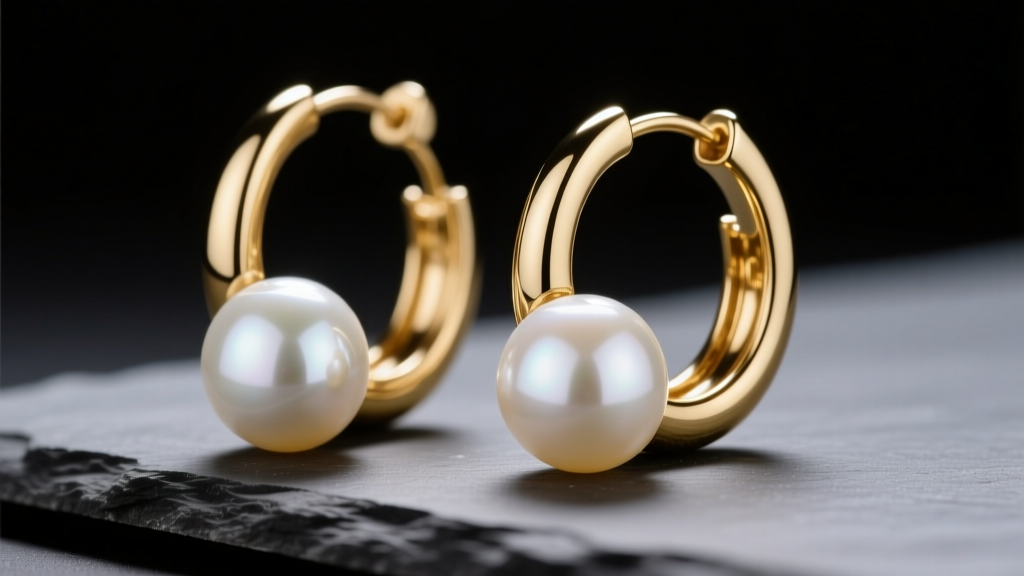
Owning a pair of large hoop earrings with pearls is a statement of elegance, blending the bold, face-framing geometry of metallic hoops with the organic, luminous beauty of nacre. However, this specific combination of materials presents a unique challenge in jewelry maintenance. The very cleaning methods that restore brilliance to gold or silver can permanently etch, dull, or destroy the delicate surface of a pearl. As of 2026, with the rise of complex mixed-media jewelry and advanced metal alloys, understanding the distinct gemological and metallurgical needs of your earrings is more critical than ever.
In this comprehensive guide, we will explore the exact protocols for cleaning, maintaining, and storing your large pearl hoops, ensuring they remain structurally sound and visually stunning for decades.
The Gemological Conflict: Metal vs. Organic Nacre
To properly care for large hoop earrings with pearls, you must first understand the fundamental incompatibility of standard metal cleaners and organic gemstones. Pearls are born from living mollusks and are primarily composed of calcium carbonate (CaCO3) held together by an organic protein called conchiolin. On the Mohs scale of mineral hardness, pearls rank between 2.5 and 4.5, making them exceptionally soft and porous compared to the 14k or 18k gold, sterling silver, or platinum typically used for the hoop structure.
When you submerge large hoop earrings in commercial silver dips or ultrasonic cleaners to remove tarnish from the metal, the harsh chemicals (often containing ammonia or thiourea) and high-frequency cavitation will strip the pearl's nacre layers. This results in irreversible 'chalkiness' and micro-fractures. According to the Gemological Institute of America (GIA), pearls require a strictly neutral, non-abrasive environment, meaning the cleaning process must be manually controlled and carefully isolated from aggressive metal polishes.
Step-by-Step Cleaning Protocol for Large Hoop Earrings with Pearls
Because you cannot safely submerge the entire earring without risking the adhesive bonds or the pearl's luster, a targeted, manual approach is required.
1. Gather the Correct Materials
- Distilled Water: Tap water contains chlorine and trace minerals that can leave spots on the nacre.
- pH-Neutral Soap: A mild, unscented baby shampoo or castile soap (pH around 7.0). Avoid dish soaps, which often contain degreasers that strip the pearl's natural moisture.
- Microfiber Cloths: Lint-free and ultra-soft to prevent micro-scratches.
- Soft-Bristled Makeup Brush: A clean, unused eyeshadow brush is perfect for cleaning the intricate crevices where the pearl meets the metal hoop.
2. The Targeted Wipe-Down Method
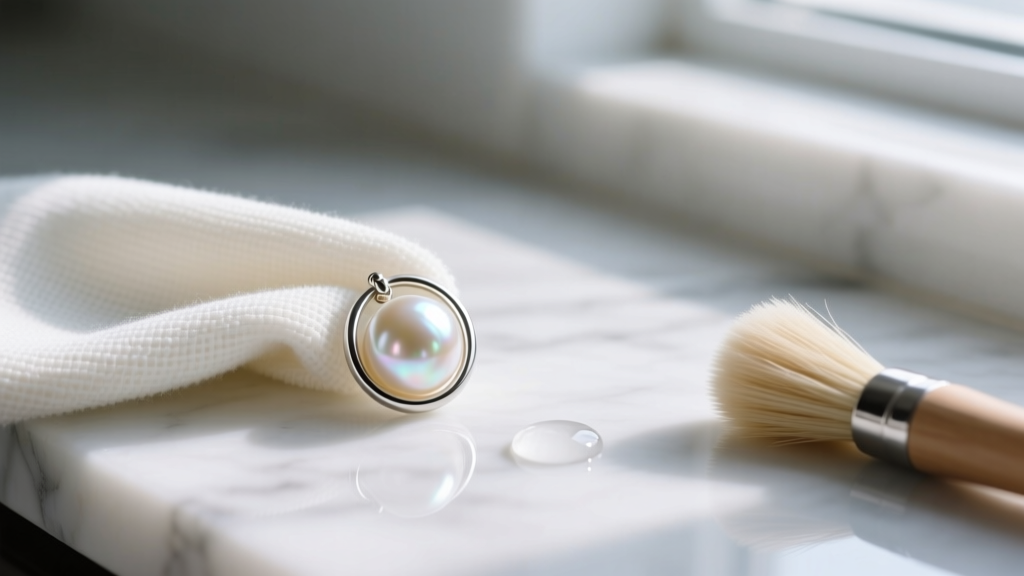
Mix a single drop of pH-neutral soap into a small bowl of lukewarm distilled water. Dampen a corner of your microfiber cloth in the solution, wringing it out until it is only slightly moist—never dripping. Gently wipe the metallic portion of the hoop, carefully navigating around the pearl mount. Use the damp makeup brush to lightly sweep away sebum, dead skin cells, and cosmetic residue from the metal setting and the drill hole of the pearl. Finally, use a dry section of the microfiber cloth to immediately buff the metal and gently polish the pearl to restore its orient and luster.
Mechanical Maintenance: Hoop Tension and Pearl Mounts
Large hoop earrings (typically defined as 50mm to 80mm in diameter) are subject to significant mechanical stress. The weight of the pearls, combined with the leverage of a large metallic circle, places continuous strain on the earring post, the hinge, and the pearl mount.
Wire Gauge and Metal Fatigue
Most high-quality large hoops are crafted from 18-gauge (1.0mm) or 20-gauge (0.8mm) wire. If your hoops feature heavy South Sea or Tahitian pearls, the continuous downward pull can cause thinner 20-gauge wires to slowly bend out of their perfect circular shape. To maintain the structural integrity of the hoop, always store them flat rather than hanging, and periodically check the circular alignment by laying the earring on a flat glass surface.
Inspecting the Pearl Mount
Pearls on large hoops are typically attached via one of two methods: a glued peg mount or a wire-wrapped bezel. If your pearls are peg-mounted, they are secured with jeweler's epoxy or cyanoacrylate. Over time, exposure to sweat, perfumes, and natural skin oils can degrade this adhesive. Every six months, gently attempt to twist the pearl (with minimal pressure). If you detect any rotation or clicking, the adhesive bond has failed. Stop wearing the earring immediately and take it to a professional jeweler for re-pegging with a high-quality, two-part jeweler's epoxy. The Jewelers of America strongly recommends annual professional inspections for any jewelry featuring organic gems set in high-stress mechanical designs like large hoops.
Chemical Hazards: What to Avoid at All Costs
The most common way owners ruin large hoop earrings with pearls is by attempting to clean the metal components with household chemicals. Below is a breakdown of common hazards and their specific destructive mechanisms.
| Chemical / Method | Effect on Metal Hoop | Effect on Pearl Nacre |
|---|---|---|
| Ultrasonic Cleaners | Excellent for removing dirt from bare metal. | Catastrophic. High-frequency vibrations cause microscopic fracturing and can shatter the pearl or dissolve the epoxy mount. |
| Ammonia (e.g., Windex) | Strips tarnish but can pit porous gold alloys. | Dissolves the calcium carbonate structure, leaving the pearl permanently dull, chalky, and pitted. |
| Chlorine (Pools/Spas) | Causes stress-corrosion cracking in 14k and 18k gold. | Eats away at the conchiolin protein, leading to peeling and flaking of the nacre layers. |
| Steam Cleaners | Safe for most solid metals and diamonds. | Thermal shock can crack the pearl; heat melts the adhesive holding the pearl to the hoop. |
Proper Storage to Preserve Nacre and Hoop Shape
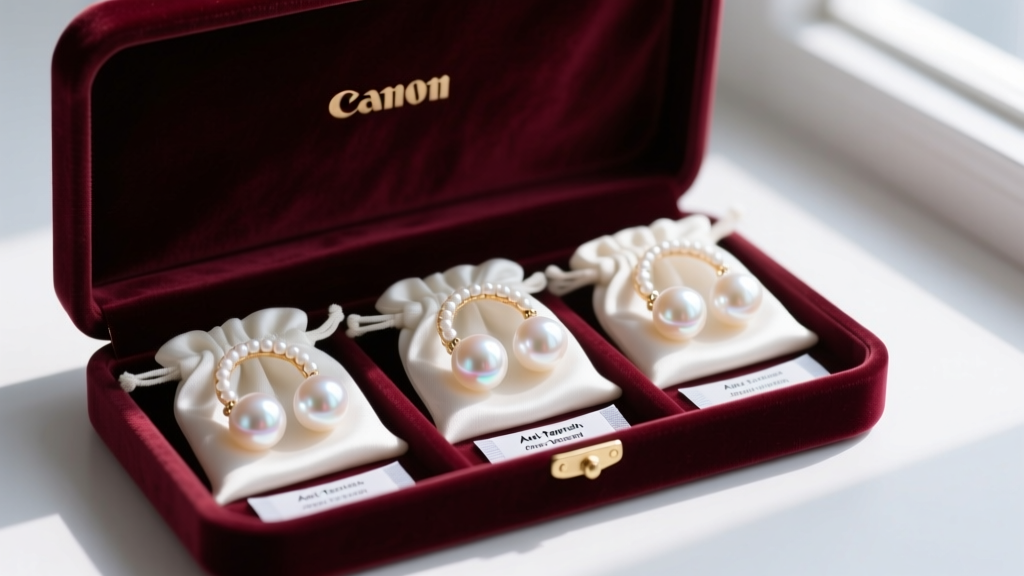
How you store your large hoop earrings with pearls is just as important as how you clean them. Because pearls are soft, they are easily scratched by the metal hoops of other earrings or by adjacent diamond and sapphire jewelry (which rank 9 and 10 on the Mohs scale, respectively).
Furthermore, large hoops are prone to tangling and bending in crowded jewelry boxes. To prevent metal fatigue and nacre abrasion, follow these storage rules:
- Individual Silk Pouches: Store each pair in its own soft silk or untreated cotton pouch. Avoid plastic bags, as polyethylene can trap moisture and emit trace gases that degrade the pearl's surface over time.
- Anti-Tarnish Strips: Place a 3M anti-tarnish strip inside the storage pouch or jewelry box drawer. This absorbs airborne sulfur compounds that cause sterling silver and copper-alloyed gold to tarnish, reducing the need for frequent polishing.
- Lay Flat: Never hang large, heavy pearl hoops on standard earring trees. The constant gravitational pull on the post and hinge will eventually warp the metal and loosen the pearl mount.
'The golden rule of pearl care is simple: pearls should be the last thing you put on when getting dressed, and the first thing you take off when you return home. This minimizes their exposure to the acidic pH of human sweat and the harsh alcohols found in cosmetics and perfumes.'
When to Seek Professional Jeweler Intervention
While routine wiping and careful storage will handle 90% of your maintenance needs, there are scenarios where professional intervention is mandatory. If the metallic post of your hoop becomes bent, do not attempt to bend it back into place yourself. Repeated bending of gold or silver alloys causes work-hardening, making the metal brittle and prone to snapping. A jeweler can safely anneal (heat and soften) the metal before reshaping it.
Additionally, if your pearls appear visibly yellowed or cracked, a professional gemologist can assess whether the damage is superficial or structural. In some cases, pearls on large hoops can be carefully removed, re-polished by a lapidary using specialized, ultra-fine grit compounds, and securely re-mounted, breathing entirely new life into your favorite statement earrings.


