How to Choose and Style Carnelian Drop Earrings: The Ultimate Guide
Learn how to choose, style, and care for carnelian drop earrings. Expert tips on face shapes, hardware gauges, and stone authentication.

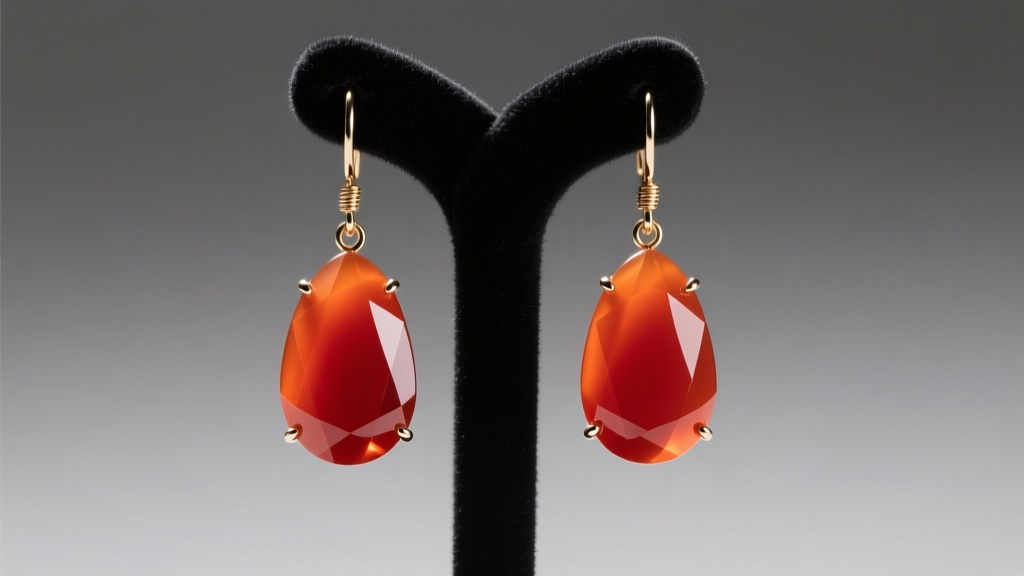
The Gemology of Carnelian: What You Are Actually Buying
Before you invest in a pair of carnelian drop earrings, it is crucial to understand the material you are wearing. Carnelian is a brownish-orange to bright red variety of chalcedony, which itself is a microcrystalline form of quartz. According to the Gemological Institute of America (GIA), carnelian ranks between 6.5 and 7 on the Mohs hardness scale. This makes it durable enough for daily wear in drop earrings, but susceptible to scratching from harder gems like diamonds or sapphires if stored improperly.
Natural vs. Dyed Agate
The most common failure point for consumers is purchasing dyed agate marketed as natural carnelian. Because natural, high-quality red carnelian is relatively rare, the market is flooded with gray or pale agate that has been heated or chemically dyed. To authenticate your stones, look for a cloudy, uneven distribution of color. Natural carnelian exhibits subtle color banding and a slightly waxy luster. If the red is uniformly vibrant or shows concentrated dye spots in surface fractures, you are likely holding dyed agate. As noted by mineralogical databases like Mindat.org, the reddish hue in true carnelian is caused by iron oxide impurities (hematite) dispersed throughout the silica matrix.
Step 1: Selecting the Right Hardware and Gauge
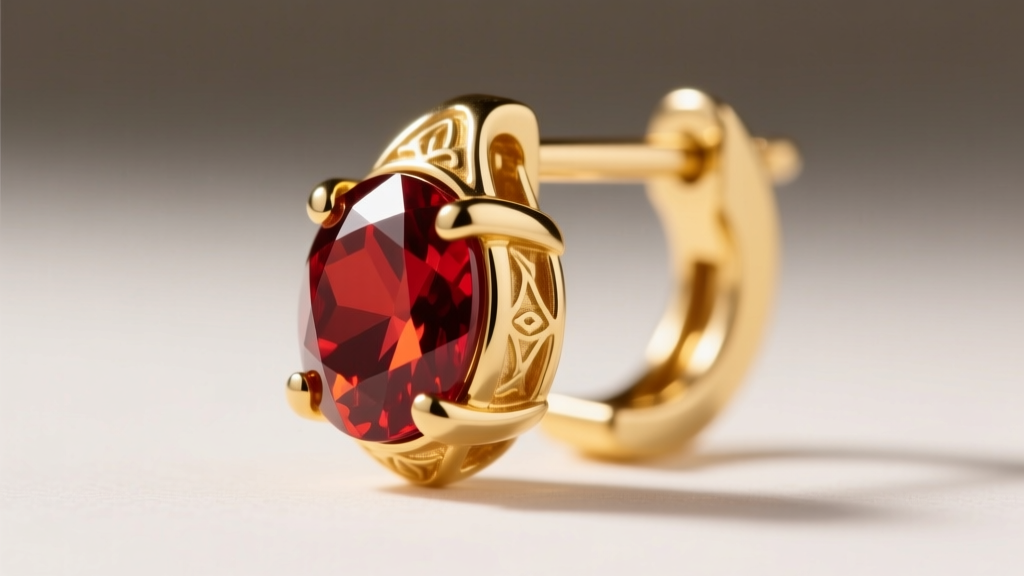
The longevity of your carnelian drop earrings depends heavily on the hardware. Because drop earrings dangle, they are prone to snagging on hair and clothing. Choosing the correct wire gauge and clasp type is non-negotiable for security.
| Hardware Type | Standard Gauge | Security Level | Best For | Price Range (14k Gold) |
|---|---|---|---|---|
| Fishhook Wire | 22g (0.64mm) | Low | Lightweight, small drops under 1 inch | $40 - $80 |
| Leverback Clasp | 20g (0.81mm) | High | Medium to heavy drops (1.5 to 3 inches) | $90 - $160 |
| French Wire with Clutch | 20g (0.81mm) | Medium | Statement drops requiring extra stabilization | $110 - $200 |
Expert Tip: Always opt for 20-gauge (0.81mm) wires for carnelian drops. Carnelian is a dense stone; a standard 1.5-inch teardrop cabochon can weigh between 4 and 7 grams per stone. A 22-gauge wire will slowly bend and warp under this weight, eventually causing the earring to slip out of the lobe.
Step 2: Matching Drop Lengths to Your Face Shape
Carnelian drop earrings are incredibly versatile, but their visual impact changes dramatically depending on the length of the drop and the geometry of your face. Use this framework to select the ideal proportions:
- Round Faces: Avoid short, wide drops that end at the cheekbone, as they will widen your face. Instead, choose elongated, linear carnelian drops measuring 2.5 to 3 inches in length. The vertical line draws the eye downward, creating an elongating illusion.
- Square Faces: Soften a strong jawline with teardrop or oval-shaped carnelian cabochons. Drops that end just below the jawline (around 1.5 to 2 inches) with curved, rounded edges will balance angular features.
- Heart-Shaped Faces: Your chin is narrow, so you want to add volume to the lower half of your face. Opt for chandelier-style drops or wider, bottom-heavy carnelian briolettes that end at or slightly below the chin.
- Oval Faces: You have the most versatility. Almost any carnelian drop style will work, but medium-length teardrops (1.5 inches) set in yellow gold will highlight your natural symmetry without overwhelming your features.
Step 3: Styling for Skin Undertones and Metals
Carnelian’s warm, fiery palette—ranging from burnt orange to deep brick red—interacts uniquely with different metal settings and skin undertones.
Warm Undertones
If your veins appear greenish and you tan easily, you have warm undertones. Pair your carnelian drops with 14k or 18k yellow gold or rose gold. The yellow and copper alloys will amplify the fiery, sunset-like qualities of the stone. For a bohemian look, oxidized brass or copper settings also work beautifully, though they require more maintenance to prevent patina.
Cool Undertones
If your veins look blue and you burn easily, you have cool undertones. While carnelian is inherently warm, you can create a striking, high-contrast look by setting it in white gold, platinum, or sterling silver. The cool, icy metal provides a crisp backdrop that makes the orange-red hues of the carnelian pop aggressively.
Stylist Note: When wearing carnelian drop earrings, keep your neckline clear. V-necks, scoop necks, or off-the-shoulder tops provide the negative space necessary for the drops to swing freely and catch the light. Avoid high collars or turtlenecks, which will tangle with the hardware and obscure the stones.
Step 4: Cleaning, Maintenance, and Failure Prevention
Proper maintenance ensures your carnelian retains its vitreous to waxy luster. Because carnelian is a porous microcrystalline quartz, it requires specific cleaning protocols.
What to Avoid
Never use ultrasonic jewelry cleaners on carnelian. The high-frequency vibrations can cause microscopic internal fractures to propagate, especially if the stone has been heat-treated. Furthermore, if your stone is actually dyed agate, the heat and chemicals in an ultrasonic bath will strip the dye, leaving you with a pale, grayish stone. Avoid steam cleaners and harsh chemical dips (like silver polish) which can degrade the stone's surface polish.
Step-by-Step Cleaning Guide
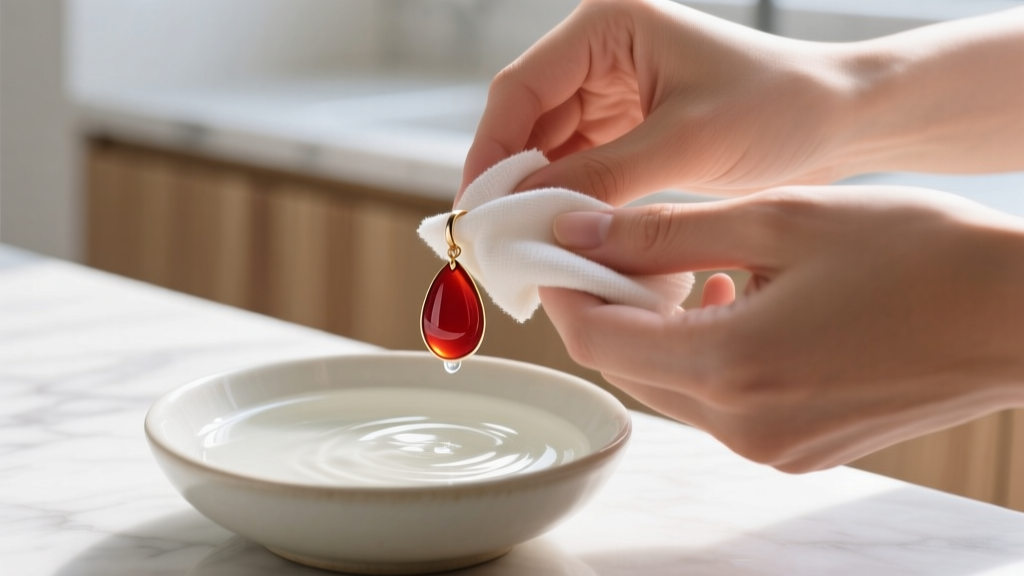
- Prepare a mild solution: Mix a few drops of phosphate-free dish soap into a bowl of lukewarm distilled water.
- Soak briefly: Dip the carnelian drops into the water for no more than 3 to 5 minutes. Prolonged soaking can weaken the adhesive if the stones are glued into bezel cups.
- Agitate gently: Use an ultra-soft baby toothbrush to gently sweep away sebum and lotion buildup from the back of the stone and the hardware clasp.
- Rinse and dry: Rinse under a gentle stream of lukewarm water. Pat dry immediately with a lint-free microfiber cloth. Do not air dry, as water spots will dull the polish.
Troubleshooting Common Carnelian Earring Issues
Even with high-quality materials, drop earrings endure significant physical stress. Here is how to troubleshoot the most common issues:
Loose Stones in Prong Settings
Carnelian is often set in prong settings to maximize light exposure. However, because it is slightly softer than traditional faceted gems, prongs can wear grooves into the stone over time, or the prongs themselves can bend, releasing the stone. Solution: Inspect your prongs every three months with a jeweler's loupe. If a prong lifts, stop wearing the earring immediately and have a jeweler push and burnish the metal back into place. For active lifestyles, switch to bezel-set carnelian drops, which encircle the stone in a protective metal rim.
Tarnished Vermeil or Silver Hardware
If your carnelian drops are set in sterling silver or gold vermeil, the sulfur in the air and your skin's natural acidity will cause tarnishing. Solution: Store your earrings in an airtight ziplock bag with an anti-tarnish silica tab. To remove existing tarnish, use a treated silver polishing cloth on the metal hardware only. Avoid rubbing the polishing cloth directly on the carnelian, as the mild abrasives in the cloth can dull the stone's high-gloss lapidary finish over time.


