Gold Chunky Hoop Earrings: Solid vs Plated Materials
Discover the best materials for gold chunky hoop earrings. Compare 14k, 18k, vermeil, and gold-filled options for weight, durability, and clasp strength.

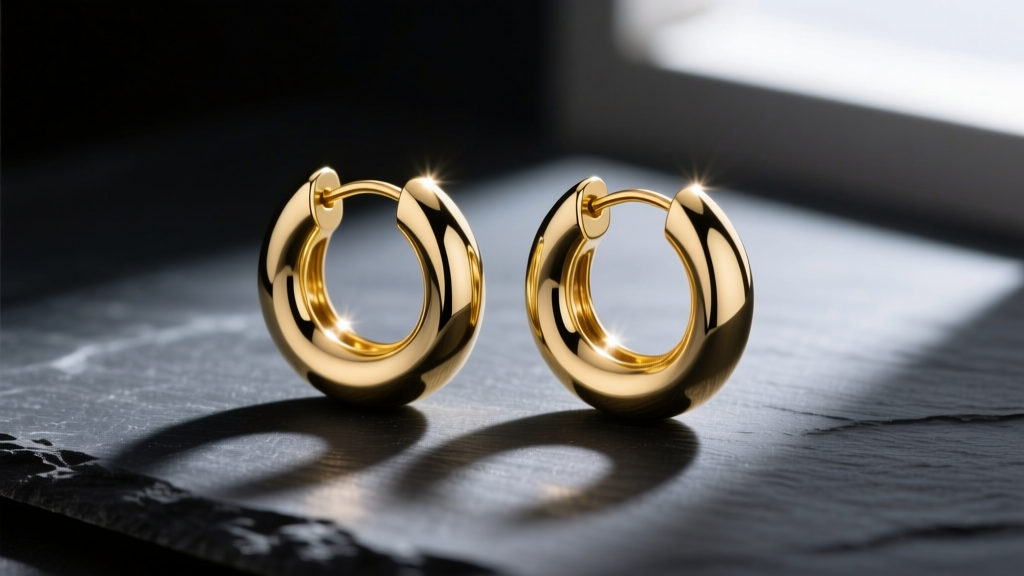
The resurgence of sculptural, substantial jewelry has firmly cemented gold chunky hoop earrings as a modern wardrobe staple. However, the transition from delicate, lightweight wire hoops to thick, tubular silhouettes introduces complex metallurgical and biomechanical challenges. When a hoop's thickness exceeds 5mm and its diameter sits between 12mm and 20mm, the sheer volume of metal required drastically alters how the earring interacts with your earlobe, its clasp mechanisms, and its long-term structural integrity.
In this comprehensive material guide, we dissect the specific properties of solid gold alloys, vermeil, and gold-filled alternatives. We will evaluate how different material compositions handle the unique torque, friction, and gravitational stress inherent to chunky hoop designs, ensuring you invest in pieces that offer both aesthetic brilliance and structural longevity.
The Physics of Chunky Hoops: Weight vs. Earlobe Health
Understanding the material science behind chunky hoops begins with density. Pure 24-karat gold has a density of 19.32 g/cm³. While jewelers alloy gold to increase hardness, the resulting 14k and 18k metals remain exceptionally dense, typically ranging from 13.0 to 15.6 g/cm³. When you scale up the volume of a hoop to a 'chunky' proportion—say, a 15mm diameter with an 8mm thickness—the weight compounds rapidly.
A solid cast chunky hoop of these dimensions can easily weigh between 9 and 14 grams per earring. Biomechanically, the human earlobe is composed of loose connective tissue and fat, lacking cartilage support. Dermatological studies indicate that continuous downward traction exceeding 10 grams per earring can lead to permanent collagen breakdown and lobe elongation over time. To combat this, premium manufacturers utilize drawn tubing rather than solid lost-wax casting. Drawn 14k gold tubing creates a hollow interior, reducing the weight of a visually identical chunky hoop to a much safer 3.5 to 5.5 grams, while maintaining the rigid outer shell necessary for the bold aesthetic.
Solid Gold Alloys: 14k vs. 18k for Heavy Hoops
When investing in solid gold chunky hoop earrings, the karatage dictates far more than just color and price; it fundamentally alters the tensile strength and Vickers hardness (HV) of the metal. According to the Gemological Institute of America (GIA), alloying metals like copper, silver, and zinc are introduced to pure gold to enhance durability, but the ratios create vastly different physical properties.
- 14k Gold (58.5% Pure Gold): With a Vickers hardness of approximately 120-140 HV, 14k gold offers superior structural rigidity. It resists scratching, holds a high-polish finish longer, and most importantly, maintains the precise tension required for secure clasp mechanisms.
- 18k Gold (75% Pure Gold): Softer and more malleable (approx. 90-110 HV), 18k gold boasts a richer, warmer yellow hue and higher intrinsic value. However, its lower hardness makes it highly susceptible to deformation under heavy loads.
Why 18k Gold Fails in Chunky Hinges
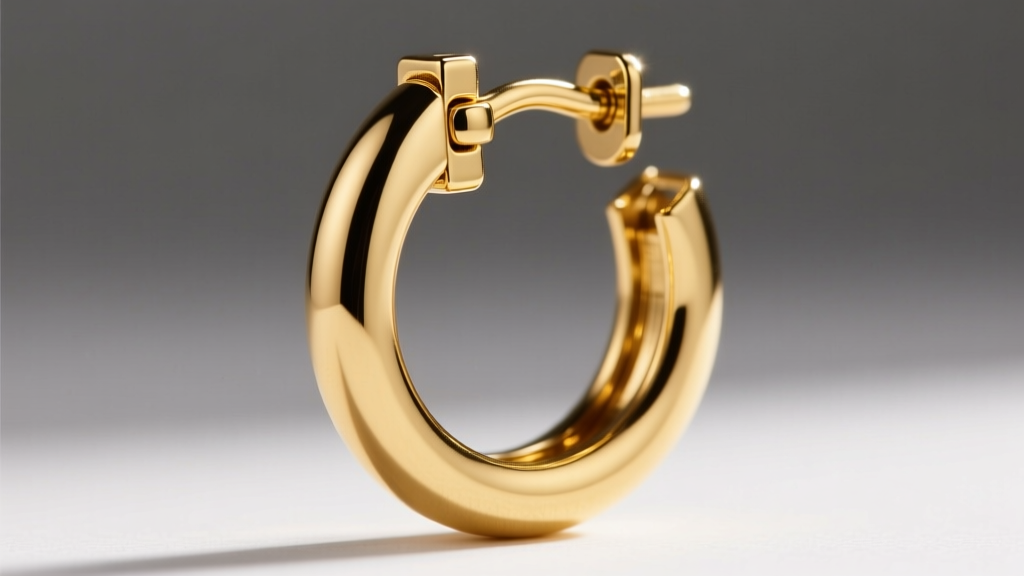
The most critical failure point in any heavy hoop earring is the hinge and clasp assembly. When you open a thick, heavy hoop, you apply lateral torque to the microscopic hinge pin. If the hoop is crafted entirely from 18k gold, the repeated stress of opening and closing a heavy tube can cause the hinge pin to warp or the clasp receiver to stretch. Over time, this leads to a 'gapping' clasp that no longer snaps securely shut, risking the loss of the earring. For chunky styles exceeding 6mm in thickness, master jewelers almost exclusively recommend 14k gold for the structural components, or they will engineer an 18k hoop with a reinforced, hidden steel or 14k internal hinge mechanism.
The Plated Alternatives: Vermeil, Filled, and Flash Plating
For those seeking the look of gold chunky hoop earrings without the premium spot-price investment, plated alternatives are widely available. However, the thick, high-friction nature of chunky hoops accelerates wear in ways that delicate jewelry does not. The Federal Trade Commission (FTC) strictly regulates the terminology used for these materials, which is vital for understanding their lifespan.
Gold Vermeil requires a sterling silver (.925) base coated with a minimum of 2.5 microns of gold. Because silver is a relatively soft metal, heavy chunky vermeil hoops are prone to bending if squeezed or dropped. Furthermore, the friction of the post sliding through the ear piercing, combined with the snapping mechanism of the clasp, will inevitably wear through the 2.5-micron gold layer at the contact points, exposing the tarnish-prone silver beneath.
Gold-Filled jewelry consists of a brass core mechanically bonded with a gold layer that must constitute at least 5% of the total weight. While highly durable and resistant to tarnish, gold-filled materials are primarily manufactured in sheets and wire. Creating thick, hollow tubing out of gold-filled brass is technically complex and rare. Consequently, most 'chunky' gold-filled hoops are actually solid brass with a heavy flash plate (less than 1 micron of gold), which will degrade rapidly with daily wear.
| Material | Base Metal | Gold Content / Thickness | Approx. Hardness (HV) | Clasp Durability | Avg. Price Range (USD) |
|---|---|---|---|---|---|
| 14k Solid Gold | None (Alloyed) | 58.5% Pure Gold | 120 - 140 | Excellent | $450 - $850 |
| 18k Solid Gold | None (Alloyed) | 75.0% Pure Gold | 90 - 110 | Moderate (Prone to warping) | $700 - $1,400 |
| Gold Vermeil | Sterling Silver | Min. 2.5 Microns | 60 - 80 (Base) | Poor (High friction wear) | $80 - $180 |
| Gold-Filled | Brass | Min. 5% Total Weight | 100 - 120 (Base) | Good (If tubing is available) | $60 - $150 |
| Flash Plated | Brass / Steel | < 1.0 Microns | 110+ (Base) | Variable (Core exposure likely) | $25 - $60 |
Clasp Mechanics and Tensile Strength
The material you choose must be paired with the correct clasp architecture. In the realm of gold chunky hoop earrings, the traditional 'saddleback' or 'butterfly' post-and-clutch closure is fundamentally flawed. A saddleback relies on a thin, straight wire post (usually 20-gauge or 0.8mm) that passes through the ear and secures into a hinged saddle. When the hoop is heavy or thick, the leverage exerted on that thin post causes it to bend downward, resulting in an uncomfortable fit and a distorted silhouette.
Instead, premium chunky hoops utilize a hinged snap-back closure (often called a click-top). In this design, the entire bottom half of the hoop swings downward on a micro-hinge, and a specialized grooved pin clicks securely into the hollow tubing of the top half. This design distributes the gravitational load across the entire structural tube rather than concentrating it on a fragile post. When evaluating a hinged closure, listen for a sharp, definitive 'click.' A dull thud indicates poor machining tolerances or a soft metal alloy that has failed to hold its engineered tension.
Maintenance and Failure Prevention
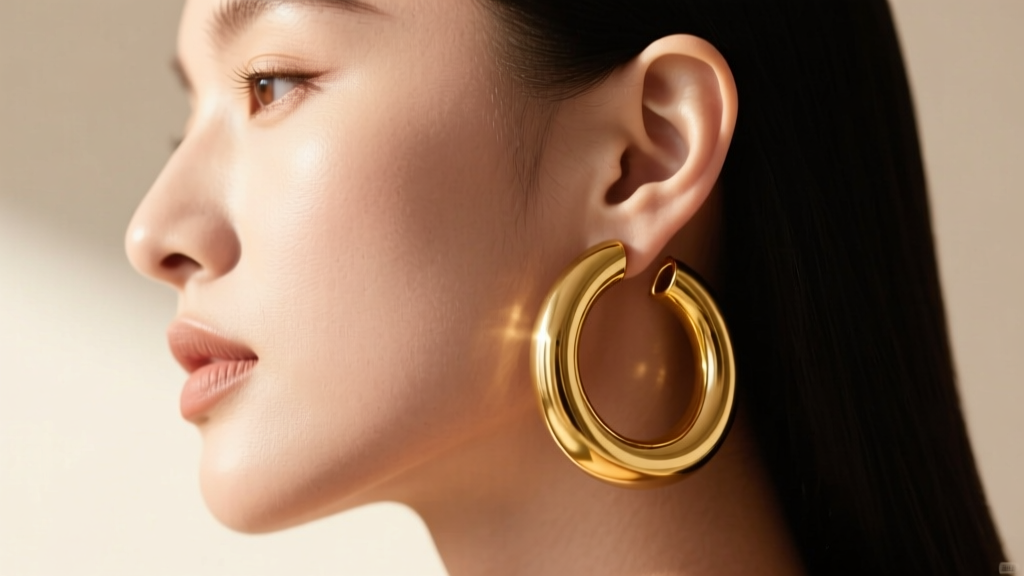
Owning substantial gold jewelry requires a shift in maintenance habits, particularly regarding storage and impact prevention. If your chunky hoops are crafted from hollow drawn tubing (the industry standard for keeping 14k gold weights manageable), they are highly susceptible to denting. Unlike solid cast metal, a sharp impact against a hard surface—such as dropping them onto a marble bathroom counter—can compress the thin gold walls, creating permanent divots that cannot be polished out.
Furthermore, the high surface area of a chunky hoop acts as a magnet for cosmetic buildup. Lotions, hair oils, and dead skin cells accumulate rapidly in the crevices of the clasp mechanism. This buildup acts as an abrasive paste, accelerating the wear of gold vermeil and dulling the polish of solid gold. According to hallmarking and care standards outlined by the London Assay Office, regular, gentle cleaning is paramount to preserving the integrity of precious metals.
Expert Care Protocol: Never store chunky hoops loose in a communal jewelry box where they can crush one another. Store them individually in soft, anti-tarnish flannel pouches. Once a week, use a soft-bristled baby toothbrush and a single drop of mild, phosphate-free dish soap in warm water to gently clear the clasp hinge of debris. Rinse thoroughly and dry completely with a microfiber cloth before snapping the hinge shut to prevent internal moisture trapping.
Ultimately, selecting the right material for your gold chunky hoop earrings requires balancing your budget, your skin's sensitivity, and your lifestyle. While 18k gold offers unparalleled luxury and color, 14k solid gold remains the undisputed champion for structural integrity, clasp longevity, and daily wearability in heavy, sculptural silhouettes. By understanding the metallurgy behind the trend, you ensure your investment remains as secure and striking as the day you first clicked them into place.


