Earring Piercing Men: 2026 Guide to Cartilage & Lobe Stacks
Discover the top earring piercing men are choosing in 2026. Explore curated cartilage stacks, gauge sizes, premium materials, and masculine styling tips.

The Shift: From Single Stud to Curated Architecture
The landscape of men's jewelry has undergone a radical transformation. Gone are the days when the standard earring piercing men opted for was limited to a solitary, generic diamond stud or a basic silver hoop. As we move through 2026, the prevailing trend in masculine ear aesthetics is 'architectural minimalism.' This approach treats the ear not merely as a canvas for a single accessory, but as a topographical map for a curated stack of high-end, anatomical body jewelry. Men are increasingly investing in multiple placements—spanning the helix, flat, conch, and daith—creating asymmetrical, highly personalized earscapes that rival bespoke tailoring in their attention to detail.
This shift is driven by a demand for premium materials and specialized hardware. According to the Association of Professional Piercers (APP), there has been a massive consumer pivot away from mall-kiosk jewelry toward implant-grade materials and internally threaded or threadless mechanisms. Men are no longer just getting pierced; they are collecting hardware from elite body jewelry manufacturers like BVLA, Anatometal, and NeoMetal.
Anatomy of the 2026 Men's Ear Stack
Building a masculine ear stack requires an understanding of ear anatomy and gauge scaling. Unlike traditional women's jewelry, which often relies on delicate 20-gauge posts, the 2026 men's trend favors slightly thicker, more substantial hardware that provides structural presence without looking bulky.
Lobe Foundations (16g - 14g)
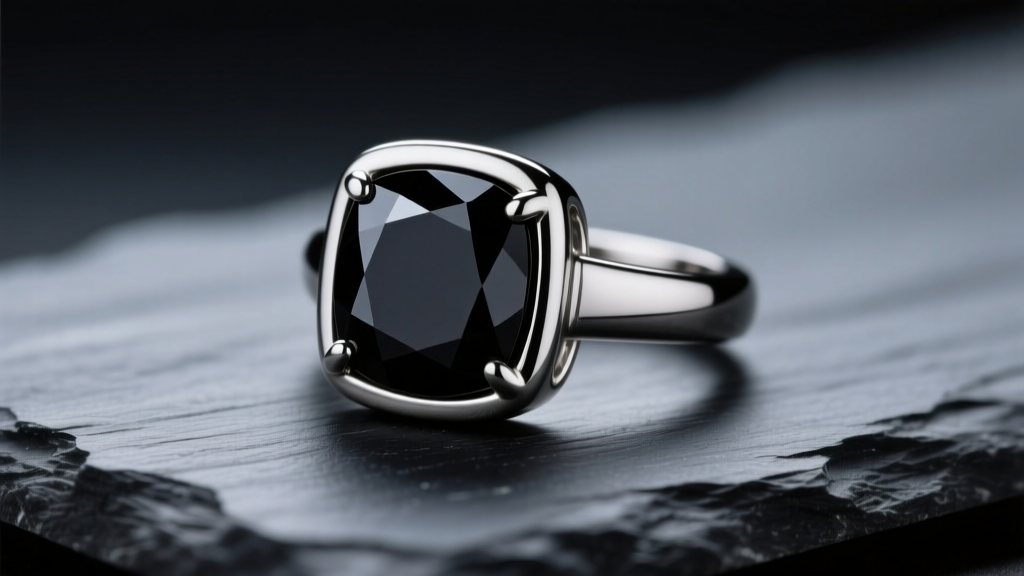
While standard lobe piercings are typically done at 18g or 20g, men are increasingly opting for 16g or even 14g for their foundational lobe piercings. A thicker gauge prevents the 'cheese-cutter effect' (where thin wire slowly migrates through the earlobe tissue) and provides a more robust, masculine silhouette. Flat-back labrets with matte finishes or bezel-set black onyx are the dominant choice, replacing traditional butterfly-back studs which trap bacteria and cause irritation.
Helix and Flat Placements (16g)
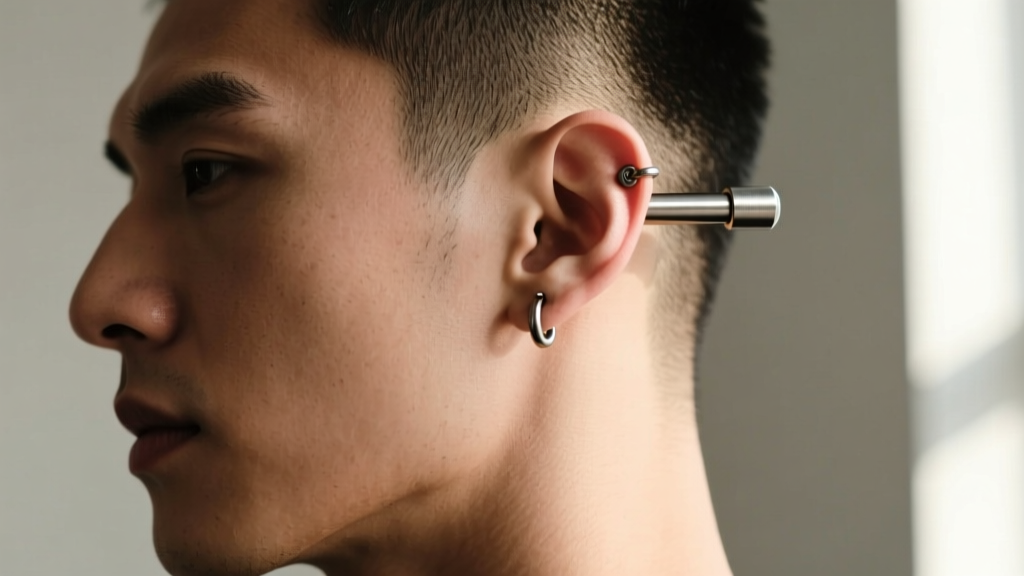
The helix and flat piercings form the upper scaffolding of the ear stack. In 2026, the trend is to cluster two or three 16g threadless ends in the flat area, mimicking the natural curve of the anti-helix. Popular ends include geometric shapes, raw hammered gold textures, and dark oxidized metals. These placements take 6 to 12 months to fully heal, requiring immense patience and strict aftercare.
The Conch and Daith Statement (14g)
For men seeking a focal point without dangling jewelry, the conch and daith are the premier choices. A 14g conch stud with a large, flat 4mm or 5mm end creates a striking industrial look. The daith piercing, situated in the innermost cartilage fold, is frequently adorned with a minimalist, seamless clicker ring featuring a single, subtle gemstone.
Material Science: What Men Are Actually Wearing
The most critical aspect of modern men's ear styling is material integrity. Cheap alloys lead to contact dermatitis, migration, and scarring. When curating a high-end ear stack, only three materials meet the 2026 standard for initial and long-term wear:
- Implant-Grade Titanium (ASTM F136): The undisputed king of body jewelry. It is entirely nickel-free, lightweight, and can be anodized to create dark, masculine hues like gunmetal, deep bronze, or matte black without the use of toxic paints or platings.
- Niobium: Highly polishable and reactive to anodization, niobium is slightly heavier than titanium, giving it a premium, substantial feel that many men prefer for larger gauge jewelry.
- 14k or 18k Palladium White/Yellow Gold: Standard white gold is alloyed with nickel, a common allergen. Premium body jewelers like BVLA use palladium to create nickel-free white gold that offers a luxurious, understated contrast against the skin.
2026 Men's Piercing Matrix: Placement & Hardware Guide
| Placement | Standard Gauge | Healing Time | 2026 Hardware Trend |
|---|---|---|---|
| Standard Lobe | 16g - 14g | 6 - 8 Weeks | Threadless flat-backs, matte black titanium |
| Helix / Flat | 16g | 6 - 12 Months | Clustered geometric ends, raw hammered gold |
| Conch | 14g | 6 - 12 Months | Large bezel-set onyx or lapis lazuli studs |
| Daith | 16g - 14g | 6 - 9 Months | Minimalist seamless clickers, no dangling charms |
| Industrial | 14g | 9 - 12+ Months | Custom-fit single-piece bars, brushed finishes |
Styling Framework: Face Shape & Ear Anatomy
A successful ear stack must complement the wearer's facial structure and ear morphology. Not all ears can accommodate every piercing, and ignoring anatomy is the fastest route to migration and rejection.
Square and Angular Jawlines
Men with strong, square jaws benefit from softening the upper face. Curved barbells in the daith or rook, along with slightly rounded huggie-style rings in the helix, draw the eye upward and balance the heavy lower face. Avoid harsh, straight industrial bars which can make the face look overly rigid.
Round and Oval Faces
For rounder face shapes, the goal is to introduce verticality and sharp angles. A 14g industrial bar crossing the upper ear creates a striking horizontal line that visually widens the upper head, balancing the roundness of the jaw. Vertical stack alignments in the flat and helix also elongate the profile.
Prominent or Protruding Ears
If your ears sit further from the head, avoid heavy dangling pieces or large hoops that pull the lobe outward and emphasize the protrusion. Stick to flush-fitting flat-back labrets, threadless ends, and tight-fitting cartilage hoops that hug the anatomy closely.
The modern masculine ear stack is less about ostentatious display and more about quiet confidence. It is an exercise in negative space, material quality, and anatomical respect.
Red Flags: What to Avoid in Men's Jewelry
As the market for men's earrings expands, so does the influx of low-quality, mass-produced alternatives. To maintain the integrity of your piercings, strictly avoid the following:
- 'Surgical Steel' Marketing: The term 'surgical steel' is unregulated and often contains high levels of nickel. Always demand ASTM F136 titanium or specific 316L steel only for fully healed, non-sensitive ears.
- External Threading: Jewelry where the screw is on the post (external) acts like a cheese grater on your healing fistula. Only wear internally threaded or threadless (push-pin) jewelry.
- Butterfly Backs: The traditional friction back traps dead skin, sebum, and bacteria, leading to foul odors and localized infections. Flat-back labrets are the only hygienic option for long-term lobe wear.
Maintenance, Healing, and Investment
Curating a high-end ear stack is a significant financial and temporal investment. A full, multi-placement ear project utilizing premium hardware from brands like NeoMetal or Industrial Strength can easily range from $400 to over $1,500 for the jewelry alone, excluding the piercer's service fees (typically $50 to $150 per placement).
Healing cartilage is a marathon, not a sprint. Cartilage lacks the direct blood supply of the earlobe, meaning it relies on surrounding tissue for immune response and healing. During the 6 to 12-month healing window, men must avoid sleeping on the pierced ear (using a travel neck pillow is a highly recommended hack), refrain from twisting the jewelry, and clean the area twice daily with sterile 0.9% sodium chloride wound wash. By prioritizing anatomical precision, implant-grade materials, and architectural styling, the 2026 men's ear stack transcends fleeting fashion, establishing itself as a permanent hallmark of modern masculine grooming.


