Winnie Pooh Earrings: Ultimate Buying Guide & Tips
Discover how to choose high-quality Winnie Pooh earrings. Learn about metal grades, enamel types, gauge sizes, and where to buy authentic character jewelry.


The Magic of Hundred Acre Wood Jewelry: Beyond the Novelty
Character jewelry often suffers from an unfair stigma. Many buyers assume that licensed or novelty pieces are inherently cheap, mass-produced trinkets destined to tarnish or cause contact dermatitis within weeks. However, as we navigate the 2026 jewelry market, the landscape of character accessories has evolved dramatically. High-end licensed collections and artisanal interpretations have surged in popularity, offering sophisticated craftsmanship that honors beloved icons without sacrificing material integrity. Winnie Pooh earrings are a prime example of this shift. Whether you are looking for a subtle honey pot stud for the office or a bold Christopher Robin dangle for a theme park vacation, understanding the metallurgy, enamel techniques, and structural sizing of these pieces is crucial. This comprehensive buying guide will help you separate the heirloom-quality treasures from the fast-fashion traps, ensuring your Hundred Acre Wood collection stands the test of time.
Material Matters: Avoiding the 'Green Ear' Trap
The most common failure mode in novelty character jewelry is the use of low-grade base metals. Because character earrings are often sold as impulse buys in mall kiosks or theme park gift shops, manufacturers frequently cut corners on the earring post—the exact part that penetrates your skin.
Zamak Alloy vs. Surgical Steel
Many budget-friendly Winnie Pooh earrings are cast from Zamak, a zinc-based alloy. While Zamak is excellent for capturing the intricate 3D details of Pooh’s face or Eeyore’s mane, it almost always contains nickel. When exposed to the moisture and natural acids of your earlobe, nickel leaches out, leading to allergic contact dermatitis and the dreaded 'green ear' stain. According to the American Academy of Dermatology, nickel allergy is the most common cause of allergic contact dermatitis worldwide. If you have sensitive ears, you must verify that the post is made of at least 316L surgical stainless steel, or ideally, ASTM F136 implant-grade titanium.
Precious Metal Standards
For premium Winnie Pooh earrings, look for solid 14k gold or 925 sterling silver. Pandora’s long-running Disney collection, for instance, utilizes sterling silver stamped with a 925 hallmark, ensuring the metal is 92.5% pure silver and alloyed with copper for durability rather than nickel. When shopping for gold vermeil styles (often found on Etsy or artisan sites), ensure the base metal is sterling silver with a minimum 2.5-micron thickness of 14k or 18k gold plating, as defined by standard Jewelers of America guidelines. Anything less is considered simple gold-plated and will wear down to the base metal within months of daily wear.

The Enamel Equation: Cold Resin vs. Vitreous Hard Enamel
Winnie Pooh’s iconic red shirt and golden fur are almost always rendered in enamel. However, not all enamel is created equal, and the difference dictates the lifespan of your earrings.
- Cold Enamel (Epoxy Resin): This is a painted-on resin that cures at room temperature. It is cheap to produce and common in $15 theme park studs. The failure mode? It scratches easily, yellows when exposed to UV light and cosmetics, and can chip off if dropped on a hard surface.
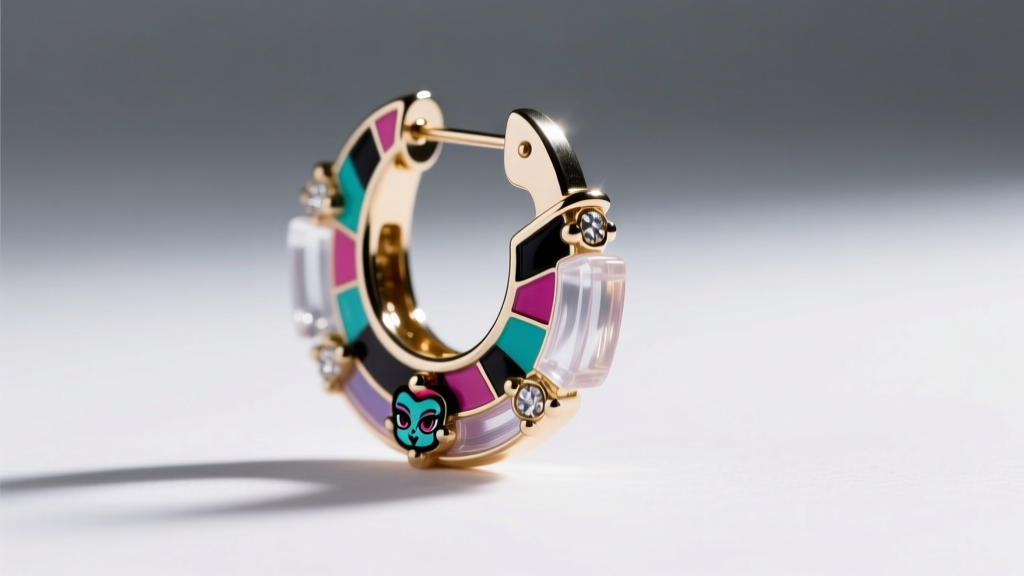
- Hard Enamel (Cloisonné/Vitreous): This traditional technique involves fusing glass powder to the metal at extremely high temperatures, then polishing it flat. High-end Winnie Pooh jewelry uses hard enamel. It is incredibly durable, scratch-resistant, and maintains its vibrant, glossy finish for decades. When inspecting the earrings, run your fingernail over the surface; if the metal wire borders are perfectly flush with the colored enamel, it is likely high-quality hard enamel.
Sizing, Gauge, and Placement Guide
Character earrings come in a variety of silhouettes, from tiny minimalist studs to heavy statement dangles. Choosing the right gauge (thickness of the post) and weight is vital for ear health, especially if you plan to wear them in cartilage piercings.
| Earring Style | Typical Gauge | Post Material | Enamel Type | Average Price Range |
|---|---|---|---|---|
| Disney Parks Standard Studs | 18g - 20g | Surgical Steel | Cold Resin | $15 - $25 |
| Pandora Disney Collection | 18g | 925 Sterling Silver | Hard Enamel | $65 - $120 |
| Artisan Gold-Vermeil Huggies | 16g | Gold over Silver | Vitreous | $80 - $150 |
| Custom Titanium Cartilage | 16g | ASTM F136 Titanium | Epoxy | $45 - $90 |
Standard lobe piercings are typically 20g or 18g. However, if you are wearing a Winnie Pooh honey pot huggie hoop on your helix or tragus, you will likely need a thicker 16g post to prevent the 'cheese-cutter effect,' where a thin wire slowly migrates through the cartilage tissue under the weight of the charm.

Licensed vs. Indie: Authentication and Sourcing
When buying Winnie Pooh earrings, you are generally choosing between official licensed merchandise and independent fan-made art. Both have their merits, but they require different authentication checks.
Spotting Official Disney Merchandise
Authentic, licensed Disney jewelry will almost always feature a copyright stamp. Look closely at the flat backing of the earring or the clasp of a dangle for a laser-engraved '©Disney' mark. Furthermore, official packaging will include the Disney Consumer Products holographic sticker or specific branding. Be wary of third-party marketplace sellers offering 'official' merchandise at deep discounts; if the metal lacks a stamp and the enamel bleeds over the metal borders, it is likely an unlicensed knockoff produced in unregulated factories.
Navigating the Indie Artisan Market
Platforms like Etsy host incredible independent jewelers who create hand-fabricated Winnie Pooh-inspired pieces. While they cannot legally use trademarked names in their listings, you can find stunning, high-quality interpretations—such as a minimalist 14k gold outline of the Hundred Acre Wood map or a subtle honeybee and honeycomb cluster stud. When buying indie, prioritize shops that explicitly state their metal sourcing and offer solid gold or platinum options for heirloom longevity.
Care and Maintenance for Character Studs
Proper care is essential to preserve the intricate details and enamel work of your Winnie Pooh earrings. Never use ultrasonic cleaners or harsh chemical dips (like silver polishing baths) on enameled jewelry. The high-frequency vibrations can shatter the glass-based hard enamel, while the chemicals can strip the painted cold resin and oxidize the metal borders.
Instead, clean your earrings using a few drops of mild, phosphate-free dish soap and warm water. Use an extra-soft baby toothbrush to gently sweep away sebum and dead skin cells that accumulate behind the bear’s ears or inside the crevices of a honey pot charm. Always store your earrings in a lined jewelry box or individual anti-tarnish pouches to prevent the silver from reacting with sulfur in the air, ensuring your favorite bear stays looking oh-so-sweet for years to come.