Stud Dangle Earrings Explained: The Beginner Guide
Discover what stud dangle earrings are, how to wear these versatile 2-in-1 hybrid styles, and expert tips on gauges, materials, and face shapes.

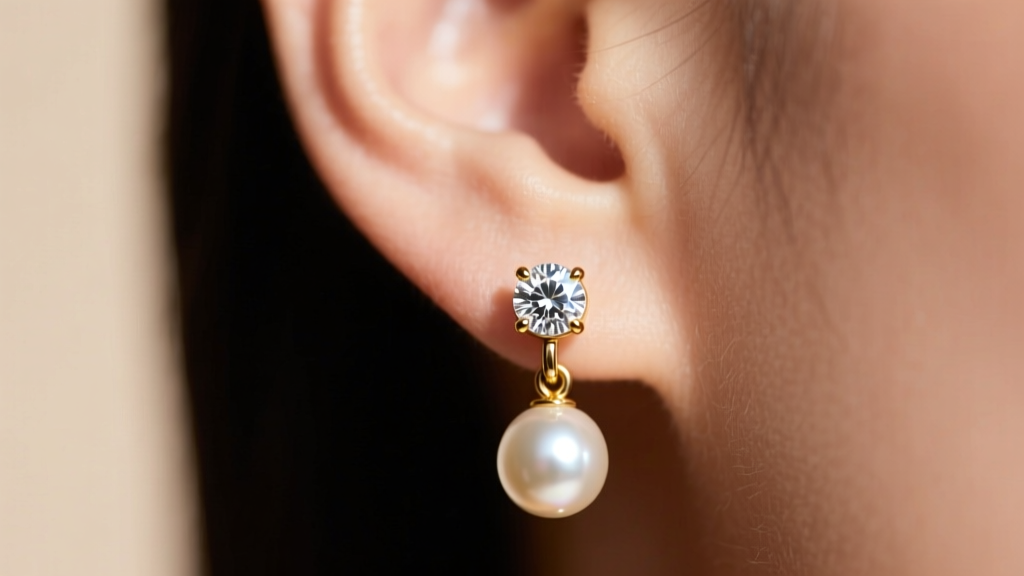
When you first start exploring jewelry, the terminology can feel like a foreign language. One term that frequently causes confusion for beginners is stud dangle earrings. At first glance, it sounds like an oxymoron: a stud is stationary and hugs the lobe, while a dangle moves freely and drops below it. So, how can an earring be both?
In modern jewelry design, a stud dangle earring is a brilliant hybrid piece. It combines the secure, comfortable post-and-back closure of a traditional stud with the visual movement and elongation of a drop or dangle earring. Whether you are looking for convertible 2-in-1 pieces, front-back ear jackets, or threader-studs, this beginner-friendly guide will break down everything you need to know about selecting, sizing, and caring for these versatile accessories.
The Anatomy of a Stud Dangle Earring
To understand this hybrid style, you need to look at the three primary mechanisms jewelers use to merge studs and dangles into a single cohesive piece:
- Convertible 2-in-1 Drops: These feature a standard stud front with a small loop or hidden hinge at the bottom. A detachable dangle component hooks onto this loop, allowing you to wear the piece as a simple diamond or pearl stud during the day, and attach the drop for evening wear.
- Front-Back Ear Jackets: The 'stud' sits on the front of your earlobe, while the 'dangle' element is actually attached to the earring back. It slides onto the post behind your ear, creating the illusion of a cuff or a drop that peeks out from behind the lower half of your lobe.
- Threader-Stud Hybrids: These begin with a rigid, stud-like post that pushes through the piercing, but instead of ending in a flat back, it transitions into a delicate chain that threads through the hole and dangles down the back of the ear.
Why the Post Gauge Matters More Than You Think
Beginners often focus entirely on the visual design of the dangle, ignoring the metal wire that actually goes through their ear. This is a critical mistake. The gauge (thickness) of the post dictates the long-term health of your earlobe.
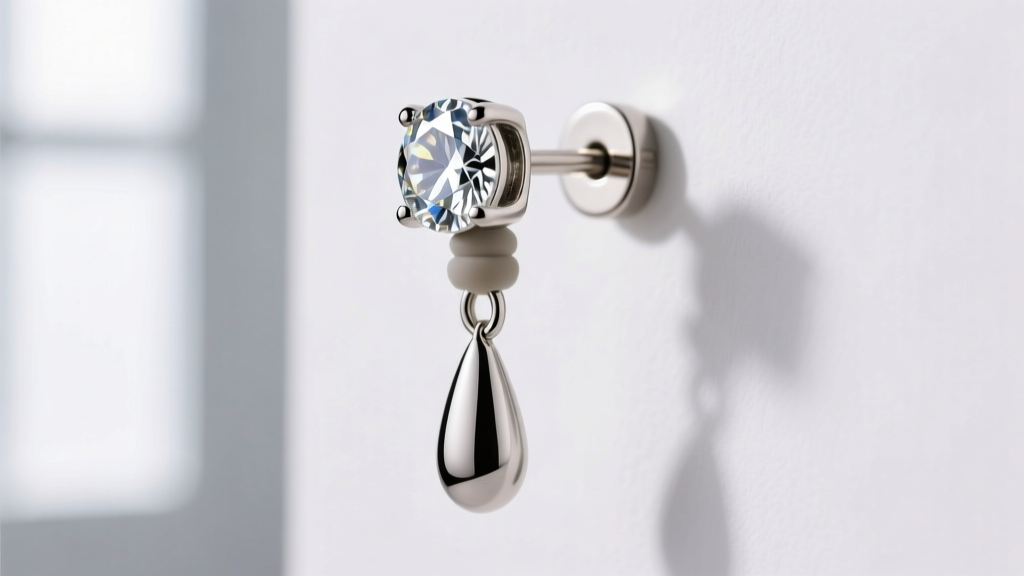
Standard stud earrings are typically 20-gauge (0.8mm). However, when you add the kinetic weight and swinging motion of a dangle, a thin 20g post can act like a wire cheese-cutter against the soft tissue of a healing or delicate earlobe. Over time, this downward drag can elongate the piercing hole or cause micro-tears.
The 18-Gauge Solution
For any stud dangle earring where the drop component exceeds 1.5 inches in length or weighs more than 4 grams, you should actively seek out 18-gauge (1.0mm) posts. The slightly thicker wire distributes the weight more evenly across the fistula (the piercing channel), preventing the dreaded 'cheese-cutter effect.' According to the Association of Professional Piercers (APP), ensuring proper jewelry thickness is vital for maintaining tissue integrity, especially when wearing heavier, dynamic jewelry.
Material Grades for Hypersensitive Lobes
Because stud dangle earrings create friction as they swing back and forth, the material resting inside your piercing must be biocompatible. If you have sensitive ears, avoid 'gold-plated brass' or 'surgical steel' (which often contains trace nickel).
- ASTM F-136 Implant-Grade Titanium: The gold standard for sensitive ears. It contains zero nickel and is highly resistant to corrosion from skin oils and hair products.
- Solid 14k or 18k Gold: Excellent for long-term wear, provided it is alloyed with silver or copper rather than nickel. (Note: White gold is often alloyed with nickel or rhodium-plated, which can trigger contact dermatitis as the plating wears off).
- Niobium: A highly reactive metal that is safely anodized for color without using toxic dyes or plating. A great, budget-friendly alternative to titanium.
The American Academy of Dermatology notes that nickel allergy is the most common cause of allergic contact dermatitis, making implant-grade metals a non-negotiable requirement for heavy, moving earrings that constantly rub against the piercing channel.
Face Shape Pairing Chart
The primary styling advantage of a stud dangle earring is its ability to manipulate visual proportions. Because the anchor point (the stud) draws the eye directly to the lobe, the dangling element acts as a directional arrow. Use this chart to find your most flattering silhouette:
| Face Shape | Ideal Stud Dangle Style | Length & Shape to Avoid |
|---|---|---|
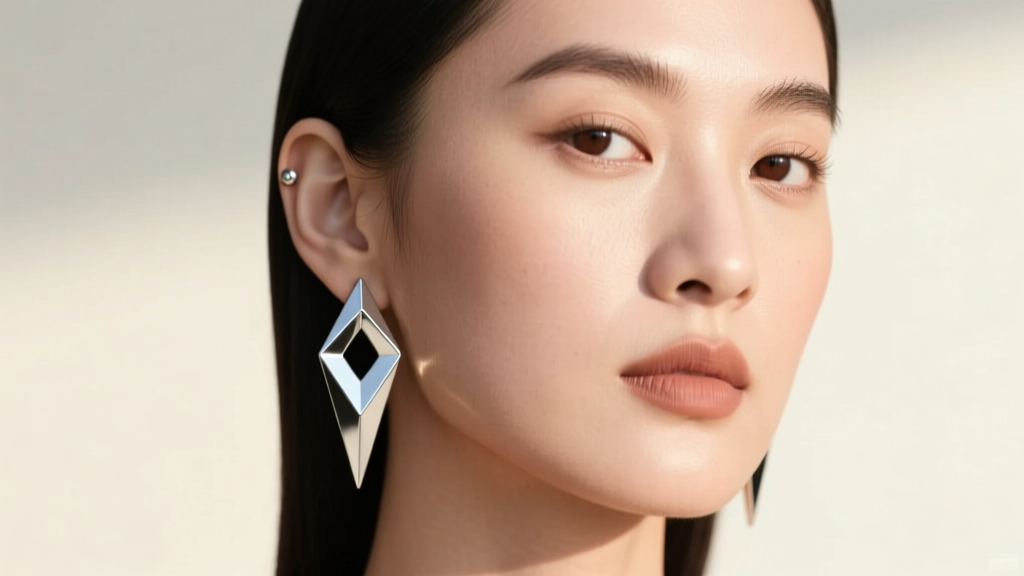
| Round | Angular, geometric drops (rectangles, diamonds) that hang 2+ inches to elongate the neck. | Short, wide circular hoops or chunky teardrops that emphasize cheek width. |
| Oval | Almost any style; front-back ear jackets or medium-length chandelier hybrids work beautifully. | Extremely long, narrow threaders that can make the face look overly drawn out. |
| Square | Curved, organic shapes (ovals, soft waves) that hang just below the jawline to soften angles. | Boxy, sharp-edged geometric drops that mirror and exaggerate a strong jawline. |
| Heart | Bottom-heavy teardrops or inverted triangles that add visual width to the lower half of the face. | Top-heavy ear jackets that add bulk near the temples and widen the forehead. |
Maintenance: Keeping the Friction Fit Secure
The most common complaint beginners have with convertible stud dangle earrings is that the detachable parts feel loose or get lost. This is usually due to a failure in maintenance rather than a defect in manufacturing. Here is how to maintain the structural integrity of hybrid earrings:
1. Clean the Silicone O-Rings
Many modern 2-in-1 earrings use tiny, translucent silicone O-rings to grip the post and hold the dangle in place. Over time, sebum, dead skin cells, and lotion build up in the microscopic grooves of the silicone, causing it to lose its friction. Remove the O-rings monthly and soak them in warm water with a drop of mild dish soap. Gently massage them to restore their grip.
2. Avoid Ultrasonic Cleaners on Threaded Drops
If your stud dangle uses a micro-screw mechanism to attach the drop to the stud, do not drop the entire assembly into an ultrasonic jewelry cleaner. The high-frequency vibrations can strip the delicate micro-threads or loosen the gemstone settings on the stud front. Instead, use a soft-bristled baby toothbrush dipped in isopropyl alcohol to carefully clean the threading.
3. Check the Post Tension
For front-back ear jackets, the 'dangle' back is held on by a standard butterfly clutch or a silicone stopper. Because the back piece is heavier than a normal earring back, gravity will slowly pull it down the post throughout the day. Always use a secure silicone disc stopper rather than a traditional metal butterfly back, as the solid silicone creates 360-degree friction against the post, preventing the heavy jacket from sliding off.
Where to Buy and What to Expect (Pricing Tiers)
When shopping for stud dangle earrings, pricing is heavily dictated by the complexity of the mechanism and the base metal. Here is a realistic breakdown of what you should expect to pay in the current market:
- Budget Tier ($25 - $60): Typically gold-plated sterling silver or brass. The mechanisms may feel slightly stiff, and the posts are often 20-gauge. Best for occasional wear, but not recommended for sensitive ears or heavy daily use.
- Mid-Tier ($80 - $250): Solid 14k gold or high-quality titanium. You will find secure micro-hinges, laser-welded loops, and precision-cut silicone grips. The posts will often be a safer 18-gauge.
- Fine Jewelry Tier ($300+): Features solid 18k gold, ethically sourced diamond or sapphire accents, and custom-engineered locking mechanisms (such as click-hinges or threaded screw-locks) designed to last a lifetime.
Stud dangle earrings represent the perfect intersection of security and style. By paying close attention to the post gauge, selecting biocompatible metals, and properly maintaining the friction points, you can enjoy the versatility of a 2-in-1 earring collection that takes you seamlessly from the office to a night out.


