Best Metals for Flower Diamond Earrings: A Material Guide
Compare platinum, 18k, and 14k gold settings for flower diamond earrings. Learn how metal properties impact floral cluster durability and brilliance.

The Anatomy of Botanical Cluster Settings
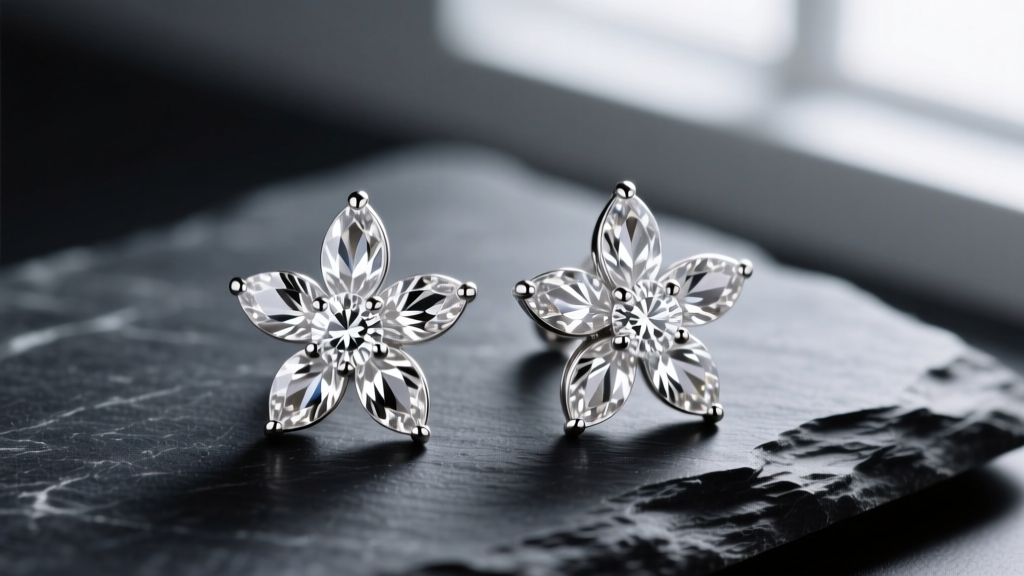
Flower diamond earrings are a masterclass in jewelry engineering. Unlike simple solitaire studs, a botanical cluster setting typically utilizes a central round brilliant stone surrounded by a halo of marquise, pear, or round melee diamonds to simulate delicate petals. A standard six-petal floral earring requires a minimum of 18 to 24 individual prongs just to secure the perimeter stones, plus an additional four to six prongs for the center stone. This high concentration of metal stress points means the metallurgical properties of your chosen alloy dictate not only the earring's aesthetic but its structural lifespan. Choosing the right metal for flower diamond earrings requires balancing tensile strength, malleability for intricate pavé work, and long-term wear resistance.
The Core Metals: Platinum vs. Gold Alloys
The foundation of any high-end floral cluster is the alloy. Jewelers manipulate specific elemental ratios to achieve the necessary hardness and color, but each comes with distinct physical properties that affect how the earrings age over decades of wear.
950 Platinum (Ruthenium Alloy)
Platinum is the undisputed king of diamond cluster settings. Standard jewelry platinum is 95% pure platinum, typically alloyed with 5% ruthenium (950 Pt/Ru) to increase workability. With a density of 21.45 g/cm³, platinum is exceptionally heavy, providing a premium, substantial feel on the earlobe. More importantly, platinum is highly malleable yet possesses incredible tensile strength. When a platinum prong is struck or bent, the metal displaces rather than chipping away. This "galling" property means that platinum prongs secure delicate melee diamonds far more reliably over time than gold alloys. According to data from Rio Grande Jewelry Supply, 950 Pt/Ru sits at approximately 135 on the Vickers Hardness (HV) scale, making it soft enough for jewelers to easily re-tip but hard enough to withstand daily deformation.
18k White Gold (Palladium Alloy)
18k white gold (75% pure gold) is a popular, more affordable alternative to platinum. However, pure gold is yellow, so white gold alloys rely on bleaching metals like palladium or nickel to achieve a white hue. High-quality 18k white gold uses palladium, which is hypoallergenic but leaves the metal with a faint greyish-yellow undertone. To achieve the brilliant white finish seen in showroom flower diamond earrings, the metal must be electroplated with rhodium (typically 0.75 to 1.0 microns thick). The primary drawback of 18k white gold for cluster settings is maintenance: as the rhodium wears away from friction and skin oils, the underlying alloy is exposed, requiring re-plating every 1 to 2 years. Furthermore, 18k gold is slightly softer (around 125 HV), meaning the numerous tiny prongs holding the floral petals are more prone to bending and releasing stones if snagged on clothing.
14k Rose Gold
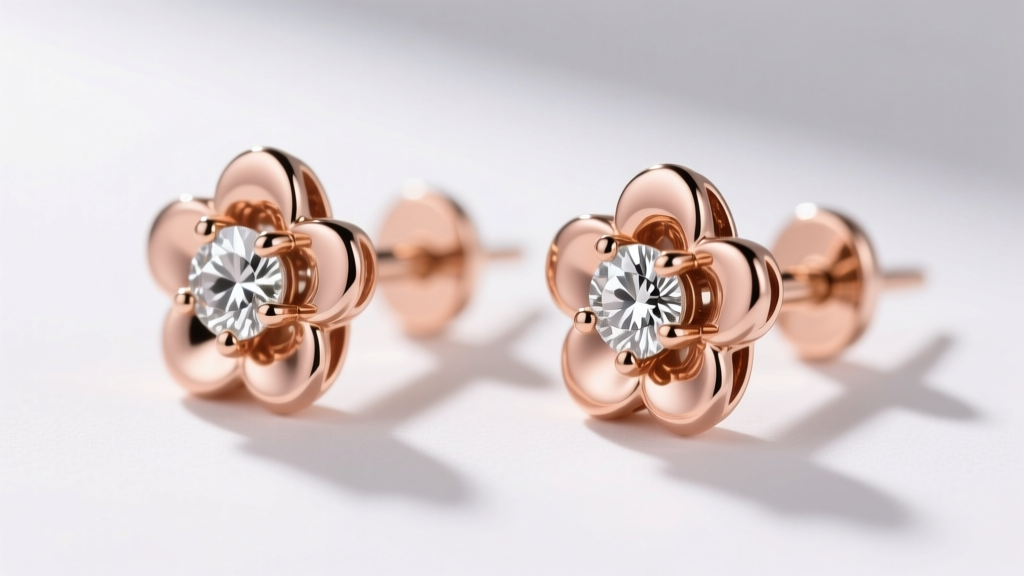
14k rose gold achieves its warm, romantic hue through a high copper content (often around 20-22%, with the remainder being silver and 58.3% pure gold). Copper acts as a powerful hardening agent, pushing the Vickers Hardness of 14k rose gold up to approximately 170 HV. This makes it incredibly resistant to scratching and bending, an excellent trait for the intricate wirework sometimes used in vintage-inspired floral earrings. However, this hardness makes re-tipping broken prongs more difficult, as the metal requires higher torch temperatures that can risk thermal shock to the surrounding diamonds. Additionally, the warm copper tones beautifully complement lower-color melee diamonds (J or K color grades), masking their slight yellow tint and making the floral cluster appear whiter than it actually is.
Diamond Selection: The Melee Factor in Floral Illusions
The metal is only half the equation; the stones themselves dictate the success of the floral illusion. The "petals" of flower diamond earrings are predominantly crafted using melee diamonds—small stones ranging from 0.001 to 0.18 carats (1mm to 3mm in diameter). When sourcing or evaluating floral clusters, the cut quality of the melee is paramount.
- Full Cut Melee (57-58 facets): Essential for high-end flower earrings. Full cut melee mimics the light performance of a large center stone, creating the scintillation needed to make flat metal petals appear three-dimensional and luminous.
- Single Cut Melee (17-18 facets): Often used in mass-produced, budget-friendly clusters. Single cut stones lack the pavilion facets required to bounce light back to the eye, resulting in a "glassy" or flat appearance that ruins the botanical illusion.
As noted by the Gemological Institute of America (GIA), the precision of the cut in smaller stones drastically affects the overall brilliance of cluster jewelry. Always insist on full-cut melee for the petals to ensure maximum light return.
Prong Architecture: Protecting Marquise Petals
The most common diamond shape used for flower petals is the marquise cut, prized for its elongated, leaf-like silhouette. However, marquise diamonds feature sharp, 90-degree points at their tips. These tips are highly vulnerable to chipping or "cleaving" if struck. Standard round prongs leave these sharp tips exposed.
To properly secure marquise petals, expert jewelers utilize V-prongs. A V-prong wraps around the sharp corner of the diamond, cradling it in a protective metal pocket. While a V-prong requires slightly more metal width at the tip (obscuring roughly 0.2mm more of the diamond's surface), it prevents catastrophic stone failure. When evaluating flower diamond earrings, inspect the tips of the petals under magnification; if round prongs are used on marquise points, the setting is structurally compromised and poses a high risk of stone loss.
| Metal Alloy | Composition | Vickers Hardness (HV) | Re-tipping Ease | Rhodium Required? |
|---|---|---|---|---|
| 950 Pt / Ru | 95% Pt, 5% Ru | 135 HV | Excellent | No |
| 18k White Au | 75% Au, 25% Pd | 125 HV | Good | Yes |
| 14k Rose Au | 58.3% Au, Cu/Ag | 170 HV | Moderate | No |
Hypoallergenic Properties and Ear Lobe Health
Because flower diamond earrings often feature wider cluster backs and heavier metal baskets, they sit flush against the earlobe, increasing the surface area of skin contact. This makes the alloy's hypoallergenic properties critical. Nickel is a common bleaching agent in cheaper white gold alloys and is a primary culprit behind contact dermatitis. Even if you do not currently have a nickel allergy, prolonged exposure to nickel-alloyed posts and baskets can sensitize the immune system over time. For sensitive ears, strictly seek out 950 Platinum, Palladium-alloyed white gold, or high-karat yellow gold. Avoid titanium for intricate diamond clusters; while highly hypoallergenic, titanium's extreme hardness and high melting point make it nearly impossible for jewelers to cast the delicate, micro-prongs required for floral pavé settings.
Maintenance Realities: Cleaning and Re-tipping
The intricate crevices of a floral cluster trap lotions, dead skin cells, and cosmetics, which quickly dull the brilliance of the melee diamonds. Proper maintenance requires understanding your metal's limitations:
- Ultrasonic Cleaners: While effective at removing grime, high-frequency vibrations can loosen melee stones if the metal prongs have experienced fatigue or wear. Use ultrasonics sparingly, and never use them on fracture-filled diamonds.
- Steam Cleaning: The safest method for platinum and gold clusters. A quick blast of steam melts away oils without applying mechanical stress to the V-prongs.
- Prong Re-tipping: Over a decade, prongs will wear down by roughly 0.1mm to 0.2mm. Platinum can be easily re-tipped by laser welding new metal onto the worn prong. White gold re-tipping requires the jeweler to strip the rhodium, solder the gold, polish, and re-plate, increasing the long-term cost of ownership.
Final Verdict
When investing in flower diamond earrings, the initial savings of choosing 18k white gold over platinum are often negated by the ongoing costs of rhodium plating and the higher risk of prong fatigue in complex cluster settings. For an heirloom-quality botanical piece that will securely hold dozens of delicate melee diamonds for generations, 950 Platinum remains the superior metallurgical choice, offering the perfect synthesis of malleability for the jeweler and indestructible security for the wearer.


