Rain Earrings: Expert Guide to Cascading Drop Mechanics
Explore the engineering behind rain earrings. Learn about chain gauge limits, kinetic weight distribution, and cartilage anchoring mechanics.

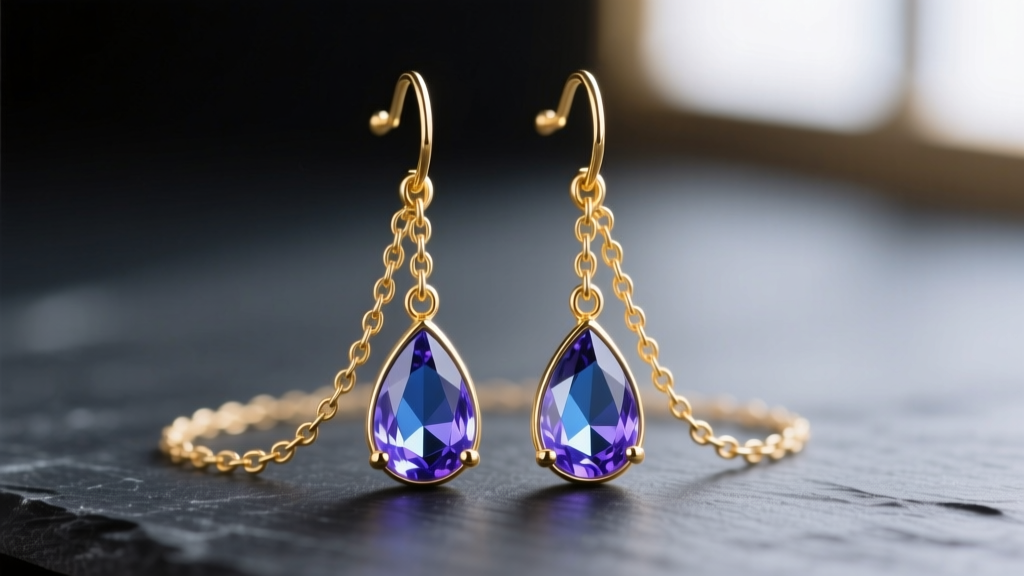
Rain earrings—characterized by their cascading chains, vertical drop motifs, and kinetic movement—represent a unique intersection of fluid aesthetics and structural engineering. Unlike static studs or rigid hoops, rain earrings introduce dynamic variables: pendulum physics, tensile stress on micro-jump rings, and localized weight distribution across the earlobe or cartilage. As we navigate the 2026 fine jewelry market, the demand for intricate, multi-strand rain drops has surged, yet many manufacturers prioritize visual delicacy over mechanical longevity. This expert deep dive dissects the metallurgy, gauge specifications, and anatomical anchoring required to engineer rain earrings that survive daily wear without compromising the fistula.
The Physics of Kinetic Weight Distribution
The primary engineering challenge of rain earrings is the 'pendulum effect.' When a wearer moves their head, the cascading chains and terminal gemstones swing, multiplying the static weight of the earring by a kinetic force factor. A static 5-gram earring can exert 12 to 15 grams of instantaneous shear force on the earlobe fistula during a sudden head turn.
This kinetic torque is transferred directly to the weakest point in the assembly: the connection between the chain and the primary anchor post. According to guidelines published by the Association of Professional Piercers (APP), continuous downward and lateral stress on a healing or mature fistula can lead to tissue thinning, migration, or the dreaded 'cheese-cutter effect.' Therefore, calculating the terminal weight of the raindrop motif—whether it is a hollow metallic teardrop or a solid gemstone briolette—is the mandatory first step in the design process.
Design Rule of Thumb: For standard 20-gauge or 18-gauge lobe piercings, the total static weight of a rain earring should not exceed 6.5 grams per ear to prevent long-term lobe elongation.
Chain Gauge and Tensile Strength Specifications
The visual 'rain' effect is achieved using micro-chains. However, not all chain profiles possess the tensile strength required to support terminal drops. The structural integrity of a chain is dictated by its wire gauge and link geometry. Below is a technical breakdown of chain profiles commonly used in rain earrings and their mechanical limits.
| Chain Profile | Standard Gauge (mm) | Tensile Limit | Kinetic Suitability |
|---|---|---|---|
| Cable Chain | 0.5mm - 0.8mm | Low (2-4 lbs) | Poor for heavy gems; high snag risk |
| Rolo Chain | 0.6mm - 1.0mm | Medium (4-7 lbs) | Excellent; rounded links resist kinking |
| Box Chain | 0.8mm - 1.2mm | High (8-12 lbs) | Superior for heavy drops; rigid structure |
| Snake Chain | 0.9mm - 1.5mm | Medium (5-8 lbs) | Avoid; tight weave traps hair and kinks permanently |
For high-end rain earrings featuring dense gemstones like cubic zirconia or sapphire, a 0.8mm box chain or a heavy 1.0mm rolo chain is mandatory. The Gemological Institute of America (GIA) notes that specific gravity varies wildly between gem materials; a 12mm quartz briolette weighs significantly less than a 12mm cubic zirconia teardrop of identical dimensions, directly impacting the required chain gauge.
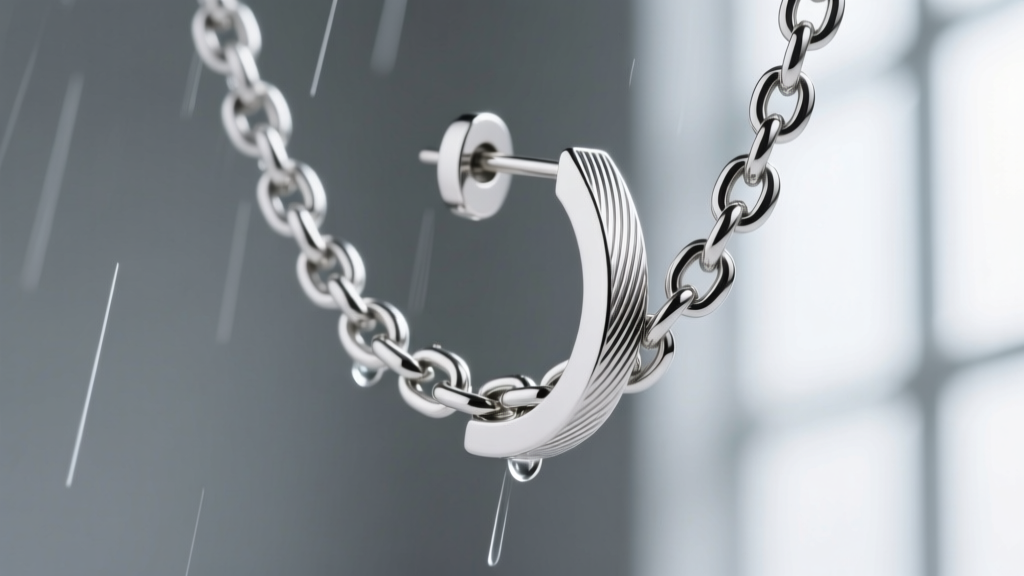
Metallurgy: 14k vs. 18k Gold in Micro-Joints
Material selection in rain earrings extends beyond color preference; it is a matter of yield strength. Pure gold (24k) is entirely unsuitable for chain links due to its malleability. In the 2026 market, the debate centers on 14k versus 18k gold for the micro-jump rings that connect the rain chains to the ear post.
- 18k Gold (75% Gold): Offers superior color saturation and hypoallergenic properties but has a lower yield strength. Under the lateral torque of a swinging rain chain, 18k micro-jump rings are prone to gapping (pulling open) unless they are laser-welded shut.
- 14k Gold (58.3% Gold): Alloyed with higher percentages of copper, zinc, and silver, 14k gold provides a significantly higher tensile strength. For multi-strand rain earrings where three or four chains converge on a single jump ring, 14k gold is the structurally superior choice to prevent link separation.
Titanium (specifically ASTM F136 implant-grade) is increasingly utilized for the anchor posts of rain earrings due to its exceptional strength-to-weight ratio, allowing for thicker 16-gauge or 14-gauge posts that support heavy drops without adding unnecessary weight to the earlobe.
Lobe vs. Cartilage Anchoring Mechanics
While rain earrings are traditionally designed for earlobes, the trend of helix and conch rain chains has introduced complex anatomical challenges. Cartilage lacks the elasticity and vascular density of the earlobe, making it highly susceptible to pressure necrosis and migration when subjected to the pendulum forces of cascading drops.
The Flat-Back Labret Advantage
Standard butterfly-back earring posts concentrate the entire kinetic load of a rain earring onto a 1mm friction point against the back of the ear. This is catastrophic for cartilage. Expert piercers and high-end jewelry designers now utilize flat-back labret studs as the anchor for cartilage rain earrings.
A 16-gauge (1.2mm) or 14-gauge (1.6mm) titanium flat-back post distributes the shear force across a wide, flat disc (typically 3mm to 5mm in diameter) resting flush against the inner ear. This mechanical upgrade neutralizes the cheese-cutter effect, allowing the wearer to enjoy short, delicate rain chains on the helix without risking fistula rejection.
Troubleshooting Common Structural Failures
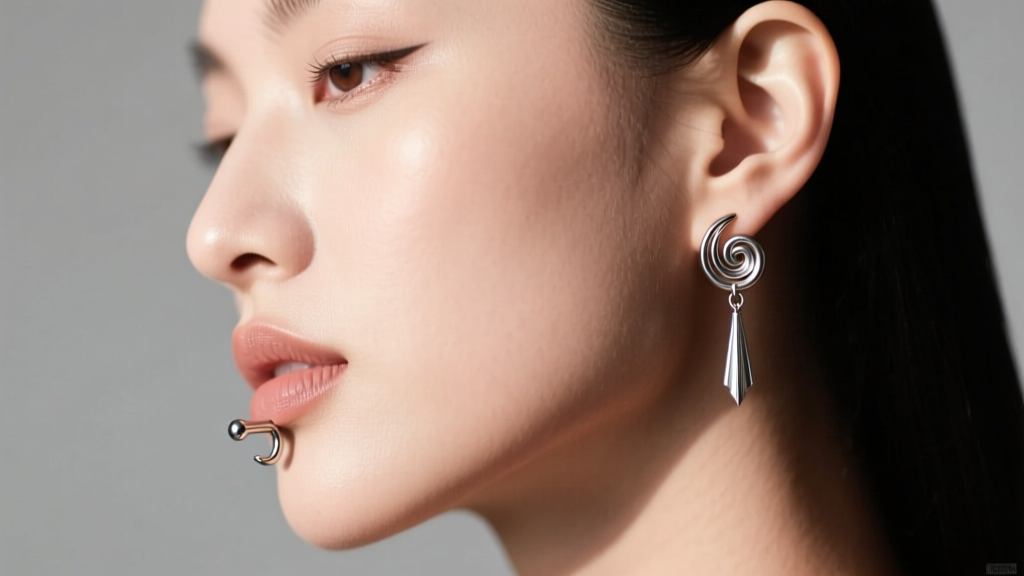
Even meticulously engineered rain earrings can fail if specific mechanical vulnerabilities are ignored during the manufacturing or wearing process. Here are the three most common failure modes and their technical solutions:
- Jump Ring Gapping: The lateral swing of the chain pulls the micro-jump ring open, dropping the gemstone. Solution: Specify laser-welded or soldered jump rings for all terminal connections. Never rely on mechanical pinch-closure for chains supporting more than 2 grams.
- Post Bending: A heavy raindrop motif on a standard 20-gauge (0.8mm) wire post will permanently bend the metal over time. Solution: Upgrade the primary anchor post to 18-gauge (1.0mm) or 16-gauge (1.2mm) wire, or utilize a threaded flat-back system.
- Snagging and Hair Entanglement: Delicate cable chains act as nets for loose hair, leading to sudden, high-force yanks that can tear the earlobe. Solution: Utilize rolo or box chains with smooth, flush-linked profiles, and advise wearers to secure hair when donning multi-strand rain designs.
2026 Market Pricing and Sourcing Matrix
Understanding the correlation between material grade, mechanical complexity, and price is vital for both consumers and buyers. The 2026 market has seen a bifurcation between mass-produced fashion drops and structurally engineered fine jewelry.
| Category | Materials | Chain Joinery | Expected Price Range |
|---|---|---|---|
| Fashion / Costume | Brass base, gold vermeil, CZ | Pinched split-rings | $45 - $120 |
| Demi-Fine | Solid 10k/14k gold, quartz | Soldered jump rings | $180 - $450 |
| Fine / Bespoke | 18k gold, Platinum, Sapphire | Laser-welded micro-links | $850 - $3,500+ |
When evaluating rain earrings, always inspect the jump rings under a 10x jeweler's loupe. A seamless, laser-welded joint is the hallmark of a piece engineered for longevity, ensuring that the cascading beauty of the design survives the rigorous physics of daily wear.


