How to Choose the Best Pierced Earring Earring Hooks Types
Master the selection and adjustment of pierced earring earring hooks types. Our step-by-step guide covers gauges, metals, and security.

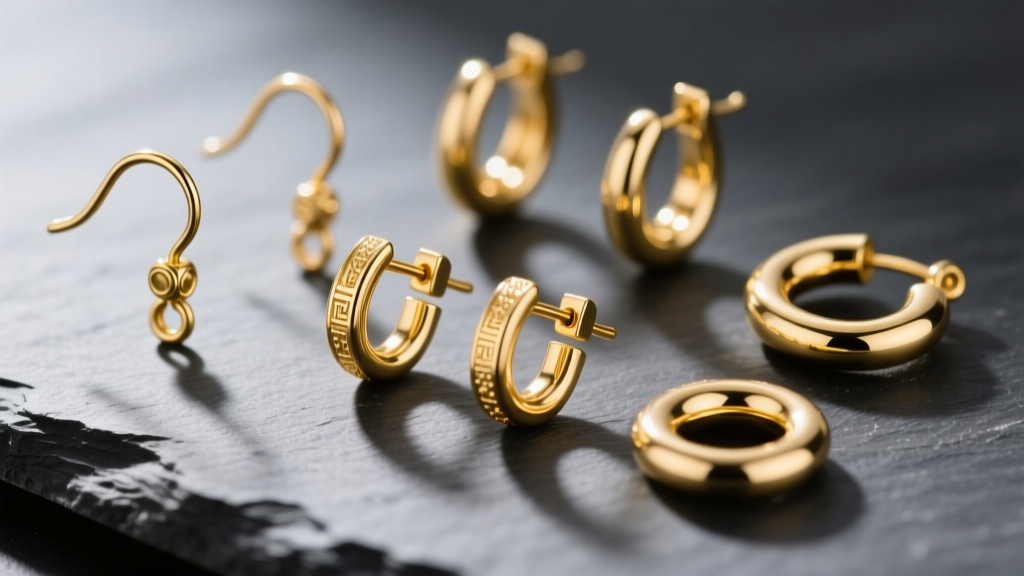
Choosing the right hardware for your jewelry collection is just as critical as the design itself. When evaluating pierced earring earring hooks types, jewelers and collectors alike must balance security, aesthetic drape, and biocompatibility. A poorly chosen hook can lead to lost gemstones, stretched lobes, or severe contact dermatitis. This step-by-step guide will walk you through the exact specifications, material grades, and adjustment techniques required to master hook-style earrings.
The Anatomy of a Standard Ear Wire
Before diving into specific styles, you must understand the structural anatomy of a hook. Every standard ear wire consists of three primary zones:
- The Loop (or Eye): The small circular opening at the base where dangles, charms, or jump rings are attached. Standard loops measure between 1.5mm and 2.5mm in inner diameter.
- The Spine (or Stem): The straight or slightly curved vertical wire that passes through the fistula (the piercing hole). This dictates the 'drop length' of the earring.
- The Apex and Tail: The curved bend that rests over the ear cartilage, ending in the tail that secures the piece behind the lobe.
Understanding these zones is vital when using tools to adjust the earring, as bending the spine will alter the drape, while manipulating the apex affects how the earring sits on the ear.
Step 1: Comparing Pierced Earring Earring Hooks Types
Not all hooks function the same way. The security and weight distribution vary wildly across different silhouettes. Below is a comprehensive breakdown of the most common configurations you will encounter.
| Hook Type | Security Level | Best For | Average Drop Length |
|---|---|---|---|
| French Wire (Shepherd Hook) | Low (requires stopper) | Lightweight dangles, chandeliers | 15mm - 25mm |
| Leverback | High (locking mechanism) | Medium to heavy gemstone drops | 12mm - 18mm |
| Kidney Wire | Medium (self-locking loop) | Everyday wear, vintage styles | 15mm - 20mm |
| V-Wire (U-Hook) | Low (requires stopper) | Contemporary, minimalist geometric drops | 20mm - 35mm |
| Ear Thread (Threader) | Medium (friction-based) | Delicate chains, adjustable lengths | 40mm - 60mm |
Pro Tip: If you are designing or buying heavy chandelier earrings, always opt for a leverback. The hinged closure prevents the ear wire from pulling forward and stretching the lobe under the weight of the stones.
Step 2: Selecting the Correct Gauge and Material
The thickness of the wire (gauge) and the metallurgical composition are non-negotiable factors for comfort and healing. Standard commercial earrings often cut corners here, leading to irritation.
Decoding Wire Gauges
In the jewelry industry, the higher the gauge number, the thinner the wire. For standard lobe piercings, you need to match the hook to the fistula size to avoid the 'cheese-cutter effect,' where a thin wire slowly slices through the tissue under the weight of the earring.
- 22-Gauge (0.64mm): The thinnest standard. Suitable only for extremely lightweight drops (under 2 grams). Often used in high-end, delicate gold jewelry.
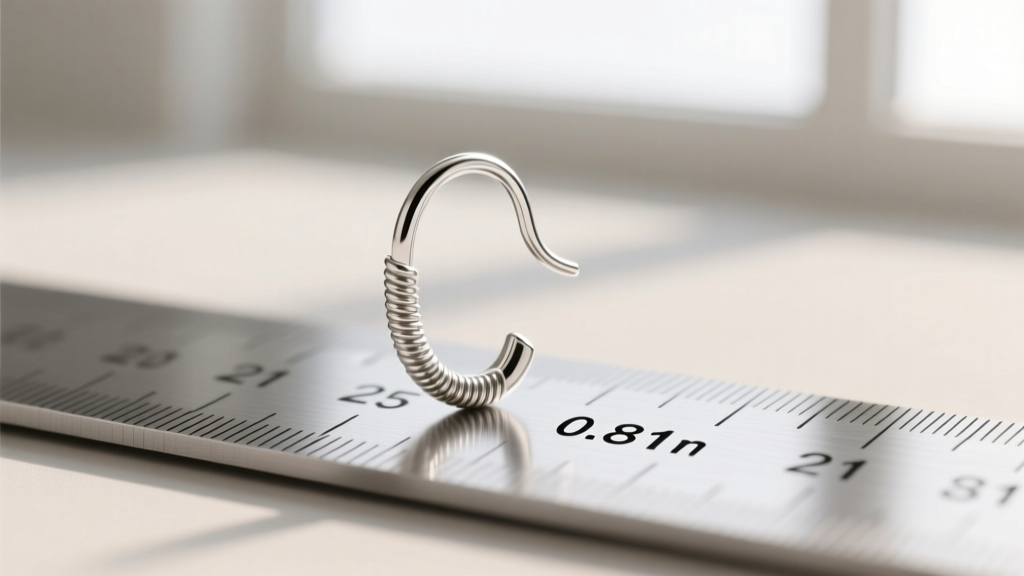
- 20-Gauge (0.81mm): The industry standard for most hook earrings. Provides an excellent balance of strength and comfort for standard 18g or 20g lobe piercings.
- 18-Gauge (1.02mm): Used for heavier pieces or cartilage piercings (like the helix or rook) where a thicker wire is needed to prevent migration and support weight.
Material Grades and Biocompatibility
According to the Association of Professional Piercers, only specific implant-grade materials should be worn in the body. When selecting hooks, avoid generic 'surgical steel' which often contains high nickel levels. Instead, look for:
- ASTM F136 Titanium (Ti-6Al-4V ELI): The gold standard for sensitive ears. It is entirely nickel-free, lightweight, and highly resistant to corrosion.
- Niobium: A highly malleable, reactive metal that can be anodized into vibrant colors. It is completely hypoallergenic and excellent for custom-bent hooks.
- 14k or 18k Solid Gold: As noted by the Gemological Institute of America, gold below 14k contains too many alloy metals (like copper and zinc) which can cause reactions. Always ensure the gold is alloyed for body safety, avoiding white gold that is plated with rhodium over a nickel base.
Step 3: Sizing the Drop Length
The distance from the top of the apex bend to the bottom of the attachment loop determines how the earring frames the face.
- Short Drop (10mm - 14mm): Keeps charms close to the lobe. Ideal for stud-like appearances with slight movement.
- Standard Drop (15mm - 20mm): The most versatile length. Allows charms to swing freely without catching on hair or clothing collars.
- Long Drop (25mm+): Used for dramatic, shoulder-dusting statement pieces. Requires a 20g or 18g wire to prevent warping.
Step 4: Adjusting and Securing Your Hooks
Even the highest quality French wires can slip out of the ear during sleep or when removing clothing. Securing them properly is a vital skill for any jewelry wearer.
Using Silicone O-Rings
Forget the cheap, stiff plastic butterfly backs that come with mass-market earrings. Invest in medical-grade silicone O-rings (often called Euro-stoppers). Slide the O-ring onto the tail of the French wire and push it flush against the back of the earlobe. The high-friction silicone grips the metal and the skin, making loss nearly impossible.
Opening and Closing the Attachment Loop
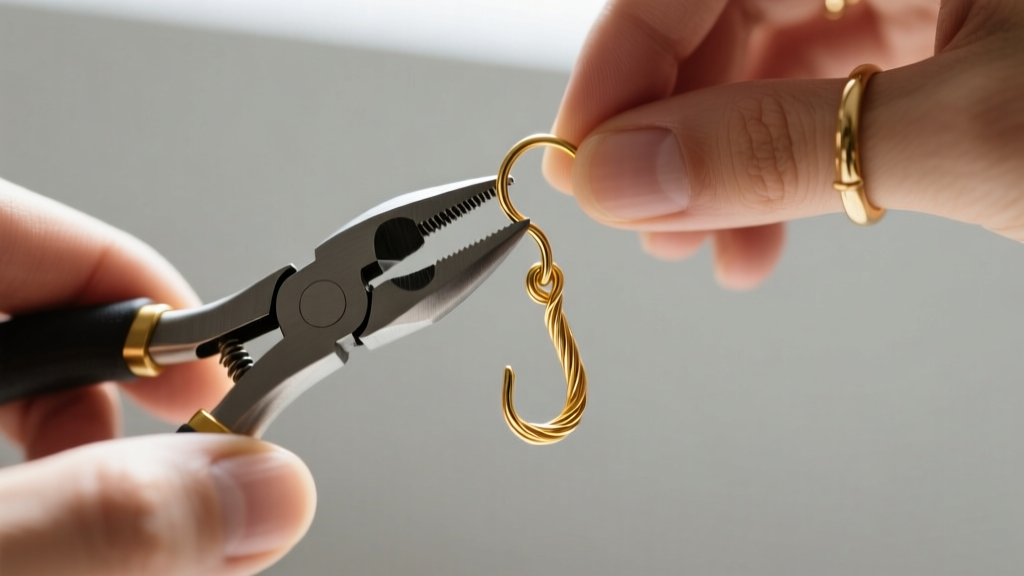
When swapping out charms on a French hook, never pull the loop apart laterally (side-to-side). This warps the circular shape and weakens the metal through work-hardening. Instead, use two pairs of jewelry pliers to twist the wire ends in opposite directions (one toward you, one away). To close it, simply twist them back until the ends meet perfectly flush.
Step 5: Troubleshooting Common Hook Failures
Over time, hook earrings experience mechanical stress. Here is how to diagnose and fix the most common failure modes.
Metal Fatigue and Stress Fractures
The Problem: The wire snaps cleanly at the apex of the curve.
The Cause: Repeated bending of the same spot causes 'work hardening,' making the crystalline structure of the metal brittle. This is especially common in sterling silver and brass.
The Fix: You cannot reverse metal fatigue. Once a hook shows a visible crease or kink at the bend, discard it immediately before it snaps and you lose the attached gemstone. When putting on French wires, slide them in smoothly without aggressively bending the apex backward.
Leverback Latch Misalignment
The Problem: The hinged leverback no longer clicks securely into the notch, leaving a gap.
The Cause: The tension wire inside the lever mechanism has relaxed, or the hook itself has been bent slightly outward.
The Fix: Using a pair of nylon-jaw pliers (which will not mar the metal finish), apply very gentle inward pressure to the main hook wire, just below the notch. Test the click mechanism after every micro-adjustment. If the internal spring wire is bent, the leverback is usually beyond repair and must be replaced.
Asymmetrical Drape
The Problem: One earring hangs perfectly straight, while the other twists outward.
The Cause: The attachment loop is not perfectly parallel to the spine, or the spine itself has a slight torsional twist from manufacturing or wear.
The Fix: Hold the spine firmly with chain-nose pliers and use a second pair to gently realign the bottom loop so it faces perfectly forward. Check the drape by hanging the earring on a T-bar display stand.
Final Thoughts on Hook Selection
Mastering the nuances of pierced earring earring hooks types elevates both the comfort and longevity of your jewelry. By paying strict attention to wire gauge, choosing implant-grade materials like ASTM F136 titanium, and utilizing proper jewelry-making tools for adjustments, you ensure that your earrings remain secure and beautiful for a lifetime. Whether you are a collector, a designer, or simply someone who values high-quality accessories, treating the humble ear wire with the respect it deserves will completely transform your wearing experience.


