2026 Trends: Men With Earrings In Both Ears Style Guide
Explore the 2026 style guide for men with earrings in both ears. Master asymmetrical stacks, implant-grade metals, and visual weight rules.

The Death of the Outdated 'One-Ear' Code
For decades, a pervasive and largely baseless cultural myth dictated strict rules regarding male ear piercings, specifically the outdated notion that piercing only the left ear signaled a specific sexual orientation while the right ear meant something else entirely. In 2026, this archaic code is completely dead. Today, men with earrings in both ears represent a mainstream, sophisticated approach to personal grooming and style. The modern bilateral ear aesthetic is no longer about rebellion; it is about deliberate curation, facial framing, and an understanding of jewelry as a core component of menswear. According to style analysts at GQ, the contemporary man approaches ear jewelry with the same rigor as selecting a luxury timepiece or a tailored lapel width. The focus has shifted entirely from 'which ear' to 'what is the visual weight, material grade, and geometric balance' of the jewelry being worn.
The 2026 Asymmetry Framework: Visual Weight & Balance
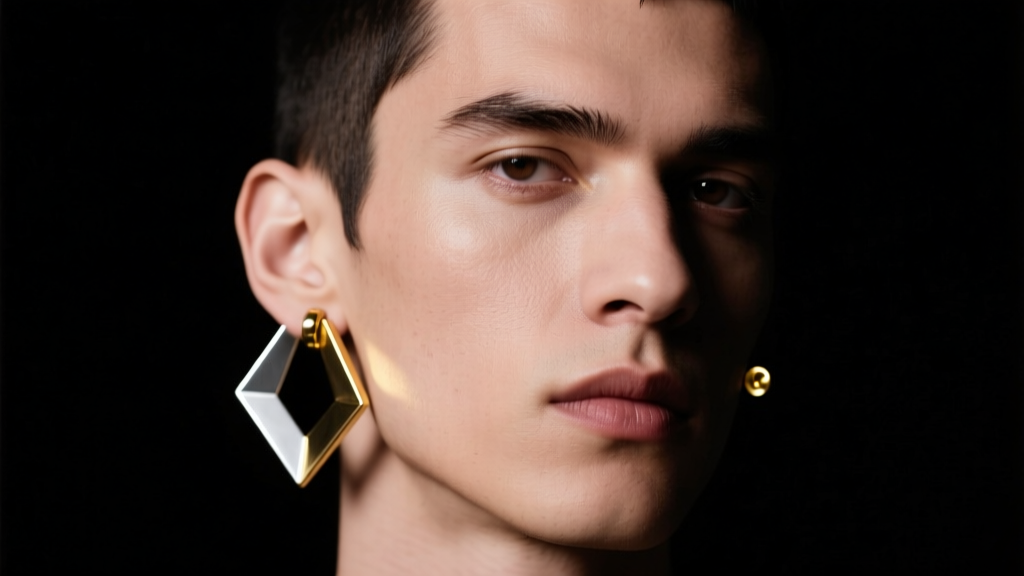
The most critical mistake men make when adopting bilateral piercings is defaulting to perfect, mirror-image symmetry. Wearing the exact same medium-sized hoop in both lobes often creates a stagnant, heavy look that drags the facial features downward. The dominant 2026 trend relies on calculated asymmetry—balancing visual weight rather than matching identical pieces. This requires understanding the concept of 'visual density.' A single, thick 12-gauge (2.0mm) gold chain link in the left lobe carries immense visual gravity. To balance this without overwhelming the face, the right ear should feature a constellation of smaller, finer pieces, such as three 18-gauge (1.0mm) threadless titanium studs scattered across the lobe and upper helix. This creates a dynamic, editorial look that draws the eye across the face rather than locking it onto a single horizontal plane.

The Anchor and Orbit Method
To execute asymmetrical styling successfully, utilize the Anchor and Orbit framework. Choose one ear to house your 'Anchor'—a statement piece with significant physical presence, such as a heavy huggie, a medium-gauge seamless ring, or a structural geometric drop. The opposite ear becomes the 'Orbit,' featuring smaller, complementary pieces that echo the metal tone of the Anchor but remain subordinate in size. This method ensures that men with earrings in both ears maintain a masculine, structured silhouette without appearing over-accessorized.
Material Science: Biocompatibility Over Fast Fashion
A sophisticated style guide is incomplete without addressing metallurgy. The skin on the earlobe and cartilage is highly reactive to cheap alloys. Many mass-market brands sell 'surgical steel' jewelry, which is a misnomer that masks high nickel content. The Association of Professional Piercers (APP) explicitly warns against 316L surgical steel for long-term wear due to its 8-12% nickel composition, which causes contact dermatitis and fistula irritation. For a refined, irritation-free aesthetic, you must invest in specific, high-grade metals.
| Metal Grade | Nickel Content | Best Use Case | Price Range (Per Piece) |
|---|---|---|---|
| ASTM F136 Titanium | 0% | Fresh piercings, sensitive lobes, everyday wear | $35 - $85 |
| 14k / 18k Solid Gold | Varies (Alloy dependent) | Healed lobes, luxury statement pieces | $120 - $450+ |
| 316L Surgical Steel | 8% - 12% | Avoid (High allergy and irritation risk) | $10 - $30 |
| Niobium (Un-anodized) | 0% | Stretching, heavy gauge hoops, cartilage | $25 - $60 |
Hardware Mechanics: Why Threading Matters
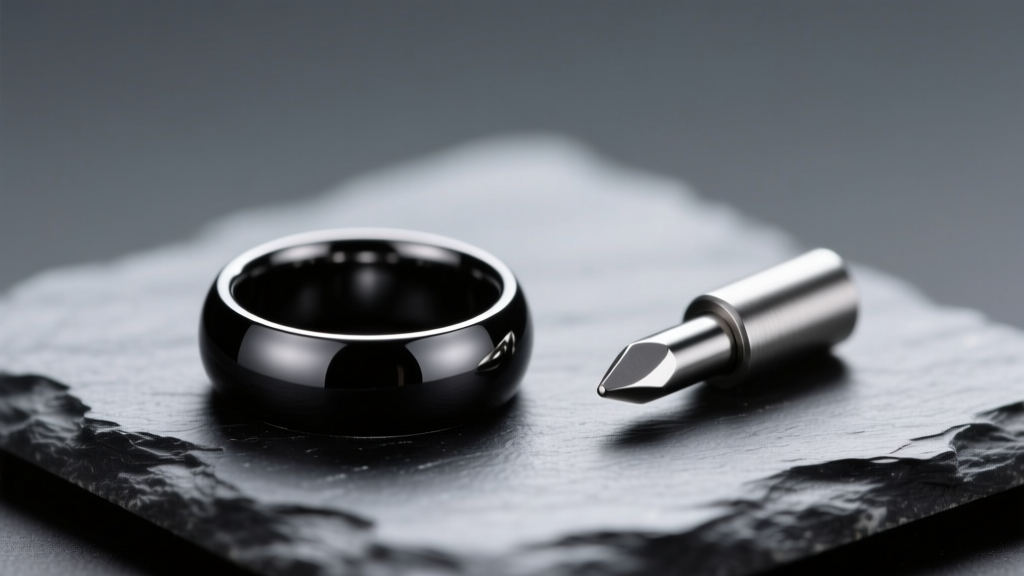
Beyond the metal itself, the mechanical construction of the earring dictates both comfort and longevity. Never wear externally threaded jewelry (where the screw pattern is on the post that passes through the ear). Pushing a threaded post through a fistula acts like a cheese grater, causing micro-tears and scar tissue buildup. High-end brands like NeoMetal and BVLA utilize threadless (press-fit) or internally threaded systems. Threadless jewelry uses a slight bend in the pin to create tension against the inside of the hollow post, offering a secure, seamless fit that is virtually impossible to lose during sleep or physical activity, while maintaining a perfectly smooth surface against the skin.
Managing Gauge Sizes and Stretching Dynamics
Standard lobe piercings are typically done at 20-gauge (0.81mm) or 18-gauge (1.0mm). However, the 2026 trend for men heavily favors slightly thicker posts, specifically 16-gauge (1.2mm) or 14-gauge (1.6mm), even in standard lobes. A thicker post provides a more substantial, masculine profile and significantly reduces the 'cheese-cutter effect,' where a thin wire slowly migrates downward through the lobe tissue over time due to gravity and the weight of the jewelry. If you are transitioning from standard to stretched lobes (e.g., 8-gauge to 2-gauge), always use glass or polished titanium tapers, and never skip sizes to avoid blowouts.
Face Shape Geometry and Jawline Framing
Earrings are not isolated accessories; they are architectural tools that alter the perceived geometry of your face. Men with strong, square jawlines should avoid sharp, angular geometric drops, which exaggerate the harshness of the jaw. Instead, opt for seamless circular hoops or curved chain elements that introduce softness. Conversely, men with rounder or softer facial structures benefit immensely from structured, linear barbell studs or geometric huggies that add sharp, defining angles to the sides of the face. The placement of cartilage piercings also plays a role; a high helix stud draws the eye upward, elongating a wider face, while a lower tragus or conch piece centers the visual weight.
The Final Verdict on the Bilateral Revival
The stigma surrounding men with earrings in both ears has been entirely replaced by an appreciation for curated, intentional styling. By abandoning the outdated symmetry rules, prioritizing ASTM-certified biocompatible metals, and understanding the physics of visual weight, men can leverage bilateral ear jewelry to elevate their personal aesthetic from basic to editorial. Whether you are anchoring a heavy gold hoop on one side with a constellation of titanium studs on the other, or rocking matched 14-gauge black niobium rings for a minimalist edge, the key is intentionality. Treat your ear curation with the same respect you give to your wardrobe, and the results will be undeniably sharp.


