Troubleshooting the Whispering Earring: Fix Snags and Clicker Hinges
Is your delicate whispering earring snagging or failing to click? Learn expert troubleshooting for thin-wire hoops, clicker hinges, and hair tangles.

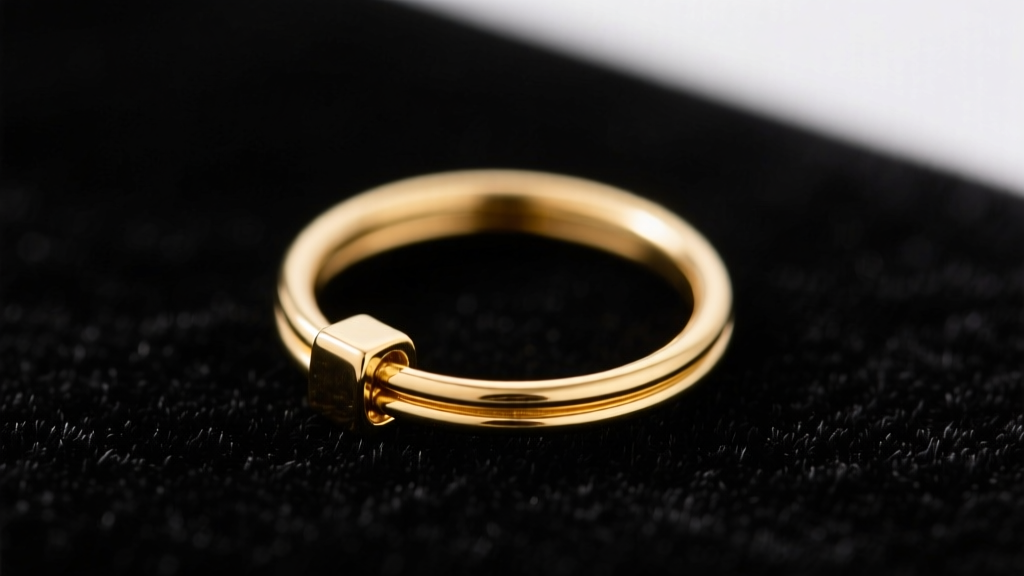
What Defines the Whispering Earring Trend?
In the evolving landscape of minimalist jewelry, the whispering earring has carved out a dedicated niche. Characterized by ultra-thin wire profiles—typically ranging from 20-gauge (0.81mm) down to a fragile 22-gauge (0.64mm)—these hoops and micro-huggies are designed to sit flush against the earlobe or helix. They offer a barely-there aesthetic that catches the light subtly, creating a visual "whisper" rather than a shout. However, as any seasoned jeweler or professional piercer will tell you, reducing the structural mass of a metal hoop introduces a unique set of mechanical vulnerabilities.
While the whispering earring trend remains incredibly popular in 2026 for its elegant, lightweight feel, owners frequently encounter three major issues: aggressive hair snagging, clicker hinge failure, and permanent wire warping. This comprehensive troubleshooting guide dives deep into the metallurgy and mechanics of micro-wire earrings, providing actionable, professional-grade solutions to keep your delicate jewelry functional and beautiful.
Problem 1: The Micro-Wire Hair Snag
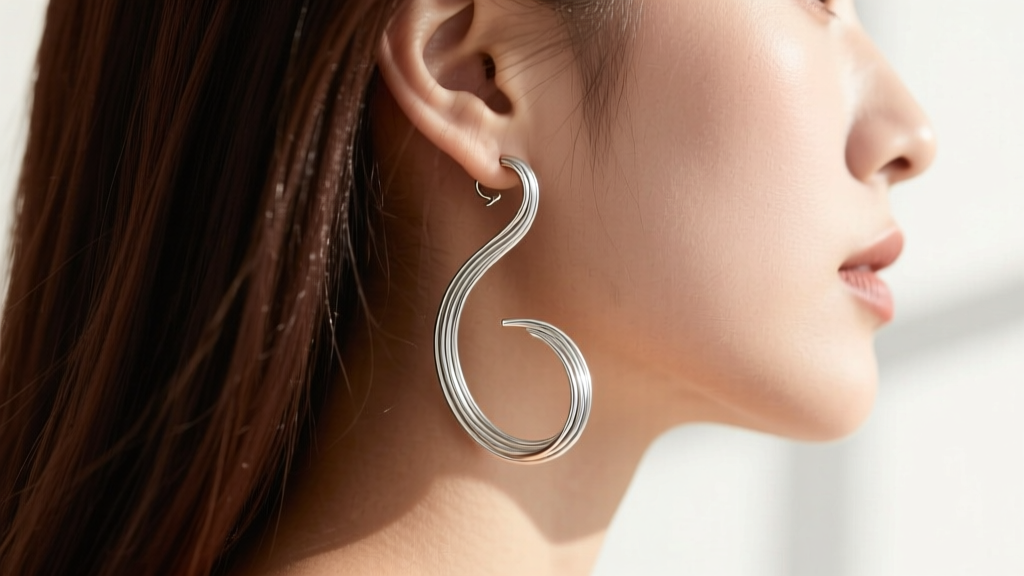
The most common complaint regarding the whispering earring is its tendency to act like a microscopic hook, catching and tearing fine hair. This is especially prevalent with continuous hoop styles that utilize a "fishhook" or loop-and-post closure. When the wire is drawn down to 22-gauge, the edge of the metal can feel surprisingly sharp against delicate hair cuticles.
Why Snagging Happens
Snagging is rarely a design flaw and almost always a finishing issue. During the manufacturing process of ultra-thin wires, microscopic burrs can remain at the cut point where the continuous loop is formed. Furthermore, if the male post of a continuous hoop is slightly misaligned with the receiving tube, it creates a sub-millimeter gap that hair easily slips into.
Expert Solutions for Snag Prevention
- Switch to Seamless or Clicker Closures: If your hair is particularly fine or prone to tangling, abandon the traditional fishhook continuous hoop. Opt for a hinged clicker closure or a truly seamless segment ring (SSR) where the metal meets perfectly flush.
- Micro-Polishing: Take a high-quality jeweler's polishing cloth (impregnated with rouge) and vigorously buff the connection point of your continuous hoop. This will smooth out microscopic manufacturing burrs that catch on hair.
- The Clear Coat Trick: For a temporary, DIY fix on a stubborn continuous hoop, apply a microscopic layer of clear, flexible jewelry coating (like Eurolac) over the seam. This fills the gap and creates a frictionless surface.
Problem 2: Clicker Hinge Tension Loss
For those who prefer the security of a hinged micro-huggie, the "click" is deeply satisfying. However, the whispering earring's clicker mechanism is notoriously prone to tension loss. Because the wire is so thin, the internal components of the hinge must be equally minuscule, leaving little room for robust tension arms.
Material Science: Why Your Hinge Fails
The longevity of a clicker hinge depends heavily on the metal's yield strength and springback properties. According to the Association of Professional Piercers (APP), material grade drastically affects jewelry performance. Below is a breakdown of how common whispering earring materials handle hinge tension:
| Material | Standard Gauge | Yield Strength | Tension Retention | Warp Resistance |
|---|---|---|---|---|
| ASTM F136 Titanium | 20g / 22g | High | Excellent | Superior |
| 316L Surgical Steel | 20g | Medium-High | Good | Moderate |
| 14k Yellow Gold | 20g / 22g | Low-Medium | Poor | Poor |
| 14k White Gold | 20g | Medium | Fair | Moderate |
As noted by the Gemological Institute of America (GIA), 14k gold alloys (mixed with copper, silver, and zinc) are prized for their color and workability but lack the structural rigidity of titanium. If you buy a 22-gauge 14k gold whispering clicker, expect the hinge to loosen within six months of daily wear.
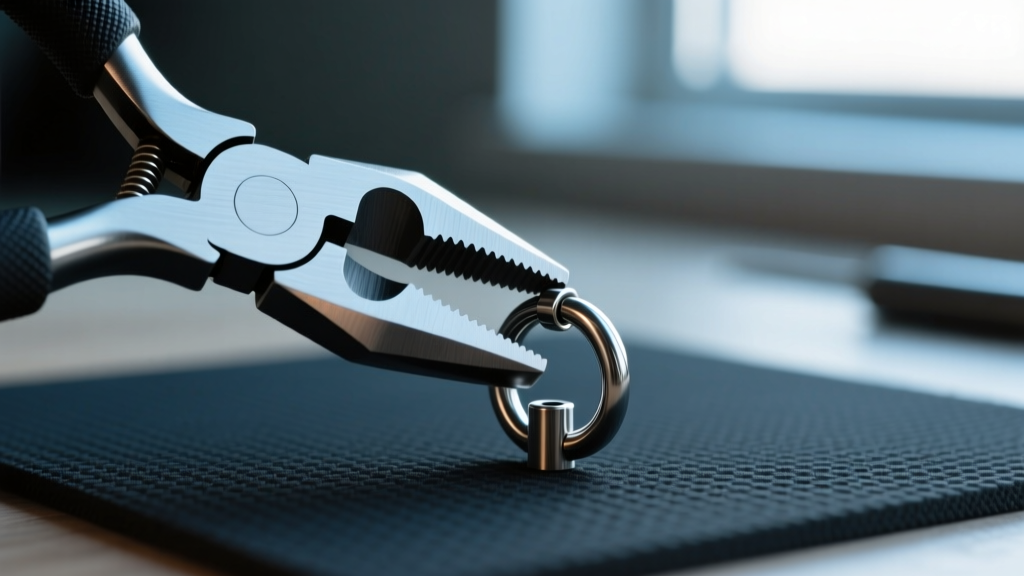
The Nylon-Jaw Pliers Fix
When your clicker stops snapping shut securely, the male post (the side without the hinge) has likely flattened out. The male post features a microscopic upward bend—the tension arm—that creates the friction required for the click. To fix this:
- Procure a pair of nylon-jaw pliers. Never use standard steel jewelry pliers, as they will permanently mar and scratch the soft metal of a 20-gauge hoop.
- Grip the male post about 2mm below the tip with the nylon jaws.
- Apply incredibly gentle pressure to bend the tip upward (away from the inside of the hoop) by just 1 to 2 degrees.
- Test the click. If it is too tight to close, gently press it back down. You are dealing with fractions of a millimeter; patience is critical.
Problem 3: Warping and the "Oval" Effect
The whispering earring is meant to be a perfect circle or a precise oval huggie shape. Yet, many wearers wake up to find their delicate hoops twisted into irregular, asymmetrical loops. This plastic deformation occurs when the metal is subjected to pressure that exceeds its yield point—most commonly from sleeping on a firm pillow.
Reshaping Your Micro-Hoops
Do not attempt to bend a warped 22-gauge hoop back into shape with your bare fingers. Finger pressure is uneven and will result in a kinked, weak point in the wire that will eventually snap. Instead, use proper jewelry mandrels:
- Stepped Ring Mandrel: Slide the warped hoop onto a plastic or nylon stepped ring mandrel. Find the step that most closely matches the hoop's original inner diameter, and gently roll it against a hard, flat surface to coax the wire back into a true circle.
- Wooden Dowel Method: For a DIY approach, find a smooth wooden dowel of the exact same diameter as your hoop. Slide the earring over the dowel and use a soft leather mallet to tap the warped sections gently until they sit flush against the wood.
Preventing Future Deformation
If you are a side sleeper, you must either remove your whispering earrings before bed or switch to a specialized piercing pillow with a central hole. Alternatively, invest in ASTM F136 titanium styles; while they can still bend under extreme force, their superior memory and yield strength make them vastly more resistant to pillow-induced warping than high-karat gold.
Cleaning Micro-Crevices Without Damaging the Wire
Troubleshooting isn't just about mechanical fixes; it is also about maintenance. The tiny hinges and ultra-thin seams of whispering earrings trap sebum, dead skin, and hair products, which can degrade the metal and cause contact dermatitis. However, aggressive cleaning can damage these fragile pieces.
Avoid Ultrasonic Cleaners for Gemstone Clickers: While ultrasonic cleaners are excellent for plain metal, the high-frequency vibrations can easily shatter the microscopic pave diamonds or opals often set into the thin clicker hinges of luxury whispering hoops. Furthermore, the vibrations can loosen the tiny hinge pins.
The Safe Soak Method: Create a solution of warm distilled water and a few drops of mild, fragrance-free castile soap. Let the earrings soak for 10 minutes. Use an ultra-soft baby toothbrush to gently sweep the hinge crevices. Rinse with distilled water and dry immediately with a microfiber cloth to prevent water spots on the polished metal.
When to Retire Your Whispering Hoops
Despite your best troubleshooting efforts, ultra-thin jewelry has a finite lifespan. It is time to retire your whispering earring if you notice any of the following critical failure signs:
- Visible Kinks: If the wire has a sharp bend or kink rather than a smooth curve, the metal's crystalline structure has been compromised. It will snap under minimal pressure.
- Hinge Pin Protrusion: If the microscopic pin holding the clicker hinge together is backing out or visible on the sides, the housing is worn. This cannot be repaired at home and poses a severe snagging and tearing risk to your earlobe.
- Thinning at the Seam: Continuous hoops that have been repeatedly opened and closed will experience metal fatigue and thinning right at the connection point. If the wire looks visibly narrower at the seam, discard it before it breaks and gets lost.
By understanding the specific mechanical limitations of the whispering earring, you can enjoy the delicate, minimalist aesthetic without the frustration of constant snags, broken hinges, or warped wires. Treat these micro-wire pieces with the precision they demand, and they will remain a staple of your jewelry rotation for years to come.


