Doorknocker Earrings Care: Cleaning and Lobe Protection
Learn how to safely clean heavy doorknocker earrings, prevent earlobe stretching, and maintain intricate metalwork with expert jewelry care tips.

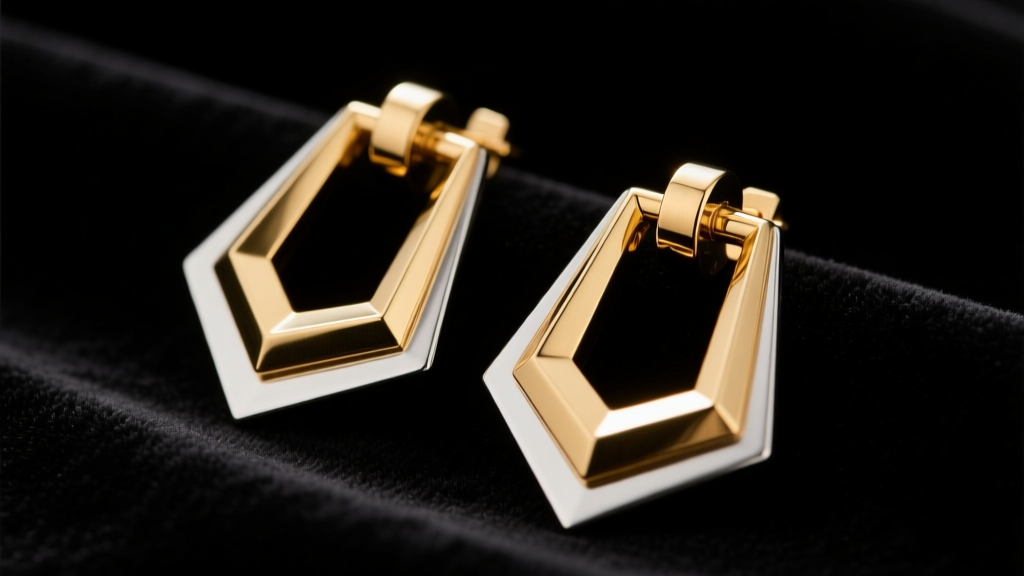
The Unique Challenges of Heavy Statement Jewelry
Doorknocker earrings are iconic. From their roots in 1980s hip-hop culture to their modern resurgence on high-fashion runways, these bold, geometric statement pieces demand attention. However, their substantial weight and intricate, often hollow-cast designs present unique maintenance challenges that standard stud or hoop earrings simply do not face. A typical doorknocker earring can weigh anywhere from 15 to 40 grams per ear—significantly heavier than the 1 to 3 grams of a standard stud.
This extreme weight, combined with deep metallic crevices and mixed-metal plating, requires a specialized care regimen. Improper cleaning can strip delicate gold vermeil or rhodium finishes, while neglecting the physical stress on your earlobes can lead to permanent tissue damage. As of 2026, jewelry care has evolved with new anti-tarnish nanocoatings and advanced support accessories, but the foundational physics of caring for heavy metals remains unchanged. This comprehensive guide will walk you through the exact protocols for cleaning, protecting, and storing your doorknocker earrings.
Step-by-Step Cleaning for Intricate Metalwork
The defining feature of doorknocker earrings is their complex geometry—often featuring hollow tubes, hinged clasps, and deep engraved patterns. These crevices are magnets for sebum, dead skin cells, cosmetic residues, and environmental dust. If left uncleaned, this buildup can cause contact dermatitis, a common skin reaction detailed by the Mayo Clinic, especially when the trapped debris reacts with base metals like brass or nickel-silver.
What You Need
- pH-neutral liquid dish soap (e.g., original blue Dawn)
- Distilled water (to prevent hard water mineral spots)
- An extra-soft baby toothbrush (never use medium or hard bristles)
- A lint-free microfiber polishing cloth
- Wooden toothpicks (for stubborn debris in deep crevices)
The Cleaning Process
Never use ultrasonic jewelry cleaners on doorknocker earrings. The high-frequency vibrations (typically 40kHz) can easily fracture hollow-cast brass structures and strip electroplated finishes. According to the Gemological Institute of America (GIA), gold vermeil must be at least 2.5 microns thick, but even this standard can be compromised by harsh chemical baths or ultrasonic cavitation.
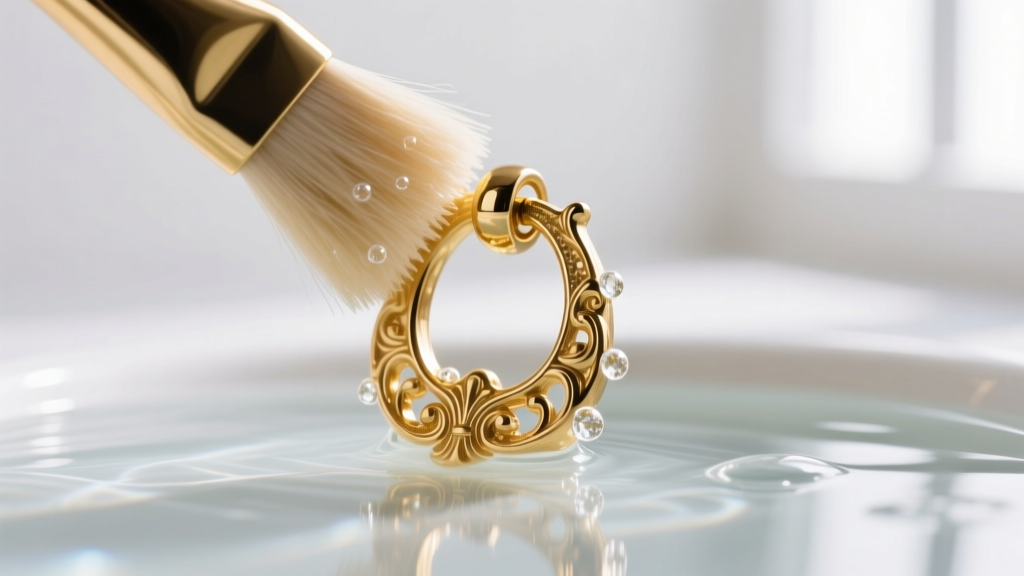
- Prepare the Solution: Mix a few drops of pH-neutral dish soap into a bowl of lukewarm distilled water. Avoid hot water, which can warp certain resin or enamel accents often found in vintage-inspired doorknockers.
- Soak Briefly: Submerge the earrings for exactly 3 to 5 minutes. This loosens trapped sebum without giving water time to seep into unsealed hollow chambers, which can cause internal oxidation.
- Agitate Gently: Using the baby toothbrush, gently sweep the bristles across the surface and into the hinges. For the narrow gaps between the 'knocker' and the main hoop, use a wooden toothpick to dislodge compacted debris. Never use metal needles, as they will scratch the plating.
- Rinse and Dry: Rinse thoroughly under a slow stream of distilled water. Immediately pat dry with a microfiber cloth, then use a hairdryer on the 'cool' setting to blow moisture out of the internal hollows and hinge mechanisms.
Protecting Your Earlobes from Heavy Statement Pieces
The most critical aspect of doorknocker earrings care is not just maintaining the metal, but protecting your anatomy. The 'cheese-cutter' effect occurs when a heavy earring rests on a thin 20-gauge or 18-gauge wire, slowly slicing through the earlobe tissue over time. To prevent permanent stretching, tearing, or elongated piercings, you must distribute the weight across a larger surface area.
| Support Method | Best For | Pros and Cons |
|---|---|---|
| Silicone Disc Backs | Post-style doorknockers | Pros: Cheap, invisible. Cons: Can trap moisture against the skin if not cleaned daily. |
| Earlobe Support Patches | Extremely heavy pieces (30g+) | Pros: Distributes weight perfectly. Cons: Single-use, adhesive can irritate sensitive skin. |
| Oval French Wire Locks | Wire-hook doorknockers | Pros: Reusable, secure. Cons: Adds slight bulk behind the ear. |
| Earlobe Repair Chains | Stretched or damaged lobes | Pros: Allows continued wear of heavy jewelry. Cons: Requires careful positioning. |
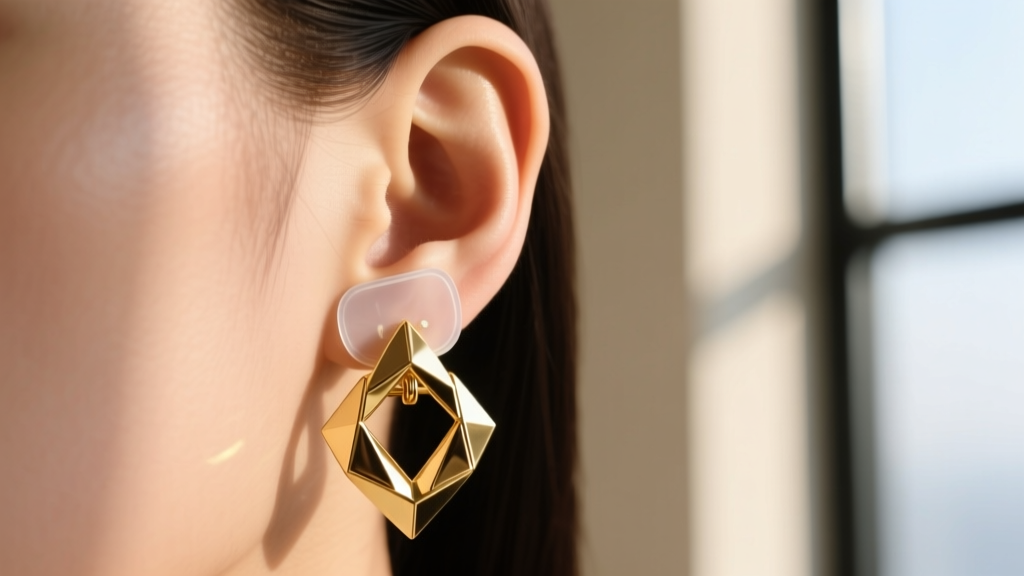
Expert Tip: If you plan to wear heavy doorknockers for an extended event (over 4 hours), apply a clear silicone earlobe support patch before inserting the jewelry. These patches feature a pre-punched hole that the earring wire passes through, effectively transferring the downward drag from the delicate piercing hole to the broader, stronger surface of the earlobe.
Storing and Preserving Plated and Solid Metals
How you store your doorknocker earrings is just as important as how you clean them. Because of their irregular, bulky shapes, tossing them into a standard jewelry box guarantees that their posts will bend under the weight of other pieces, and their clasps will become misaligned.
The Hanging Storage Rule
Always store doorknocker earrings vertically. Use a jewelry arbor or a padded hanging organizer with individual slots. Hanging them ensures that the post or wire hook bears no lateral pressure, preserving the structural integrity of the solder joints where the post meets the main body of the earring.
Tarnish Prevention for Base Metals
Many doorknocker earrings are crafted from brass or bronze and plated with gold or silver. When the plating inevitably wears thin, the exposed base metal will oxidize rapidly when exposed to humidity and sulfur in the air. To combat this, store each pair in an individual anti-tarnish flannel bag (such as Pacific Silvercloth). For added protection in humid climates, drop a small silica gel desiccant packet into the storage drawer to keep the ambient relative humidity below 40%.
When to See a Professional Jeweler
While daily maintenance can be handled at home, certain issues require professional intervention. According to the Jewelers of America, attempting DIY repairs on complex jewelry mechanisms often leads to irreversible damage.
- Re-plating (Electroplating): If the brass base metal is showing through the gold vermeil on the high-friction areas (like the wire hook or the clasp), a jeweler can polish the piece and apply a fresh 2.5-micron layer of gold via electroplating.
- Hinge and Clasp Repair: The tension hinges on folding doorknocker clasps can loosen over time, causing the earring to snap open unexpectedly. A jeweler can use laser welding to reinforce the hinge pin without applying the high heat of a traditional soldering torch, which could melt adjacent enamel or resin details.
- Post Replacement: If the earring post snaps off at the base, do not attempt to glue it back. A jeweler will solder a new, thicker 18-gauge post to provide better structural support for the heavy front-facing element.
Conclusion
Doorknocker earrings are an investment in bold, architectural style. By understanding the specific vulnerabilities of their heavy, hollow-cast designs and implementing a rigorous, gentle cleaning protocol, you can preserve their finish for decades. More importantly, by utilizing modern earlobe support accessories, you ensure that your piercings remain healthy and intact, allowing you to carry the weight of these statement pieces with absolute confidence.


