Arabic Earrings Trends 2026: Modern Styling & Heritage Designs
Explore 2026 Arabic earrings trends, blending heritage 22k gold motifs with modern ear curation. Discover material grades, gauges, and styling tips.

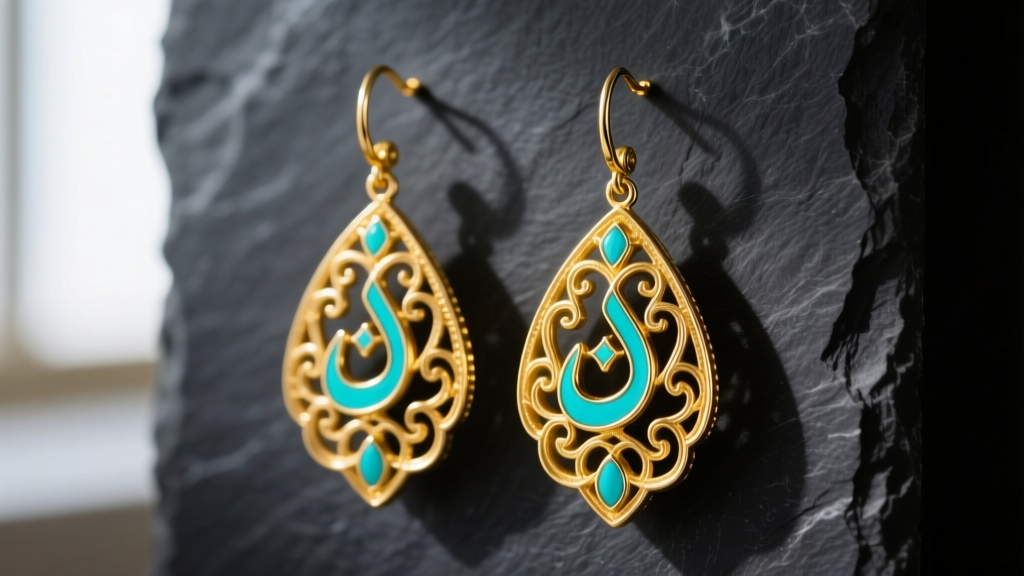
The 2026 Renaissance of Arabic Earrings
The global jewelry landscape in 2026 has witnessed a profound shift toward cultural heritage, with Arabic earrings emerging as a dominant force in both high jewelry and everyday luxury. Moving beyond the confines of traditional bridal trousseaus, Middle Eastern ear styling is being reimagined through a contemporary lens. Today’s collectors and style enthusiasts are no longer reserving intricate jhumkas or heavy filigree drops solely for ceremonial events. Instead, they are integrating these historically rich pieces into modern, curated ear setups, blending centuries-old craftsmanship with minimalist cartilage piercings.
This fusion represents a broader trend of "heritage maximalism"—a styling philosophy that pairs one or two statement pieces of deep cultural significance with sleek, modern basics. Whether you are exploring the bustling gold souks of Dubai or browsing the digital storefronts of independent Levantine artisans, understanding the metallurgy, motif history, and structural requirements of Arabic earrings is essential for making informed, high-value acquisitions this year.
Decoding the Motifs: What Defines Authentic Arabic Ear Styling
Authentic Arabic jewelry is characterized by its mathematical precision, spiritual symbolism, and mastery of metal manipulation. The Metropolitan Museum of Art notes that historic Islamic and Arabic metalwork heavily relied on geometric interlacing and arabesque vegetal motifs, avoiding figurative representation in favor of infinite, repeating patterns that symbolize the boundless nature of the universe.
Celestial & Geometric Architecture
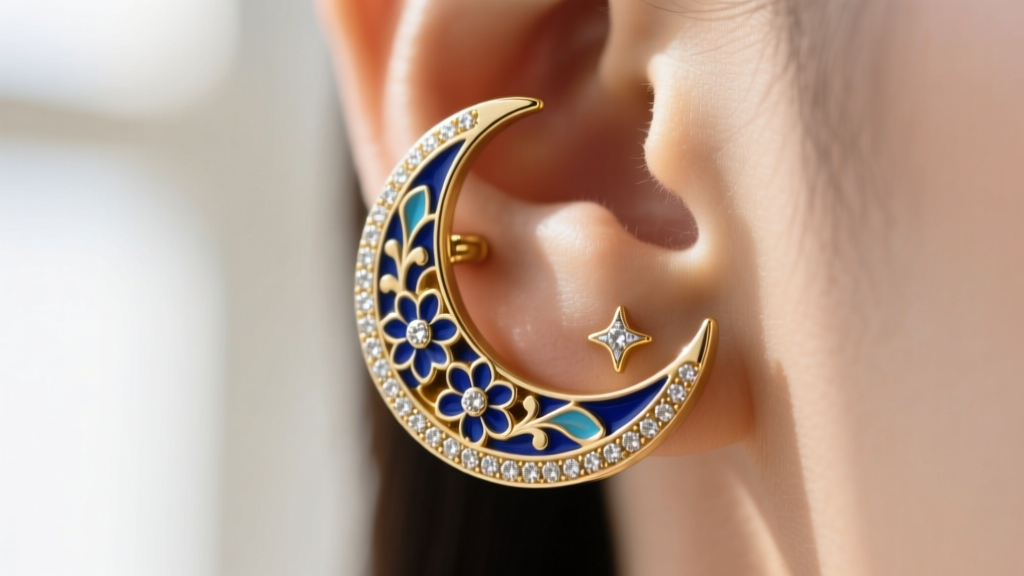
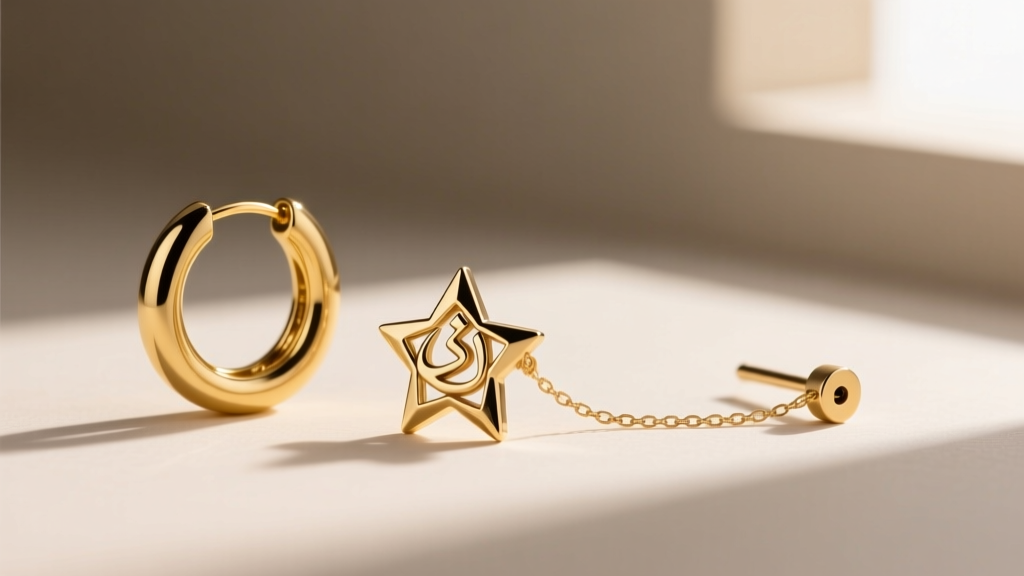
In 2026, the crescent moon and eight-pointed star (Rub el Hizb) remain foundational motifs. However, modern interpretations have scaled these down for everyday wear. Instead of heavy, solid-cast pendants, contemporary designers are utilizing laser-cut 18k gold to create negative-space geometric studs. These pieces offer the visual weight of traditional Arabic architecture while remaining light enough for standard 20-gauge (0.8mm) lobe piercings.
Meenakari Enamel & Polki Uncut Stones
Meenakari, the ancient art of fusing vibrant glass enamel to gold, is experiencing a massive resurgence. While traditional pieces favored deep reds and emerald greens, the 2026 color palette for Arabic earrings leans heavily into lapis lazuli blues, turquoise, and matte ivory. When paired with Polki (uncut, polished diamonds), the result is a raw, organic texture that contrasts beautifully with the precise gold bezels.
Material Grades & Metallurgy: 22K Heritage vs. 18K Modernity
One of the most critical aspects of purchasing Arabic earrings is understanding the karat weight and its impact on structural integrity. According to the Gemological Institute of America (GIA), pure 24k gold has a Vickers hardness of roughly 25, making it entirely unsuitable for earring wires that must support weight.
Traditional Arabic jewelry often utilizes 22k gold (91.6% purity, Vickers ~60). This alloy offers the highly prized, rich yellow-orange hue synonymous with Middle Eastern gold but is inherently soft. To prevent bending under the weight of heavy jhumka domes, 22k earrings require thick, 16-gauge (1.2mm) or even 14-gauge (1.6mm) wires. For 2026's modernized Arabic earrings, master jewelers are pivoting to 18k gold (75% purity, Vickers ~120-150). Alloyed with copper and silver, 18k gold allows for intricate, lightweight filigree, secure leverback clasps, and delicate ear cuffs that won't warp during daily wear.
| Category | Material & Technique | Avg. Weight | 2026 Price Range (USD) | Recommended Gauge |
|---|---|---|---|---|
| Heritage Jhumkas | 22k Gold, Hand-Engraved | 12g - 18g | $1,200 - $3,500 | 16g (1.2mm) |
| Modern Arabesque Studs | 18k Gold, Laser-Cut | 2g - 4g | $350 - $800 | 20g (0.8mm) |
| Meenakari Enamel Drops | 18k Gold, Glass Enamel | 6g - 10g | $600 - $1,400 | 18g (1.0mm) |
| Souk-Inspired Brass | Gold Vermeil over Brass | 8g - 15g | $45 - $120 | 18g (1.0mm) |
The Modern Ear Curation: Integrating Arabic Pieces into Cartilage Setups
The concept of the "curated ear" has fully embraced Middle Eastern aesthetics. The key to successfully integrating Arabic earrings into a multi-piercing setup lies in balancing visual weight and metallic texture. A common mistake is overcrowding the ear with highly detailed pieces, which results in a cluttered, chaotic look.
Lobe vs. Helix Weight Distribution
Anchor your curation with a single, substantial Arabic drop or jhumka in the primary lobe piercing. Because these pieces often feature dangling chains or bells, they command attention. For the upper ear (helix, flat, or forward helix), opt for minimalist Arabic-inspired cuffs or tiny geometric studs. If you are wearing a heavy 22k gold lobe piece, ensure your cartilage piercings are fully healed and accustomed to weight, as the kinetic movement of heavy drops can cause sympathetic pulling on the upper ear tissue. For ear cuffs that require no piercing, look for designs featuring the "hamsa" or evil eye motifs, tension-fitted to the outer helix ridge with a silicone-backed grip to prevent slipping.
Face Shape Framework for Heavy Arabic Dangles
Arabic drop earrings are notoriously dramatic, often extending 50mm to 80mm below the earlobe. Styling them requires a strategic approach to facial geometry to ensure the jewelry enhances rather than overwhelms your features.
- Round Faces: Avoid wide, circular jhumka domes that mirror the face's natural curves. Instead, opt for elongated, teardrop-shaped Arabic filigree pendants or vertical crescent moon drops that create an illusion of length and draw the eye downward.
- Oval Faces: The most versatile canvas. You can confidently wear wide, chandelier-style Arabic earrings with horizontal spread, as well as heavy, multi-tiered Polki and enamel drops.
- Square Faces: Soften a strong jawline with Arabic earrings that feature curved, organic arabesque motifs and rounded Meenakari enamel drops. Avoid sharp, rigid geometric studs that emphasize angularity.
- Heart-Shaped Faces: Look for Arabic dangles that are wider at the bottom than the top, such as traditional bell-shaped jhumkas, to add visual weight to the lower half of the face and balance a narrower chin.
Sourcing & Pricing: What to Expect in 2026
When sourcing authentic Arabic earrings, provenance and craftsmanship dictate the price. Heritage houses like L'azurde and Damas continue to dominate the high-end market, offering certified 18k and 21k gold pieces with lifetime craftsmanship warranties. For these brands, expect to pay a premium for the intricate hand-setting of uncut Polki diamonds and the labor-intensive process of traditional Meenakari enameling, which requires multiple firings in a kiln.
Conversely, a new wave of independent designers based in Beirut, Amman, and Dubai is bridging the gap between heritage and accessibility. These artisans often utilize 14k or 18k gold vermeil over recycled brass, offering souk-inspired geometric designs in the $50 to $150 range. While these pieces capture the aesthetic of Arabic earrings, buyers must be vigilant about clasp quality; always inspect the ear wire for smooth finishing and ensure the tension on French wire hooks is sufficient to hold the weight of the drop without bending.
Final Styling Verdict
Arabic earrings in 2026 are a masterclass in the intersection of history and modern wearability. By understanding the structural limitations of high-karat gold, respecting the geometry of traditional motifs, and thoughtfully integrating these pieces into contemporary ear curations, you can elevate your personal style with jewelry that carries both profound cultural weight and undeniable aesthetic power. Whether you invest in a pair of heirloom-quality 22k jhumkas or a sleek 18k arabesque ear cuff, the key is to let the intricate craftsmanship speak for itself.


