Understanding the Gauge of Standard Earring Sizes and Materials
Discover the exact gauge of standard earring piercings. Compare titanium, gold, and steel properties, weights, and healing metrics for every thickness.

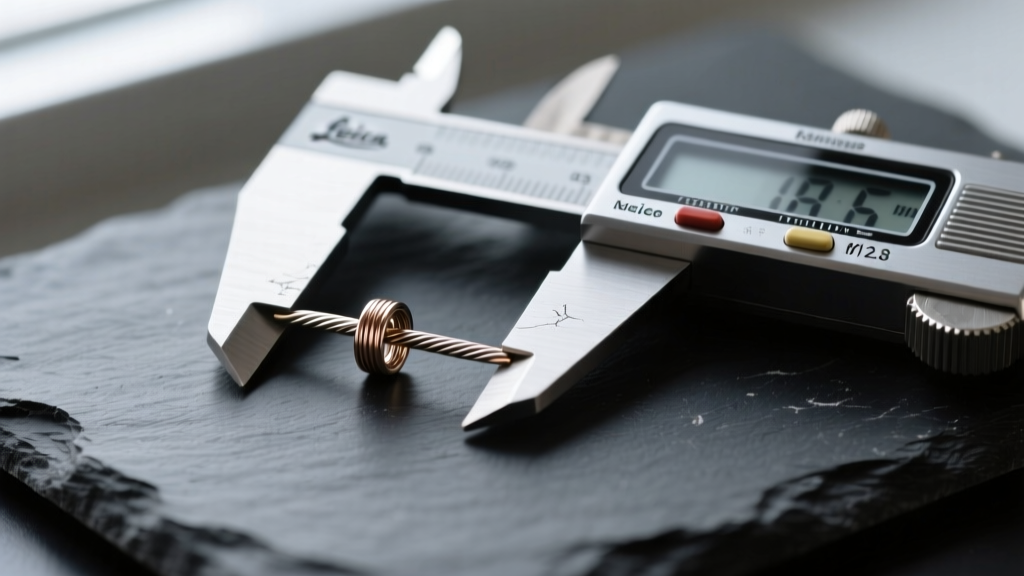
When navigating the world of fine jewelry and body modification, one of the most frequently asked questions by both novices and seasoned collectors revolves around the exact gauge of standard earring piercings. While fashion retailers often gloss over this metric, professional piercers and metallurgists understand that the thickness of your jewelry post fundamentally dictates how different materials behave, heal, and wear over time. As of 2026, advancements in biocompatible alloys have shifted the industry away from one-size-fits-all surgical steel, demanding a more nuanced understanding of how gauge size interacts with material density, tensile strength, and hypoallergenic properties.
Whether you are stepping into a professional studio for a fresh lobe piercing or upgrading your cartilage stack with fine jewelry, understanding the relationship between wire thickness and metallurgy is essential. This comprehensive guide breaks down the physical properties of standard earring gauges across the most popular jewelry materials on the market.
The Baseline: What is the Gauge of Standard Earring Piercings?
The term 'gauge' refers to the thickness of the jewelry wire or post that passes through the fistula (the piercing channel). The lower the gauge number, the thicker the jewelry. In the professional piercing industry, standardization is critical for minimizing tissue trauma and ensuring proper healing. According to the Association of Professional Piercers (APP), the initial jewelry thickness must be substantial enough to prevent the 'cheese-cutter effect,' where thin wires migrate through the tissue under the weight of the jewelry.
| Piercing Placement | Standard Initial Gauge | Millimeter Equivalent | Common Jewelry Types |
|---|---|---|---|
| Standard Earlobe | 18G or 16G | 1.02mm - 1.29mm | Flatback labrets, captive bead rings |
| Helix / Cartilage | 16G | 1.29mm | Flatback labrets, clickers, seamless rings |
| Tragus / Conch | 16G | 1.29mm | Flatback labrets, barbells |
| Daith / Rook | 16G or 14G | 1.29mm - 1.63mm | Captive bead rings, curved barbells |
| Industrial | 14G | 1.63mm | Straight barbells, custom scaffolds |
While commercial mall kiosks and department stores frequently use 20G (0.81mm) or even 22G (0.64mm) for standard lobe piercings using piercing guns, professional studios universally reject these thin gauges for fresh piercings due to the high risk of migration and rejection. Once fully healed, however, many fine jewelry designers utilize 20G or 18G wires for delicate drop earrings and lightweight huggies.
Material Density and Weight at Standard Gauges
The gauge of standard earring jewelry directly multiplies the impact of a material's specific gravity (density). When you increase the thickness of a wire from 18G to 14G, you are not just adding a fraction of a millimeter; you are exponentially increasing the volume, and consequently, the weight of the piece. This is where material selection becomes a matter of physical comfort, especially for cartilage piercings that are highly sensitive to downward drag.
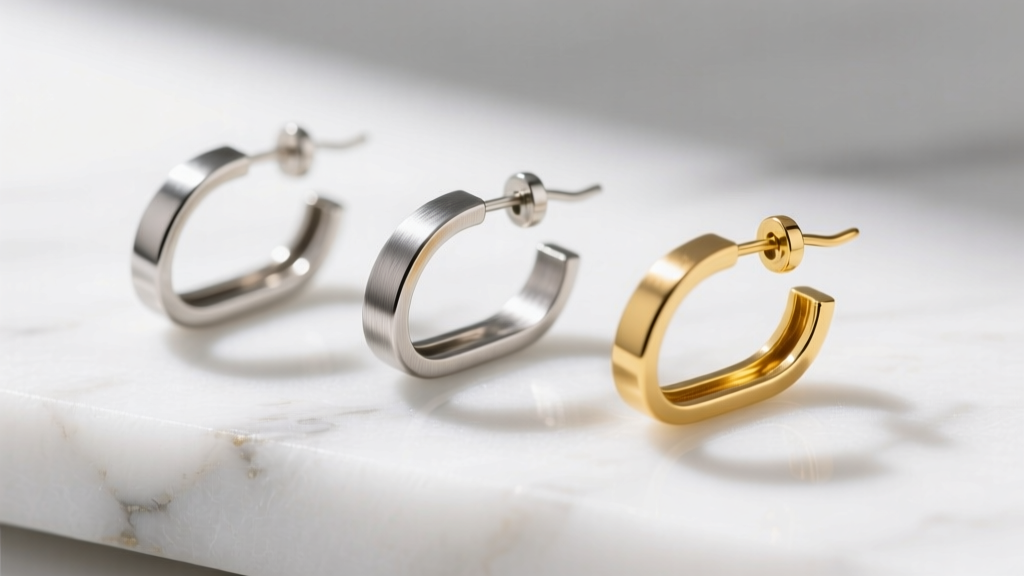
Let us compare the three most common earring materials based on their density:
- Implant-Grade Titanium (ASTM F136): Density of 4.43 g/cm³
- 316L Surgical Stainless Steel: Density of 8.00 g/cm³
- 14k Solid Gold (Nickel-Free): Density of ~13.50 g/cm³
If you wear a standard 12mm diameter hoop at a 14G (1.63mm) thickness, the material density dictates the resting weight on your fistula. A 14G titanium hoop weighs approximately 0.10 grams. That exact same hoop in 316L steel weighs 0.19 grams, and in 14k gold, it weighs a substantial 0.32 grams. While these numbers seem microscopic in isolation, the cumulative effect of gravity on a healing cartilage piercing can cause angle shifts, leading to hypertrophic scarring or irritation bumps. For heavier materials like gold, professional piercers often recommend sizing up to a thicker gauge (like 14G instead of 16G) to distribute the increased weight over a wider surface area of tissue, reducing localized pressure points.
Tensile Strength, Malleability, and Bending Risks
Not all metals possess the same structural integrity at thinner gauges. When evaluating the gauge of standard earring posts, you must consider the Vickers hardness and tensile strength of the alloy. This is particularly crucial for seamless rings, clickers, and wire-wrapped dangles that endure daily mechanical stress from hair brushing, sleeping, and clothing changes.
The Problem with Thin-Gauge Gold
Gold is inherently malleable. While alloying it with metals like copper, silver, or palladium increases its durability, 18k and 14k gold remain significantly softer than steel or titanium. A 20G (0.81mm) or 22G (0.64mm) gold wire is highly susceptible to bending, warping, and eventually snapping under repetitive stress. If you are purchasing gold seamless hoops for a cartilage piercing, you should never drop below 18G (1.02mm), and 16G (1.29mm) is vastly superior for maintaining a perfect circular shape over years of wear.
Titanium and Steel Rigidity
Conversely, implant-grade titanium and 316L steel possess immense tensile strength. A 20G titanium wire is remarkably difficult to bend with bare hands, making it an excellent choice for delicate, minimalist jewelry that still requires structural rigidity. However, this rigidity means that if a thin steel or titanium post is subjected to extreme blunt force, it is more likely to cause tissue tearing rather than bending out of the way, which is why thicker gauges (16G and 14G) are mandated for active lifestyles and fresh piercings.
Biocompatibility and Hypoallergenic Properties Across Thicknesses
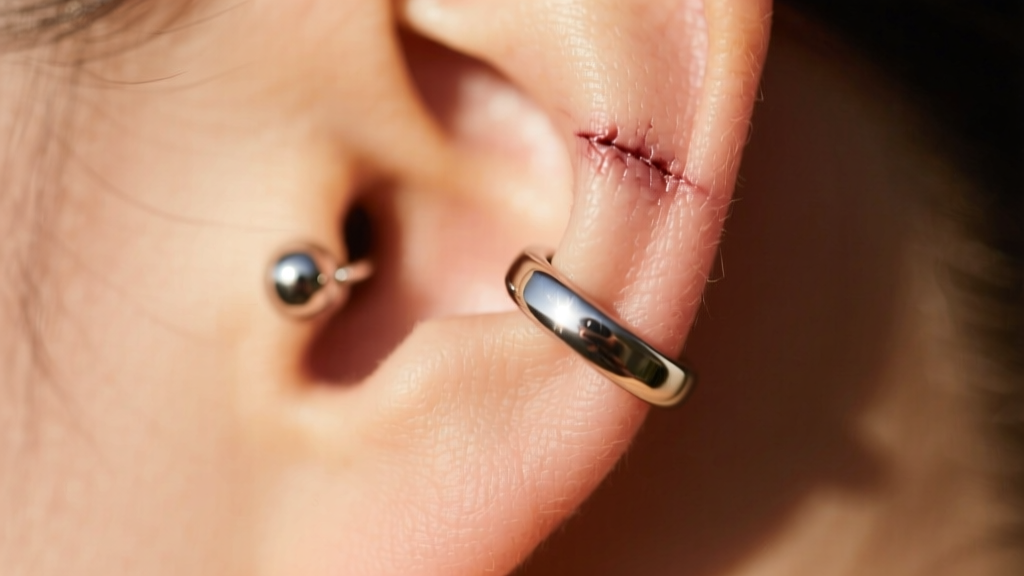
The surface area of the jewelry post that remains in constant contact with the mucosal lining of the fistula changes with the gauge. A thicker gauge means more surface area touching the tissue. While this provides better structural support, it also amplifies the biological response to the material's chemical composition.
According to extensive dermatological and piercing industry data, the passive oxide layer of a metal determines its biocompatibility. 316L surgical steel contains between 8% and 10.5% nickel. While the chromium oxide layer traps the nickel inside the alloy, microscopic wear and tear, combined with the acidic pH of human sebum, can cause nickel ions to leach into the fistula. If you are wearing a thin 20G steel post, the pressure per square millimeter is high, potentially compromising the tissue barrier and accelerating allergic contact dermatitis in sensitive individuals.
By upgrading to a 16G or 14G post made of ASTM F136 Implant-Grade Titanium, you achieve two things simultaneously: you reduce the point-pressure on the fistula, and you introduce a completely nickel-free, biologically inert surface. Titanium forms an incredibly stable, self-repairing oxide layer that human tissue does not recognize as a foreign threat, making it the undisputed gold standard for fresh piercings and sensitive healed lobes. For a deep dive into safe jewelry materials, the APP FAQ on jewelry materials remains the definitive medical resource.
Expert Sizing Framework: Matching Material to Your Gauge
To synthesize this metallurgical and anatomical data into a practical buying guide, use the following decision framework when selecting your next pair of earrings:
- For Fresh Piercings (Lobes and Cartilage): Strictly use 16G or 14G Implant-Grade Titanium (ASTM F136). Avoid gold and steel entirely until the fistula is fully matured (minimum 6-12 months). The thicker gauge prevents the cheese-cutter effect, and the titanium guarantees zero nickel exposure during the vulnerable inflammatory healing phase.
- For Healed Lobes Wearing Heavy Drops: If you prefer elaborate, heavy dangle earrings or solid gold hoops, opt for 18G or 16G. The thicker wire will distribute the high density of gold across the lobe, preventing the piercing from stretching or migrating downward over time.
- For Delicate, Minimalist Ear Stacks: If you are styling multiple helix and lobe piercings with tiny, lightweight studs or micro-huggies, 18G or 20G is perfectly acceptable for healed piercings. Ensure that if you choose 20G, the material is titanium or high-quality steel to prevent the thin wire from bending out of shape during sleep.
- For Threadless and Internally Threaded Ends: The gauge of the post dictates the size of the threading pin. 14G and 16G posts utilize robust, thick pins that rarely snap. 18G and 20G threadless pins are incredibly thin and require careful handling; always insert and remove them using proper hemostats or specialized tools to avoid snapping the pin inside the post.
Ultimately, the gauge of standard earring jewelry is not just a measurement of thickness; it is a critical variable that interacts with the density, strength, and biological safety of the metal. By aligning your material choices with the appropriate gauge for your specific anatomy and lifestyle, you ensure that your jewelry remains comfortable, secure, and visually flawless for a lifetime of wear.


