What Is the Biggest Gauge Earring? Anatomy and Stretch Limits
Discover the technical limits of the biggest gauge earring. Explore tissue biology, material weight, and safe stretching thresholds.

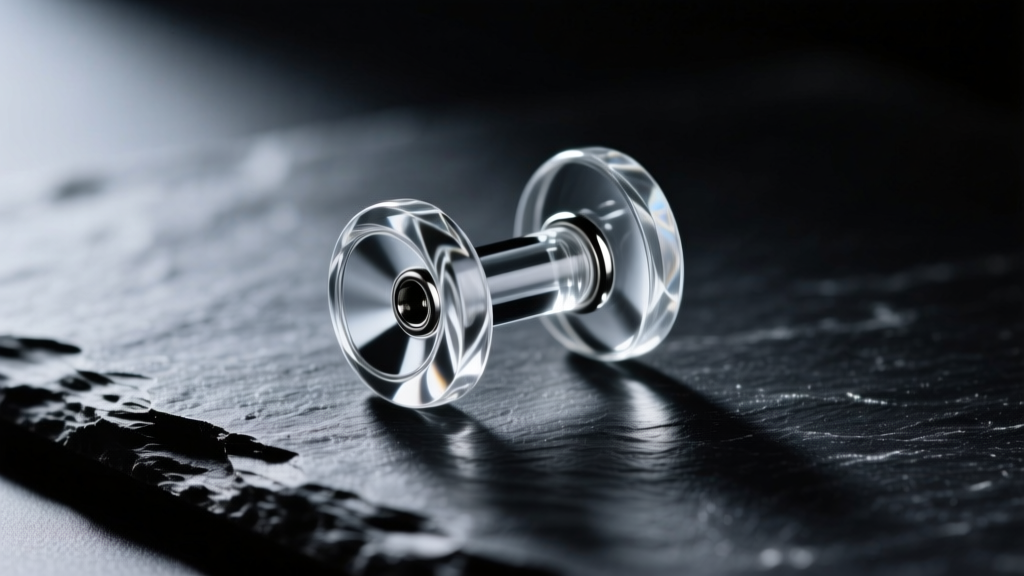
The Physics and Biology of Earlobe Tension
When enthusiasts and the deeply curious search for the 'biggest gauge earring,' they are often operating under the misconception that there is a universal, anatomical hard limit to human tissue expansion. In reality, the maximum gauge an earlobe can accommodate is dictated by a complex interplay of individual genetics, elastin density, and the physics of gravity. The human earlobe is entirely devoid of cartilage; it is composed primarily of areolar connective tissue, adipose (fat) deposits, and a dense network of blood vessels. This unique composition allows for significant expansion, but it also introduces severe risks when the biological limits of the tissue are ignored.
Stretching the earlobe induces controlled micro-tears in the collagen and elastin matrix. According to the Association of Professional Piercers (APP), healthy stretching requires allowing these micro-tears to heal and generate new cellular structure before introducing a larger diameter. When individuals attempt to force the biggest gauge earring into a freshly stretched or unprepared lobe, the tissue does not expand; it tears. This results in a catastrophic failure known in the body modification community as a 'blowout,' where the fistula (the skin tube lining the piercing) inverts and pushes through the back of the lobe, creating severe scar tissue.
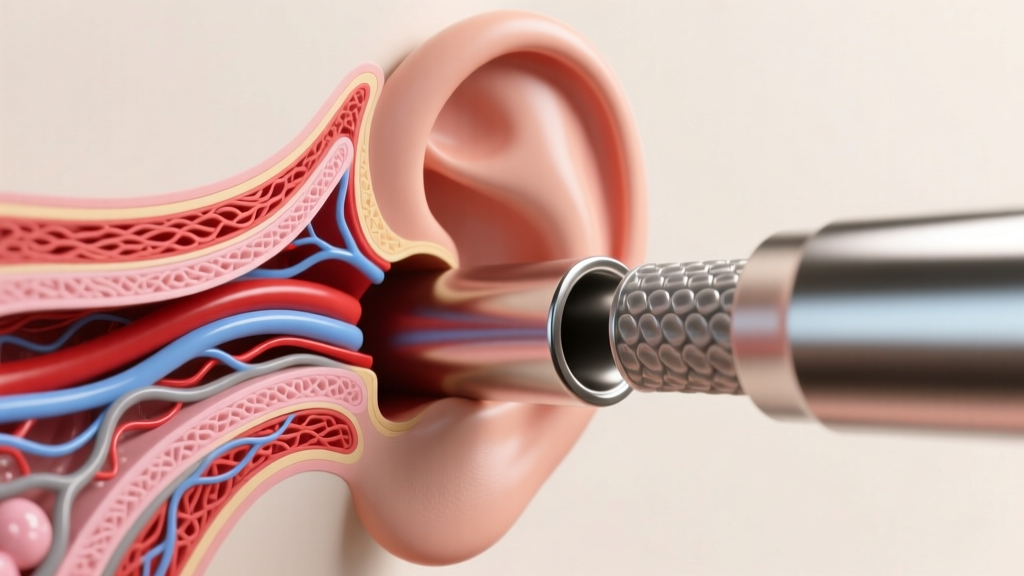
Gauge Sizing Chart: The Point of No Return
In the body jewelry industry, the transition from standard wire gauges to fractional inches and millimeters marks the threshold into extreme modification. The widely accepted 'point of no return'—the size at which an earlobe is highly unlikely to shrink back to a standard, unnoticeable hole without surgical intervention—is generally considered to be 00g (approximately 9mm to 10mm). However, tissue memory varies wildly. Some individuals can shrink back from 1/2 inch (12.7mm), while others suffer permanent lobular migration at 8g (3.2mm).
| Gauge / Fraction | Millimeters | Tissue Reversibility | Primary Risk Factor |
|---|---|---|---|
| 0g | 8.0 mm | High (with slow stretching) | Mild thinning of the lower lobe |
| 00g | 9.5 - 10 mm | Moderate to Low | Permanent loss of elastin snap-back |
| 000g | 11 - 12 mm | Very Low | Lobe migration and edge thinning |
| 1/2 inch | 12.7 mm | Minimal (Surgical likely) | Gravity-induced tissue sagging |
| 1 inch | 25.4 mm | None (Requires reconstruction) | Necrosis if blood flow is restricted |
| 2+ inches | 50.8+ mm | None | Complete structural lobe failure |
Once you surpass the 1-inch mark, you are no longer simply stretching skin; you are manipulating the structural integrity of the entire ear. The weight of the jewelry begins to pull the fistula downward, causing the top of the piercing channel to thin out dangerously, a condition that frequently necessitates surgical lobuloplasty if the wearer ever wishes to downsize.
Material Science for Heavy and Large Gauges
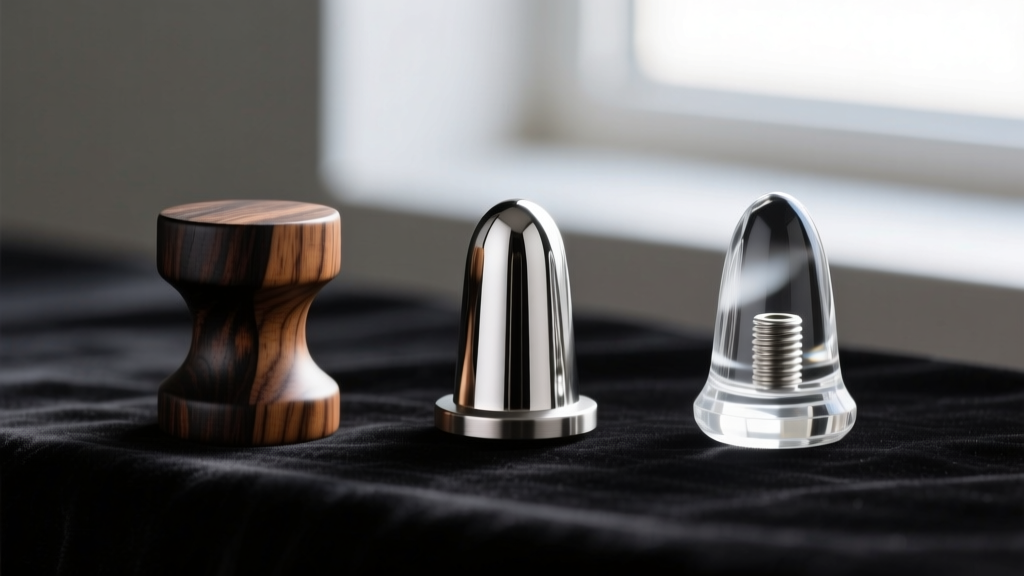
When accommodating the biggest gauge earring sizes, the material density of the jewelry becomes a critical variable in long-term tissue health. Standard surgical steel (ASTM F138) or implant-grade titanium (ASTM F136) are the undisputed champions for initial piercings and early-stage stretching due to their mirror-polish capabilities and biocompatibility. However, at extreme sizes (1 inch and beyond), the sheer mass of a solid steel or titanium plug introduces chronic downward tension.
This constant gravitational pull leads to 'cheese-cutter effect' migration, where the heavy jewelry slowly slices through the top of the fistula. To combat this, expert modifiers transition to low-density, high-volume materials. Borosilicate glass is a premier choice; it is non-porous, easily sterilized, and significantly lighter than steel. Similarly, dense, lightweight woods like ebony, cocobolo, or carved coconut shell provide the necessary structural rigidity to hold the fistula open without subjecting the lobe to exhausting tensile stress. The APP guidelines on body jewelry materials emphasize that porous materials like untreated wood should only be worn in fully healed, mature fistulas to prevent bacterial trapping and subsequent localized infections.
Ischemia, Necrosis, and Tissue Failure Modes
The ultimate limiting factor of the biggest gauge earring is not the skin's ability to stretch, but the vascular network's ability to perfuse. The earlobe relies on a delicate web of capillaries to deliver oxygen and nutrients. When a plug is inserted, it exerts radial outward pressure against the fistula walls. If the jewelry is too large, or if the stretch was performed too rapidly, this radial pressure exceeds the capillary perfusion pressure (typically around 20-30 mmHg).
The resulting condition is localized ischemia—a restriction in blood supply. If the ischemia is not relieved by downsizing or removing the jewelry, the tissue undergoes necrosis (cell death). The lobe will turn pale, then cyanotic (blue/purple), and eventually black as the tissue dies. This is a medical emergency that often results in the complete loss of the earlobe, requiring amputation of the necrotic tissue and complex reconstructive surgery. Furthermore, wearing heavy, solid plugs during sleep can compress the lobe against a pillow, cutting off circulation for hours and accelerating ischemic damage.
Surgical Options Beyond the Biological Limit
For those whose genetic elastin limits prevent them from reaching their desired gauge naturally, the modern body modification industry offers surgical alternatives. Scalpel stretching is a procedure performed by specialized modification artists or plastic surgeons. Unlike traditional stretching, which relies on tissue expansion, scalpel stretching involves excising a precise, crescent-shaped wedge of tissue from the bottom of the lobe and suturing the remaining edges together around a much larger plug. This instantly creates a larger fistula without the tensile stress of stretching, though it permanently alters the anatomical shape of the earlobe.
Another technique is the dermal punch, typically used for cartilage but occasionally adapted for the upper lobe to remove a perfect circle of tissue. However, dermal punching the lobe removes the vital vascular ring that keeps the tissue alive, making it a highly controversial and risky procedure that most reputable professionals refuse to perform on soft tissue. Ultimately, the biggest gauge earring you can safely wear is not a number found on a chart; it is a biological boundary defined by your unique vascular health, tissue elasticity, and commitment to the slow, methodical science of body modification.
True tissue expansion is a marathon of cellular regeneration, not a sprint of mechanical force. Respect the biology, or the biology will enforce its own limits.


