Golden Earring Barry Hay Style: 2026 Rock Hoop Trend Analysis
Discover how the Golden Earring Barry Hay rockstar hoop earring trend is shaping 2026 gender-neutral jewelry. Get gauge, material, and styling tips.


The Sonic and Visual Impact of Heritage Rock
When discussing the intersection of music history and jewelry trends, few figures cast as long a shadow as Barry Hay, the iconic frontman of the Dutch rock band Golden Earring. Known for global anthems like "Radar Love" and "Twilight Zone," Hay’s visual signature was as unmistakable as his raspy vocals: the oversized, chunky gold hoop earring. In 2026, the "heritage rock" aesthetic has roared back into the mainstream, with high-fashion houses and indie streetwear brands alike mining the 1970s and 1980s rock-chic archives. The Golden Earring Barry Hay style is no longer just a nostalgic nod; it is the foundation of the modern, gender-neutral statement earring movement.
Unlike the delicate, minimalist jewelry that dominated the early 2020s, the 2026 trend cycle demands weight, volume, and unapologetic presence. Hay’s signature look—often featuring a single, substantial gold hoop in one earlobe—challenged the gender norms of his era and laid the groundwork for today’s fluid approach to men's and androgynous jewelry. To truly capture this aesthetic, one must look past the superficial "pirate hoop" costumes and understand the precise anatomical and material specifications that make a rockstar hoop look authentic, expensive, and structurally sound.
Anatomy of the Rockstar Hoop: Gauge, Diameter, and Drop
The biggest mistake consumers make when attempting to replicate the Golden Earring Barry Hay style is purchasing standard-weight jewelry. A true rock-and-roll hoop relies on specific proportions to achieve its signature drape and visual weight. According to Rolling Stone music history archives, the flamboyant rock era was defined by excess, and jewelry was no exception.
The Critical Gauge Thickness
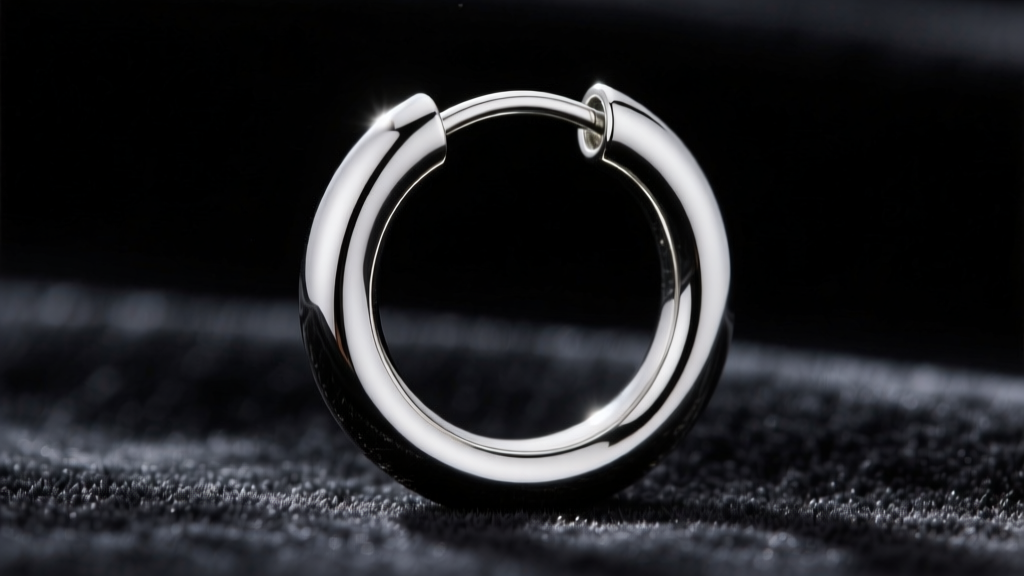
Standard commercial earrings are typically 20-gauge (0.8mm) or 18-gauge (1.0mm). However, a hoop of this magnitude requires a thicker wire to prevent bending and to provide the necessary visual "chunkiness." For an authentic Barry Hay aesthetic, you must look for 14-gauge (1.6mm) or 12-gauge (2.0mm) wire thickness. This added mass not only mimics the vintage solid-gold feel but also provides the structural integrity needed to support heavier closures without warping over time.
Diameter and the Pendulum Effect
The ideal diameter for this specific trend sits between 35mm and 50mm. Anything smaller reads as a standard huggie or everyday hoop; anything larger crosses into costume territory and risks severe lobe strain. A 40mm diameter is the sweet spot, offering enough surface area to catch stage or street lighting while maintaining a wearable center of gravity.
Material Science: Choosing Your Metal
Barry Hay’s earrings were historically crafted from high-karat yellow gold, a metal that exudes warmth and vintage authenticity. However, modern metallurgy offers several alternatives depending on your budget, skin sensitivity, and lifestyle. The Gemological Institute of America (GIA) notes that the alloy composition in gold drastically affects both its color and its durability, which is crucial for heavy, swinging jewelry.
| Material | Gauge / Thickness | Price Range (per pair) | Durability & Notes |
|---|---|---|---|
| 316L Surgical Steel | 14G - 12G | $25 - $60 | Highly durable, heavy, but contains trace nickel. Best for healed lobes. |
| ASTM F136 Titanium | 14G | $45 - $120 | Lightweight, 100% hypoallergenic. Lacks the yellow gold warmth unless PVD coated. |
| 14k Solid Yellow Gold | 14G - 12G | $350 - $800 | Excellent balance of hardness and rich color. Ideal for daily heavy wear. |
| 18k Solid Yellow Gold | 12G | $800 - $1,500+ | Deepest vintage yellow hue, but softer. Prone to scratching and warping if snagged. |
Expert Tip: If you opt for PVD (Physical Vapor Deposition) gold-coated titanium, ensure the manufacturer uses a 14k or 18k gold target. Cheaper PVD coatings often use brass alloys, resulting in a greenish tint that immediately ruins the heritage rock illusion.
Lobe Health and Heavy Hoop Troubleshooting
Wearing 12-gauge, 45mm solid gold hoops introduces significant kinetic stress to the earlobe. The "pendulum effect"—where the earring swings with head movement—can rapidly stretch the piercing fistula, leading to irreversible lobe thinning or catastrophic tearing.
"The earlobe has no cartilage to support weight; it relies entirely on the collagen matrix of the skin. Continuous heavy hoop wear breaks down this matrix, causing the 'slit' effect common in vintage rockers."
Preventative Framework for Heavy Hoops
- Silicone Support Patches: Apply medical-grade silicone earlobe support patches (like BlingWraps) to the back of the ear. These distribute the 14G wire's pressure across a 15mm surface area rather than a single puncture point.
- O-Ring Stabilization: Use thick, 3mm silicone O-rings instead of standard metal butterfly backs or latch-backs. The friction of the silicone grips the thick wire, preventing the hoop from sliding forward and pulling on the bottom of the fistula.
- The Rotation Rule: Never sleep in hoops larger than 20mm. The leverage applied when your head presses against a pillow can instantly tear a lobe accommodating a 40mm rockstar hoop.
2026 Styling Framework: Face Shapes and Placements
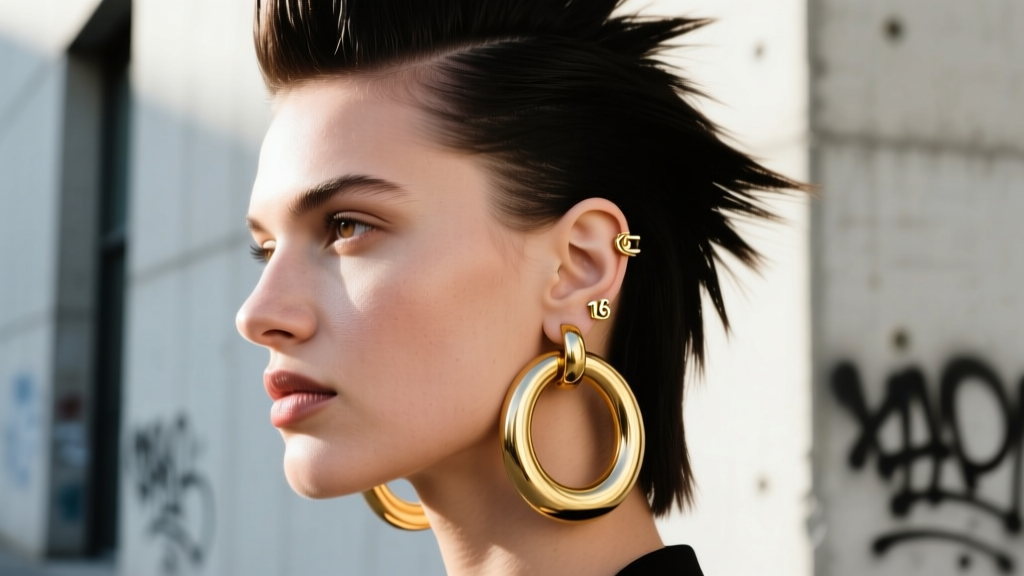
The Golden Earring Barry Hay style is inherently asymmetrical. Hay frequently wore a single, prominent hoop, a styling choice that remains highly relevant in 2026's deconstructed fashion landscape. However, adapting this to your specific anatomy requires strategic placement.
Face Shape Pairing
Because the classic rockstar hoop is perfectly circular, it interacts predictably with facial geometry:
- Square and Angular Faces: The soft, continuous curve of a 40mm round hoop perfectly offsets strong jawlines and prominent cheekbones, softening the overall profile.
- Round Faces: A perfect circle can exaggerate roundness. To adapt the Barry Hay look, opt for a slightly ovalized hoop or a circular hoop with a weighted, elongated bottom drop to create verticality.
- Heart-Shaped Faces: The volume of a thick 14G hoop at the jawline helps balance a narrower chin, creating an illusion of structural symmetry.
The Asymmetrical Cartilage Stack
While the lobe is the traditional home for the rockstar hoop, 2026 styling pushes this aesthetic into the upper ear. Sourcing a 14G, 35mm hoop for the helix or upper conch creates a striking, modern evolution of the classic look. This requires a professionally pierced and fully healed cartilage site (minimum 9-12 months healing time for 14G cartilage), as the weight of the metal will irritate fresh tissue.
Sourcing Authentic Rocker Hoops
To avoid the flimsy, mass-market "costume" look, you must source from jewelers who specialize in body jewelry and structural integrity. Brands like Maria Tash offer high-karat gold hoops in precise 14G thicknesses with secure, click-lock closures that mimic vintage latch-backs without the risk of accidental opening. For a more rugged, industrial rock aesthetic, Industrial Strength and BVLA produce mirror-polished, seamless continuous rings in implant-grade metals that will not tarnish, even under the sweatiest stage lights or summer festival conditions.
Final Verdict
The Golden Earring Barry Hay style is a masterclass in how a single, well-proportioned piece of jewelry can define an entire persona. As we navigate the 2026 jewelry landscape, the shift away from micro-trends toward heavy, heritage-inspired, gender-neutral statement pieces proves that the rockstar hoop is not merely a relic of the 1970s. By respecting the material science, adhering to proper gauge thicknesses (14G-12G), and prioritizing lobe health, you can authentically channel the electric, rebellious energy of Golden Earring while maintaining the refined edge demanded by modern style. For more deep dives into music history and archival fashion, consult the Golden Earring official archives and vintage tour photography to study the exact drape and scale of the originals.


