Restoring Vintage Bogoff Earrings: A Troubleshooting Guide
Discover expert troubleshooting for vintage Bogoff earrings. Learn to fix dull rhinestones, clean rhodium plating, and repair mid-century clip-ons.

The Legacy of Harry Bogoff: Why Conservation Matters
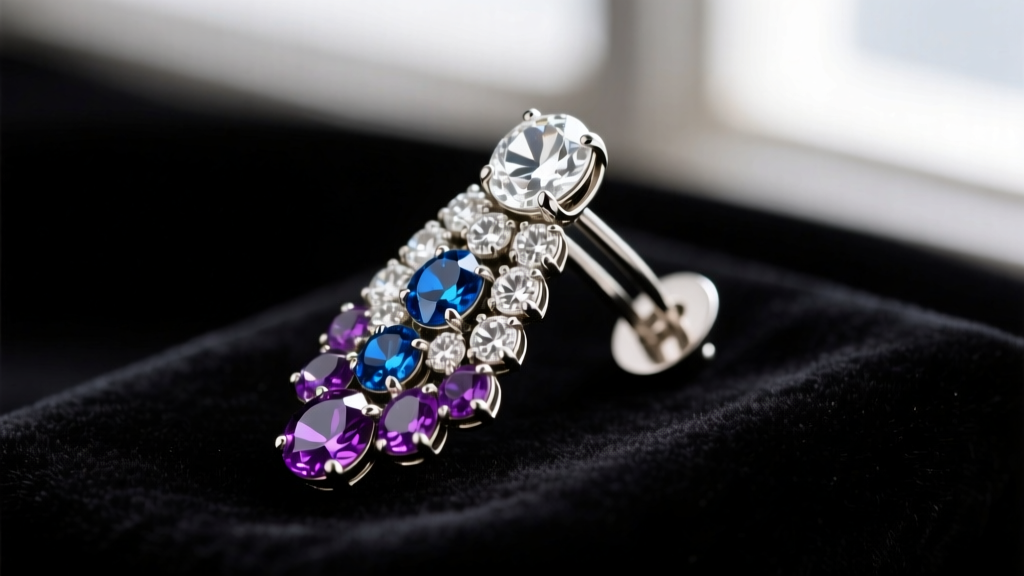
As we navigate the vintage jewelry market in 2026, authenticated mid-century pieces by Harry Bogoff continue to command premium prices. Active primarily from the 1940s through the late 1950s, Bogoff was a master of high-end costume jewelry, frequently utilizing sterling silver bases, heavy rhodium plating, and precision-cut glass rhinestones. However, these materials present unique conservation challenges. Unlike fine jewelry, vintage costume pieces require highly specific troubleshooting protocols to avoid irreversible damage. According to authentication resources like the Ruby Lane Jewelry Blog, improper cleaning is the leading cause of value depreciation in vintage Bogoff earrings. This guide provides a professional-grade troubleshooting matrix and actionable restoration techniques for collectors and conservators.
Troubleshooting Matrix: Common Bogoff Earring Issues
Before attempting any repair, accurately diagnose the failure point. Bogoff's manufacturing techniques evolved over his career, meaning a 1942 sterling silver pair requires different care than a 1956 pot-metal Aurora Borealis pair. Below is a diagnostic framework for the most frequent issues encountered in Bogoff earrings.
| Symptom | Root Cause | DIY Conservation Method | Estimated Difficulty |
|---|---|---|---|
| "Dead" or dull rhinestones | Moisture ingress oxidizing the silver foil backing | Stone removal, archival foil replacement, UV adhesive reseating | High |
| Black spots on rhodium metal | Sterling silver tarnish bleeding through micro-porous plating | Targeted mechanical polishing; avoid chemical dips | Medium |
| Yellowing or peeling pearls | Degradation of guanine crystal "essence d'orient" coating | Stabilization with distilled water; avoid all solvents | Low |
| Loose or painful clip-ons | Loss of spring tension in the hinged paddle mechanism | Tension adjustment using nylon-jaw pliers | Low |
Reviving Dull Rhinestones and Foil Backing
The most common complaint with vintage Bogoff pavé earrings is the presence of "dead" stones—rhinestones that have lost their brilliance and appear gray or black. Bogoff utilized high-lead-content glass chatons backed with delicate silver foil to maximize light refraction. Over decades, humidity breaches the bezel setting, causing the foil to oxidize.
Step-by-Step Foil Replacement
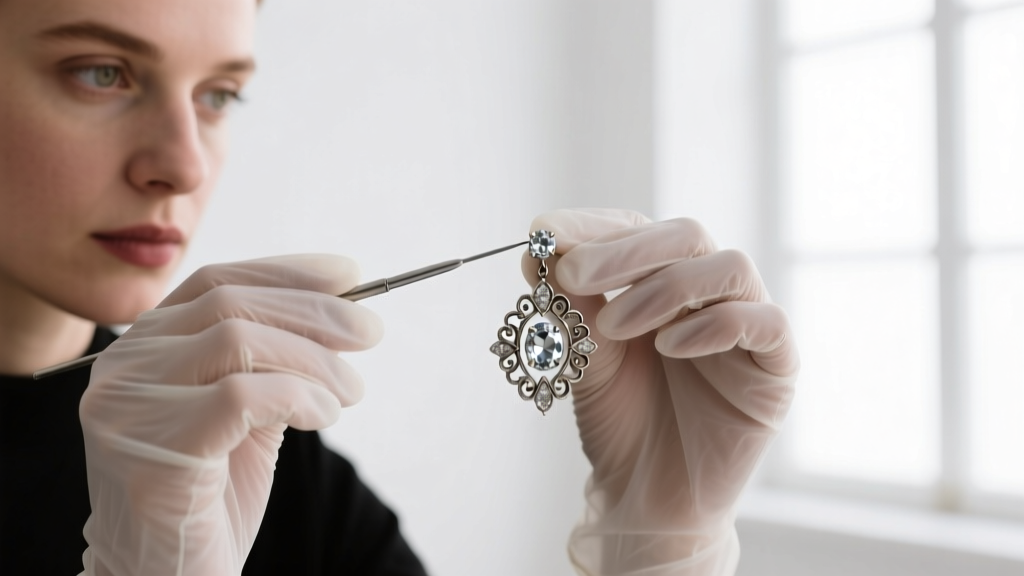
Never use ultrasonic cleaners on Bogoff rhinestone earrings. The high-frequency vibrations will shatter the vintage glass and completely disintegrate the foil backing. Instead, follow this conservation-grade protocol:
- Stone Extraction: Using a fine brass needle or a specialized bezel-lifting tool, gently pry back the micro-prongs holding the dead stone. Remove the glass chaton and store it safely.
- Foil Removal: Scrape away the blackened, oxidized foil using a wooden toothpick to avoid scratching the metal bezel cup.
- Bezel Cleaning: Swab the empty cup with a micro-brush dipped in naphtha (lighter fluid) to remove decades of skin oils and old adhesive. Allow it to evaporate completely.
- Foil Replacement: Cut a micro-circle of archival-grade aluminum foil or specialized rhinestone foil. Seat it flat at the bottom of the bezel using a tiny drop of Norland Optical Adhesive 61 (NOA61).
- Reseating: Place the original glass stone back into the bezel. Apply a microscopic amount of UV-curing resin to the girdle of the stone, push down the prongs, and cure under a 365nm UV lamp for 60 seconds.
Cleaning Rhodium-Plated Base Metals Safely
During the 1940s and 1950s, Bogoff frequently cast his earring bases in sterling silver and plated them with rhodium—a platinum-group metal that provides a brilliant, tarnish-resistant white finish. However, rhodium plating from this era is often micro-porous. When the underlying sterling silver tarnishes, black shadows appear beneath the rhodium layer.
A critical error made by amateur restorers is the use of thiourea-based liquid silver dips. According to guidelines from the American Institute for Conservation (AIC), chemical silver dips can strip or permanently discolor rhodium plating and leave microscopic crystalline residues in the prong settings that accelerate future corrosion.
The Safe Cleaning Protocol
- Prepare a solution of warm distilled water and a few drops of pH-neutral conservation surfactant (such as Orvus WA Paste).
- Submerge the earring for no more than three minutes to loosen surface debris.
- Agitate gently using a soft, natural horsehair brush, paying special attention to the intricate pavé settings.
- Rinse thoroughly with distilled water to prevent hard water spotting.
- Dry immediately using a low-heat hair dryer and a microfiber cloth. Compressed air can be used to blow moisture out from beneath the clip-on mechanisms.
- Finish by applying a micro-thin layer of Renaissance Wax to seal the porous rhodium and delay underlying silver oxidation.
Stabilizing Yellowing Faux Pearls
Bogoff's faux pearls are legendary for their realistic luster, achieved by coating glass or plastic beads with "essence d'orient"—a suspension of guanine crystals derived from fish scales. As we move further into the 2020s, the organic binders in these mid-century coatings are naturally breaking down, leading to yellowing, flaking, or a chalky texture.
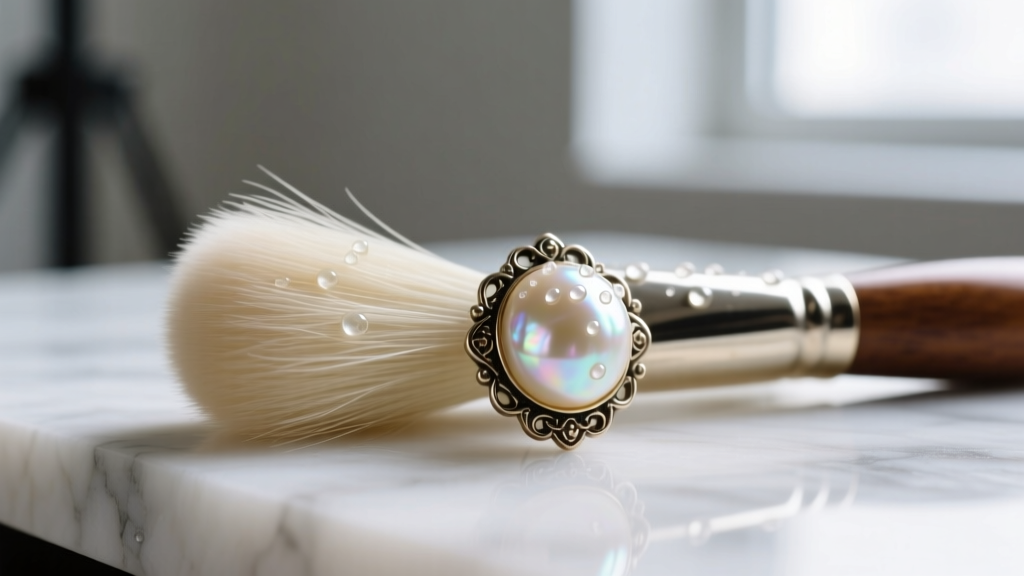
The GIA Gem Encyclopedia notes that imitation pearl coatings are highly susceptible to chemical solvents. Alcohol, ammonia, and even standard jewelry polishing cloths will instantly strip the guanine coating, leaving a bare, worthless glass bead.
If your Bogoff pearl earrings are yellowing, the degradation is occurring within the binder itself. While you cannot reverse the yellowing without completely stripping and repainting the bead (which destroys the historical integrity), you can stabilize the coating to prevent flaking. Wipe the pearls gently with a cloth dampened only with distilled water. If the coating is actively flaking, a professional conservator can apply a reversible, non-yellowing acrylic consolidant like Paraloid B-72 to lock the remaining scales in place.
Adjusting and Converting Mid-Century Clip-Ons
Because ear piercing was less common in the 1940s and early 1950s, the majority of Bogoff earrings were designed as clip-ons or screwbacks. The hinged paddle clip-ons used by Bogoff often suffer from metal fatigue, resulting in earrings that slide off the lobe or, conversely, clamp down with painful force.
Tension Adjustment
Do not use standard steel jewelry pliers to adjust the clip, as they will mar the rhodium finish and leave permanent dents in the metal paddle. Instead, use flat-nose, nylon-jaw pliers. To tighten a loose clip, gently squeeze the paddle closer to the earring face. To loosen a painful clip, gently bend the paddle outward. Apply a microscopic drop of synthetic watch oil to the hinge pin to ensure smooth operation without attracting dust.
The Conversion Debate
Many modern wearers opt to convert vintage clip-ons to pierced earrings. While this makes them more wearable, it fundamentally alters the historical artifact and significantly reduces the resale value for serious Bogoff collectors. If you must convert them, avoid soldering, which can melt the glass rhinestones and blister the rhodium. Instead, use a laser welder to attach a sterling silver post, or employ a non-invasive clip-on-to-pierced converter tube that slides over the existing paddle.
When to Call a Professional Conservator
While routine cleaning and tension adjustments are safe for experienced collectors, certain Bogoff earring issues require professional intervention. If the base pot metal is exhibiting "zinc pest" (a crystalline degradation that causes the metal to swell and crack), or if the structural solder joints connecting the clip mechanism to the earring face have failed, stop handling the piece. A professional jewelry conservator with experience in mid-century metallurgy can stabilize the alloy and perform low-heat laser soldering to preserve both the structural integrity and the collectible value of these mid-century masterpieces.


